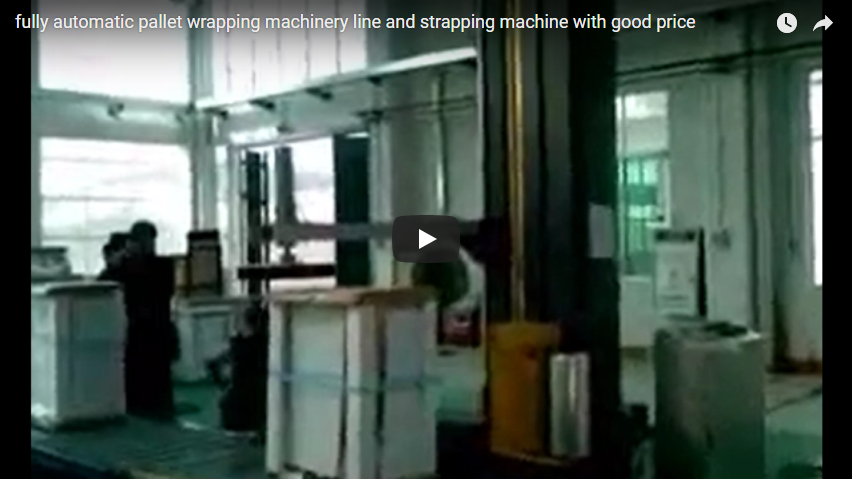
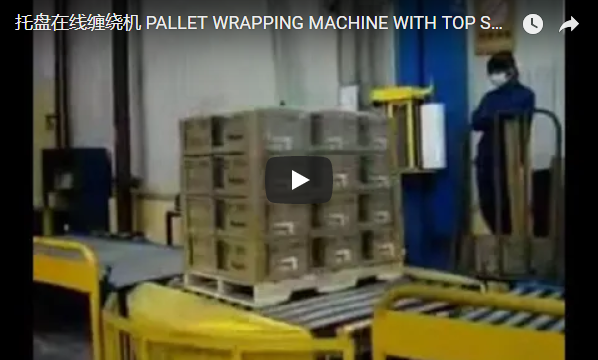
Pallet strapping integrated with wrapping machine-M type

Executive summary This video shows an M-type machine that combines pallet stretch wrapping and strapping in one station: a pallet load rotates on a turntable while stretch film is applied, then a green strapping band is fed and tightened over the load. No operator appears on camera — the cycle runs automatically from load placement to film cut-off. Load stability after wrapping comes from combined film coverage plus top-to-bottom strapping, all in a single machine footprint.

Why combined wrapping and strapping matters

Stretch film holds a pallet load together by wrapping it under tension. Strapping adds a second, stronger restraint that penetrates through the load profile and locks top and bottom layers together. Many plants run these as two separate stations, which means two footprints, two handling moves, and one extra operator touchpoint per pallet.

The machine shown in this video does both jobs in one position. A pallet load is placed once, the machine wraps it with stretch film as the turntable rotates, and then a strapping unit delivers a band over the top of the load and tightens it. When the cycle finishes, the load is fully secured and ready to leave the station. For buyers evaluating packaging equipment, this is the key selling point: one machine, one load position, two securing methods.

What the video shows

The footage is split into two demo sequences, both filmed in a workshop setting. Here is what happens, with approximate time references.

First sequence (t≈0–56s):

  • A blue pallet loaded with stacked blue-and-white boxes (arranged roughly two layers by three columns) sits at the center of a circular turntable. An overhead blue beam assembly with a motor and tensioning mechanism hangs above the load.
  • From about 20 seconds, the turntable rotates clockwise and the load turns with it. Stretch film is already partially wound around the load sides in crossing “X” pattern stripes, and a side arm or presser contacts the load edge lightly.
  • Around 36–44 seconds, a green strapping band is seen dropping from above and settling against the load surface while the beam moves laterally — the strapping and wrapping actions overlap in one cycle.
  • By about 48–56 seconds, the turntable slows and stops, the beam returns to its home position, and the load is fully enclosed in stretch film with green strapping bands applied across it.

Second sequence (t≈60–88s):

  • A different pallet load — light-colored pallet with stacked cartons, roughly four layers forming a near-cube — is positioned on the same rotating platform.
  • The turntable starts rotating counterclockwise. Film is fed and stretched continuously as the load turns, and the overhead beam makes small adjustments to maintain film tension.
  • Near the end, the beam assembly presses downward over the top of the load — consistent with a top-press or film-sealing step — and then the film is automatically cut at the right side of the machine. Loose film tails are visible as the cut completes.
  • The wrapped, strapped load is left ready for removal.

Throughout both sequences, no operator is visible. The machine performs the full wrap-strap-cut cycle on its own once the load is in place.

Direct observation notes

The following block stays close to the analysis of the sampled video frames, with only light grammar edits.

  • The workpiece (blue pallet plus stacked boxes) rests at the center of a circular turntable; an overhead blue beam structure with a motor and tensioning mechanism hangs above it.
  • The turntable rotates, carrying the load with it; stretch film is wound around the load sides in “X” pattern crossings while a side arm lightly presses the load edge.
  • A green strapping band drops from above and lies against the load surface while the beam moves; the load ends up wrapped in stretch film and fixed with two green bands on all four sides.
  • Machine frame: deep blue painted metal structure; columns and base in grey/white; circular blue turntable plate set into a grey base with positioning stops.
  • Overhead beam assembly includes a motor (fan cover visible), tensioning pulleys, guide rails, and a laterally movable execution arm. Vertical guide rails are on both sides; the left side shows rack/chain drive elements, the right side a flexible cable drag chain.
  • Second load: a wooden/plastic pallet with stacked cartons (approximately 4 layers × 2 columns × 2 rows, 16 boxes), light grey-blue cartons, transparent film.
  • The film supply mechanism sits on the right side: film spool, guide rollers, and a cutting blade in the upper right area. The frame is a twin-column gantry providing rigid support.
  • No readable text, nameplate, logo, or watermark is visible in any sampled frame.
  • No control panel, emergency-stop button, guard fencing, light curtain, or warning labels are visible within the camera view.

How the working cycle fits together

Reading the two sequences together, the M-type configuration follows a logical process flow:

  1. Load placement — the palletized load is set at the center of the turntable.
  2. Film wrapping — the turntable rotates while stretch film is fed and tensioned around the load; the beam adjusts height or lateral position to build even coverage.
  3. Strapping — the overhead unit releases a strapping band over the top of the load; the band is tightened so it clamps the wrapped stack vertically.
  4. Film cut and release — the film is cut automatically, and the machine returns to its home position.

Because the strapping head and the film carriage share the same gantry structure, the machine avoids moving the pallet between stations. This is what makes the “integrated” designation meaningful in practice.

What the video does not show

The footage is a demonstration, not a spec sheet. The following are not observable and must be verified with the manufacturer before purchase:

  • Rated power, voltage, and frequency
  • Maximum pallet size and load weight capacity
  • Cycle time per pallet
  • Model designation and exact machine dimensions
  • Film thickness range and strapping strap specifications
  • Strapping tension settings
  • Control panel design and HMI details (not visible in the frame)
  • Safety configuration: no fencing, e-stop, light curtain, or warning labels appear in the video — confirm what safety package ships with the machine and whether it meets your local regulations
  • Compatibility with your conveyor line or PLC protocol, if automation integration is needed

Fit checklist for buyers

Use this list when comparing an integrated wrap-strap machine like this one against running separate strapping and wrapping machines:

Question Why it matters
Does your typical load need both film and strap? Loads that stack well may need film only; heavy or unstable loads benefit from added strapping.
What is your available floor space? One integrated station replaces two machines and the transfer between them.
Is the load height within the gantry range? The video shows loads roughly 1.2–1.5 m tall; confirm the machine’s max wrapping height.
Do pallet sizes vary? The turntable in the video handles one load type per demo; confirm multi-size flexibility.
What safety guarding is required at your site? Nothing visible in the footage; specify guarding, e-stop placement, and interlocks in your RFQ.
What cycle time do you need? Not shown in the video — request measured cycle data for your load profile.

Applications this configuration suits

Based on the loads shown and the process observed, this integrated machine fits environments such as:

  • Food, beverage, and FMCG distribution where carton pallets need dust and moisture protection plus load stability for transit.
  • E-commerce and warehouse outbound stations where throughput per square meter matters and a second handling move between wrap and strap stations is wasteful.
  • Mixed loads where film alone may not stop top layers from shifting — strapping adds vertical restraint through the stack.

Operation and maintenance notes

For operators and maintenance teams considering this type of machine:

  • Keep the film carriage rollers and the strapping tensioning mechanism clean and free of film debris; buildup changes tension behavior.
  • Inspect the film cutting blade regularly — a dull or dirty blade causes partial cuts and loose film tails.
  • Check the turntable drive and the beam guide rails for wear; the video shows both a chain/rack drive and a cable drag chain, both of which need periodic inspection.
  • Because no operator interface is visible in the footage, confirm control location, fault display, and alarm functions with the manufacturer.
  • If the machine operates in an open floor area as shown, define and enforce a keep-out zone around the rotating turntable during the cycle.

Frequently asked questions

Does one machine really replace a wrapper and a strapper? The video shows film wrapping and strapping performed over the same load position in one cycle. Whether it replaces your existing two-station setup depends on your load types and required throughput — check with the manufacturer for your specific case.

Can it handle different pallet sizes? The video shows two different loads on the same turntable, but exact size limits are not observable. Verify supported pallet dimensions with the manufacturer.

Is there any operator involvement during the cycle? No operator appears in the footage; once the load is placed, wrapping, strapping, and cutting proceed automatically. How loads are fed and removed (forklift, conveyor, pallet truck) should be confirmed for your layout.

What safety features does it include? The video shows no fencing, emergency stop, or light curtain in view. This is a key item to verify with the manufacturer, including compliance with your local safety regulations.

What film and strap does it use? The video shows transparent stretch film and a green strapping band. Film width, thickness range, and strap specifications are not visible — confirm consumable specs before ordering.

Related reading

Next step

If a combined wrap-and-strap station matches your pallet packaging needs, contact the FHOPE team with your pallet size, load weight, and target cycle time to get a machine configuration and quotation.


Source and method: this article is based on the demonstration video embedded above. The footage was analyzed by a vision model using sampled frames; the video contains background music only, with no narration or speech, so all process descriptions come from visual observation alone. Specifications and safety features not visible in the video are marked as items to verify with the manufacturer.