Overview
For a production or warehouse packing line where pallets already travel on roller conveyors, an inline turntable pallet wrapper removes the most wasteful step in wrapping: getting the pallet on and off the machine. Its turntable deck is itself a roller conveyor, so the load runs into the wrapper on line, wraps while the table turns, and runs straight out again — the forklift never touches the wrapper zone. This article explains the inline roller-deck layout shown in the clip, the machine data to confirm for your load, and the questions to answer before you request a quote.
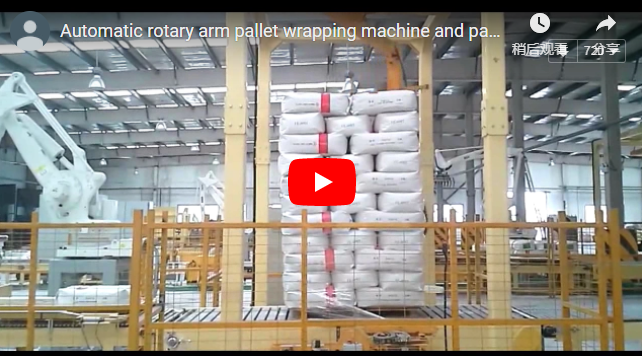
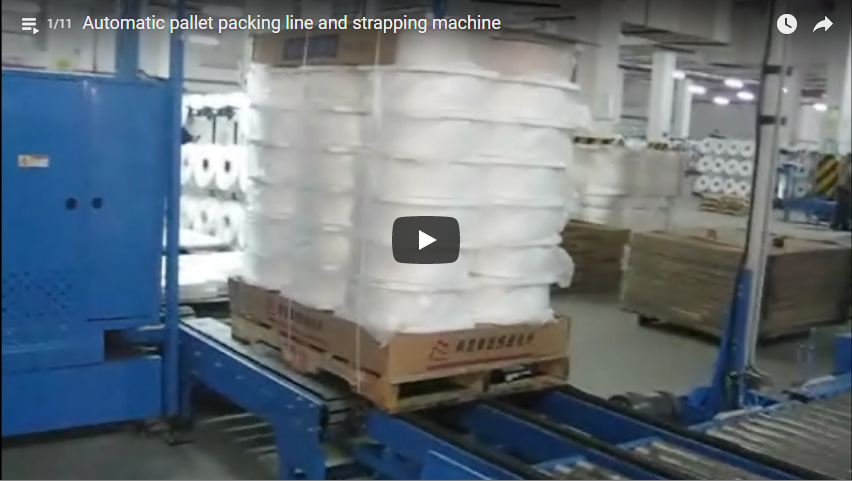
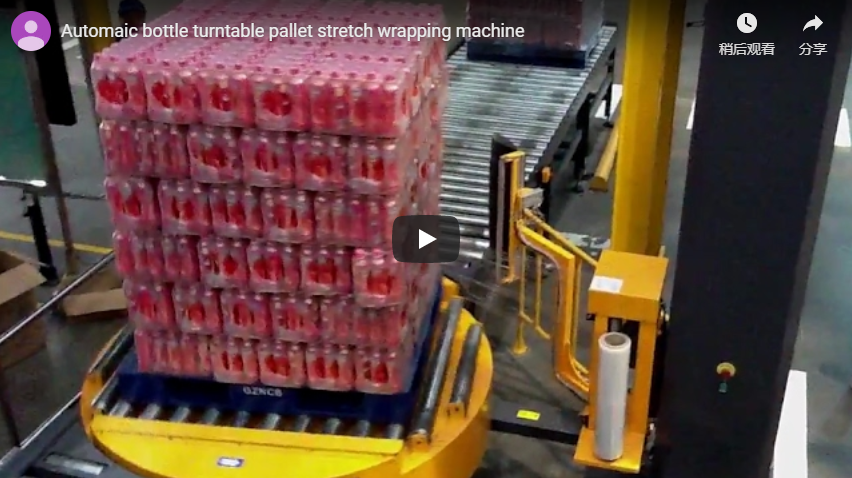
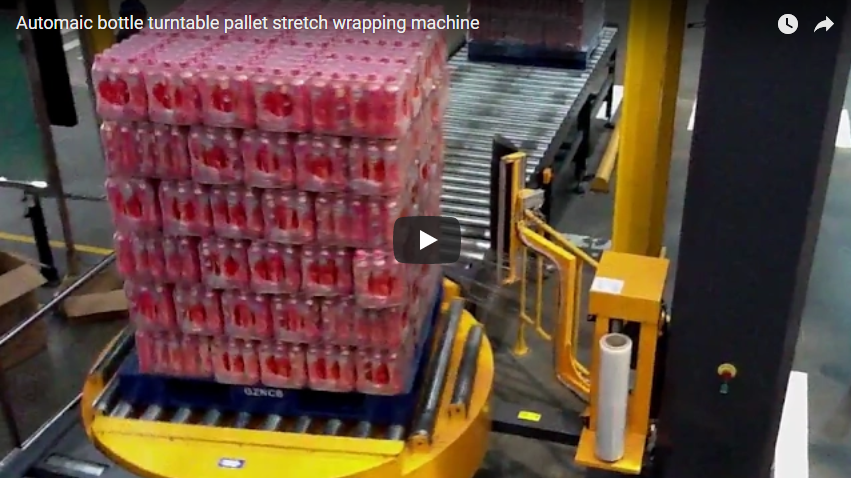
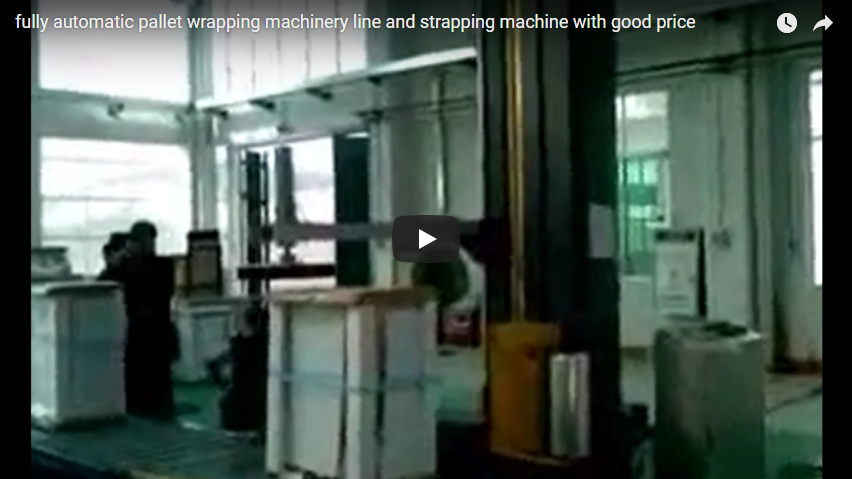
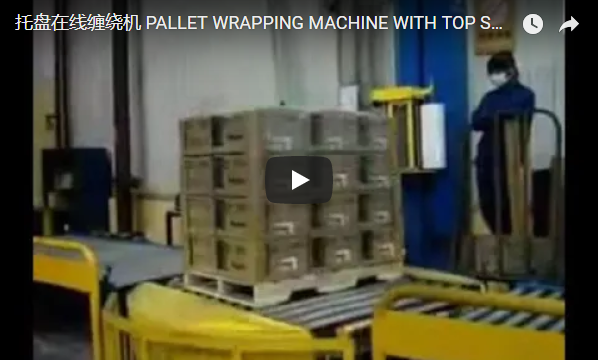
The clip below shows a tall pallet load being wrapped on the inline machine:
The Inline Principle Behind the Clip
The machine in the clip is an inline turntable wrapper: not a plain turntable that a forklift must place and remove a pallet from, but a turntable whose top surface is a section of roller conveyor aligned with the infeed and outfeed track.
| Element | What it does in the cycle |
|---|---|
| Roller-conveyor turntable deck | Carries the load into and out of the wrapper in line with the track |
| Film carriage and mast | Rides up and down beside the load, laying film over the packing height |
| Turntable drive | Rotates the load while the carriage moves, producing the spiral wrap |
| Height sensing | Measures each load so the carriage travels to its full height |
Because the deck is a roller conveyor at the same level as the track, a pallet can run on, wrap, and run off as one continuous flow. The machine is sized so the turntable, infeed and outfeed sit on one horizontal line, which is what allows loads to pass straight through rather than being lifted on and off.
What to Send for Sizing
An inline turntable wrapper is configured around the actual pallet program, not a fixed rating. Send the following so a proposal matches your flow:
| Data point | Why it is needed |
|---|---|
| Pallet length, width and load height range | Turntable diameter and mast travel |
| Load weight per pallet | Table capacity rating and drive sizing |
| Pallets per hour | Cycle-time planning and buffer requirements |
| Conveyor height and travel direction | Deck height matching and entry/exit orientation |
| Film width, type and stretch requirement | Carriage and pre-stretch setting |
For CE-market deliveries we reference ISO 12100 for the risk assessment and EN 415-10 for the general safety requirements of packaging machines. Throat and turntable capacity figures are confirmed per project because the deck, mast and drive are sized to the load range supplied. As a stated manufacturer practice for this machinery family, units are factory-tested for about 24 hours before delivery, including control-system and emergency-stop checks; treat this as the stated family practice and confirm the test record for your unit.
Film Use With Pre-Stretch
Film consumption depends on the pre-stretch ratio and the wrap pattern you run. With pre-stretch, one metre of film pulled off the roll is stretched to a longer length on the load, so the pattern that covers the load consumes less film from the roll.
Illustrative arithmetic: if a wrap pattern lays the equivalent of 3 m of film on the load for every 1 m delivered by the carriage, the roll feed is one third of the laid length. The published machine range for this family quotes pre-stretch up to 200% — treat that figure as an illustrative baseline and confirm the actual pre-stretch ratio, film grade and number of layers per project; that confirmation is what turns the headline figure into a usable consumption number for your pallet.
A pneumatic film grab and cut-off (and, where needed, a top sheet unit or top press) can be added so each cycle ends cleanly without hand tearing. Whether these are fitted is a per-project decision based on whether you need a sealed finish and a consistent top cover.
FAQ
Q: What makes a turntable wrapper “inline”?
A: The turntable deck is a roller conveyor aligned with the infeed and outfeed track, so loads run on and off without a forklift or manual lift.
Q: Does the load turn while it is wrapped?
A: Yes. The turntable rotates the load while the carriage moves up the mast, laying a spiral wrap; the rotation and carriage motion together cover the packing height.
Q: How is the top of each load found?
A: A height sensor reads the load automatically, so the carriage wraps to the actual height of each pallet load.
Q: What numbers must be confirmed before a quote?
A: Pallet footprint, load height and weight, pallets per hour, conveyor height and film stretch ratio — confirmed per project.
Q: Which safety standards apply?
A: We reference ISO 12100 for the risk assessment and EN 415-10 for the general safety requirements of packaging machines on CE-market deliveries.
Next Step
- Email info@fhopepack.com with pallet sizes, load weights and pallets per hour.
- State conveyor height, travel direction and film preference.
- FHOPE returns a proposal with machine data and layout within the project cycle.
- Book a site survey so the deck height and conveyor links are confirmed on the floor.
- Turntable Stretch Wrapper B200: Inline Roller Turntable with Pneumatic Top Plate – The B200 inline roller-turntable family from the same product line.
- Turntable Pallet Wrapper with Conveyor – Conveyor-fed turntable wrapping for inline pallet flows.
- Pallet Wrapping Machine with Automatic Film Cutting – Film grab, cut and finishing options on pallet wrappers.