Executive summary A horizontal orbital stretch wrapper passes long products through a rotating ring that carries the film roll, applying stretch film in an overlapping spiral along the product length. It is used for pipes, profiles, panels and bundles that are too long to spin on a turntable. Ring size, conveyor speed, film type and overlap are configured per project.
Table of Contents
- Why orbital for long products
- How the ring wraps
- Key components
- Typical configuration
- Setting overlap and conveyor speed
- Applications
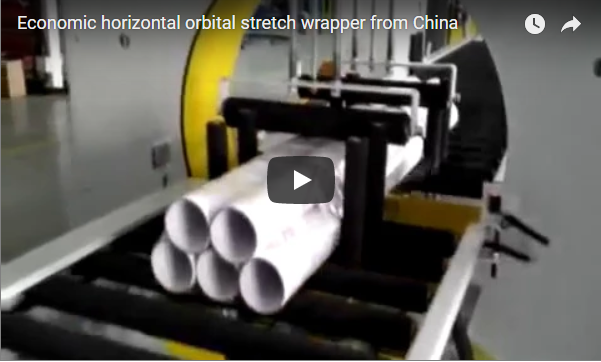
- What the video shows
- Machine selection checklist
- Controls and safety
- Engineering FAQ
- Next step
- Related reading
- Sources and standards
Why orbital for long products
Pipes, profiles and panels do not fit on a turntable. A horizontal orbital wrapper runs the product straight through a rotating film ring instead, so the load keeps a fixed pitch and the film covers its full length in a spiral.
That matters for bundles that must arrive tight and clean: film holds the layers together, keeps surface finish protected, and stops small parts shifting during transport.
How the ring wraps
The product sits on an infeed conveyor and moves through the ring opening. The ring carries the film roll around the product, and the combination of ring rotation and conveyor travel lays the film in an overlapping spiral. A clamping unit grips the film at the start, and a cutter separates it at the end of the cycle.
Because the load passes through in a straight line, long lengths wrap in sections without the load spinning or touching the floor between passes.
Key components
| Component | Role |
|---|---|
| Rotating ring | carries the film roll around the product path |
| Film carriage and tension unit | controls film tension and pre-stretch against the load |
| Clamping and cutting unit | grips the film at cycle start and cuts it on completion |
| Infeed and outfeed conveyors | move the product through the wrapping zone |
| Control system | sets overlap, wrap count, speed and the automation sequence |
Typical configuration
Numbers below are common starting envelopes for this machine class, sized to the bundle cross-section per order.
| Parameter | Typical range, confirmed per project |
|---|---|
| Maximum product length | machine section, conveyor dependent |
| Ring opening width | 1500 mm example for the video unit |
| Ring opening height | 1200 mm example for the video unit |
| Ring speed | up to 50 RPM |
| Film type | LLDPE stretch film, width project-specific |
| Power supply | 380 V three phase 50 Hz for standard industrial lines, or 220 V single phase, selected per project to the plant supply |
Setting overlap and conveyor speed
Film cover along the product is set by the balance between ring rotation and conveyor travel. A higher overlap holds the bundle tighter but uses more film, so it suits heavy loads and long sea hauls. A lower overlap suits light, stable bundles and cuts film use.
The pattern is stored on the control panel, so the same product wraps the same way every cycle.
Applications
- Metal pipe, tube and extrusion bundles.
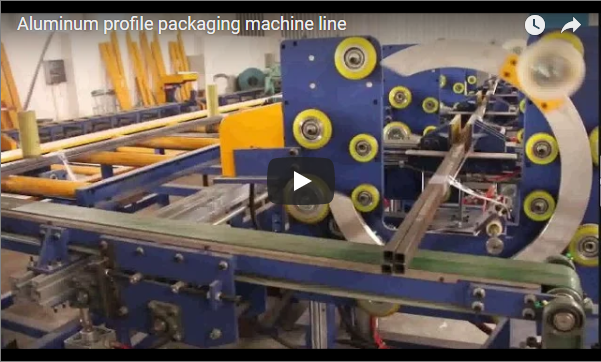
- Aluminum profiles and bars up to several metres long.
- Plastic profiles and window or door frames.
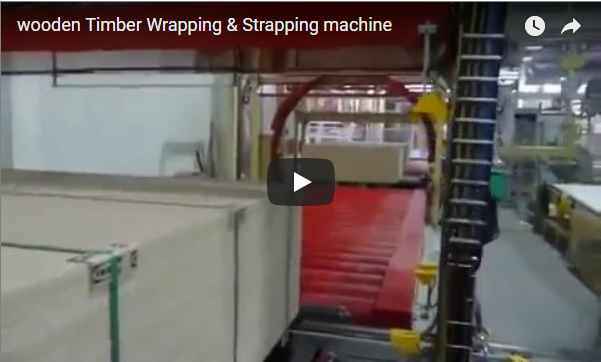
- Lumber, mouldings and panels.
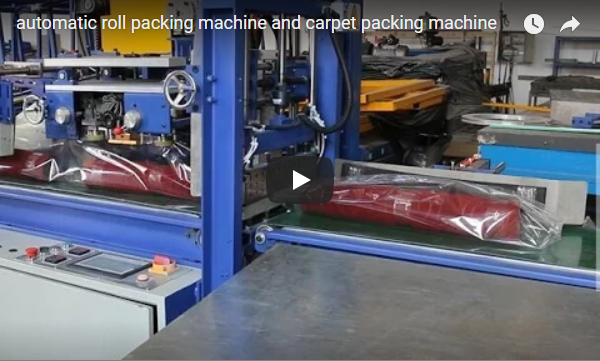
- Rolls of carpet, fabric and flooring.
Product length, width and weight decide ring size and conveyor rating.
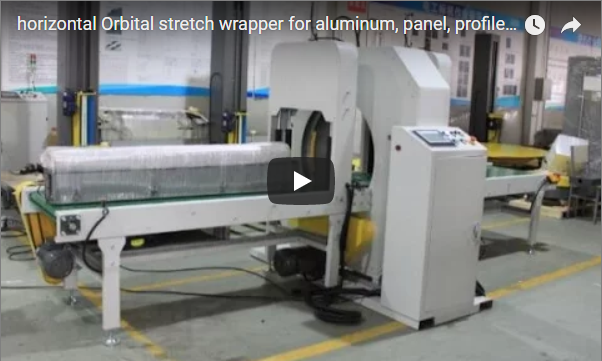
What the video shows
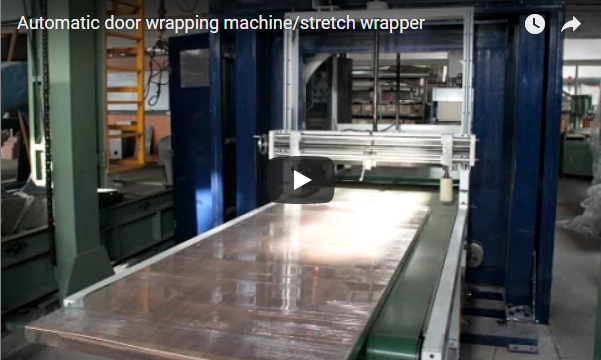
The demonstration clip shows continuous infeed-to-outfeed passage through the film ring. The footage is a short demo, so ring speed, film settings and the exact product range are sized to your line rate with us.
Machine selection checklist
| Question | Confirm per project |
|---|---|
| Product envelope | maximum length, width and height through the ring |
| Product weight | conveyor and ring capacity for your heaviest bundle |
| Throughput | conveyor speed and cycle time for your line rate |
| Film requirements | film width, thickness and pre-stretch settings |
| Automation level | manual film clamp or automatic clamp and cut |
| Safety package | guarding, interlocks and any certification supplied |
Controls and safety
The control panel stores overlap, wrap count and speed settings for each product, and the sequence runs with the operator at the panel. Keep clear of the ring while it rotates, and make sure the guarding stays in place while the machine runs. Emergency stop is fitted on the panel, and interlocks stop the ring when the guard is opened.
Engineering FAQ
Q: Can it wrap products longer than the ring is wide? A: Yes. The product moves through the ring on the conveyor, so length is handled in sections and is limited by the machine layout, confirmed per project.
Q: How secure is the wrap? A: Film is applied in an overlapping spiral, and the overlap is adjustable, so heavy bundles can run with more overlap for tighter holding.
Q: Does it need two operators? A: No. Loading, starting the cycle and removing the bundle can be handled by one operator.
Q: What film does it use? A: Stretch film, with width and thickness set to the product and confirmed per project.
Q: How fast is the cycle? A: Ring rotation is rated up to 50 RPM, and conveyor advance sets throughput, balanced against your required film overlap; final cycle time is confirmed per project.
Next step
- Email us at info@fhopepack.com with your longest product, bundle size and line speed.
- We send ring sizes, film settings and a layout drawing within 48 hours.
- We arrange a site survey to confirm the wrapper fits your line.
Related reading
- Orbital stretch wrapper for pipe
- Horizontal orbital stretch wrapper for aluminum profile
- Steel pipe bundling machine
- Semi automatic aluminum profile stretch wrapping machine
- FHOPE packing machinery product lines
Sources and standards
- ISO 12100:2010 — Safety of machinery. General principles for design, risk assessment and risk reduction
- EN 415-10:2014 — Safety of packaging machines. General requirements
- EN ISO 13849-1:2023 — Safety of machinery. Safety-related parts of control systems
- FHOPE horizontal orbital stretch wrapper demonstration video. Footage reviewed as a short demonstration; product range and settings confirmed per project.
Last reviewed: 2026-10-10