Executive summary
Long products such as aluminium extrusions, steel tubes and plastic profiles cannot easily spin on a turntable, and hand wrapping a long length is slow and inconsistent. An orbital wrapping machine rotates a ring of film around the product instead of rotating the product, laying even, overlapping layers as the ring circles the load. We build orbital wrapping machines. Product range and wrap setup are confirmed per project.
Table of Contents
- Why orbital wrapping exists
- What the machine does
- The ring around the load
- The wrap cycle
- What the footage shows
- Typical configuration
- Selection checklist
- Operation and safety
- Engineering FAQ
- Next step
- Related reading
- Sources and standards
Why orbital wrapping exists
Long products such as aluminium extrusions, steel tubes, plastic profiles and mouldings are awkward to protect. Turntable and rotary-arm pallet wrappers are built for goods on a pallet, and a long bar or profile cannot easily be spun on a turntable. Hand wrapping a long length is slow, inconsistent and hard on the operator’s back.
An orbital machine fills that gap. Instead of rotating the product, it rotates a ring of film around the stationary or slowly advancing product, laying even, overlapping layers. The result is a uniform band of stretch film that protects the profile through handling and transport. Product range and wrap standard are confirmed per project.
What the machine does
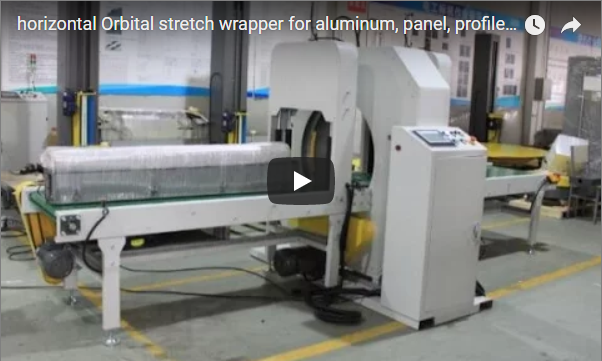
The machine is an orbital wrapping machine for long, slender products. The product sits or feeds through the machine, and a ring carrying the film rotates around it, laying film in even, overlapping layers as the ring circles the load. In the compact configuration on this page, one worker loads a long profile, runs the machine, and pulls out a fully wrapped piece.
The film ring does the travel around the product. The product does not spin, so long profiles stay straight through the wrap. Product range and ring setup are confirmed per project.
The ring around the load
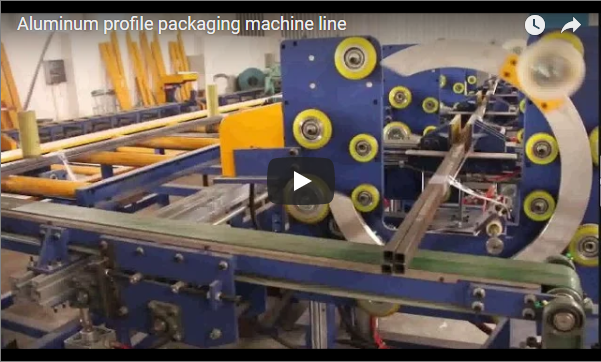
The core of the machine is the film ring. It rotates around the product and carries the film carriage with it, so the film is laid on as the ring circles the load instead of the load turning. Ring travel gives even overlap along the full product length.
Because the ring moves and the product stays still, long items wrap without bending or needing extra clearance to spin. The ring keeps the profile straight through the whole pass. Ring opening and travel are confirmed per project.
The wrap cycle
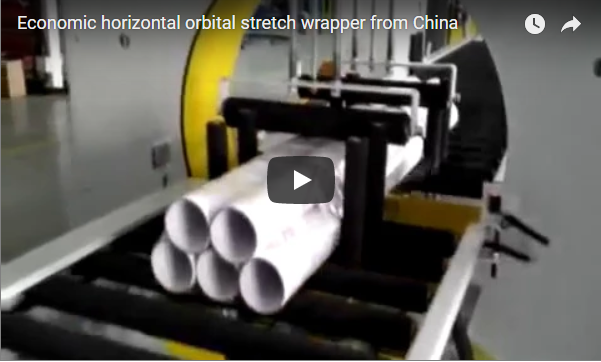
The footage shows a full load, wrap and unload sequence. The operator loads the long profile into the machine, runs the wrap, and the machine lays the film as the ring moves along the product. When the pass is complete, the operator pulls the wrapped piece clear.
The cycle is compact and operator-fed, with the film applied along the product in one run. Wrap travel and overlap settings are confirmed per project.
What the footage shows
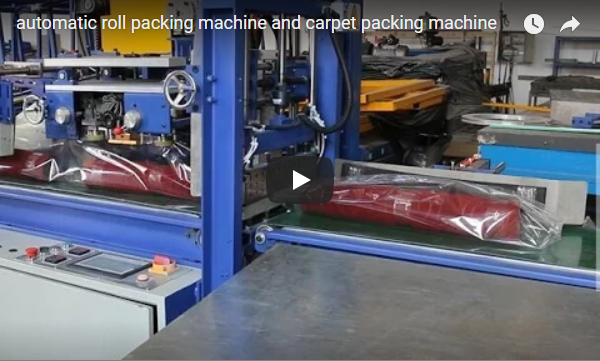
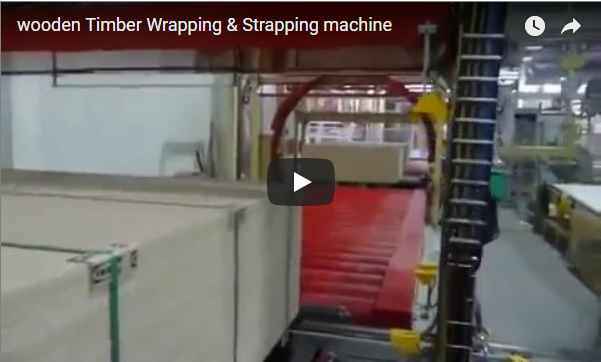
Our footage shows an orbital wrapping machine wrapping a long profile in a full load, wrap and unload cycle. It is a general demonstration, so your product range and wrap requirements are confirmed with us per project.
Typical configuration
Figures below list functional design boundaries rather than numeric values, and are confirmed per project.
| Parameter | Typical range, confirmed per project |
|---|---|
| Product | long, slender profiles |
| Ring | rotating film ring |
| Wrap | even, overlapping layers |
| Feed | operator-fed or in-line |
| Control | PLC and HMI |
| Electrical supply | 380 V three phase 50 Hz, or 220 V single phase for light machines, selected per project |
Selection checklist
| Question | Confirm per project |
|---|---|
| Product range | widths, lengths, weights |
| Ring | opening size |
| Wrap | layers, overlap, travel |
| Feed | manual or in-line |
| Control | PLC and HMI options |
| Electrical supply | voltage, phase and frequency on site |
Operation and safety
Load the profile, run the wrap from the panel and the ring applies the film around the product automatically. Keep clear of the ring, film and product path while the machine runs, with guarding and emergency stops at the operator position. The operator stays clear while the ring travels.
Routine checks cover the ring drive, film carriage, feed, sensors and control, per the machine manual. Confirm the wrap settings against the profile before each run so layers stay even.
Engineering FAQ
Q: What does the machine wrap? A: Long, slender products such as profiles, tubes and mouldings.
Q: Why not spin the product? A: The film ring rotates around the product, so long items stay straight.
Q: How is the film applied? A: The ring carries the film around the load in even, overlapping layers.
Q: Is the product moved? A: It feeds through or sits in place while the ring travels.
Q: What does the footage prove? A: A full load, wrap and unload cycle on a long profile.
Next step
- Email us at info@fhopepack.com with your product range and wrap needs.
- We send an orbital wrapping proposal and a layout drawing within 48 hours.
- We arrange a site survey to confirm product range and wrap requirements.
Related reading
- Orbital stretch wrapper with BOPP tape
- Horizontal wrapping machine
- Manual horizontal wrapping machine
- FHOPE packing machinery product lines
Sources and standards
- ISO 12100:2010 Safety of machinery, general principles for design and risk assessment
- EN 415-10:2014 Safety of packaging machines, general requirements
- EN ISO 13849-1:2023 Safety of machinery, safety-related parts of control systems
FHOPE orbital wrapping machine demonstration video. Reviewed as a general demonstration; product range and wrap confirmed per project.
Last reviewed: 2026-10-11