Executive summary
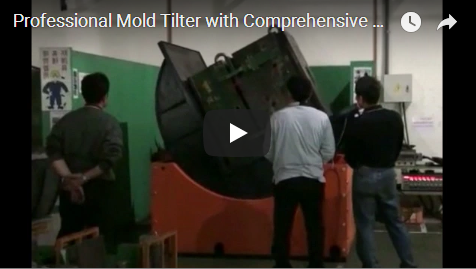
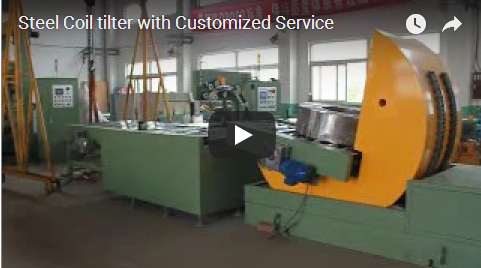
A coil and mold upender turns a heavy load through 90° so it can be stored, packed or worked on in the right orientation. Coils and molds behave differently in the turn: a coil rolls, a mold is a dense block with an off-centre mass. Top quality here means a cradle designed for the actual load, a controlled hydraulic turn and proper locking. Our mold upenders come in 10 t and 20 t models, and our hydraulic coil upenders cover 2 t to 50 t.
Whether the load is a steel coil or a press mold, the job is the same: a controlled quarter turn with the load seated the whole way.
Table of Contents
- Why one plant needs to turn both coils and molds
- Coil vs mold: what changes in the turn
- What top quality means on an upender
- Models and range
- Selection checklist
- Safety: EN 415-10 and ISO 12100
- Engineering FAQ
- Next step
- Related reading
- Sources
Why one plant needs to turn both coils and molds
Steel, wire and stamping plants often handle both. Coils arrive eye-horizontal and must stand eye-vertical for packing or storage, or the other way round for a decoiler. Press and injection molds must be laid flat for maintenance and stood up for mounting. Turning either load with a crane and chains is slow and risky, because the load swings and drops onto its edge.
An upender does the turn on a fixed pivot under control. The load is seated before the turn and supported all the way through it.
Coil vs mold: what changes in the turn
| Point | Coil | Mold |
|---|---|---|
| Shape | Round, can roll | Block, off-centre mass |
| Seat | V-deck or cradle with sidewalls | Flat L-shaped table with stops |
| Surface | Edges and film need lining | Faces and guide pins need clearance |
| Turn | 90° flat to upright or reverse | 90°, or 180° turnover option |
A mold’s centre of gravity is rarely on its centreline. As it turns, the mass shifts past the pivot, so the table needs end stops and a drive sized for that shift. The cradle is the part that changes. The drive, frame and controls follow the same design, sized to the load.
What top quality means on an upender
- Designed to the load. The cradle or table matches the coil sizes or mold footprint.
- Controlled turn. The hydraulic drive gives a smooth, even turn and a gentle stop.
- Locking. A positioning lock holds the table, and displacement restrictors limit travel.
- Separate control. The panel sits apart from the turning body, with an E-stop.
- Certified build. CE and ISO 9001, with a 2-year warranty.
Models and range
For molds, our 90° mold upenders come in 10 t and 20 t models. For coils, our hydraulic coil upender range runs from 2 t to 50 t.
| Model | Load | Power | Turn time |
|---|---|---|---|
| FPCT-02 coil | 2 t | 1.5 kW | 50–70 s |
| FPCT-10 coil | 10 t | 3.2 kW | 60–90 s |
| FPCT-20 coil | 20 t | 4.5 kW | 60–90 s |
| FPCT-50 coil | 50 t | 11.5 kW | 60–100 s |
| Mold upender 10T | 10 t | confirmed at quote | confirmed at quote |
| Mold upender 20T | 20 t | confirmed at quote | confirmed at quote |
Table size depends on the coil or mold and is confirmed at quote. Combined coil and mold duty is built as a custom design.
Selection checklist
- Load type: coil, mold or both.
- Heaviest load, with coil OD, ID and width or mold footprint.
- 90° turn, or 180° turnover.
- Loading method: crane, forklift or conveyor.
- Surface protection needs, such as lining for coated coils.
Safety: EN 415-10 and ISO 12100
Upenders in packing lines follow EN 415-10, with the risk assessment done to ISO 12100. The main hazards are the turning body and a heavy load in motion. The positioning lock, displacement restrictors and a remote E-stop address them. On a hydraulic upender, check valves on the cylinders hold the table if pressure is lost. Guarding is set for each layout.
Engineering FAQ
Q: Can one upender handle both coils and molds? A: Yes, with a cradle designed for both, or with interchangeable seats.
Q: Why hydraulic for heavy loads? A: It gives a smooth turn and a soft stop at the end of travel.
Q: Can it turn 180°? A: Yes, as a turnover version; the standard is 90°.
Q: What is the cycle time? A: On our hydraulic coil models it runs 50–100 s; for molds it is confirmed at quote.
Next step
- Send load type, weights and sizes to info@fhopepack.com.
- We design the cradle and drive for your loads.
- We reply within 24 hours with a proposal and quotation.
Related reading
- 90 degree mold upender 10T (product)
- Hydraulic coil upender (product)
- Multipurpose automatic coil tilter with slide table
- Why 90 degree mold upenders are replacing overhead cranes
- Coil upender with turntable
Sources
- FHOPE product pages: 90 degree mold upender 10T and 20T; hydraulic coil upender; custom engineered upenders
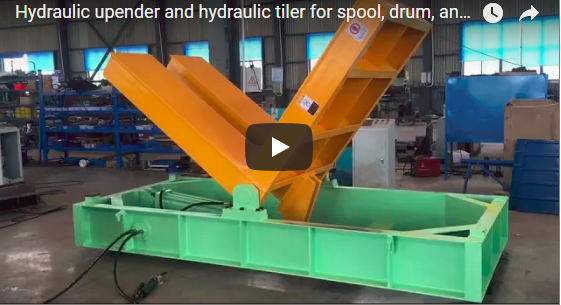
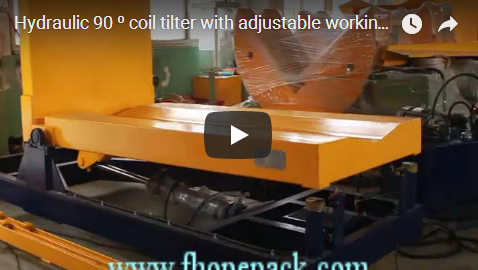
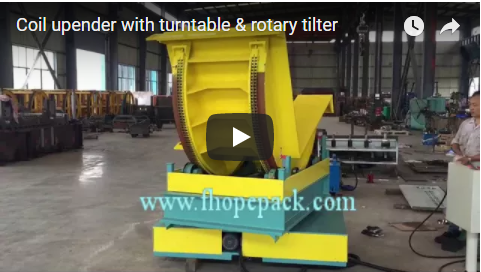
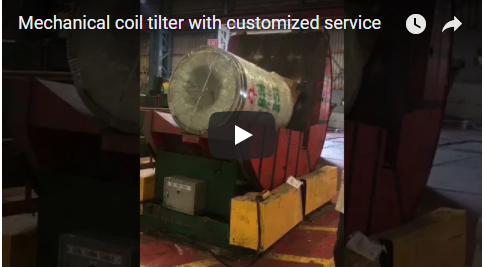
- Our coil and mold upender shown above
Last reviewed: 2026-10-19