Executive summary
A master horizontal wrapping machine wraps long, flat workpieces in transparent film as they travel along a conveyor. The workpiece is loaded at the infeed end, and a vertical wrap unit lowers film over it while the piece moves through the machine. The wrapped piece travels out at the far end, and the next piece enters for the next cycle. Workpiece size, film choice and line speed are confirmed per project.
Table of Contents
- Why horizontal wrapping
- What the machine does
- Conveyor feed and wrap unit
- Wrap cycle and take-away
- What the footage shows
- Typical configuration
- Selection checklist
- Operation and safety
- Engineering FAQ
- Next step
- Related reading
- Sources and standards
Why horizontal wrapping
Long, flat workpieces are awkward to wrap by hand because every side needs a clean layer before transport. A horizontal wrapping machine carries the piece along a conveyor and wraps it in film in one pass.
The wrap is applied while the piece moves, so the machine keeps pace with a line instead of stopping for each part. Workpiece size and film choice are confirmed per project.
What the machine does
The machine is a horizontal wrapping unit with a conveyor that runs through the middle. A long workpiece is loaded at the infeed end, travels to the wrap unit, and is covered in film as it passes.
The wrapped piece leaves at the far end while the next piece is loaded. Workpiece length and conveyor speed are confirmed per project.
Conveyor feed and wrap unit
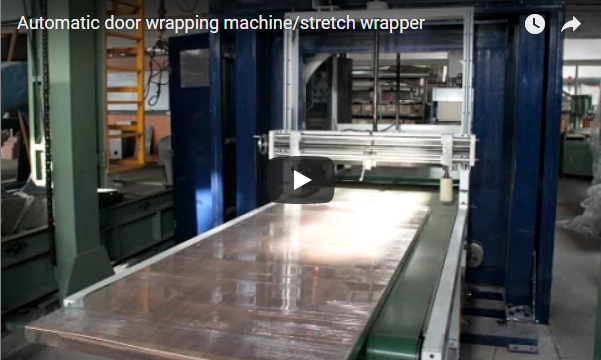
A horizontal conveyor carries the workpiece from the infeed end into the wrapping area. The wrap unit stands over the line as a vertical tower, with a roll of film at the top and an arm that moves down over the load.
As the workpiece travels under it, the arm feeds the film down from the roll and lays it over the top of the piece. Film width and the arm travel are confirmed per project.
Wrap cycle and take-away
The cycle starts when the loaded workpiece reaches the wrap unit. The film is fed from above while the piece continues on the conveyor, so the wrap follows the full length of the workpiece.
Once the wrap is finished, the arm rises back into place and the wrapped piece leaves the machine, and the next piece moves into the wrap unit. Stop points and film tension are confirmed per project.
What the footage shows
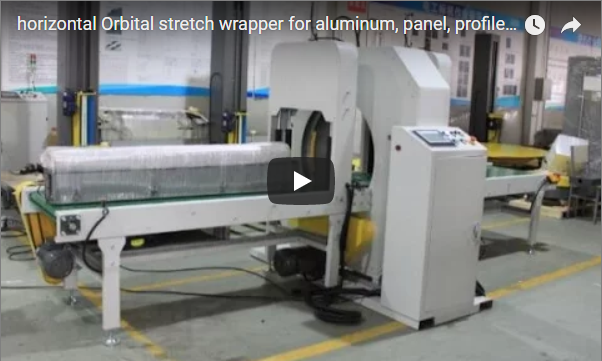
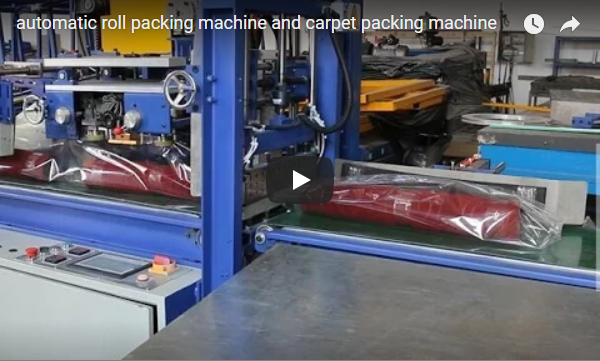
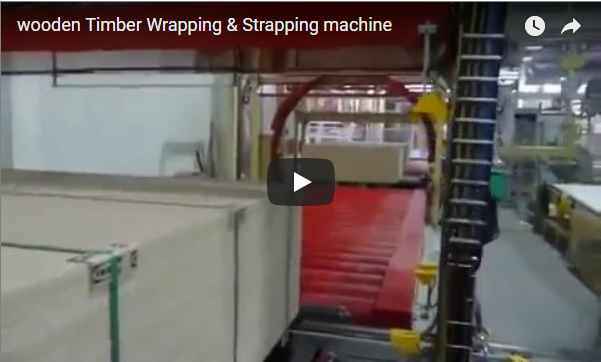
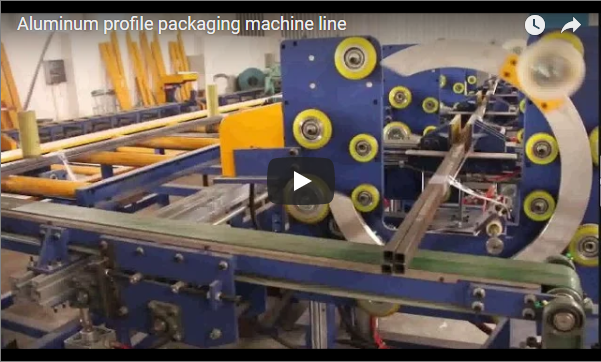
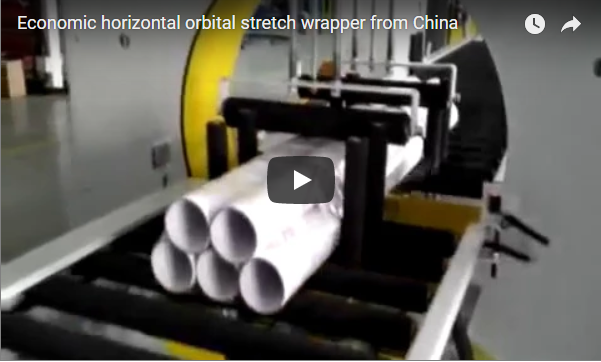
Our footage shows a long, flat workpiece being loaded on the conveyor, and the wrap unit lowering film over it as it travels through the machine. The wrapped piece leaves on the far side while the next one enters. It is a general demonstration, so your workpiece size, film choice and line speed are confirmed with us per project.
Typical configuration
Figures below list functional design boundaries rather than numeric values, and are confirmed per project.
| Parameter | Typical range, confirmed per project |
|---|---|
| Load | long, flat workpieces on conveyor |
| Wrapping | vertical unit feeding film from a top roll |
| Feed | horizontal conveyor, in and out |
| Control | panel with buttons and indicator lamps |
| Mount | floor, in line with the production flow |
| Electrical supply | 380 V three phase 50 Hz, or 220 V single phase for light machines, selected per project |
Selection checklist
| Question | Confirm per project |
|---|---|
| Workpiece range | length, width, height, weight |
| Film | width, thickness, stretch |
| Cycle | feed speed, wrap length, stop points |
| Line | conveyor height, in and out interfaces |
| Site | floor space, access at both ends |
| Electrical supply | voltage, phase and frequency on site |
Operation and safety
Load the workpiece at the infeed end, start the cycle, and let the conveyor carry the piece through the wrap unit. Keep hands clear of the conveyor and the film arm while the machine runs.
Routine checks cover the conveyor, the wrap unit and the film supply, per the machine manual. Confirm the workpiece is straight on the conveyor before each cycle.
Engineering FAQ
Q: What does this machine do? A: It wraps long, flat workpieces in film as they travel along a horizontal conveyor.
Q: How does the film cover the piece? A: The wrap unit feeds film down from a top roll while the workpiece passes underneath.
Q: Does the line stop between pieces? A: No, the next workpiece enters the conveyor as soon as the wrapped piece leaves.
Q: Can it wrap different lengths? A: The wrap follows the length of the workpiece; the film and settings are confirmed per project for your parts.
Q: What does it suit? A: Long boards, panels and similar flat workpieces that need a clean wrap before storage or transport.
Next step
- Email us at info@fhopepack.com with your workpiece size and line speed.
- We send a horizontal wrapping proposal within 48 hours.
- We confirm the conveyor interface and film choice for your line.
Related reading
- Master horizontal wrapping machine
- Automatic horizontal wrapping machine and orbital wrapper
- Aluminum horizontal wrapping machine with spacer feeder
- FHOPE packing machinery product lines
Sources and standards
- ISO 12100:2010 Safety of machinery, general principles for design and risk assessment
- EN 415-10:2014 Safety of packaging machines, general requirements
- EN ISO 13849-1:2023 Safety of machinery, safety-related parts of control systems
FHOPE master horizontal wrapping machine demonstration video. Reviewed as a general demonstration; workpiece size, film choice and line speed confirmed per project.
Last reviewed: 2026-10-11