Executive summary Large flat bundles need more than a spiral of stretch film: a covering film laid over the faces first gives a closed, even skin under the wrap. Our giant horizontal orbital wrapper does both in one line, with a film covering unit ahead of a big yellow-guarded ring on a green frame. Covering film width follows from the bundle width and the side drop. Both are set per project.
Table of Contents
- What the video shows
- How the film covering and orbital wrap work together
- Calculating the covering film width
- Film use per metre
- Controls and safety
- Selection checklist for a giant orbital wrapper with film covering
- Engineering FAQ
- Next step
- Related reading
- Sources
What the video shows
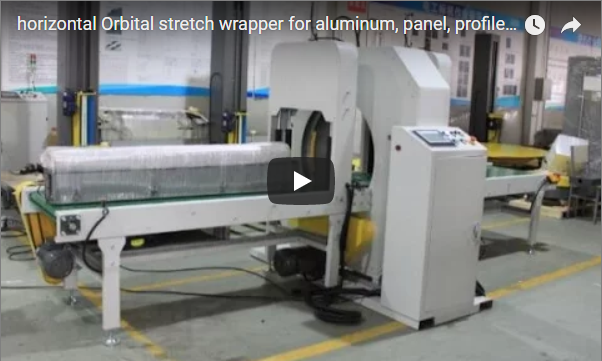
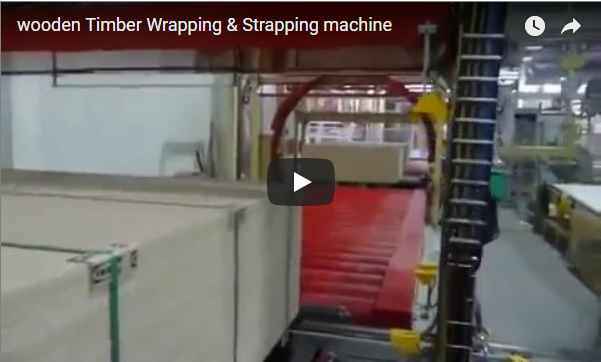
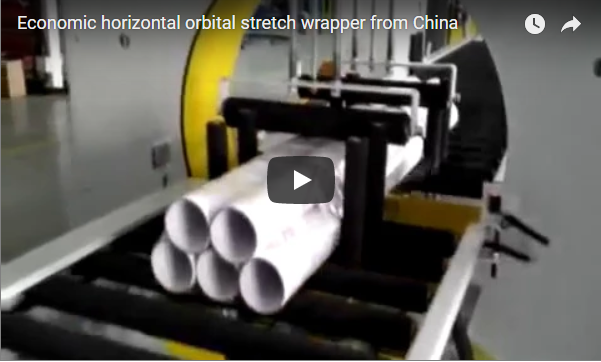
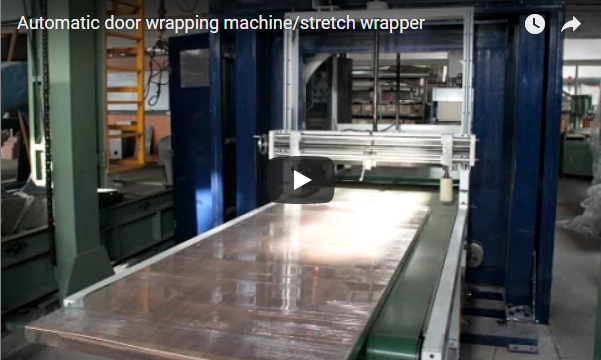
A long bundle of flat boards runs on the green roller line into our giant orbital wrapper. Tall yellow panels guard the ring, and the FHOPE GROUP mark and fhopepack.com watermark run across the clip.
Ahead of the ring, the film covering unit lays film over the bundle. The ring then wraps stretch film around it as it moves through. At the end, a hand presses on the finished skin of film to show how tight and smooth it lies.
How the film covering and orbital wrap work together
| Station | What it does |
|---|---|
| Infeed rollers | Carry the bundle in on the line |
| Film covering unit | Lays covering film over the bundle faces |
| Orbital ring | Wraps stretch film around the bundle as it moves |
| Outfeed rollers | Carry the wrapped bundle out |
The covering film gives a smooth, closed face. The orbital wrap then holds the covering film down and ties the bundle together.
Calculating the covering film width
The covering film should lie across the top and fold down the sides far enough for the wrap to catch it. Illustrative example:
| Item | Value |
|---|---|
| Bundle width (illustrative) | 1,200 mm |
| Side drop each side (illustrative) | 200 mm |
| Covering film width, 1,200 + 2 × 200 | 1,600 mm |
A wider side drop gives the wrap more film to hold, but uses more covering film per metre. We set it from your bundle sizes, as we do when sizing a horizontal orbital wrapper for doors.
Film use per metre
Illustrative example for a 1,200 × 400 mm bundle with 500 mm stretch film at half overlap:
| Item | Value |
|---|---|
| Bundle perimeter, 2 × (1,200 + 400) | 3,200 mm |
| Advance per turn, half of 500 mm | 250 mm |
| Turns per metre, 1,000 ÷ 250 | 4 |
| Stretch film per metre, 4 × 3.2 m | about 12.8 m |
| Covering film per metre of bundle | 1 m of 1,600 mm film |
For a 6 m bundle that is about 77 m of stretch film and 6 m of covering film. These are lengths laid on the bundle; pre-stretch means the stretch film roll pays out less.
Controls and safety
The ring is large and turns at speed behind its yellow guard panels. Keep people outside the guarded zone while the line runs, and stop it before anyone reaches in to adjust film.
The standards that apply depend on the destination market. For CE markets, ISO 12100 sets the risk-assessment method and EN 415-10 sets general requirements for packaging machines.
Selection checklist for a giant orbital wrapper with film covering
- Bundle width, height and length, smallest to largest.
- Heaviest bundle.
- Bundles per shift.
- Side drop for the covering film.
- Stretch film width and overlap.
- Line length and floor space.
Engineering FAQ
Q: Why add a film covering unit? A: The covering film gives a smooth, closed face under the spiral wrap, which the wrap alone does not.
Q: How wide should the covering film be? A: Bundle width plus the side drop on each side. Our 1,200 mm example with 200 mm drops needs 1,600 mm.
Q: How much stretch film per metre? A: About 12.8 m for a 1,200 × 400 mm bundle at half overlap in our example.
Q: Does the bundle stop during wrapping? A: No. It runs through on the rollers while the ring wraps it.
Q: What loads suit it? A: Long, wide, flat bundles such as boards, sheets and panels that need a closed top face as well as a spiral wrap.
Next step
We plan your giant orbital wrapping line in three steps:
- Submit your layout drawing with bundle sizes and output to info@fhopepack.com.
- Receive a proposal within 48 hours, with the covering and wrap film plan.
- Book a site survey to check the line length and floor space.
Related reading
- Video: horizontal orbital ring stretch wrapper for sheet metal building materials
- Video: 6-side sealed furniture packaging with bubble film and orbital wrapping
- Video: gypsum board packaging line with orbital wrapper
- Horizontal orbital stretch wrapper
Sources
- Machine content: FHOPE engineering team, 2026-10-04
- Film examples: our worked examples, illustrative values
- Machine in action: our video on YouTube
- Standards scope: ISO 12100:2010, EN 415-10:2014
Last reviewed: 2026-10-04