Executive summary
A palletized load is strapped automatically, at the same tension, every time. An automatic pallet strapping machine feeds strap around the load, tensions it, friction-weld seals it and cuts it, all under PLC control in the line. This guide covers the process, the strap patterns and material choice. Load and strap plan are confirmed per project.
Table of Contents
- What the machine does
- How the strapping process runs
- Vertical, horizontal or cross
- Tension, seal and cut
- PP or PET strap
- Line integration
- Typical configuration
- What the video shows
- Selection checklist
- Controls and safety
- Engineering FAQ
- Next step
- Related reading
- Sources and standards
What the machine does
An automatic pallet strapping machine applies plastic strap around palletized loads to unitize and stabilize them. The strap prevents the stacked product from shifting, collapsing or shedding during handling, transport and storage. A strap done by hand varies; a strap done by the machine holds the same tension and lands in the same position on the load every cycle, which is the point of automating it.
How the strapping process runs
The process follows the load through the machine. The pallet arrives on the conveyor and stops in the strapping zone, where sensors confirm its presence and footprint. Strap feeds from a coil through the arch or around the load, is tensioned, sealed and cut, and the pallet conveys out. A programmable controller coordinates the sensors, motors and strap head so the cycle runs without an operator stepping in.
Vertical, horizontal or cross
Strap can be applied vertically, horizontally or in both directions, and the selection per project follows the load and the transit it must survive. Vertical straps anchor the load to the pallet runners, horizontal straps stabilize column-stacked tiers, and cross-strapping combines both for high-instability loads and long-haul transit. Each pattern is a recipe the line recalls per product, so the machine straps the way each load needs, per project.
Tension, seal and cut
The strap head does the holding. The strap is pulled tight to a preset tension, with electronic tension control that holds the load together without crushing it. The overlapping ends are then friction-weld sealed, the joint heat built by vibration, at a strong durable joint, and the strap is cut cleanly near the seal. Because the head sets the tension, the seal quality is the same from the first strap of the shift to the last.
PP or PET strap
The two common strap materials cover different duties. PP strap is a conventional choice for lighter loads and budget-conscious packaging. PET strap carries higher retained tension and is the usual choice for heavy or settling loads that need the strap to stay tight over time. The material and size follow the load weight and the transit it must survive, confirmed per project.
Line integration
The machine is built to sit inside an automated line. Loads arrive and leave on the conveyor, the sensors and head run from the same PLC as the surrounding equipment, and strap patterns are stored as product recipes. Integration is what separates it from a floor strapping tool: the pallet passes through, and the strap happens on the way.
Typical configuration
Figures below list functional design boundaries rather than numeric values, and are confirmed per project.
| Parameter | Typical range, confirmed per project |
|---|---|
| Load | pallet footprint and height |
| Strap | PP or PET, size |
| Pattern | vertical, horizontal, cross |
| Tension | preset electronic control |
| Flow | conveyor infeed and outfeed |
| Electrical supply | 380 V three phase 50 Hz, or 220 V single phase for light machines, selected per project |
What the video shows
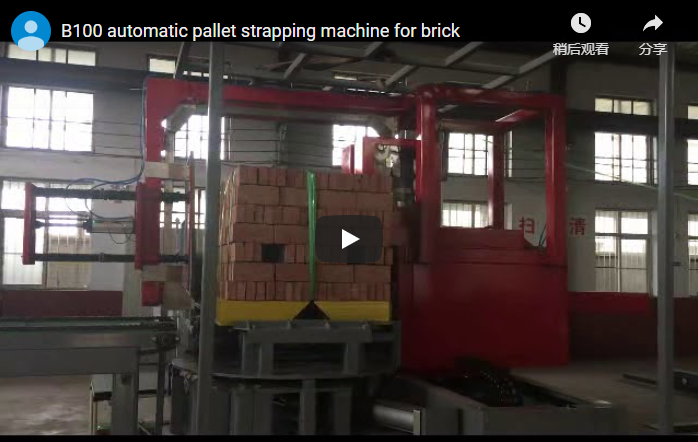
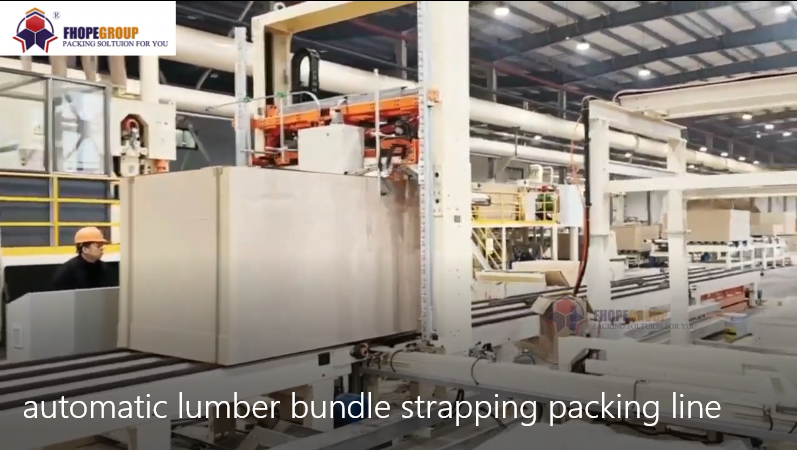
Our footage shows a pallet being strapped on an automatic machine, including a vertical strapping cycle. It is a general demonstration, so load and strap plan for your plant are confirmed with us per project.
Selection checklist
| Question | Confirm per project |
|---|---|
| Load range | footprint, height, weight |
| Strap plan | PP or PET, size, position |
| Pattern | vertical, horizontal, cross |
| Line pace | cycle fit to conveyor |
| Plc link | interface to line control |
| Electrical supply | voltage, phase and frequency on site |
Controls and safety
The strapper runs from its control panel with an emergency stop at the operator position. Guarding covers the strap head and the arch, and the operator stays clear while a cycle runs. Routine checks cover the strap feed, the tension unit, the sealing and cutting head and the sensors, per the machine manual.
Engineering FAQ
Q: What does an automatic pallet strapper do? A: It feeds strap around a palletized load, tensions, seals and cuts it automatically, every cycle.
Q: Which strap pattern should we use? A: Vertical anchors the load to the pallet runners, horizontal stabilizes column-stacked tiers, and cross suits unstable loads and long transit; per project.
Q: How is strap sealed? A: The overlapping ends are friction-weld sealed, the joint heat built by vibration, at a strong durable joint.
Q: PP or PET? A: PP suits lighter loads and budget packaging; PET holds higher retained tension for heavy or settling loads.
Q: Can it join an existing line? A: Yes, it runs from a PLC with conveyor infeed and outfeed, and patterns are recalled per product.
Next step
- Email us at info@fhopepack.com with your load sizes, strap plan and volumes.
- We send a strapping machine proposal and a layout drawing within 48 hours.
- We arrange a site survey to confirm services and line interface.
Related reading
- Automatic pallet strapping machine for brick
- B series pallet wrapping machine with top film dispenser
- Automatic pallet strapping machine from Nantong Huayang
- FHOPE packing machinery product lines
Sources and standards
- ISO 12100:2010 Safety of machinery, general principles for design and risk assessment
- EN 415-10:2014 Safety of packaging machines, general requirements
- EN ISO 13849-1:2023 Safety of machinery, safety-related parts of control systems
FHOPE automatic pallet strapping machine demonstration video. Reviewed as a general demonstration; load and strap plan confirmed per project.
Last reviewed: 2026-10-10