Executive summary Coiling, cutting and strapping in one synchronized cycle removes the hand-off where coils unwind. An automatic wire coiler and strapping machine takes wire from a spool, straightens and feeds it, winds it into a coil at a set inner and outer diameter, cuts it at the target length and straps the finished coil in the next step. Steel, stainless, copper and aluminum wire all run through it, with coil dimensions per project.
Table of Contents
- One machine, one sequence
- Pay-off and feeding
- Precision coiling
- Cutting at the target
- Strapping the coil
- Ejection and handling
- Typical configuration
- What the video shows
- Selection checklist
- Controls and safety
- Engineering FAQ
- Next step
- Related reading
- Sources and standards
One machine, one sequence
Coiling and strapping are two operations that used to mean two stands of labor. On an automatic coiler, the wire is drawn from the payoff, wound into a coil, cut at the set length and strapped in the same running sequence, so the coil leaves the machine already secured.
Pay-off and feeding
The wire starts on a spool or payoff, drawn into the machine by a feed that holds steady tension and rate. Straightening rollers take the curvature out of the wire before it coils, so a uniform coil does not start from a crooked line.
Precision coiling
The coiling mechanism winds the wire to set dimensions rather than a fixed guess. Inner diameter, outer diameter and traverse width are the plan, and the winding pattern lays neat layers so the coil holds its shape instead of flopping into a tangle.
Cutting at the target
When the coil reaches its target length or weight, an integrated cutter shears the wire cleanly. Because the cut is triggered by the product count, each coil comes off at the same size regardless of who is running it.
Strapping the coil
The coil is indexed to the strapping station, where a strap or several straps are applied around the circumference to hold the windings in place. Strap material, number and position are programmable per product. PET strapping suits finishes that mark easily; steel suits heavy coils that hold their shape without give, with the choice per project. The straps do two jobs: keep the coil’s shape for handling and stop the wire from unspooling.
Ejection and handling
The strapped coil is ejected onto a conveyor, an accumulation table or a tilting mechanism, chosen per project for how the coil leaves. The coil arrives ready for the next packing or shipment stage without an operator reaching into the machine.
Typical configuration
Figures below are common starting envelopes for this machine class and are confirmed per project.
| Parameter | Typical range, confirmed per project |
|---|---|
| Wire range | material, diameter and feed rate of your line |
| Coil plan | inner and outer diameter, traverse width, pattern |
| Cut | triggered by length or weight target |
| Strapping | PET or steel, number and position programmable, choice per project |
| Ejection | conveyor, table or tilt to suit your outfeed |
| Electrical supply | 380 V three phase 50 Hz, or 220 V single phase for light machines, selected per project to the plant supply |
What the video shows
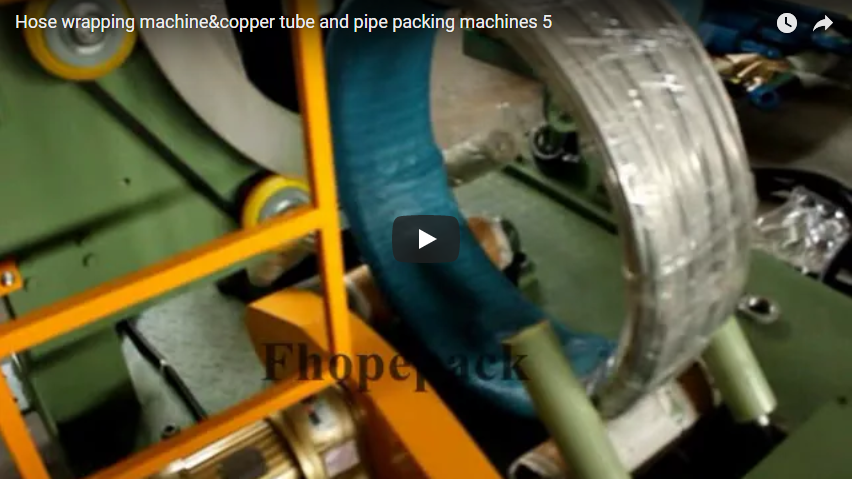
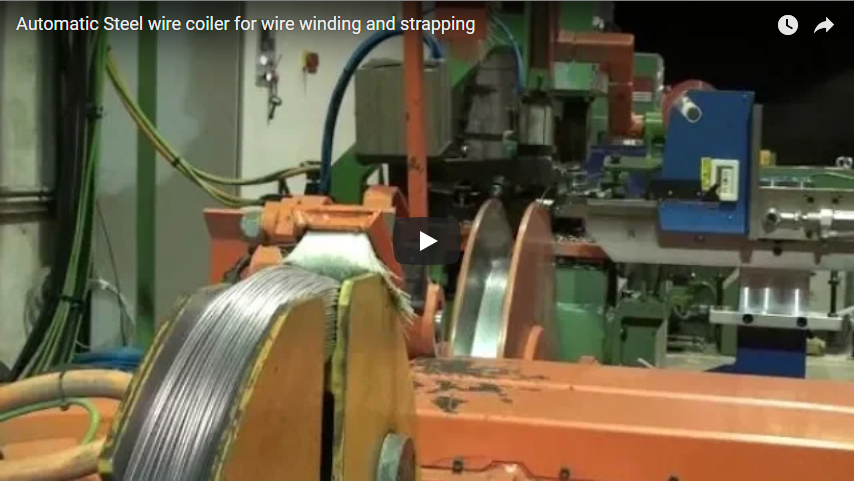
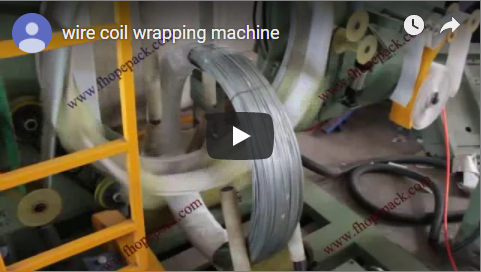
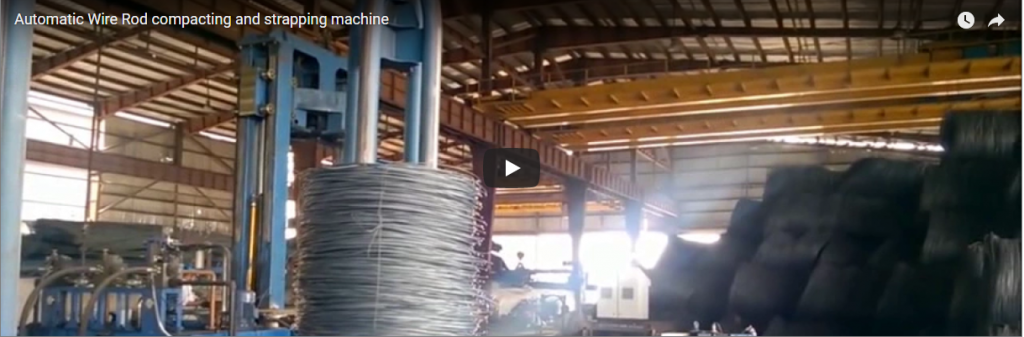
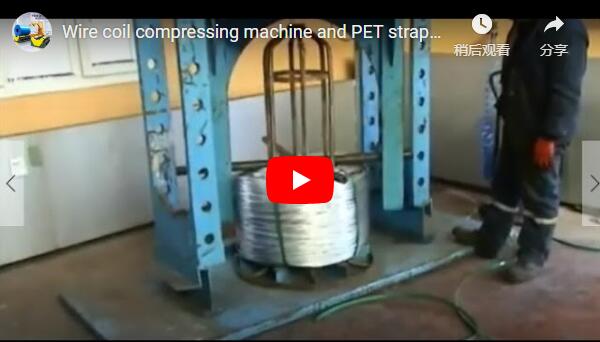
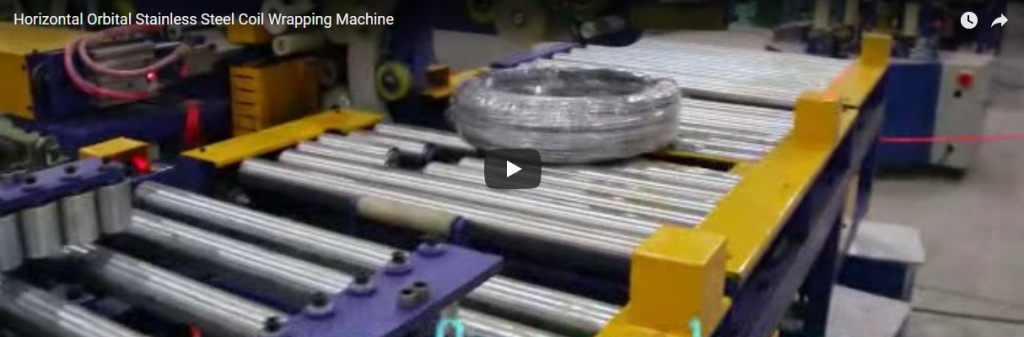
Our footage shows wire being fed, coiled and carried to a strapping station on one machine. It is a general demonstration, so wire range, coil dimensions and strapping for your product are confirmed with us per project.
Selection checklist
| Question | Confirm per project |
|---|---|
| Wire material and diameter | feed and coiler setup |
| Coil dimensions | inner and outer diameter, width |
| Cut method | length or weight trigger |
| Strap count and position | per product |
| Outfeed | ejection and handling style |
| Electrical supply | voltage, phase and frequency on site |
Controls and safety
The machine runs from a control panel with an emergency stop at the operator position and guarding around the payoff, coiling and strapping zones. Keep hands clear while the line runs. Routine checks cover the feed rollers, coiling mechanism, cutter and strap head, per the machine manual.
Engineering FAQ
Q: Can one machine handle different coil sizes? A: Yes. Coil dimensions, cut target and strap plan are set at the panel, so a size change is a stored selection rather than a rebuild.
Q: What wires does it run? A: Low and high carbon steel, stainless, copper and aluminum wire, with feed and coiling set for the material per project.
Q: How are the coils strapped? A: One or more PET or steel straps are applied around the circumference, with number and position programmable per product.
Q: Does the cut vary between coils? A: No. The cutter triggers at the set length or weight, so coils come off to the same size every run.
Q: How does the finished coil leave? A: It is ejected to a conveyor, table or tilt, ready for the next packing or shipping step.
Next step
- Email us at info@fhopepack.com with your wire range, coil sizes and volumes.
- We send a coiler-and-strapper proposal and a layout drawing within 48 hours.
- We arrange a site survey to confirm services and floor space.
Related reading
- Wire coil wrapping and packing: technology and best practices
- Coil packaging: operation and applications
- Coil stacking machine
- FHOPE packing machinery product lines
Sources and standards
- ISO 12100:2010 — Safety of machinery. General principles for design, risk assessment and risk reduction
- EN 415-10:2014 — Safety of packaging machines. General requirements
- EN ISO 13849-1:2023 — Safety of machinery. Safety-related parts of control systems
- FHOPE automatic wire coiler and strapping machine demonstration video. Reviewed as a general demonstration; wire range, coil dimensions and strapping confirmed per project.
Last reviewed: 2026-10-10