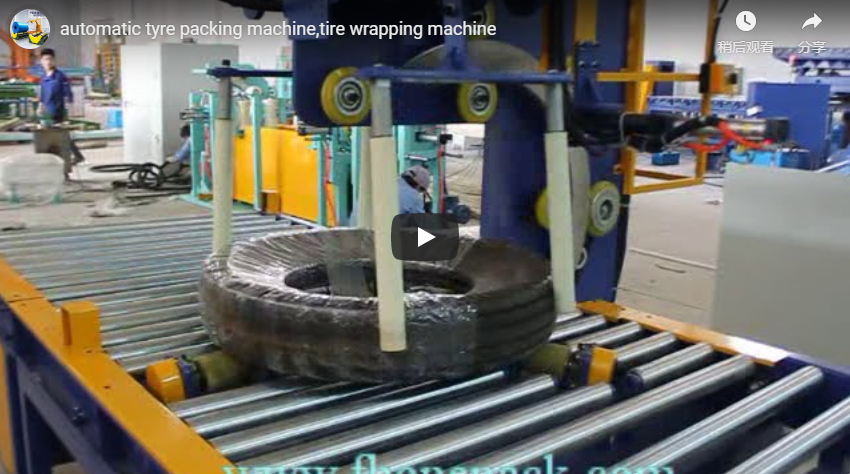
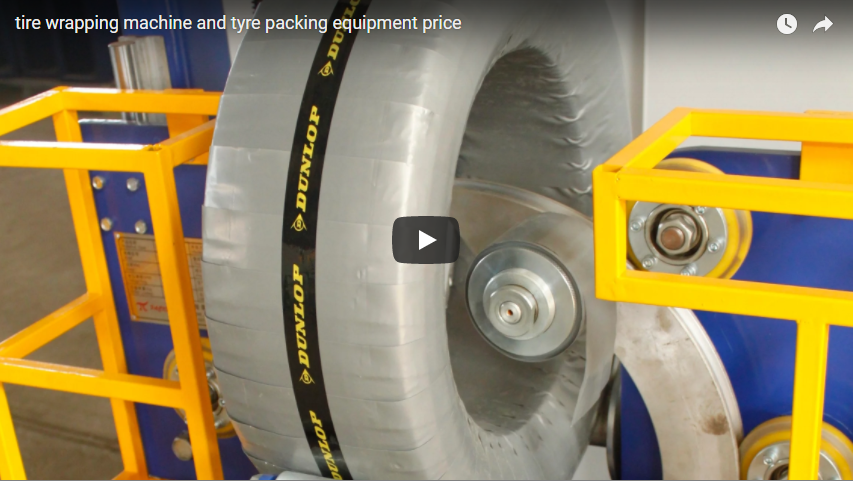
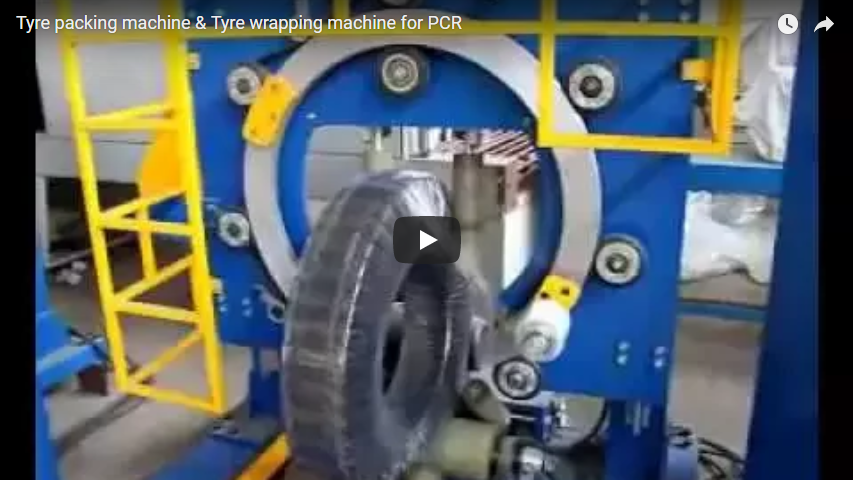
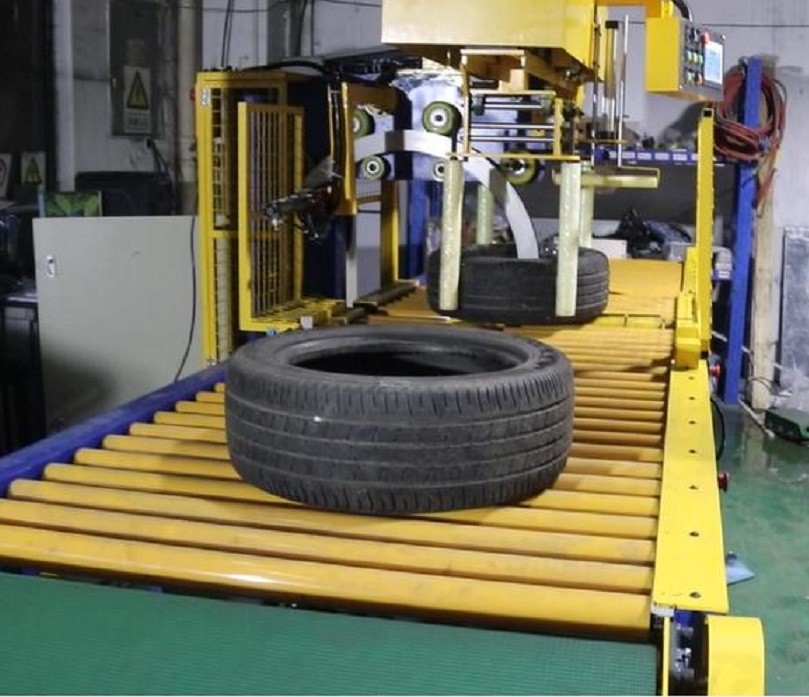
Executive summary An automatic inline tyre labelling machine applies identification and barcode labels directly to tyres moving along an automated packaging conveyor. Positioned before final horizontal stretch wrapping or vertical stacking, the system eliminates offline manual handling, maintains uniform label placement on the tread surface, and ensures digital traceability across continuous high-speed tire manufacturing lines.
Table of Contents
- How inline labelling works
- Why label inline
- Labels per hour
- What we set per tyre
- Selection checklist
- Safety
- Engineering FAQ
- Next step
- Related reading
- Sources
How inline labelling works
Inline tyre labelling integrates directly into the material handling conveyor of the tyre finishing area. In complete packaging configurations, the labelling station operates upstream of the stretch wrapping unit and downstream of the curing inspection line [manufacturer rating].
| Process stage | Engineering function | Line integration detail |
|---|---|---|
| Machine design | Frame and applicator mounting | Positioned straddling or adjacent to the belt conveyor for rigid overhead or side application |
| Infeed conveying | Controlled tyre transfer | Tyres feed onto the belt conveyor with controlled spacing from upstream manufacturing lines |
| Tyre detection | Optical sensing trigger | Industrial photoelectric sensors detect tyre presence and trigger the application stroke |
| Labelling execution | Print-and-apply sequence | High-speed applicator head applies the label precisely to the tyre tread or shoulder |
| Line transfer | Outfeed to packaging | Labelled tyres proceed directly to automated stretch wrapping or automated palletizing |
Why label inline
- No extra step. Tyres are labelled continuously on the conveyor en route to final packing, eliminating secondary staging zones.
- Right place. Pneumatic or electric tamp applicators index to consistent positions on the tyre tread or bead profile.
- Traceable. Labels carry real-time variable production data, including tyre dimension, DOT batch code, tread pattern, and 1D/2D barcodes.
- Fewer errors. Automated inline data printing and application eliminates manual placement mismatches and mix-ups between tyre batches.
Labels per hour
Line throughput depends on tyre transit speed, conveyor pitch, and applicator recovery cycle time.
Worked example [illustrative]:
| Item | Calculation | Value |
|---|---|---|
| Line target speed | Baseline production quota | 600 tyres per hour |
| Gross cycle window | 3,600 s ÷ 600 tyres | 6 s per tyre |
| Labelling execution cycle | Sensor trigger, stroke, tamp, return | 4 s per tyre |
| Conveyor buffer margin | 6 s − 4 s | 2 s spare window per tyre |
At a production rate of 600 tyres per hour, a 4-second mechanical labelling cycle leaves a 2-second buffer per pitch, ensuring line stability without tyre accumulation.
What we set per tyre
Applicator and line settings are configured according to the mechanical profile of the tyre and packaging requirements:
| Setting | Engineering parameter | Dependent line variables |
|---|---|---|
| Head position | Vertical height and stroke depth | Tyre outer diameter, section width, and target label coordinate |
| Label media | Print thermal transfer ribbon and stock | Label dimensions, adhesive grade for rubber compounds, and printer engine |
| Sensor timing | Infeed trigger delay and debounce | Optical detection profile and conveyor speed |
| Conveyor drive | Belt transit velocity | Line speed synchronization and pitch management |
Selection checklist
Ensure your engineering team verifies the following mechanical and electrical parameters prior to integration:
- Tyre profile envelope: Outer diameter (OD), section width, inner bead diameter (ID), and net weight. (Tyre packaging family reference range: OD 600–1400 mm, ID 300–900 mm, width 150–350 mm, weight 10–100 kg [manufacturer rating]).
- Label specifications: Label material, rubber-grade adhesive performance, dimensions, and target placement spot.
- Data architecture: Dynamic print requirements (serial number, DOT date, barcode format, ERP/MES interface).
- Target line throughput: Required tyres per hour and line pitch spacing.
- Conveyor layout: Belt width, operating line height, travel direction, and upstream/downstream spacing.
- Verification hardware: Integrated barcode verification scanner or vision confirmation sensor required or not.
Safety
- Keep hands clear: Operators must keep clear of the vertical applicator stroke and labelling head envelope during automatic cycling.
- Lockout before maintenance: Disconnect and lock out pneumatic and electrical energy before servicing ribbons, labels, or printheads.
- Conveyor guarding: Keep loose clothing and sleeves away from infeed and discharge pinch points along the belt conveyor.
- Harmonized standards: For CE machinery compliance, structural guarding and risk mitigation adhere to ISO 12100:2010 and packaging machinery safety standards under EN 415-10:2014.
Engineering FAQ
Q: What does the machine do? A: It applies self-adhesive identification and tracking labels directly to each tyre as it travels along the conveyor belt in an automated production line.
Q: Why label inline? A: Inline labeling merges product identification into the primary material flow en route to packaging, eliminating manual transfer steps and reducing human handling errors.
Q: How fast does the machine cycle? A: In our baseline worked example [illustrative], the system handles 600 tyres per hour based on a 4 s labelling cycle, leaving a 2 s spare buffer between consecutive tyres.
Q: Can the labelling head print dynamic batch data? A: Yes, an integrated industrial thermal-transfer printer engine prints variable production data, tyre sizes, batch numbers, and high-contrast barcodes immediately prior to tamp application.
Q: Does it fit into an existing packing conveyor line? A: Yes. The applicator frame, stroke length, and optical sensors are configured to match existing conveyor bed heights, belt speeds, and target tyre dimensions. In complete automated lines, it interfaces directly before wrapping and stacking equipment [manufacturer rating].
Q: Which technical standards apply? A: Machine design and functional safety follow ISO 12100:2010 for general risk assessment and EN 415-10:2014 for automated packaging machines.
Next step
To size an inline tyre labelling machine for your packaging line:
- Submit your layout drawing including tyre size envelope (OD, width, weight), label dimensions, print data interface, and target throughput (tyres per hour) to info@fhopepack.com.
- Receive a formal proposal within 48 hours containing applicator specifications, conveyor integration drawings, and layout schematics.
- Book a technical site survey to confirm conveyor mounting dimensions, line speeds, and pneumatic connection points.
Related reading
- Automatic Tire Packaging Line
- Automatic Horizontal Tyre Stretch Wrapper
- Tyre Packing Machine PCR/TBR Wrapping
- Pallet Wrapping and Strapping Machine, M Type
- Carton Sealer with Side Belts
- Automatic Packing Line Solutions
Sources
- Machine engineering specifications: FHOPE Packaging Engineering Team, technical review 2026-10-10
- Packaging line integration data: Automatic Tire Packaging Line and Horizontal Tyre Stretch Wrapper systems [manufacturer rating]
- Throughput sizing: Worked engineering cycle calculations [illustrative values]
- International safety standards: ISO 12100:2010 (Safety of machinery — General principles for design — Risk assessment and risk reduction); EN 415-10:2014 (Safety of packaging machines — General requirements)
- Proposal turn-around: Standard corporate commercial guarantee (technical proposal within 48 hours)
Last updated: 2026-10-29