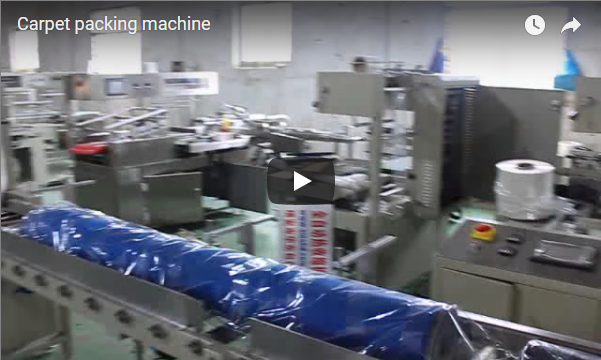
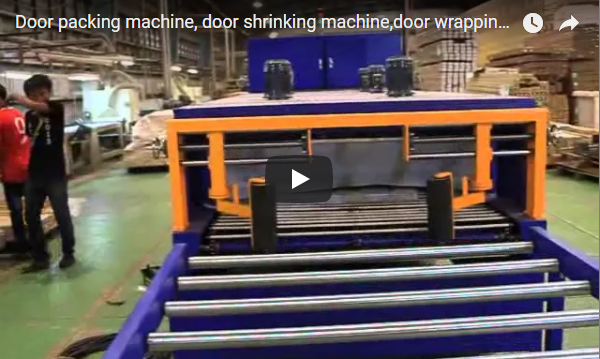
Executive summary Blocks and compounds packed by hand in loose film arrive dusty and look different every time. Our shrink wrapping machine in this video wraps a brown block in clear film on the conveyor, seals it and carries it through an orange heat tunnel, where the film shrinks tight. Film width and tunnel time follow from the product size and the conveyor speed. We set both per project.
Table of Contents
- What the video shows
- How the shrink wrap cycle works
- Film width and tunnel dwell time
- What to tell us about your products
- Controls and safety
- Selection checklist for a shrink wrapping machine
- Engineering FAQ
- Next step
- Related reading
- Sources
What the video shows
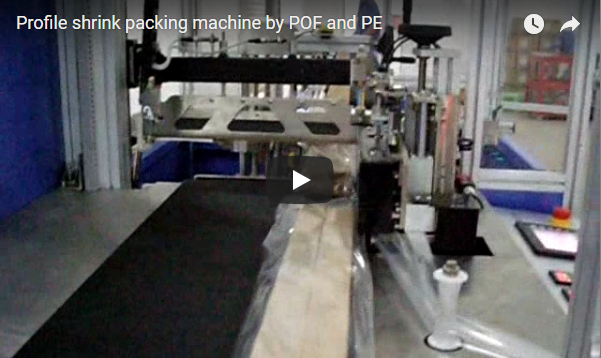
A brown rectangular block lies on the green conveyor of our white and orange machine. Clear film from the reel wraps around the block and is sealed as the conveyor advances.
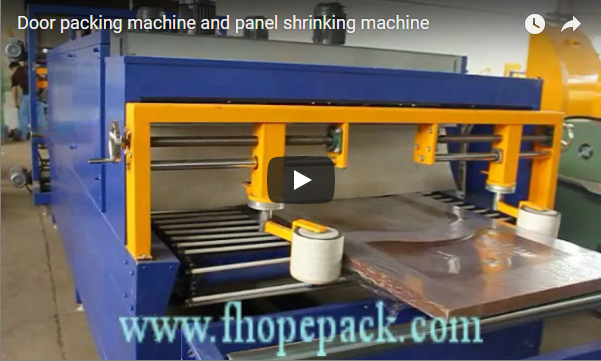
The wrapped block runs into the orange perforated heat tunnel, and the film tightens round it. The control panel above the conveyor has a small screen, two digital readouts, indicator lamps and a red emergency stop. At the exit a worker stacks the finished blocks and holds one up to show the tight film.
How the shrink wrap cycle works
| Step | What happens |
|---|---|
| Infeed | The product lies on the conveyor |
| Wrap | Film from the reel goes round it |
| Seal | The film is sealed as the product moves |
| Shrink | The heat tunnel shrinks the film tight |
| Exit | The packed product is stacked |
Sealing first and shrinking second gives a closed pack with no loose film to catch dust or tear.
Film width and tunnel dwell time
Illustrative example:
| Item | Value |
|---|---|
| Product size (illustrative) | 150 × 100 × 50 mm |
| Film width round the product, 2 × (100 + 50) + 30 overlap | 330 mm |
| Time in heat | Heated length ÷ conveyor speed |
We set film and heat on trial with your products, so the film shrinks fully without marking them.
What to tell us about your products
| Item | Why it matters |
|---|---|
| Length, width and height | Sets film width and sealer size |
| Weight | Sets the conveyor |
| Heat sensitivity | Sets the tunnel temperature |
| Products per minute | Sets the conveyor speed |
Send us samples, and we run them on trial before we confirm the film and heat settings.
Controls and safety
The sealer and the heat tunnel are hot, and the conveyor carries products through them. Keep hands out of the sealer and tunnel while the machine runs, and clear a jam only when it has stopped and cooled.
The standards that apply depend on the destination market. For CE markets, ISO 12100 sets the risk-assessment method and EN 415-10 sets general requirements for packaging machines.
Selection checklist for a shrink wrapping machine
- Product length, width and height range.
- Product weight and heat sensitivity.
- Film type and thickness.
- Products per minute.
- Infeed and outfeed method.
- Floor space and power supply.
Engineering FAQ
Q: What film does the machine use? A: POF shrink film from a reel, sealed round the product.
Q: How wide should the film be? A: Twice the width plus height, plus the seal overlap: 330 mm for a 150 × 100 × 50 mm block in our example.
Q: How long is the product in the heat? A: Heated length divided by conveyor speed; film and heat are then set on trial with your products.
Q: Is the tunnel enclosed? A: Yes. The heat tunnel has an orange perforated casing.
Q: How are jams cleared safely? A: Only after the machine has stopped and the sealer and tunnel have cooled.
Q: Can products be tested first? A: Yes. We run your samples on trial before confirming film and heat.
Next step
We plan your shrink wrapping machine in three steps:
- Submit your layout drawing with product sizes, weights and output to info@fhopepack.com.
- Receive a proposal within 48 hours, with the film and heat plan.
- Book a site survey to check infeed, outfeed and floor space.
Related reading
- Flow wrapping and shrinking machine
- Video: automatic bagging machine for tube and pipe
- Video: carpet roll shrinking machine
Sources
- Machine content: FHOPE engineering team, 2026-10-04
- Film and heat example: our worked example, illustrative values
- Machine in action: our video on YouTube
- Standards scope: ISO 12100:2010, EN 415-10:2014
Last reviewed: 2026-10-04