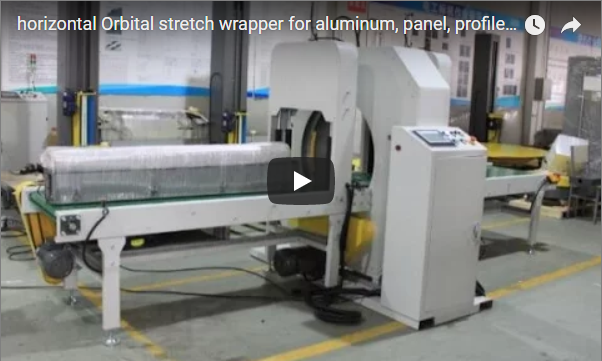
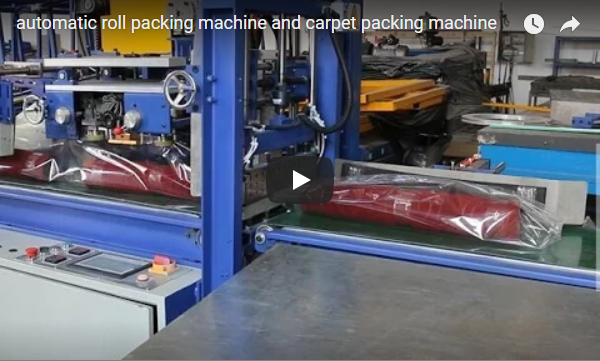
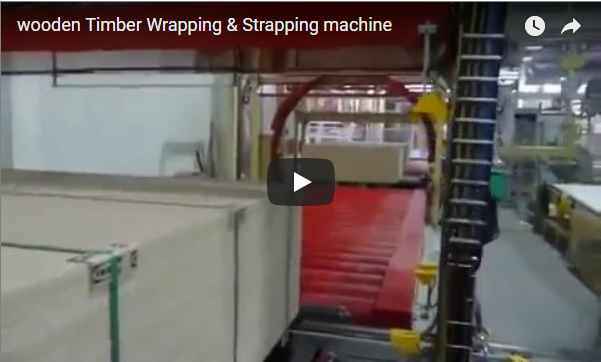
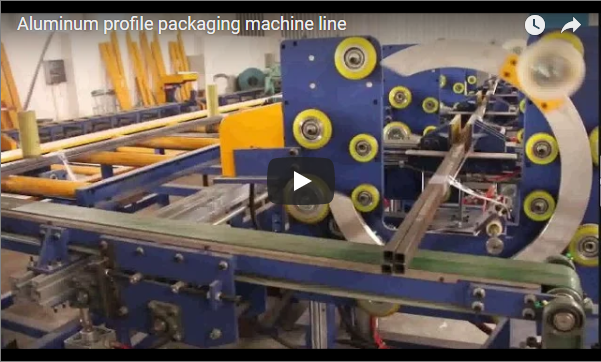
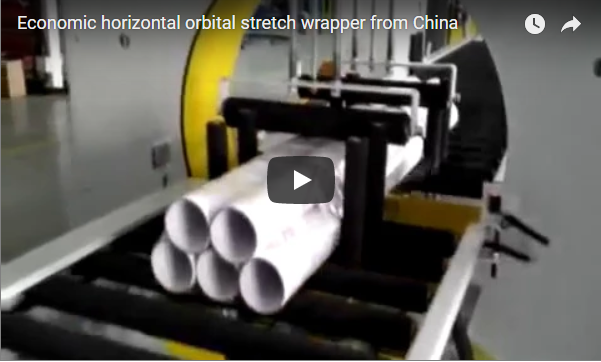
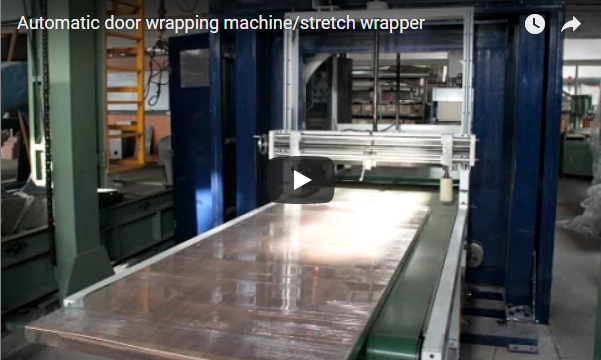
Executive summary Our automatic panel wrapping machine spirals stretch film around EPS panels, sandwich panels and boards as they pass through a rotating ring on a conveyor. It handles packages 1000–1500 mm wide, 300–1400 mm high and 2000–3000 mm long at a 20–50 r/min ring speed. It runs online with a panel line or offline. This guide covers the process, specifications, ring sizing, film setup and wrap time.
Table of Contents
- Wrapping process
- Specifications
- Ring sizing
- Film setup
- Wrap time
- Surface protection
- Line integration
- Selection checklist
- Engineering FAQ
- Next step
- Related reading
- Sources
How we wrap an EPS or sandwich panel, step by step
We built the machine in this 217 s video for EPS and sandwich panels. Each step below adds the setting behind it:
- 0–48 s, infeed. The panel enters on the motor-driven infeed conveyor under the press rollers, with side guides centring it on the ring axis. On our EPS machine a belt conveyor protects the panel face, and a sensor detects the panel before the wrap starts.
- 48–104 s, film start. Our operator draws the film tail from the roll and leads it over the panel front at the infeed, where the press rollers hold it in place.
- 104–200 s, spiral wrapping. The conveyor carries the panel through the turning ring. The ratio of ring speed to conveyor speed sets the overlap, adjustable from 20% to 90%; inverters drive both, so overlap is a setting on the HMI. Guide rollers hold the panel straight for its full length.
- 200–217 s, finished panel. The wrapped panel is stood upright, covered along its full length.
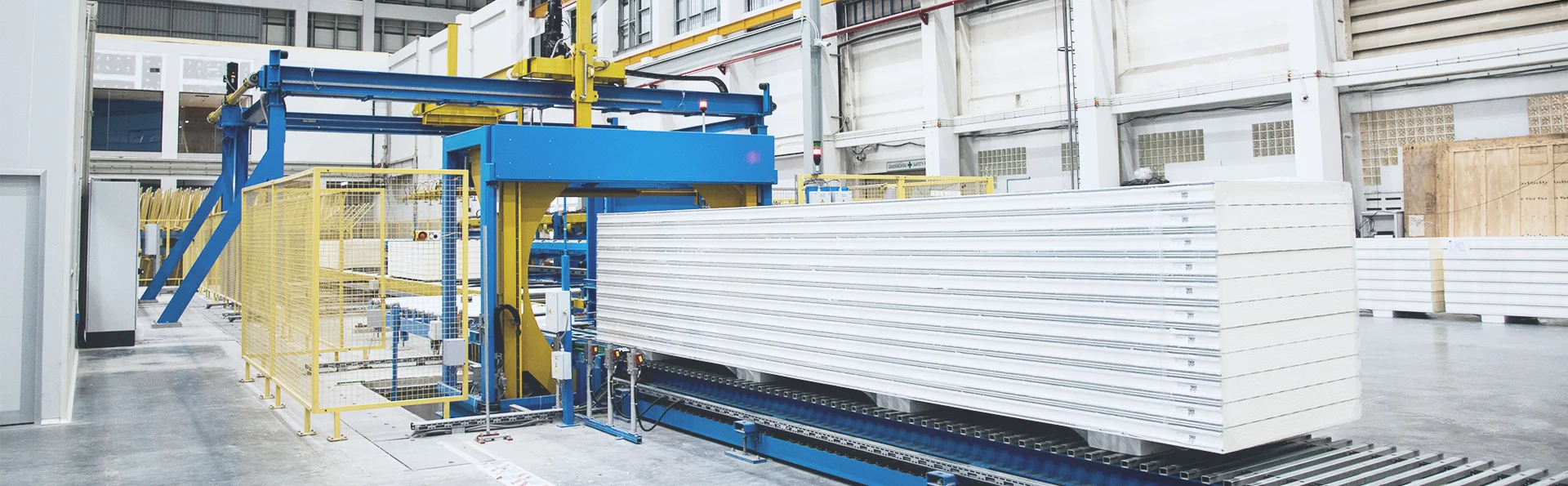
The panel never turns. Long, flat panels stay supported on the conveyor for the whole cycle, which protects edges and faces.
Panel wrapping machine specifications
Values from our panel horizontal orbital wrapping machine:
| Parameter | Value |
|---|---|
| Package width | 1000–1500 mm |
| Package height | 300–1400 mm |
| Package length | 2000–3000 mm |
| Ring speed | 20–50 r/min, adjusted by inverter |
| Overlap | 20–90% adjustable |
| Power | about 10.5 kW |
| Supply | 380 V, 3 PH, 50 Hz (changeable) |
Our EPS packing machine is a separate, lighter machine for EPS panels, with its own size range:
| EPS variant | Value |
|---|---|
| Object size | W 1000–1250 mm, H 600–1200 mm, L over 2000 mm |
| Infeed / outfeed conveyor | 3000 mm each, motor driven |
| Ring speed | 20–60 r/min |
| Power / weight | about 3.5 kW / about 1850 kg |
| Film | width 200–250 mm, OD 100–200 mm, ID 76 mm |
The two machines have different length ranges: the panel machine is specified for 2000–3000 mm packages, the EPS machine for panels over 2000 mm. | Panel holding | two press-down devices and left/right side protection |
Ring sizing for panel stacks
The ring must clear the diagonal of the package cross-section plus the film carriage. Work it out like this:
- Diagonal = √(W² + H²). The largest standard package, 1500 × 1400 mm, has a 2052 mm diagonal.
- Our design rule from a board-stack project: a W 1.2 × H 1.5 m stack, 1921 mm diagonal, needed a ring OD above 2300 mm. That figure is the ring outer diameter. We build each wrapper to order, so the same model can carry different parameters from one project to the next.
- Stack height: stacking panels raises H quickly. Size the ring for the tallest stack you ship, not a single panel.
Stretch film setup for EPS and sandwich panels
The panel machine runs a standard film format:
| Film parameter | Panel machine |
|---|---|
| Film type | Stretch film / polyethylene |
| Thickness | 20–40 µm |
| Width | 300–500 mm |
| Roll OD | 100–180 mm |
| Core ID | 76 mm |
Selection rules we apply:
- EPS panels: soft faces dent under high tension. Run lower tension and film from the thin end of the 20–40 µm range, with more overlap rather than more force.
- Sandwich panels with steel faces: sharp edges cut thin film. Use film from the thick end of the range and add edge protection before wrapping.
- Film width: wider film cuts wrap time; narrower film follows short packages more closely.
Wrap time per panel package
Wrap time follows from film width, overlap and ring speed:
- Pitch per ring turn = film width × (1 − overlap). 500 mm film at 50% overlap gives a 250 mm pitch.
- Ring turns = package length ÷ pitch. A 3000 mm package needs 12 turns.
- Wrap time = turns ÷ ring speed. At 20–50 r/min that is 36 s down to 14.4 s of spiral wrapping, before head and tail wraps.
On the EPS variant, 250 mm film at 50% overlap gives a 125 mm pitch. A 3000 mm panel needs 24 turns, which is 24 s at 60 r/min. Add head and tail wraps, the film cut and the infeed and discharge transfer for the full cycle.
Surface protection and panel holding
Light EPS panels move under film tension unless they are held. Our machines fix the package in three ways:
- Press-down devices with soft contact material hold the stack from above, so the top face is not marked.
- Side guides and supporting rollers keep the package centred and straight through the ring.
- Belt conveyors on the EPS variant protect the product surface where rollers would mark it.
Line integration, installation and delivery
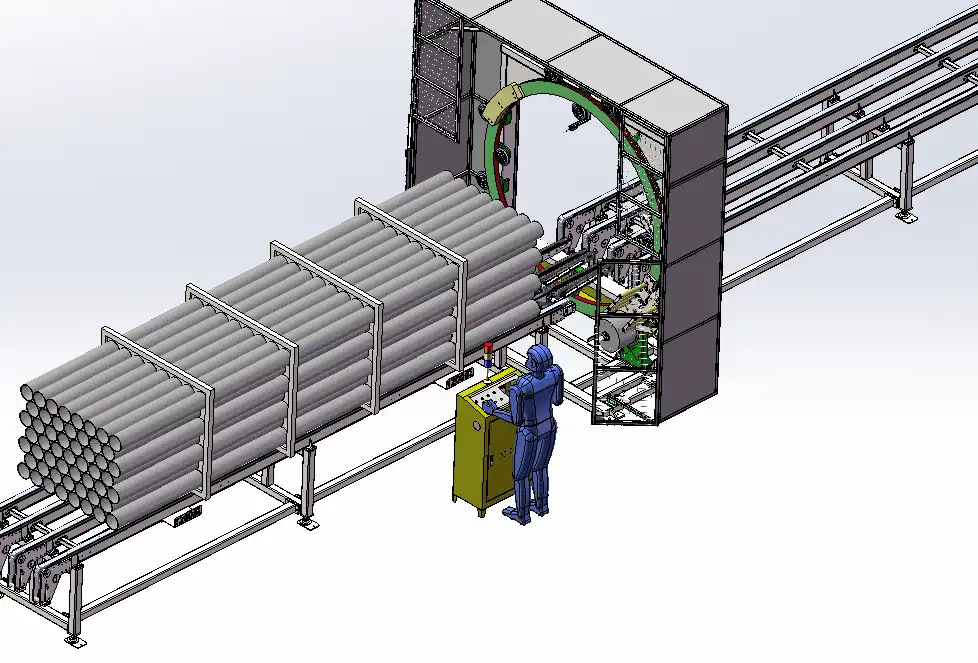
The machine works online behind a panel line or offline as a standalone station:
- Controls: PLC and HMI with automatic programs, connectable to the production line. Manual and automatic modes for changeovers.
- Conveyor height: we match the infeed height to your line at the connection point and fix it on the layout drawing.
- Positioning: photo-sensors detect the package and set the wrapping position.
- Safety: light beam, emergency stop, safety enclosures and warning signals. Alarms trigger automatically when a fault occurs.
- Lead time: standard horizontal wrappers ship in about 45 days, customised machines in about 60 days.
ISO 12100 sets the risk-assessment method and EN 415-10 the general packaging machine requirements. Which standards apply depends on the destination market.
Selection checklist for a panel wrapping machine
Send these values with your request:
- Panel type (EPS, sandwich, wood) and face material.
- Package width, height and length, including stack height.
- Panels or packages per hour.
- Online with a panel line or offline; conveyor height at the connection point.
- Film thickness and width; edge protection needs.
- Supply voltage and frequency.
Engineering FAQ
Q: Which panel sizes does the machine take? A: Packages 1000–1500 mm wide, 300–1400 mm high and 2000–3000 mm long. Our EPS variant takes W 1000–1250 mm, H 600–1200 mm and lengths over 2000 mm.
Q: How long does one panel package take to wrap? A: A 3000 mm package with 500 mm film at 50% overlap needs 12 ring turns. That is 14.4–36 s at 20–50 r/min, plus transfer time.
Q: How do I stop EPS panels from being crushed? A: Lower the film tension and use film from the thin end of the 20–40 µm range, with more overlap. Hold the stack with soft press-down devices instead of film force.
Q: What ring size do I need for stacked panels? A: Take the cross-section diagonal √(W² + H²) and add carriage clearance. On a W 1.2 × H 1.5 m stack, our ring OD was above 2300 mm.
Q: Can the wrapper connect to our panel production line? A: Yes. PLC and HMI control connects to the line, and we match the infeed conveyor to your line height on the layout drawing. Standard machines ship in about 45 days.
Next step
Get a panel wrapping configuration for your line:
- Submit your layout drawing with panel type, package sizes, stack height and output per hour to info@fhopepack.com.
- Receive a machine proposal within 48 hours, with ring size, conveyor layout, film setup and a wrap-time check.
- Book a site survey to connect the wrapper to your panel line.
Related reading
- Panel horizontal orbital wrapping machine
- EPS packing machine and EPS board wrapping machine
- Video: sandwich panel wrapping machine and packing machine
- Video: orbital wrapping for extra long panels
- Video: fibre panel packing machine
Sources
- Package size, ring speed, overlap, power, supply, film, controls, safety: panel horizontal orbital wrapping machine page
- EPS variant object size, conveyors, ring speed, power, weight, film, holding devices: EPS packing machine page
- Ring OD rule, lead time: FHOPE internal engineering data
- Ring outer-diameter basis and custom parameters per project: FHOPE engineering confirmation, 2026-10-03
- EPS and sandwich panel application, online or offline use: our video on YouTube, 217 s, and its description
- Standards scope: ISO 12100:2010, EN 415-10:2014
Last reviewed: 2026-10-03