Executive summary
Flexible gas rubber tubes have to be coiled and secured before transport or assembly, and the tension in both jobs decides whether the coil holds. This machine automates gas pipe coiling and banding: a precisely driven coiling unit forms the tube into neat coils while dancers and accumulators manage slack, and banding secures each coil. We build gas pipe coiling and banding machines for gas piping and appliance producers. Tube range and coil spec are confirmed per project.
Table of Contents
- Why gas pipe is coiled in machine
- What the machine does
- The coiling unit
- Slack and tension management
- Banding the coil
- Consistency across the shift
- Typical configuration
- What the video shows
- Selection checklist
- Operation and safety
- Engineering FAQ
- Next step
- Related reading
- Sources and standards
Why gas pipe is coiled in machine
Flexible gas rubber tubes are long and pliable, and they have to be coiled and secured before they travel or go into assembly. Manual coiling is labor-intensive and inconsistent, and a loosely coiled gas pipe is a handling risk on the floor.
Gas piping and appliance sectors need the coil consistent and the tube protected, so the coiling and banding work stays repeatable. Automating the job delivers the consistency that hand winding cannot, and the tube range is confirmed per project.
What the machine does
The machine automates the two-step end of the line: it coils flexible gas tubes into neat coils of predetermined diameters, then bands each coil to hold it for the next handling. Coiling forms the tube, and banding secures what coiling made, so the tube leaves as a stable coil. Both steps run on the machine in sequence, without a hand pass that relaxes or roughens the tube. The covered steps are confirmed per project on the real tube range.
The coiling unit
The coiling unit forms the tube into coils, driven by precisely controlled servo motors or variable frequency drives. Precise drive control is what makes the coil diameter repeatable, rather than a coil that grows or shrinks with the operator’s hand. The drive speed and the coil diameter it produces are set on the controller, so each coil comes out the same. The coiling drive and diameter are confirmed per project on the actual tube.
Slack and tension management
The machine uses dancers or accumulators to manage slack and keep the tension consistent as the tube feeds and coils. A gas tube that feeds slack can tangle or coil unevenly, and one under tension can be marked or stretched; the dancer and accumulator balance both. Managing slack is what lets a flexible tube coil neatly without fighting itself. The tension elements follow the tube and the feed, confirmed per project.
Banding the coil
After coiling, the machine bands the coil so it holds together in transport, storage or assembly. Banding draws the coil closed and keeps the tube from springing out, turning a neat coil into a stable unit. The band tension and positions follow the coil, tight enough to hold the tube and not so tight as to constrict it, confirmed per project. A banded coil is the package that moves.
Consistency across the shift
The machine keeps coil quality the same at the start of the shift and at the end, where manual work drifts. Consistency is the reason automation pays on gas pipe: the same diameter, tension and band on every coil, every run. Predictable coils are easier to store, stack and feed to assembly, and the machine holds that steadiness without an operator adjusting by feel. Consistency requirements are confirmed per project against the coil standard.
Typical configuration
Figures below list functional design boundaries rather than numeric values, and are confirmed per project.
| Parameter | Typical range, confirmed per project |
|---|---|
| Tube | gas rubber range |
| Coil | diameter, drive |
| Tension | dancer, accumulator |
| Band | positions, tension |
| Output | transport or assembly |
| Electrical supply | 380 V three phase 50 Hz, or 220 V single phase for light machines, selected per project |
What the video shows
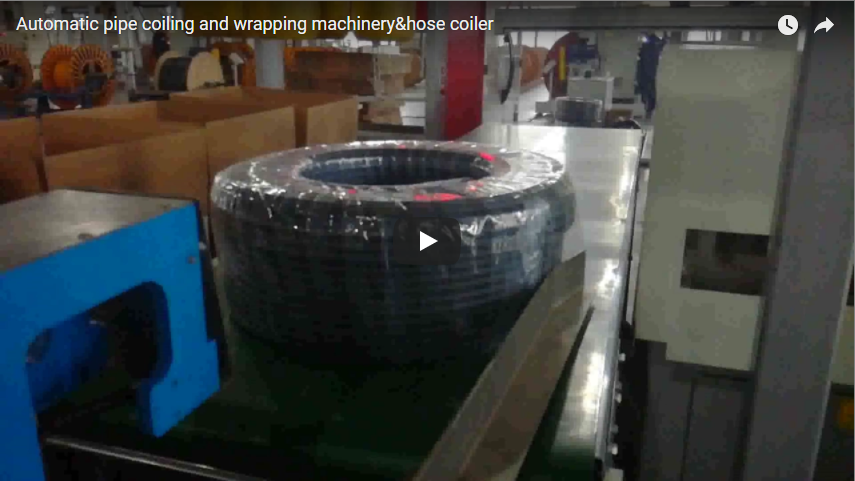
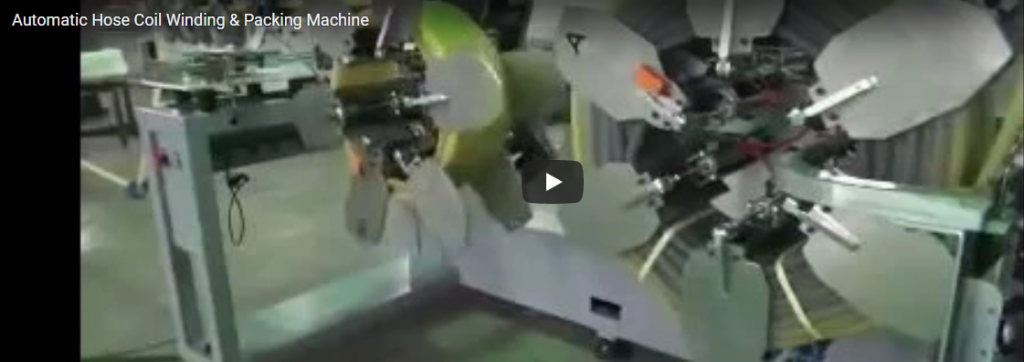
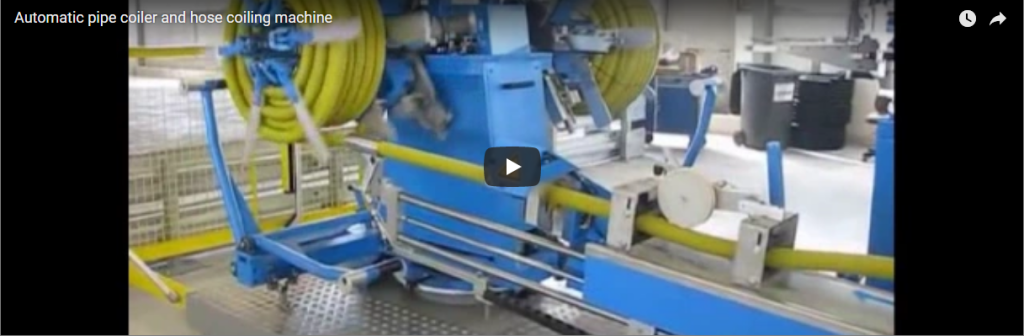
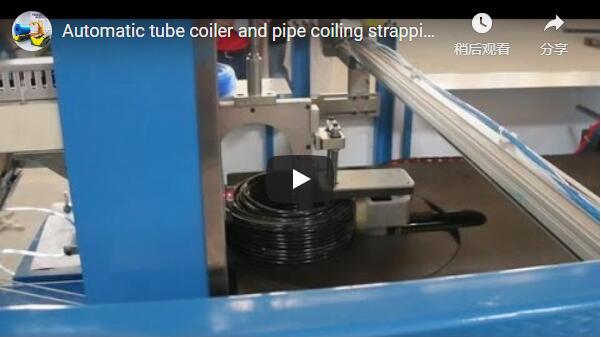
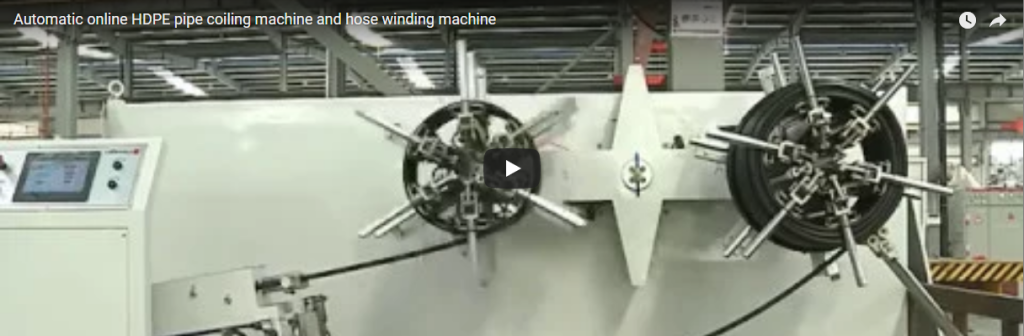
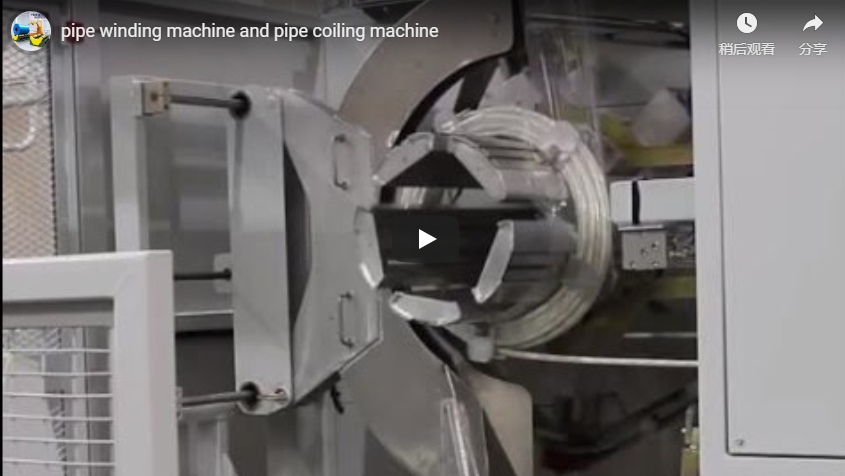
Our footage shows an automatic gas pipe coiling and banding machine forming and banding coils. It is a general demonstration, so your tube range and coil spec are confirmed with us per project.
Selection checklist
| Question | Confirm per project |
|---|---|
| Tube range | gas rubber sizes |
| Coil | diameter |
| Tension | dancer, accumulator |
| Band | hold positions |
| Output | transport or assembly |
| Electrical supply | voltage, phase and frequency on site |
Operation and safety
Run the recipe from the panel and the machine coils, manages tension and bands each tube length automatically. Keep clear of the coiling unit, dancer and accumulator, banding head and outfeed while the machine runs, with guarding and emergency stops at the operator position. Routine checks cover the coiling drives, dancers, banding unit, sensors and control, per the machine manual. Confirm the coil settings against the tube before each run so coils come out consistent.
Engineering FAQ
Q: What does this machine do? A: It coils flexible gas rubber tubes and bands each coil to hold it.
Q: Why servo or VFD drives? A: Precise drive control makes the coil diameter repeatable on every coil.
Q: What are dancers and accumulators? A: They manage slack and keep tension consistent as the tube feeds and coils.
Q: Why band the coil? A: Banding holds the coil together for transport, storage or assembly.
Q: How is consistency kept? A: The machine repeats the same diameter, tension and band across the whole shift.
Next step
- Email us at info@fhopepack.com with your tube range, coils and volumes.
- We send a gas pipe coiling proposal and a layout drawing within 48 hours.
- We arrange a site survey to confirm tube range and line flow.
Related reading
- Automatic hose coiling and strapping machine for hoses
- Automatic pipe coiler and strapping machine
- Rubber hose coiling machine
- FHOPE packing machinery product lines
Sources and standards
- ISO 12100:2010 Safety of machinery, general principles for design and risk assessment
- EN 415-10:2014 Safety of packaging machines, general requirements
- EN ISO 13849-1:2023 Safety of machinery, safety-related parts of control systems
FHOPE gas pipe coiling and banding machine demonstration video. Reviewed as a general demonstration; tube range confirmed per project.
Last reviewed: 2026-10-10