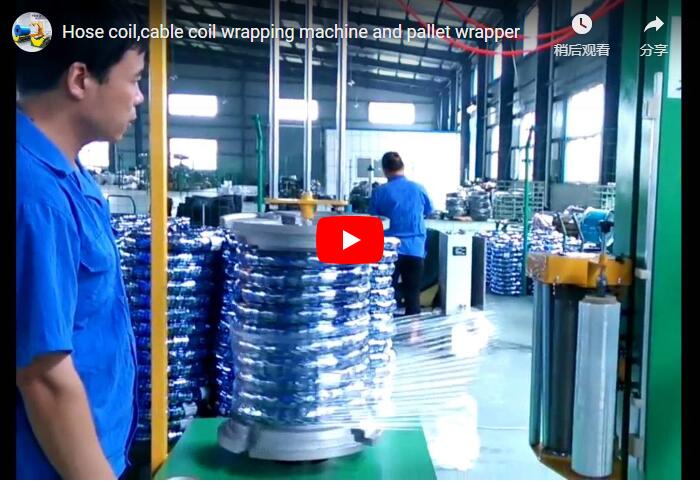
Executive summary A full film wrap keeps tyres clean and stops tread and sidewall marking in storage and transport. Our machine in this video clamps a tyre on its support and wraps film through the bead and round the tread and sidewalls under a press arm. Film per tyre follows from the wraps round the tyre times the section perimeter.
Table of Contents
- What the video shows
- How a tyre is wrapped
- Film per tyre
- Controls and safety
- Selection checklist for a tyre wrapping machine
- Engineering FAQ
- Next step
- Related reading
- Sources
What the video shows
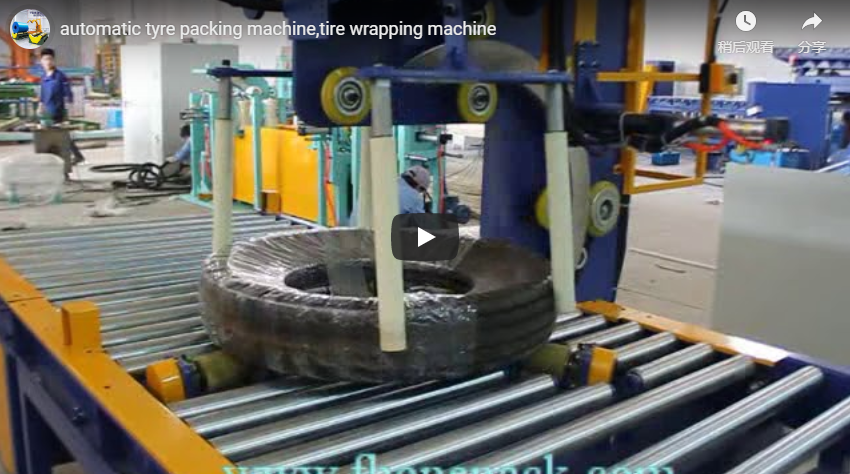
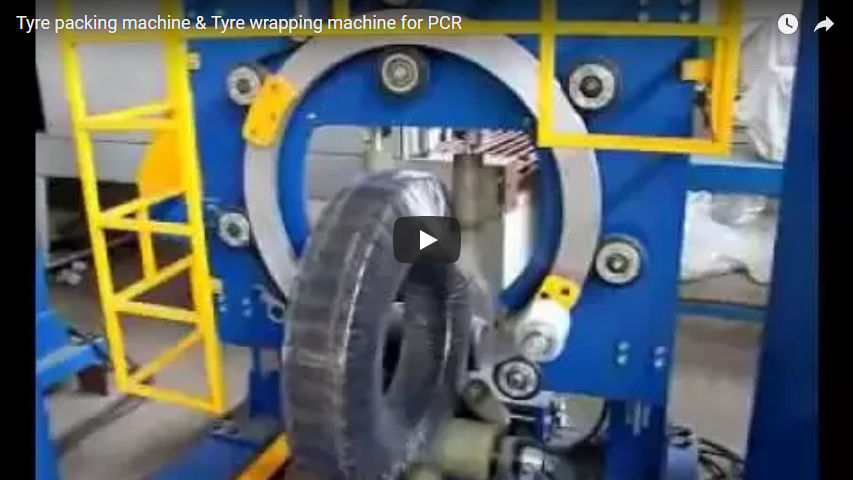
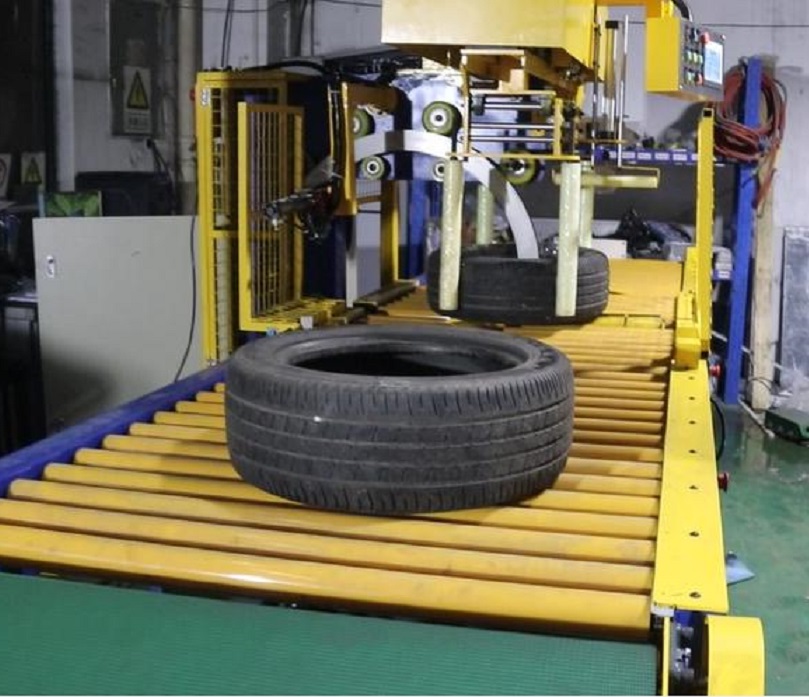
The operator sets a tyre on the centre support of the blue-framed machine and lines it up. Clamp arms rise from below and lock the tyre in place.
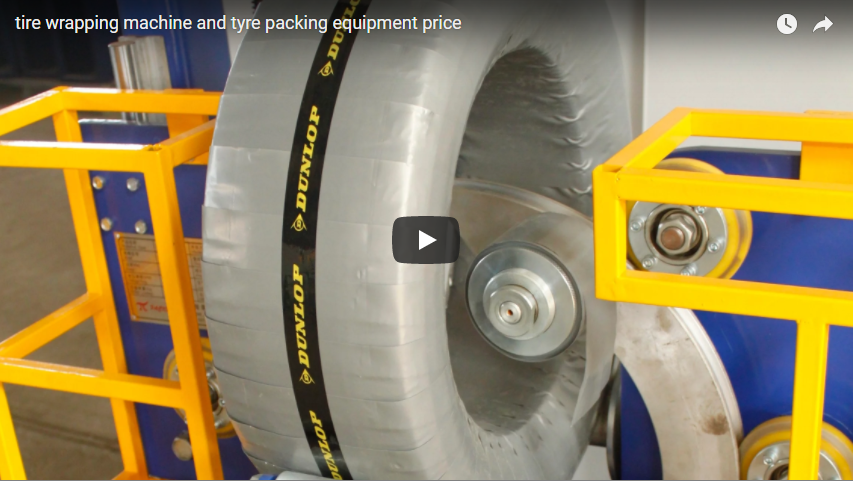
Film is drawn from the roll over guide rollers to the tyre, and the press arm comes down onto it. The film is then carried round the tyre and laid on in overlapping wraps over the tread and both sidewalls.
At the end the arm returns and the wrapped tyre waits on the support to be lifted off by hand. A blue control cabinet on the right has a screen, buttons and a covered red emergency stop, with yellow rails on the frame.
How a tyre is wrapped
Times are read from the video timestamps.
| Step | What happens | Video time |
|---|---|---|
| Load | The operator sets the tyre on the support | about 0–8 s |
| Clamp | Clamp arms lock the tyre | about 8–12 s |
| Film start | Film is led from the roll to the tyre | about 16–20 s |
| Wrap | Film is laid round the tyre with the press arm down | about 20–44 s |
| Finish | The arm returns; the tyre waits for unloading | about 44–56 s |
Short gaps between the times are moves between steps. Loading and unloading are by hand here, so the operator’s time is part of each cycle.
Film per tyre
Illustrative example:
| Item | Value |
|---|---|
| Outer and bead diameter (illustrative) | 650 and 400 mm |
| Section width (illustrative) | 200 mm |
| Section height, (650 − 400) ÷ 2 | 125 mm |
| Section perimeter, 2 × (125 + 200) | 650 mm |
| Mean circumference, π × 0.525 m | about 1.65 m |
| Advance per wrap (illustrative) | 50 mm |
| Wraps, 1,650 ÷ 50 | 33 |
| Film laid, 33 × 0.65 m | about 21.5 m |
A smaller advance per wrap gives more overlap and more film per tyre.
Controls and safety
The press arm moves round the tyre and the clamps close with force. Load and unload the tyre only with the machine stopped, keep hands clear of the arm while it runs, and use the covered emergency stop on the cabinet if needed.
The standards that apply depend on the destination market. For CE markets, ISO 12100 sets the risk-assessment method and EN 415-10 sets general requirements for packaging machines.
Selection checklist for a tyre wrapping machine
- Tyre outer and bead diameter and width range.
- Heaviest tyre.
- Film type and overlap.
- Manual or conveyor loading.
- Tyres per shift.
- Labelling after wrapping.
Engineering FAQ
Q: What does the machine do? A: It clamps a tyre and wraps film through the bead and round the tread and sidewalls.
Q: How much film does a tyre take? A: Wraps times section perimeter: 33 × 0.65 m gives about 21.5 m in our example.
Q: How many wraps go round a tyre? A: Mean circumference divided by advance per wrap: 1,650 ÷ 50 mm gives 33.
Q: How is the tyre loaded? A: By hand in this video; conveyors can be added for a line.
Q: Can it take my tyre sizes? A: Send the size range and we set the support, clamps and film.
Next step
We plan your tyre wrapping machine in three steps:
- Submit your layout drawing with tyre size range and weights to info@fhopepack.com.
- Receive a proposal within 48 hours, with film type and overlap.
- Book a site survey to check loading method and tyres per shift.
Related reading
Sources
- Machine content: FHOPE engineering team, 2026-10-04
- Film example: our worked example, illustrative values
- Machine in action: our video on YouTube
- Standards scope: ISO 12100:2010, EN 415-10:2014
Last reviewed: 2026-10-04