Plastic Pipe and Tube Packing: Complete Guide

🛠️ Scope

This technical framework governs the engineering validation, installation, and operational acceptance of automated plastic pipe packaging systems. It standardizes bundle formation, strapping, wrapping, and bagging protocols to eliminate quantity variance and resolve structural complexity across diverse tube geometries.

The implementation of automated plastic pipe packaging lines requires rigorous scoping to address the inherent diversification of tube packaging and the persistent lack of a uniform packaging quantity standard. Modern packaging architectures are characterized by a complex structure of pipe packaging equipment, where mechanical actuators, film tensioning modules, and control networks must operate in deterministic synchronization. This checklist defines the validation boundaries for customizing automatic plastic pipe packaging lines, covering bundle forming, bundling and strapping, wrapping, and bagging with different bags. It explicitly excludes upstream extrusion and downstream palletizing, focusing exclusively on the packaging cell where throughput bottlenecks and material waste typically originate. By establishing clear validation parameters during vendor selection and site installation, engineering teams can verify that the system meets throughput targets while mitigating the operational risks associated with multi-diameter changeovers and inconsistent bundle weights.

🏗️ Checklist Body

Execution of this validation matrix requires precise calibration of mechanical actuators, film tensioning systems, and programmable logic controllers. Each module must demonstrate repeatable performance under variable load conditions to guarantee throughput stability and prevent downstream production bottlenecks.

  • Bundle forming alignment and grip calibration
    Validate that the forming station centers pipe segments within the OEM-specified tolerance band. The gripping mechanism must utilize contact surfaces rated at a Shore A durometer range of [Supplier-Verified Range] (Shore A is a standardized durometer scale that measures the hardness of elastomers and soft plastics). Contact pressure must be programmable and capped at [Supplier-Verified Max Pressure] to prevent surface deformation or micro-cracking on high-pressure pipe grades.
    Business Impact: Proper grip calibration eliminates surface damage rework, reduces material scrap costs, and prevents premature bearing wear on forming rollers.

  • Strapping module tension and feed synchronization
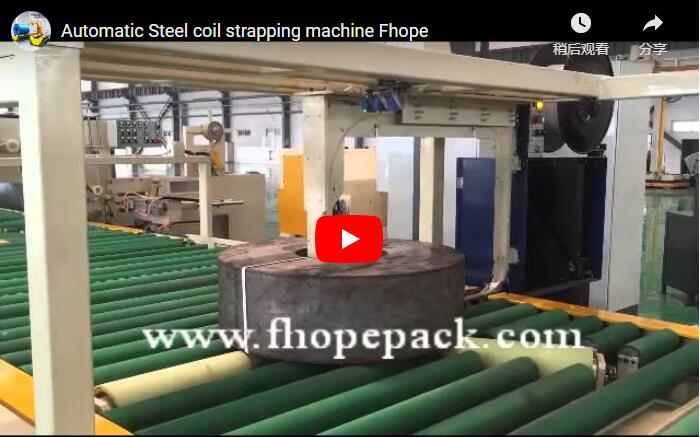
    Confirm that the strapping head applies a consistent tension profile across the bundle perimeter. The tension must be recipe-driven and adjustable within [Supplier-Verified Tension Range]. Feed rate synchronization must prevent strap slack or over-tensioning, which typically occurs when the servo drive exceeds [Supplier-Verified Feed Rate]. Verify that the tensioning mechanism compensates for thermal expansion during continuous operation.
    Business Impact: Stable strapping tension prevents bundle collapse during transit, reduces strap waste by minimizing over-application, and lowers downstream handling downtime caused by failed load integrity.

  • Wrapping film layering and pre-stretch optimization
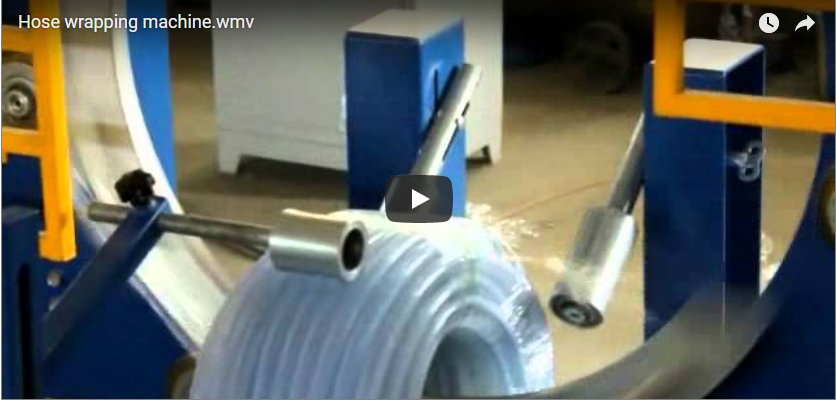
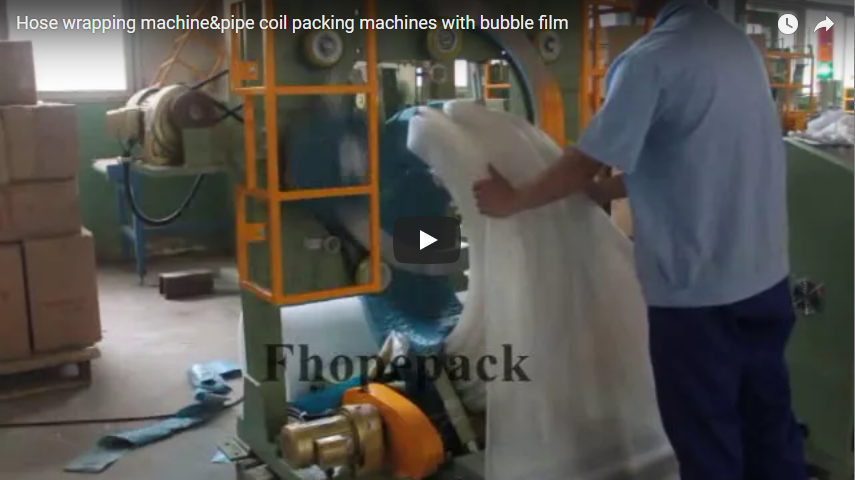
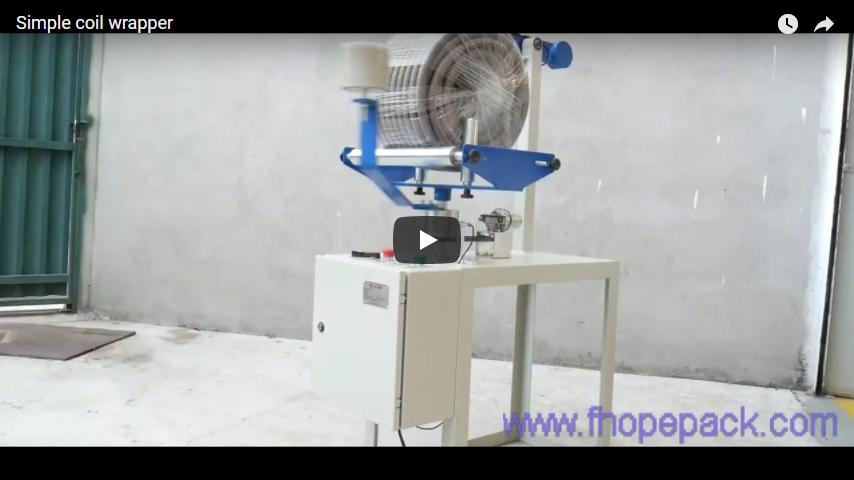
    Verify that the wrapping station applies a pre-stretch ratio within [Supplier-Verified Pre-Stretch Range] to maximize film yield without compromising containment force. Film tension must be regulated within [Supplier-Verified Tension Range], with overlap calibrated to [Supplier-Verified Overlap Range] for adequate load stabilization. For closed-loop or coiled tube geometries, confirm that the wrapping mechanism utilizes orbital or rotary indexing rather than rigid orbital motion to maintain consistent film laydown.
    Business Impact: Optimized pre-stretch directly reduces film consumption costs, while precise tension control prevents film tearing and ensures compliance with international freight stabilization standards.

  • Bagging insertion sequence and thermal sealing
    Test the bagger’s insertion timing to ensure the pre-formed bag is deployed within [Supplier-Verified Insertion Window] of bundle indexing. The sealing head must utilize a PID controller (Proportional-Integral-Derivative, a closed-loop control algorithm that maintains precise temperature stability) to hold the seal zone within [Supplier-Verified Temperature Range]. Verify that bag material thickness meets [Supplier-Verified Thickness Range] for the target pipe diameter and environmental exposure requirements.
    Business Impact: Accurate insertion sequencing prevents bag misfeeds that cause line stoppages, while PID-regulated sealing ensures consistent moisture and UV barrier protection, reducing warranty claims and product degradation.

  • PLC control network and buffer sequencing
    Confirm that the PLC (Programmable Logic Controller, an industrial-grade computer that automates electromechanical processes) utilizes a modular I/O architecture with standard industrial protocols. The buffer zone must enforce FIFO sequencing (First-In-First-Out, a deterministic inventory management method that preserves bundle order to prevent count drift). Verify that all field sensors maintain a response time within [Supplier-Verified Response Time] to ensure real-time synchronization across all packaging modules.
    Business Impact: Deterministic FIFO sequencing prevents bundle count drift, eliminates downstream module jams, and reduces unplanned downtime by ensuring predictable material flow through the packaging cell.

  • Changeover mechanics and diameter adaptation
    Measure the mechanical transition time when switching between pipe diameters within the same product family. Servo-driven automatic adjustment should achieve changeover within [Supplier-Verified Changeover Time], while manual tooling setups must not exceed [Supplier-Verified Manual Time]. Verify that quick-release clamps and modular forming guides eliminate the need for full system recalibration during diameter shifts.
    Business Impact: Rapid changeover capabilities directly increase equipment OEE (Overall Equipment Effectiveness), reduce labor costs associated with setup, and enable profitable production of high-mix, low-volume tube orders.

  • Safety interlocks and emergency stop validation
    Ensure all access doors and maintenance panels utilize interlock switches rated for [Supplier-Verified Cycle Rating] minimum cycles. Verify that the emergency stop circuit cuts power to all actuators within [Supplier-Verified Stop Time] of activation. Confirm that safety relays comply with [Supplier-Verified Safety Standard] and that bypass functions are strictly disabled during production runs.
    Business Impact: Robust safety interlocks prevent operator injury, ensure regulatory compliance, and avoid costly production halts caused by safety system faults or unauthorized bypass attempts.

🔗 Related: Explore more solutions

📈 Pass/Fail Criteria

Acceptance thresholds must be established through documented supplier validation rather than generic benchmarks. Verifying these parameters against actual production runs directly correlates to operational uptime, material yield optimization, and long-term capital asset protection across all packaging stages.

Parameter Supplier-Verified Acceptance Range Validation Method Business Impact
Bundle count deviation [Supplier-Verified Deviation Range] Verified over 10 consecutive production cycles Prevents inventory miscounts and downstream fulfillment errors
Film wrap pre-stretch ratio [Supplier-Verified Pre-Stretch Range] Measured at standard ambient temperature and humidity Reduces film procurement costs by maximizing material yield
Strapping tension deviation [Supplier-Verified Tension Deviation] Test with OEM-specified strap width and material Prevents bundle failure during transit and reduces strap waste
Changeover time (servo) [Supplier-Verified Servo Changeover] Diameter shift ≥ [Supplier-Verified Diameter Step] Increases line OEE and enables profitable high-mix production
PLC cycle time (full sequence) [Supplier-Verified Cycle Time] From bundle start to final bag seal Eliminates synchronization bottlenecks and reduces unplanned downtime
Contact pressure (gripper) [Supplier-Verified Max Pressure] Shore A [Supplier-Verified Durometer Range] pad Prevents surface deformation and reduces material scrap costs
Sealing temperature stability [Supplier-Verified Temp Stability] Thermal camera verification across 50 consecutive seals Ensures consistent barrier protection and reduces warranty claims

Key Point: All numerical ranges are supplier-verified placeholders. Engineering teams must require documented test reports and OEM calibration certificates before signing acceptance. Unverified tolerances directly correlate to increased maintenance costs, material waste, and production line instability.

🛡️ Commonly Missed Items

Field commissioning frequently overlooks deterministic sequencing logic, thermal profile calibration, and consumable wear tracking. Addressing these latent variables during factory acceptance testing prevents catastrophic line stoppages and preserves warranty coverage for critical packaging components system-wide.

  1. Buffer zone FIFO logic validation – Installation teams often skip deterministic sequencing tests. Without FIFO enforcement, bundle counts drift, causing downstream modules to jam or misfeed. Verify by manually interrupting the pipe feed and confirming that order is restored within [Supplier-Verified Recovery Cycles] cycles. Business Impact: Prevents cascading downtime and eliminates manual intervention during peak production runs.

  2. Film roll core adapter compatibility – Wrapping stations frequently default to standard core sizes, but suppliers may provide 2-inch, 3-inch, or 6-inch cores. Ensure the machine includes adjustable chucks or spare adapters. Business Impact: Eliminates film changeover delays and prevents costly line stoppages when switching film vendors or grades.

  3. PID thermal profile calibration for bag material – Default sealing temperatures are often calibrated for LDPE. If using PVC, PE, or biodegradable films, verify that the PID controller maintains stability within [Supplier-Verified Thermal Tolerance] across the entire seal time. Conduct thermal imaging during the first 50 bags. Business Impact: Prevents seal failures that compromise product protection, reducing customer returns and material waste.

  4. Safety interlock bypass protocols – Commissioning teams sometimes temporarily bypass door interlocks for troubleshooting. This is a critical fail item. Require a dedicated test mode that prevents machine operation while interlocks are bypassed. Business Impact: Ensures regulatory compliance, prevents operator injury, and avoids costly safety audits or production shutdowns.

  5. Strapping head wear strip lifecycle – Wear strips are consumables that degrade based on strap friction. Request a replacement schedule based on strap usage (typically every [Supplier-Verified Wear Cycles] cycles). Missing this causes strap mis-feed and unexpected downtime. Business Impact: Proactive wear management reduces unplanned maintenance costs and extends strapping module lifespan.

  6. Footprint clearance for maintenance access – Layout plans frequently omit adequate clearance around the packaging cell. Verify minimum clearance of [Supplier-Verified Clearance Range] on all service sides during site preparation. Business Impact: Prevents costly equipment relocation, ensures safe technician access, and reduces future maintenance labor hours.

🔗 See Also: Related equipment

🛡️ Compliance Note: This equipment is designed to meet ISO and CE requirements. Verify specific certifications with the manufacturer before procurement.

⚙️ FAQ

This section addresses critical factory acceptance testing pitfalls and provides a structured methodology for calculating return on investment. Evaluating these factors ensures procurement decisions align with operational efficiency targets and total cost of ownership models.

Q: What are the most common FAT (Factory Acceptance Test) pitfalls that compromise long-term packaging line performance?
A: The most frequent FAT pitfalls include testing the line at empty or half-load conditions, ignoring thermal drift in sealing modules, and skipping deterministic FIFO sequencing validation. Testing under full production load with actual pipe diameters and weights reveals synchronization gaps, tension inconsistencies, and buffer zone bottlenecks that only manifest during continuous operation. Additionally, failing to verify consumable wear rates and safety interlock bypass protocols during FAT leads to unplanned downtime and warranty disputes post-installation.

Q: How should engineering teams calculate ROI justification for an automated plastic pipe packaging line?
A: ROI justification must be calculated using a total cost of ownership (TCO) model that factors in labor displacement, material yield optimization, and downtime reduction. Quantify the reduction in manual strapping and bagging labor hours, calculate film and strap waste reduction through optimized pre-stretch and tension control, and factor in the avoidance of production stoppages caused by bundle failure or seal defects. A typical industrial validation model projects ROI within [Supplier-Verified Payback Period] months, assuming consistent utilization rates and proper preventive maintenance scheduling.

Q: Why is supplier-verified tolerance documentation mandatory before final acceptance?
A: Generic industry benchmarks rarely account for specific pipe material properties, ambient environmental conditions, or OEM-specific mechanical tolerances. Supplier-verified documentation ensures that tension profiles, thermal setpoints, and changeover parameters are calibrated for your exact product mix. Relying on unverified tolerances increases the risk of surface damage, inconsistent bundle formation, and accelerated component wear, directly negating the operational efficiency gains promised by automation.