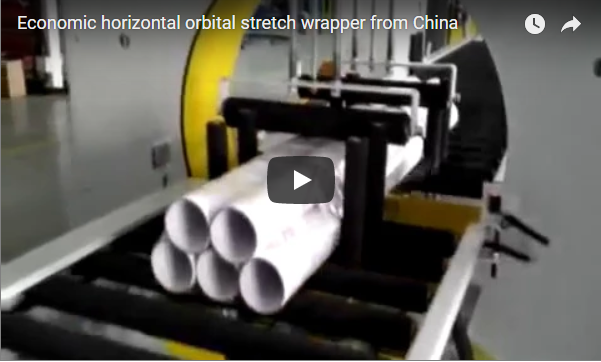
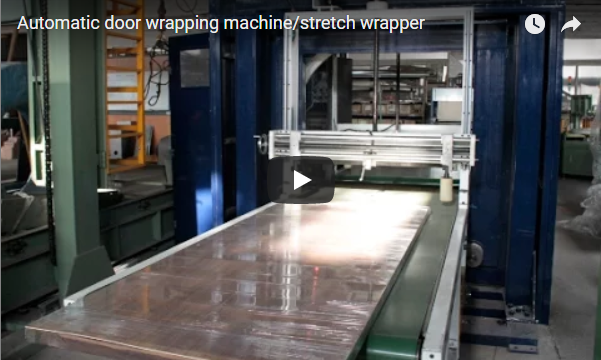
Executive summary 6-side sealed furniture packaging combines two stations in one line. A sealing station encloses the product in bubble film from rolls above and below and heat-seals the open sides. An orbital ring then wraps stretch film around the four long sides. Our sealing station takes products 900–2,400 mm long and 20–100 kg, and bulky items such as sofas go to our larger furniture wrapper [manufacturer rating].
Table of Contents
- How the line seals all six sides
- Size windows
- Sealing station details
- Conveyor speed and time per piece
- Film and bubble rolls
- Utilities and safety
- Selection checklist
- Engineering FAQ
- Next step
- Related reading
- Sources
How the line seals all six sides
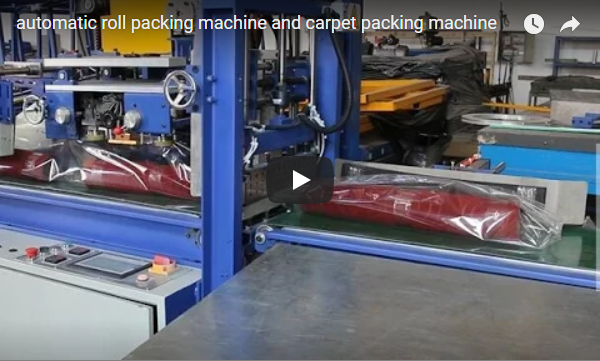
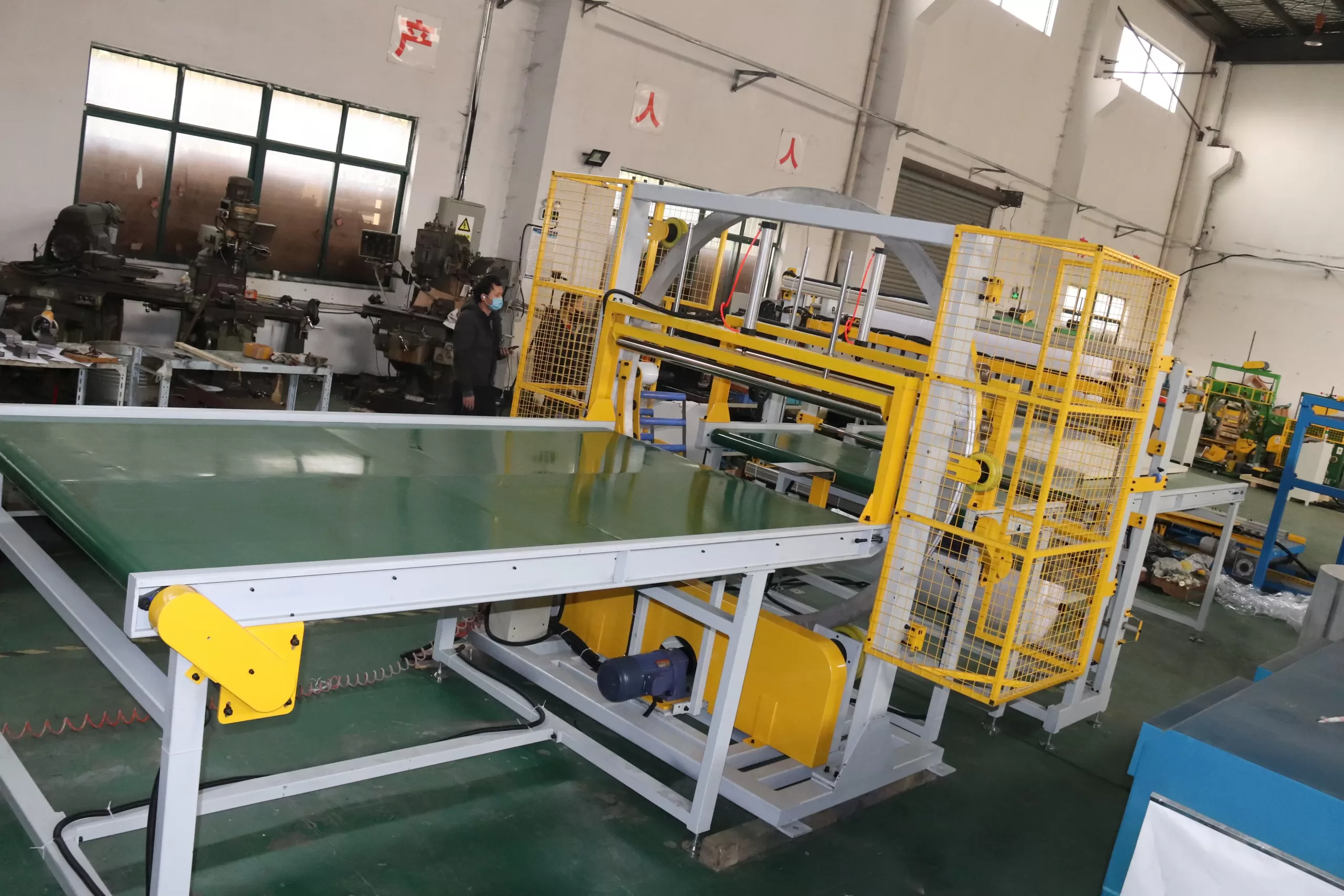
In this line, a photoelectric sensor fixes each product’s position on the powered infeed conveyor before it enters the sealing frame. Bubble film runs from a roll above and a roll below, so the product is covered top and bottom as it passes. The station then heat-seals the open sides, and the product leaves fully enclosed. The same end-sealing architecture is also applied to flat panels, door slabs and radiators [manufacturer rating].
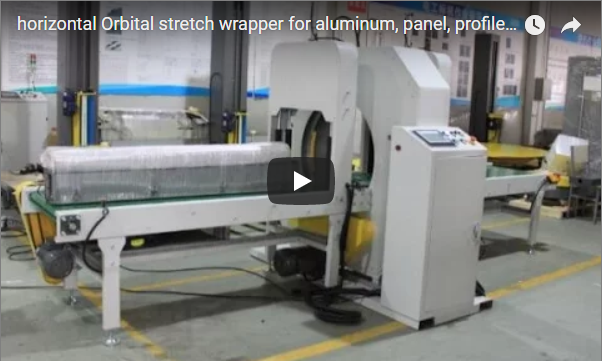
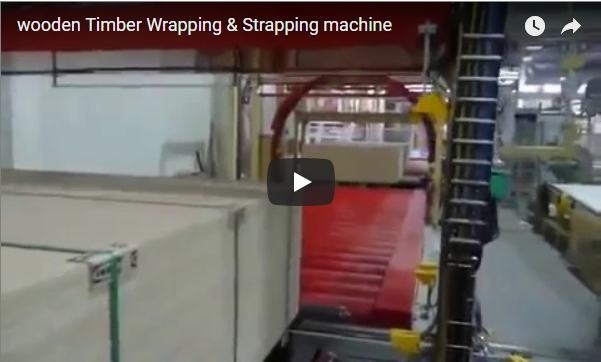
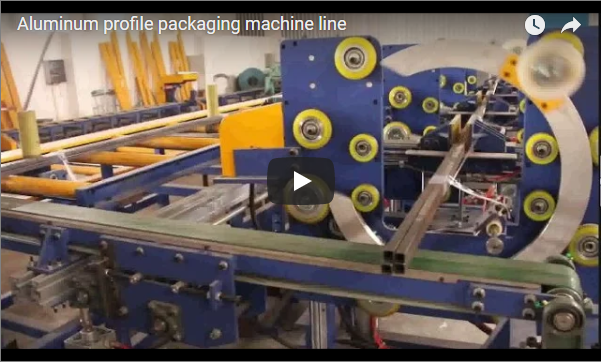
Next, the product passes through the orbital ring wrapper. The ring lays stretch film around the four long sides, which holds the bubble film tight and adds a moisture and dust barrier. The two stations connect, so the product moves from sealing to wrapping without handling.
Size windows
| Parameter | Bubble film sealing line | Furniture horizontal wrapper |
|---|---|---|
| Product length | 900–2,400 mm | over 1,500 mm |
| Product width | 200–1,200 mm | 800–1,800 mm |
| Product height | 100–800 mm | 800–1,800 mm |
| Product weight | 20–100 kg | 20–200 kg |
| Typical products | boxed furniture, panels | sofa, cabinet, doors, windows |
| Wrapping ring ID | confirmed in proposal | over 1,400 mm |
Illustrative example: a flat-packed wardrobe box of 2,000 × 600 × 400 mm and 60 kg fits the bubble film sealing line. A sofa 1,000 mm high and 1,600 mm wide fits only the furniture wrapper, which also offers bubble film or EPE film covering before wrapping.
Sealing station details
- Positioning. A photoelectric sensor detects the product and fixes its position.
- Bubble film. Rolls above and below cover the product, and the machine seals the remaining open sides automatically.
- Heat sealing. A constant-temperature system seals and cuts. The seal bar is permanently heated, with an easily exchanged blade, and the PLC controls and monitors the temperature.
- Sealing height. Adjustable for different products.
- Feed modes. Automatic or manual feed-in.
The sealing station is carbon steel, with a working table height of about 800 mm.
Conveyor speed and time per piece
The product must travel its own length through each station. Time = length ÷ conveyor speed:
Time = length ÷ conveyor speed
| Product length | At 4 m/min | At 9 m/min |
|---|---|---|
| 1,200 mm | 18 s | 8 s |
| 2,000 mm | 30 s | 13.3 s |
This is transit time only. Sealing and cutting, film clamping at the ring and the gap between products add to each cycle. The sealing conveyor runs at about 4–9 m/min, and the wrapping conveyor at 1–9 m/min. The wrapping speed also depends on ring speed and overlap, so we time the full cycle on a trial product.
Film and bubble rolls
| Material | Width | Roll OD | Core ID |
|---|---|---|---|
| LLDPE stretch film | 150–500 mm | 100–200 mm | 50 mm |
| Bubble film | up to 1,300 mm | 50–600 mm | confirmed in proposal |
The bubble film must be wide enough to cover your widest product, so we check roll width against product width and height. The product also passes the ring corner first, so we check its cross-section diagonal:
so the cross-section diagonal of a 600 × 400 mm box is about 721 mm.
The ring runs at about 10–60 r/min.
Utilities and safety
| Utility | Requirement |
|---|---|
| Sealing station power | about 6.5 kW [manufacturer rating] |
| Power supply (as listed) | 230 V, 3 phase, 50 Hz; confirmed against site plant supply |
| Compressed air | 6–8 kgf/cm² [manufacturer rating] |
| Infeed and outfeed conveyors | 2,000 × 1,400 mm each |
| Wrapping section conveyor, overall | about 4,500 × 1,600 × 900 mm |
The standards that apply depend on the destination market. For CE markets, ISO 12100 sets the risk-assessment method and EN 415-10 sets general requirements for packaging machines. We confirm guarding around the heat-seal bar in the proposal.
Selection checklist for a 6-side sealing line
- Product length, width, height and weight, smallest and largest.
- Products per hour.
- Bubble film or EPE film, and roll width.
- Stretch film width.
- Inline with your packing line, or standalone.
- Power supply and compressed air.
Engineering FAQ
Q: How are all six sides covered? A: Bubble film from rolls above and below covers the product, the station heat-seals the remaining open sides, and the orbital ring wraps stretch film around the four long sides.
Q: What product sizes does the sealing line take? A: 900–2,400 mm long, 200–1,200 mm wide, 100–800 mm high, and 20–100 kg.
Q: How long does a 2,000 mm product take to pass a station? A: 30 s at 4 m/min, or about 13.3 s at 9 m/min, before sealing, cutting and product gaps.
Q: What about sofas and bulky furniture? A: Our furniture horizontal wrapper takes items 800–1,800 mm wide and high, with bubble or EPE film covering available.
Q: What utilities does the sealing station need? A: About 6.5 kW at 230 V, 3 phase, 50 Hz, and compressed air at 6–8 kgf/cm².
Next step
We plan your furniture sealing and wrapping line in three steps:
- Submit your layout drawing with product sizes and products per hour to info@fhopepack.com.
- Receive a proposal within 48 hours, with the stations, film plan and conveyor layout.
- Book a site survey to fit the line to your packing area.
Related reading
- Orbital stretch wrapper with bubble film
- Furniture horizontal stretch wrapper
- Panel wrapping machine
- Horizontal stretch wrapper E1800
- Automatic bubble film wrapping machine
Sources
- Sealing station, size window, rolls, utilities: orbital stretch wrapper with bubble film page
- Furniture wrapper window, bubble and EPE covering: furniture horizontal stretch wrapper page
- Machine in action: the machine on YouTube
- Standards scope: ISO 12100:2010, EN 415-10:2014
Last reviewed: 2026-10-29