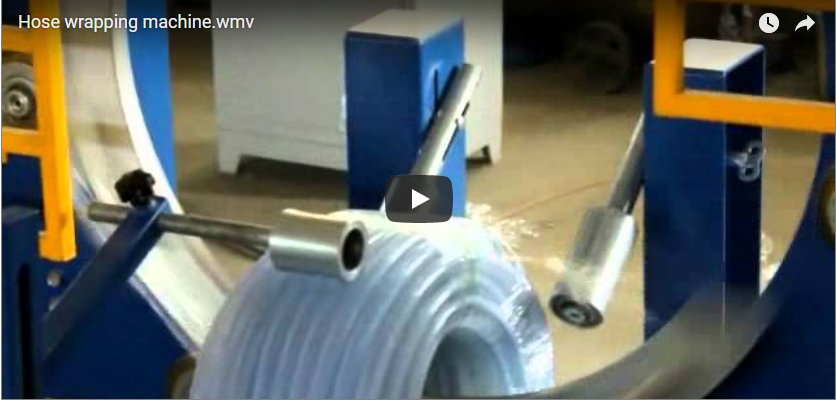
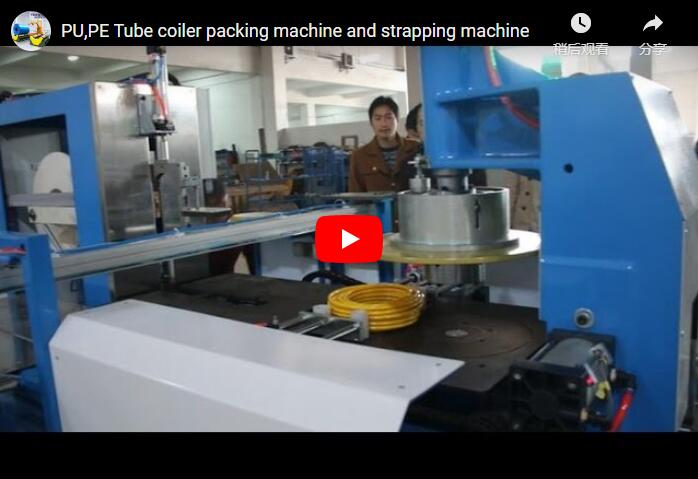
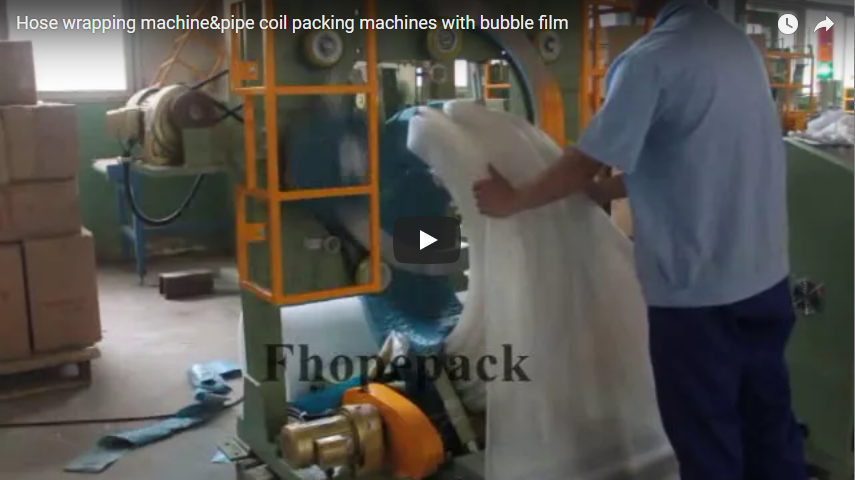
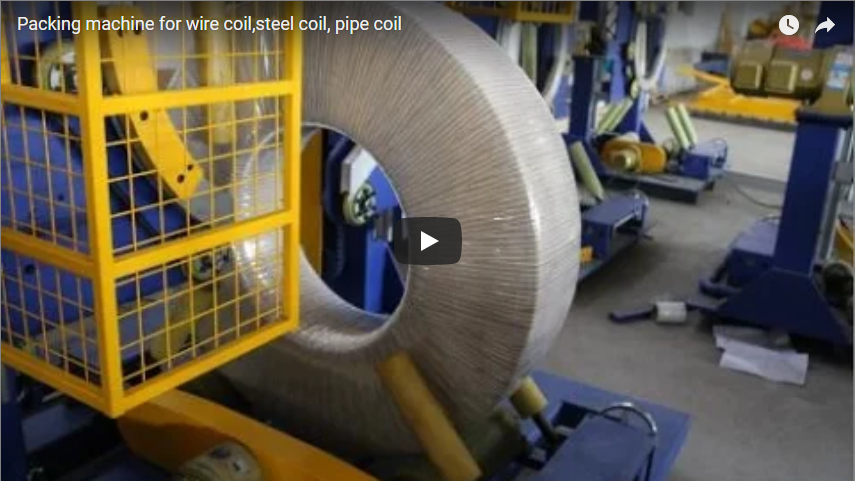
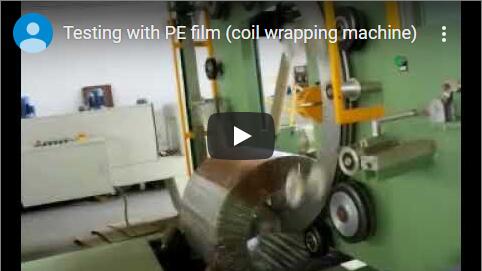
Rubber hose coil wrapping machine

Executive summary This video shows a rubber hose coil wrapping machine in a real workshop, covering the full working cycle: manual loading of hose into the infeed area, wrapping by the machine’s central ring-type unit, and manual unloading of the finished coil. It is a semi-automatic process — operators feed and remove coils while the machine does the wrapping. The footage does not show any technical specifications, safety guarding, or emergency-stop devices, so those points must be confirmed with the manufacturer before purchase.

If you are evaluating a rubber hose coil wrapping machine for your plant, this page gives you a plain-language walkthrough of what the machine actually does on the floor, based entirely on what is visible in the video. No invented numbers, no marketing claims — just observed facts, clearly separated from reasonable interpretation, plus a checklist of what to verify with the manufacturer.

What the video shows: the machine in action, step by step

The video shows two operators working around a green-painted steel machine. The working cycle visible on screen runs roughly as follows:

  1. Loading (from the start of the video). An operator in a grey-blue top and apron brings a length of black rubber hose to the machine and lays it into the top rotary station. The hose is spread along a ring-shaped track on the turntable, stacked in layers and pressed into position by hand.
  2. Positioning and preparation. The operator continues adjusting the hose so it sits evenly around the turntable edge. A second operator is briefly seen organizing strap-like material on the floor nearby.
  3. Wrapping. From around the 105-second mark, the machine’s central green ring-shaped unit — a large arched structure that can move down and rotate — engages the hose. It clamps the bundle and rotates it, producing a continuous spiral wrap. One operator holds a roll of tape from a yellow tape dispenser on the right side of the machine, ready to fix the coil during or after wrapping.
  4. Unloading. Once the wrap cycle completes, the ring unit rises back to its home position. The operator lifts the finished wrapped coil out of the machine and places it onto the take-up/spool platform on the right side, or onto a ground-level support.
  5. Next cycle. A new hose coil is fed into the right-hand infeed guide, the wrap head descends again, and the sequence repeats. The whole load–wrap–unload pattern is visible several times across the roughly four-minute footage.

The pattern throughout is “manual infeed + mechanical wrapping + manual outfeed.” The machine handles the consistent spiral wrapping; humans handle material handling at both ends.

Direct observation notes

The following is a dry, factual description kept close to the source analysis of the footage, with only grammar-level edits:

  • The machine frame is green-painted steel with a white/grey-painted base; surfaces show oil marks and normal signs of use.
  • Main visible components: a circular rotary worktable with fixing holes and clamping devices; at least four sets of vertically arranged silver metal guide rollers; a right-side take-up/spool unit with a yellow bracket and a tape roll spindle; a light-grey control cabinet at the lower right; and red pneumatic/hydraulic lines hung along the mid-frame.
  • The control panel carries multiple round buttons (black/red/green), indicator lights (red and green visible), at least two rotary knobs with a scale, and a small display whose content is unreadable. There is no large touchscreen. A triangular warning symbol is visible on the panel.
  • The product in the early frames is smooth black rubber hose, stacked in multiple layers across the turntable. Finished coils seen in the video are green hose with a yellow stripe band, wound tightly.
  • The wrap action is performed by a large green arched (ring-type) unit that lowers, clamps, and rotates the hose bundle to form a spiral wrap, then rises to release it.
  • Finished coils are removed by hand and set onto the spool platform or a floor support.
  • No fully enclosed guarding, light curtain, safety-door interlock, or clearly visible emergency-stop button appears in the footage.
  • The only readable on-screen text is a video-platform watermark; no machine nameplate or panel labels are legible.

Process overview at a glance

Stage Who/what does it Visible in video
Infeed and hose positioning Operator, by hand Yes — repeated several times
Clamping and spiral wrapping Central ring-type wrap head Yes — lowers, rotates, rises
Tape fixing Operator with tape roll from side dispenser Yes
Unloading finished coil Operator, by hand Yes
Automatic stacking / palletizing Not shown No
Changeover between hose sizes Not shown No

What the video does not show

Buyers should be clear about the limits of this footage. The following are not observable in the video:

  • Machine model designation, rated power (kW), voltage, and frequency
  • Maximum and minimum hose diameter and coil size range
  • Cycle time per coil and production rate
  • Whether fully automatic start or PLC-based control is available
  • Safety certifications (CE, UL, or similar)
  • Maintenance intervals, lubrication points, and spare-parts lists
  • Compatibility with upstream/downstream equipment such as cutters or tension controllers
  • Warranty terms and after-sales support arrangements

None of these facts can be read from the footage, and no readable nameplate or parameter label appears on screen. Treat any specification you need as verify with the manufacturer.

Who this machine suits

Based on what is visible — manual loading, mechanical spiral wrapping, manual unloading, and coils handled one bundle at a time — this type of machine is a realistic fit for:

  • Small and mid-sized hose producers who wrap coils in batches and can dedicate one or two operators to feeding and unloading.
  • Workshops with mixed or varied orders, where manual infeed gives flexibility that a fully automatic line does not.
  • Teams upgrading from purely hand wrapping, where consistency of wrap tension and coil appearance is the main pain point. The machine’s rotating wrap head produces a more uniform spiral than hand winding, and it processes multiple hose lengths per bundle.

It is probably not the right fit if you need:

  • Fully automatic infeed and outfeed with no operator at the machine
  • Very high throughput with short, fixed takt times
  • Closed guarding and interlocked safety systems as a hard requirement out of the box — the video shows an open working area, so you would need to confirm or add guarding

Safety observations worth your attention

The footage shows an open machine: operators reach close to the turntable and the moving ring unit, and no light curtain, safety door, or clearly identifiable emergency-stop button is visible. The control panel does carry a general warning symbol. Interpretation (marked as inference): this suggests the machine, as filmed, relies on operator positioning and judgment rather than engineered guarding. Before purchase, ask the manufacturer specifically about:

  • Emergency-stop type and location
  • Whether guarding, light curtains, or interlocks can be supplied
  • Compliance with the safety regulations applicable in your market

What to verify with the manufacturer

Use this checklist before committing to a purchase:

  1. Wrapping capability — confirm the automatic rotate-and-wrap function shown in the video is standard, and what wrap patterns/tape types are supported.
  2. Hose size range — minimum and maximum hose diameter and coil diameter/width the machine accepts, and how changeover between sizes is done.
  3. Cycle time and throughput — realistic seconds per coil for your hose specification.
  4. Controls — what the panel display shows, whether parameters are stored per recipe, and whether an emergency stop is included.
  5. Safety package — available guarding, interlocks, and certification for your region.
  6. After-sales — spare parts availability, commissioning, and operator training.

Frequently asked questions

Is the machine fully automatic? The video shows a semi-automatic pattern: operators load and unload hose by hand while the machine performs the wrapping. Whether an automatic load/unload option exists — check with the manufacturer.

What hose sizes can it handle? The video shows smooth black rubber hose roughly a few centimeters in diameter and finished coils of moderate size, but exact diameter and coil-size ranges are not stated on screen. Verify the compatible size range with the manufacturer.

Does it wrap with tape or film? A tape dispenser is mounted at the machine and an operator uses tape during the process. Whether stretch film or other materials are also supported — check with the manufacturer.

How long does one wrap cycle take? The footage shows repeated cycles within a few minutes of video, but no reliable per-coil cycle time can be measured from sampled frames. Ask the manufacturer for a cycle time based on your hose dimensions.

Is the machine safe to operate as shown? The video shows no enclosed guarding, light curtain, or clearly visible emergency stop. This is an observation about the footage, not a safety judgment. Confirm the safety configuration with the manufacturer before use.

Maintenance pointers (from what is visible)

The machine’s visible construction — rotating turntable, guide rollers, a moving ring-type wrap head, and pneumatic lines — implies routine care in these areas:

  • Keep the rotary table and roller surfaces clean; the footage shows normal oil residue typical of hose production environments.
  • Inspect rollers and clamping surfaces for wear, since slippage would cause uneven wraps.
  • Check pneumatic lines and fittings periodically for leaks.
  • Confirm the manufacturer’s recommended lubrication points and service intervals — not shown in the video, so verify with the manufacturer.

Related reading

Next step

If this rubber hose coil wrapping machine looks like a match for your coil sizes and production volume, the fastest way to get answers to the checklist above is to contact the FHOPE team directly. Share your hose diameter, coil dimensions, and target output, and request a quotation plus a demonstration. Visit our contact page to start the conversation.

Source and method

This article is based solely on the video embedded above. The footage was analyzed frame-by-frame using a local vision model; the video contains background music only, with no narration, so no speech recognition was performed. All facts in the observation sections come from what is visible on screen; interpretation and safety commentary are explicitly labeled as inference, and any specification not visible in the video is marked for confirmation with the manufacturer.