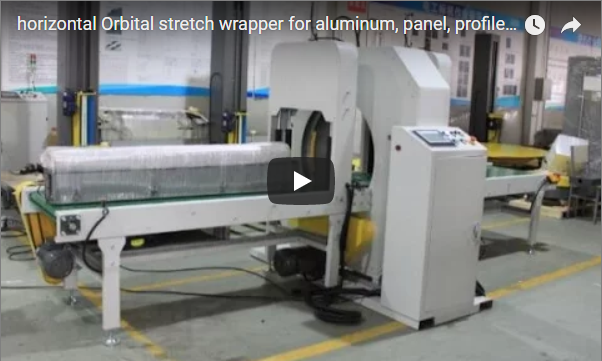
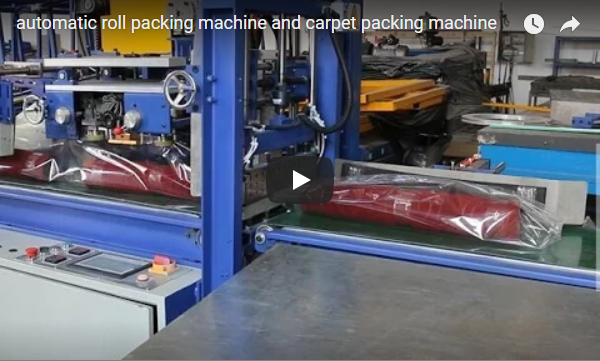
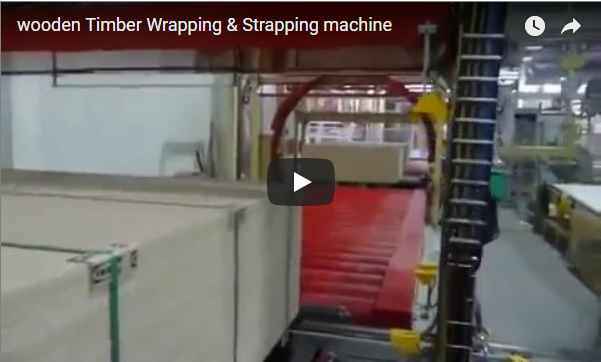
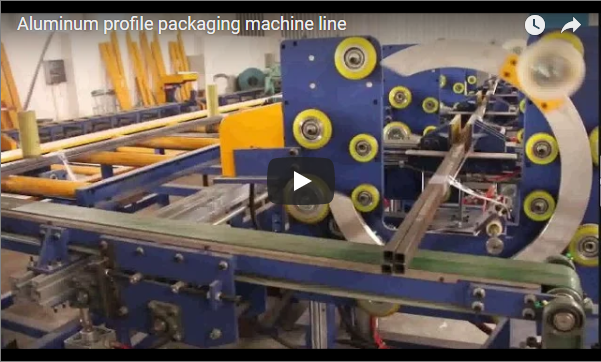
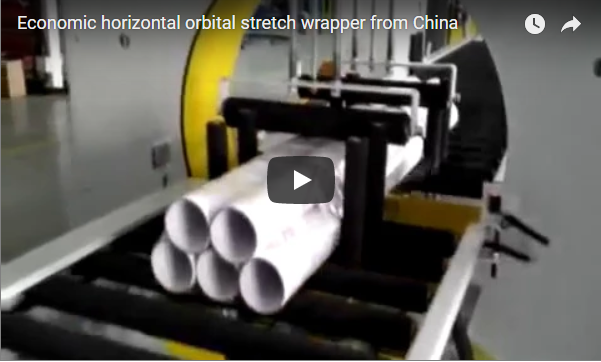
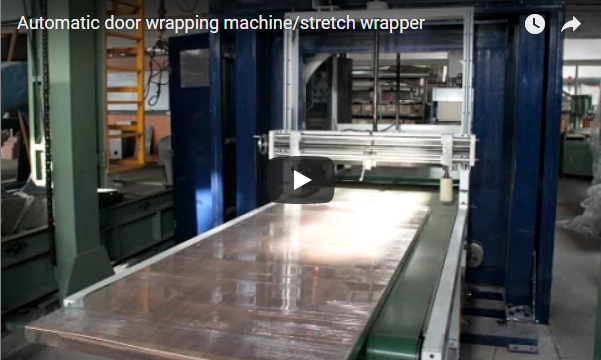
Executive summary This clip shows doors packed inline with our horizontal ring wrapper. Operators place each door on the infeed conveyor table, the door runs through the turning ring and is spiral wrapped in stretch film, and it leaves on the outfeed table for the next step. The close-up shows the film roll riding on the ring.
Table of Contents
- What the clip shows
- Stations in the line
- Film per door
- What we set per door
- Selection checklist
- Safety
- Engineering FAQ
- Next step
- Related reading
- Sources
What the clip shows
| Step | What you see |
|---|---|
| Infeed | Two operators place a door on the conveyor table |
| Ring | The door enters the turning ring |
| Wrap | Film is laid in a spiral along the door |
| Film roll | Close-up of the roll riding on the ring |
| Outfeed | The wrapped door leaves on the table |
Stations in the line
| Station | Job |
|---|---|
| Infeed table | Holds and feeds the door |
| Ring wrapper | Spiral wraps the door |
| Outfeed table | Takes the wrapped door away |
| Panel | Sets door length and overlap |
Film per door
Worked example (illustrative).
| Item | Value |
|---|---|
| Door length (illustrative) | 2,100 mm |
| Film width (illustrative) | 250 mm |
| Overlap (illustrative) | 40% |
| Advance per turn, 250 × 0.6 | 150 mm |
| Turns per door, 2,100 ÷ 150 | 14 (spiral only; end wraps added) |
What we set per door
| Setting | Depends on |
|---|---|
| Ring size | Door width and thickness |
| Overlap | Edge protection needed |
| Conveyor speed | Doors per hour |
| Film | Width and thickness |
Selection checklist
- Door length, width and thickness.
- Door weight.
- Doors per hour.
- Finish to protect.
- Film width.
- Line layout.
Safety
- Keep clear of moving stations.
- Stay outside the fence while the line runs.
- Lock out before clearing a jam.
- For CE markets, the machine is designed to ISO 12100 and EN 415-10.
Engineering FAQ
Q: Which steps are automatic? A: Operators load each door; the conveyor and the turning ring then wrap it in stretch film automatically.
Q: How many turns does a door need? A: 14 turns for a 2,100 mm door at 40% overlap with 250 mm film in the worked example.
Q: Can it be linked to my line? A: Yes, the infeed and outfeed tables connect to your conveyors.
Q: Does film protect the door edges? A: Yes, overlap is set so edges are covered.
Q: What sizes fit? A: The ring and tables are sized to your doors.
Q: Which standards apply? A: For CE markets, ISO 12100 and EN 415-10.
Next step
We match a door wrapping line in three steps:
- Submit your layout drawing with door sizes and doors per hour, to info@fhopepack.com.
- Receive a proposal within 48 hours with the machine data and layout.
- Book a site survey so we confirm the line layout.
Related reading
- Automatic Door Wrapping Machine
- Wooden Board, Door and Plate Shrink Packaging
- Horizontal Orbital Wrapper for Pallet Strapping and Wrapping
- Orbital stretch wrapper
Sources
- Machine content: FHOPE engineering team, 2026-10-10
- Clip: the video on YouTube
- Film per door: our worked example, illustrative values
- Standards scope: ISO 12100:2010; EN 415-10:2014
- Proposal timing: approved house CTA (proposal within 48 hours)
Last reviewed: 2026-10-10