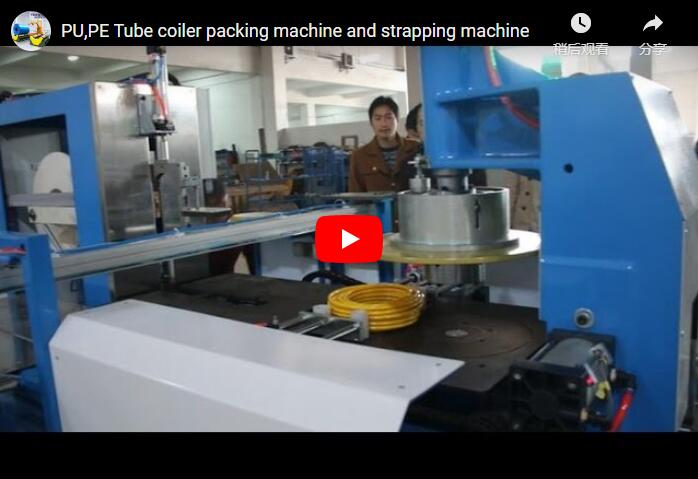
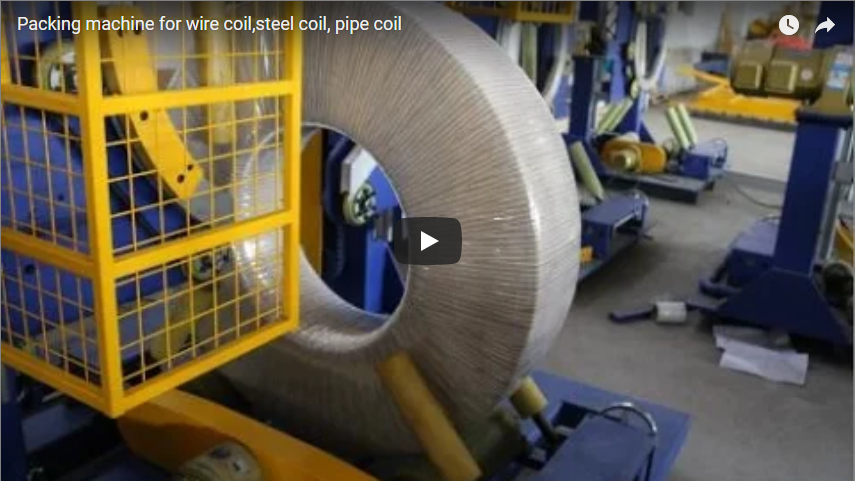
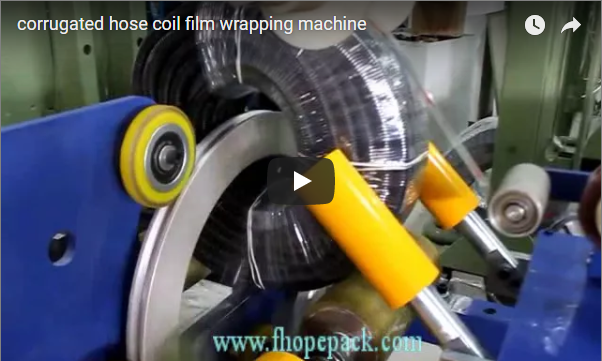
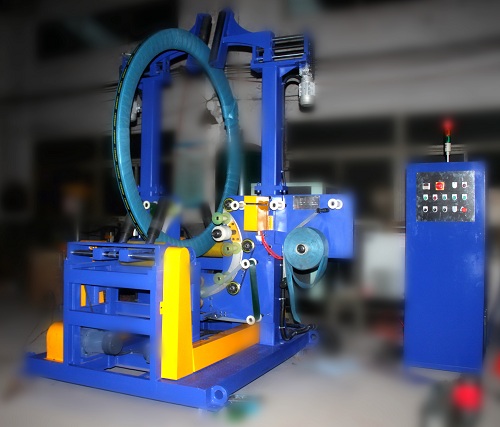
Summary: Selecting the right coil wrapping machine for steel wire coils requires precise analysis of coil dimensions, weight capacity, and automation needs. This guide delivers expert criteria to optimize packaging efficiency, reduce labor costs, and ensure CE-compliant operations.
🛠️ Critical Factors for Coil Wrapping Machine Selection
Choosing the appropriate coil wrapping machine for your steel wire coil operations directly impacts production throughput, film consumption, and workplace safety. The decision matrix must account for coil orientation (eye-to-sky vs. eye-to-wall), weight ranges from 500kg to 50,000kg, and integration with existing coil upender or coil tipper systems.
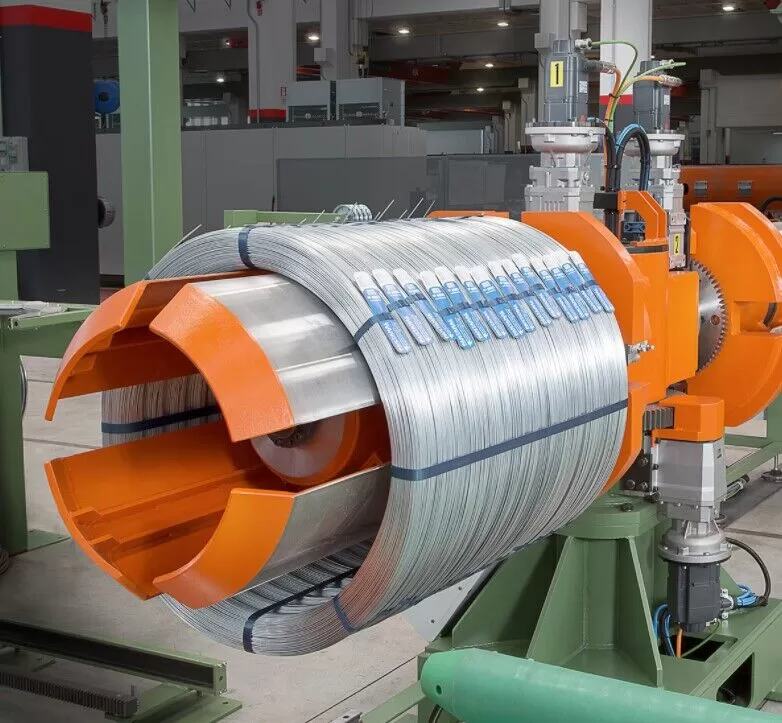
The selection process extends beyond basic dimensions. You must evaluate wrapping speed (measured in coils per hour), film tension control (critical for preventing coil deformation), and PLC automation level to match your facility’s scalability roadmap.
📊 Understanding Your Coil Specifications
Every steel wire coil presents unique packaging challenges. A horizontal coil wrapping machine (eye-to-sky configuration) suits coils stored flat, while a vertical coil wrapper (eye-to-wall) handles upright coils common in wire drawing facilities.
| Consideration | Technical Details | Industry Standard |
|---|---|---|
| Coil Inner Diameter | Range: 400mm – 2,000mm | Must match mandrel size |
| Coil Outer Diameter | Range: 800mm – 3,500mm | Determines ring travel distance |
| Coil Weight Capacity | 500kg – 50,000kg | Requires C45 steel frame construction |
| Wrapping Speed | 15-60 coils/hour | PLC-controlled variable frequency drive |
| Film Type | LLDPE stretch film 15-25 micron | Pre-stretch ratio 250%-300% |
| Automation Level | Semi-auto to fully-automatic | CE certified safety interlocks |
Expert Pro Tip: For steel wire coils exceeding 10,000kg, always specify a heavy-duty coil inverter with hydraulic damping systems. This prevents edge damage during orientation changes and reduces film waste by up to 18%.

Misalignment between coil specifications and machine capacity creates bottlenecks. Facilities processing mixed coil sizes should invest in adjustable coil tilter systems with digital position memory, enabling quick changeovers without manual recalibration.
⚙️ Customizing Your Coil Packaging Solution
Your operational environment dictates whether a standalone coil packing machine or an integrated coil packing line delivers optimal ROI. High-volume wire manufacturers benefit from conveyor-integrated systems with automatic film cutting and sealing.
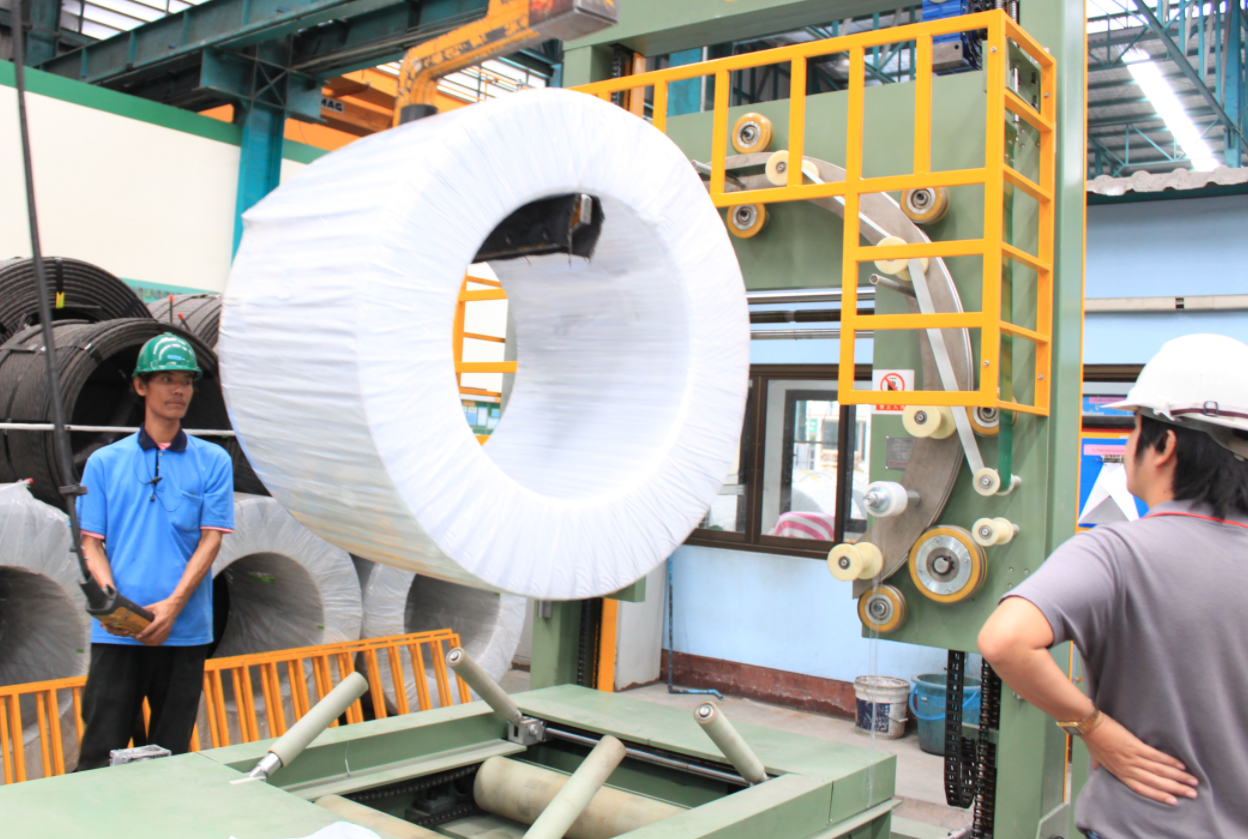
📈 Embracing Automation Technology
Modern automatic coil wrapping machines integrate IoT sensors for real-time film consumption tracking and predictive maintenance alerts. This transforms packaging from a cost center into a data-driven efficiency lever.
Automation Impact Comparison:
| Performance Metric | Manual Operation | Automated System | Improvement |
|---|---|---|---|
| Labor Requirement | 2-3 operators | 1 supervisor | 67% reduction |
| Wrapping Consistency | ±15% film variance | ±3% film variance | 5x precision |
| Throughput | 12-18 coils/hour | 40-60 coils/hour | 233% increase |
| Workplace Incidents | 4-6 per year | 0-1 per year | 85% reduction |
| Film Consumption | 2.5kg per coil | 1.8kg per coil | 28% savings |
ROI Insight: A fully-automatic coil stretch wrapper with PLC control typically achieves payback within 14-18 months through labor reduction alone. Add film savings and damage prevention, and ROI accelerates to under 12 months for high-volume operations.
Automation eliminates the variability inherent in manual wrapping. Programmable logic controllers ensure each coil receives identical tension patterns, critical for steel wire products sensitive to compression damage during transport.
🏗️ Steel Coil Handling: Collection & Transfer Optimization
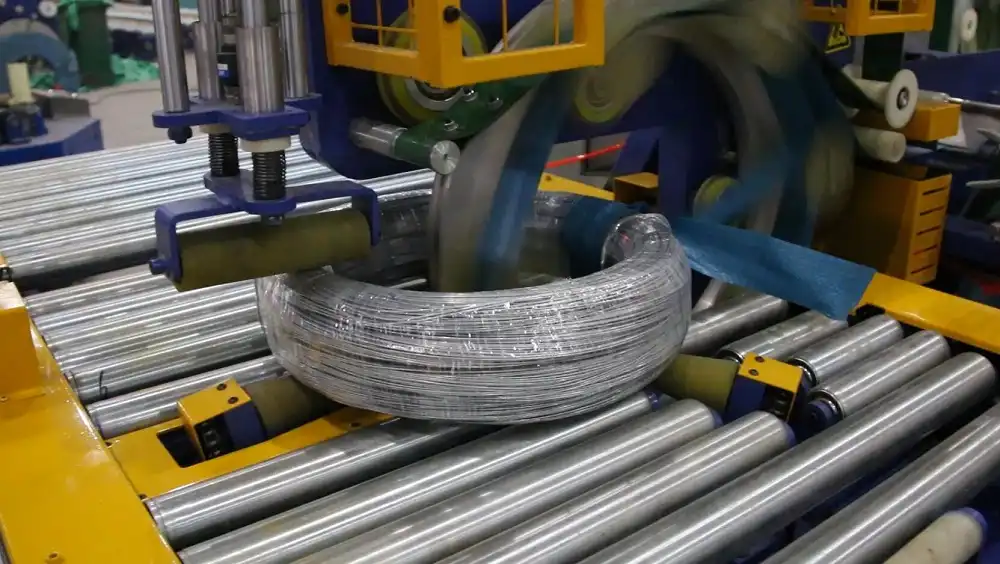
Efficient collection processes in steel coil handling require seamless integration between coil turning machines, conveyors, and wrapping stations. Bottlenecks at transfer points can negate wrapping line efficiency gains.
🛡️ Automation Advances in Coil Transfer
The integration of coil upenders with automated positioning systems eliminates manual crane operations, reducing cycle time from 8 minutes to under 90 seconds per coil orientation change.
Safety & Efficiency Comparison:
| Risk Factor | Manual Handling | Automated Transfer | Risk Reduction |
|---|---|---|---|
| Crush Injuries | High exposure | Zero direct contact | 100% elimination |
| Coil Edge Damage | 12-15% of coils | <2% of coils | 87% reduction |
| Operator Fatigue | Significant | Minimal | 90% reduction |
| Positioning Accuracy | ±50mm tolerance | ±5mm tolerance | 10x precision |
Facilities implementing hydraulic coil tilters with soft-start functions report 40% fewer warranty claims related to transport damage. The initial investment pays dividends through reduced customer complaints and preserved product integrity.
🎯 Advanced Equipment for Tight Production Schedules
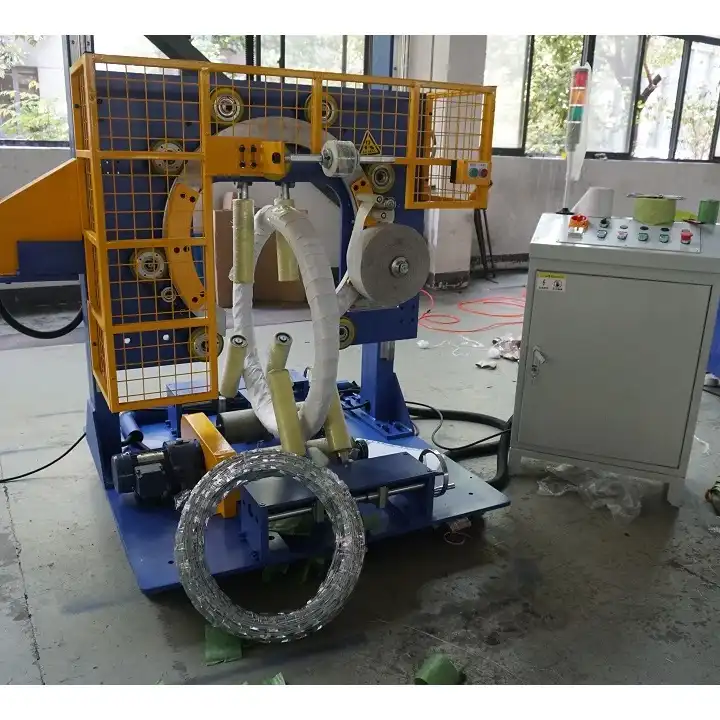
When production windows compress, automatic wrapping lines with quick-change tooling become mission-critical. Modern systems enable coil size changeovers in under 5 minutes without specialized tools.
⏱️ Equipment Impact on Schedule Compliance
| Cost Factor | Manual Process | Automated Equipment | Annual Savings* |
|---|---|---|---|
| Labor Costs | $180,000/year | $60,000/year | $120,000 |
| Turnaround Time | 4-6 hours/batch | 45-90 minutes/batch | 75% faster |
| Quality Rejects | 3.5% of output | 0.8% of output | $85,000 saved |
| Film Waste | 22% overuse | 8% overuse | $35,000 saved |
*Based on 2-shift operation, 5,000 coils/month facility
Key Takeaway: Advanced coil packing systems with servo-driven film carriages deliver consistent tension regardless of operator skill level. This standardization enables facilities to meet just-in-time delivery commitments without quality compromises.
Robotic integration takes this further. Facilities deploying coil inverter systems with vision-guided positioning achieve 99.7% first-pass quality rates, eliminating rework cycles that derail tight schedules.
🔍 FAQ: Coil Wrapping Machine Selection
What coil weight range requires a heavy-duty wrapper?
Coils exceeding 10,000kg demand heavy-duty construction with reinforced C45 steel frames and hydraulic tension systems. Standard machines typically handle 500kg-8,000kg ranges.
Should I choose horizontal or vertical coil wrapping?
Horizontal wrappers (eye-to-sky) suit flat-stored coils common in warehousing. Vertical wrappers (eye-to-wall) integrate directly with wire drawing lines where coils remain upright throughout production.
How does a coil upender improve packaging efficiency?
A coil tipper or coil inverter enables rapid orientation changes without crane operations, reducing transfer time by 80% and eliminating edge damage from manual handling.
What automation level is recommended for high-volume operations?
Facilities processing 50+ coils per day should invest in fully-automatic PLC-controlled wrapping lines with automatic film cutting, conveying, and data logging capabilities.
Can existing packaging lines be upgraded with automation?
Yes. Most semi-auto coil wrappers can be retrofitted with servo drives, PLC controls, and conveyor integration. Retrofit costs typically run 40-60% of new equipment pricing.
📞 Ready to Optimize Your Coil Packaging? Contact Fhopepack’s engineering team for a free coil specification analysis. We’ll match your steel wire dimensions, weight ranges, and throughput targets to the optimal coil wrapping machine configuration—delivered with CE certification and 24-month warranty coverage.