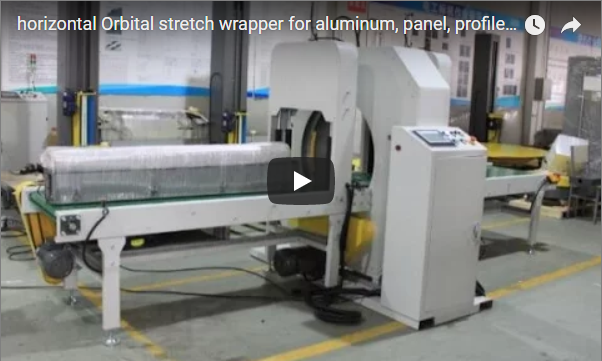
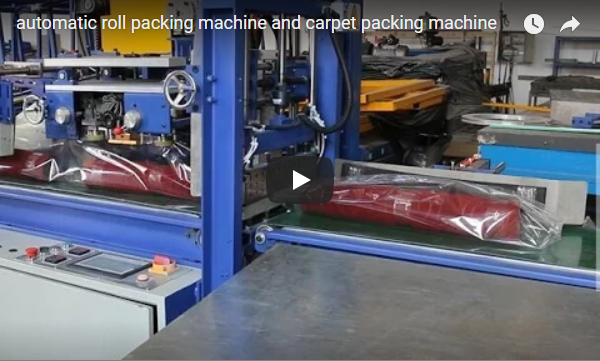
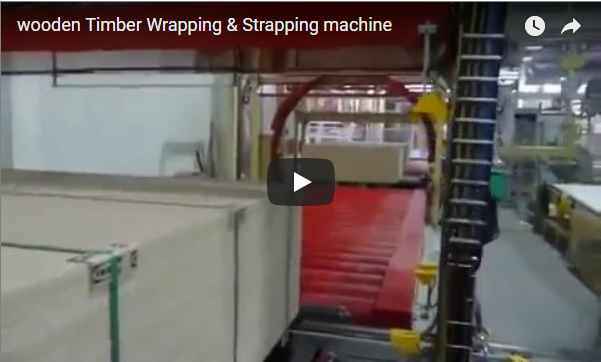
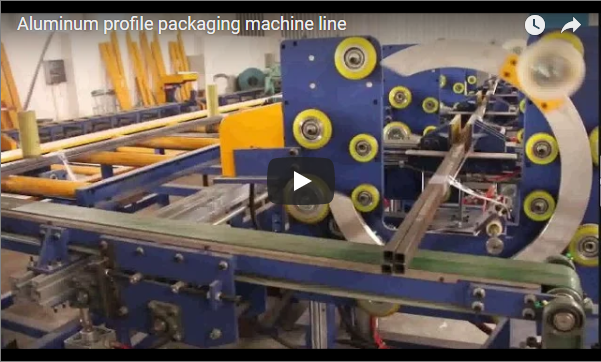
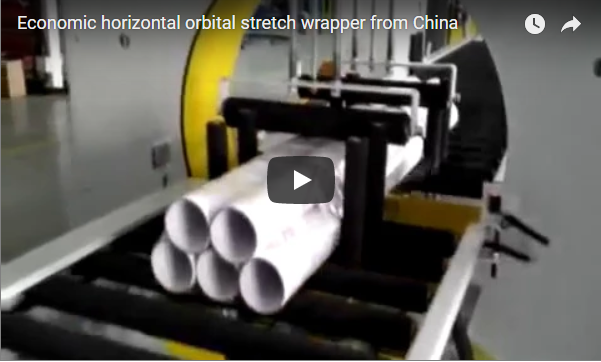
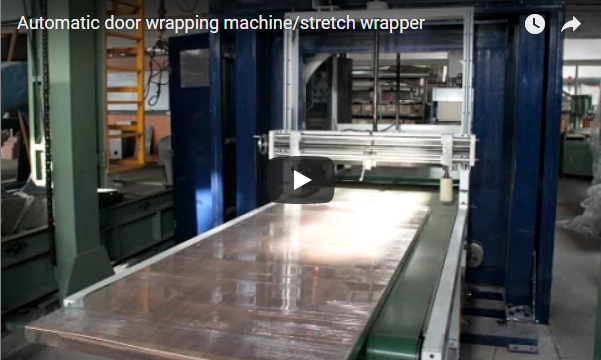
Executive summary We build the FHOPE MDF board inline packing line as a chain of modules: conveyor, vacuum lifter, stacker, strapping, wrapping or shrinking, and palletizer. The panel orbital wrapper takes bundles of 1000–1500 mm width and 2000–3000 mm length with 20–40 µm stretch film. The shrink option takes boards up to 1250 × 2500 mm with 30–45 µm PE film. Line rate is set by the slowest station, so this guide shows the cycle-time method, PLC handshake and an implementation checklist.
Table of Contents
- Line architecture
- Infeed and stacking
- Edge protection
- Closure method
- Material selection
- PLC integration
- Cycle time
- Layout and installation
- Implementation checklist
- Engineering FAQ
- Next step
- Related reading
- Sources
How an MDF inline packing line is built
We design an inline packing line to keep pace with the press or sanding line that produces the boards. The vacuum lifter connects directly to the exit of the board production line, so no forklift buffer sits between production and packing. Our standard design runs every packing step with one operator on the line.
We build each module as a separate machine on a common conveyor. That lets us drop or add stations per plant: strapping only for in-house transfer, six-side wrapping or shrink for export, and a pallet changer where loads change carriers.
| Module | Function in the line | Key published value |
|---|---|---|
| Vacuum lifter and stacker | Picks boards from the production exit and builds the stack | Program-controlled stack position |
| Board upender (C-type) | Turns or transfers stacks inline | Connects to conveyors before and after |
| Strapping station | PET or PP strap around the bundle | 50–5000 N tension, about 10 s per strap* |
| Orbital wrapper | Stretch film around all sides | Ring speed 20–50 r/min, overlap 20–90% |
| Shrink sealer and tunnel | PE film sealed, then heat-shrunk | Tunnel 100–220 °C, conveyor 0–12 m/min |
| Inline pallet changer | Swaps or recycles pallets | 40 pallets/h for 1200 × 1200 mm loads |
*Published for our horizontal strapping station, rated for packages up to 1200 × 1200 × 1800 mm. Arches for full-length board bundles are configured per order.
Infeed and vacuum stacking
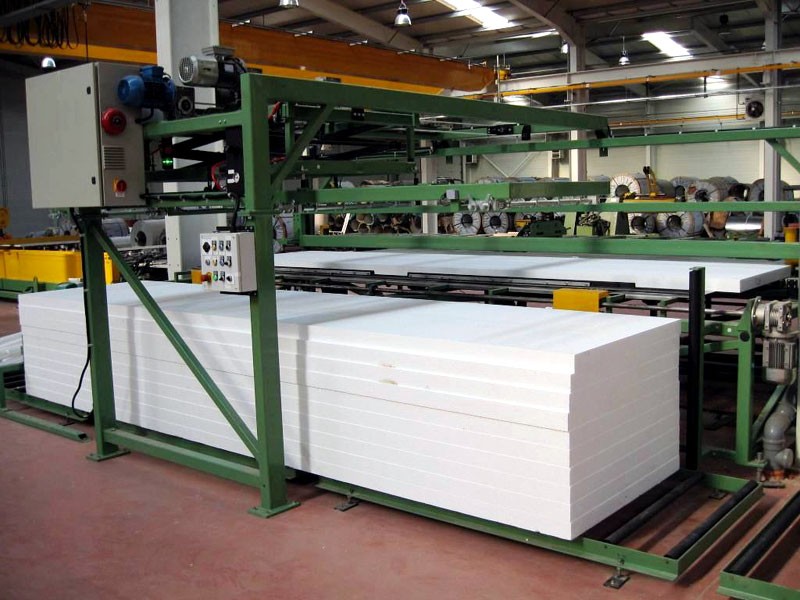
The stacker lifts each board with a vacuum frame and places it on the stack in a programmed position. The whole sequence is program-controlled, so a board size change is a settings change on the panel. We built the line in the video below, which runs vacuum stacking straight into a shrink packing stage.
The video follows boards from infeed to the sealed pack:
- 0–7 s, infeed from the production exit. The board arrives on the infeed conveyor directly from the line, so no forklift buffer sits between production and packing.
- 14–98 s, programmed stacking. The stacking head places each board in its programmed stack position. A size change is a panel setting.
- 105–182 s, stack build-up. The head repeats the pick-and-place until the stack reaches its programmed height. One operator supervises the whole sequence, as in our single-operator line design.
- 189–210 s, top covering. Film is laid over the stack top before the closure step, so the top face is covered before sealing.
- 210–280 s, sealing. The covered stack enters the sealing station of the shrink stage. On our board shrink machine this stage uses one long sealer and two motion sealers with photoelectric positioning under PLC control, ahead of the 100–220 °C tunnel.
Three engineering points decide whether stacking keeps up with the press:
- Pick rate vs. board pitch. The stacker must complete one pick-and-place inside the gap between two boards leaving the line.
- Centering before the next station. On our E1800 orbital wrapper, protective rollers center the stack before the ring. Press-down rollers hold it during the wrap.
- Height detection. Photo sensors read the stack height so the wrapper and strapper adjust without manual input.
Corner and edge protection
MDF edges and corners take the impact in transit, so protection is placed before the closure step, not after. We use three methods depending on destination and handling:
- Top-sheet covering. A film covering mechanism lays a PE sheet over the stack before horizontal wrapping. After wrapping, the pack is fully sealed with no exposed face.
- Six-side orbital wrap. The six-side wrapper covers all six faces and the corners. It accepts several recyclable packing materials.
- Timber block and edge-protector feeding. Our compact board lines feed wooden blocks automatically as part of the stacking and packing sequence. The plasterboard strapping video in our library shows timber feeding and edge protection on one station.
PU-coated rollers on our large orbital wrappers protect the board faces and extend roller life. Edge-protector profile and thickness are set per order from the strap tension and stack weight.
Wrapping, shrink or strapping: choosing the closure
The closure method follows the destination, not the machine price. Use this selection logic:
| Requirement | Recommended closure | Why |
|---|---|---|
| Export, humid climate, outdoor storage | Six-side orbital stretch wrap | Full film enclosure on all faces and corners |
| Single boards, retail-ready finish | Sealer plus shrink tunnel | Tight PE skin, boards up to 1250 × 2500 mm |
| Large stacked bundles over 1 m high | Back-seal bag plus shrink, on our back-seal machine | Film sealed at the ends, then shrunk tight; not the 1250 × 2500 mm single-board tunnel |
| Frequent size changes | Two-side sealing shrink (E series) | Tolerant of length and width changes |
| In-plant transfer, load unitizing | PET or PP strapping only | No film; straps hold the stack together |
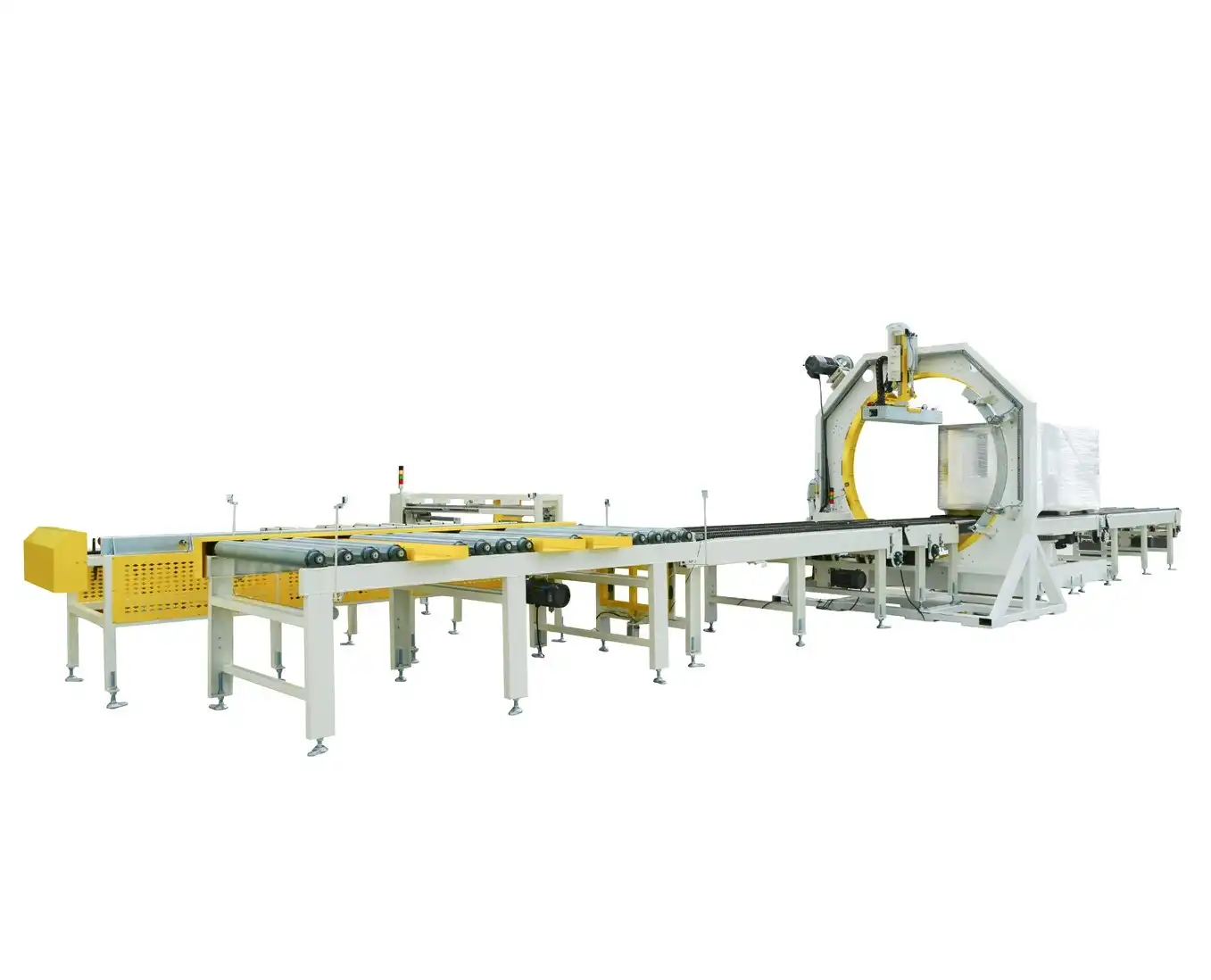
Many export lines combine two closures: strapping for load integrity, then wrap or shrink for moisture and dust. The panel wrapping machine handles packages of 1000–1500 mm width, 300–1400 mm height and 2000–3000 mm length.
Larger bundles go to our wide-ring models, where the ring can exceed 3 m. We size the ring by the stack’s cross-section diagonal plus carriage clearance: for a W 1.2 × H 1.5 m board stack, 1921 mm across the diagonal, the ring OD has to be above 2300 mm. That figure is the ring outer diameter. We build these lines to order, so the same model can carry different parameters per project.
MDF wrapping film and strap selection
Film and strap must sit inside the window of the machine head. These are the published windows for our board machines:
| Material | Published window | Machine |
|---|---|---|
| Stretch film thickness | 20–40 µm (stretch film or PE) | Panel orbital wrapper |
| Stretch film roll | OD 100–180 mm, width 300–500 mm, core ID 76 mm | Panel orbital wrapper |
| Stretch film roll | Core ID 76 mm, width 500 mm | E1800 / E800 orbital wrapper |
| Shrink film | PE, 30–45 µm | Board and door shrink machine |
| Strap | PET, 12–16 mm or 19 mm, friction weld, 20 mm seal | Horizontal strapping station |
| Strap reel | Core diameter 406 mm | Horizontal strapping station |
Selection rules we apply at quotation stage:
- Overlap sets film use. Overlap is adjustable from 20% to 90%. Higher overlap adds layers and moisture protection; lower overlap cuts film per bundle.
- Shrink film follows tunnel temperature. The tunnel runs from 100 °C to 220 °C, so a film trial on the actual board finish fixes the setpoint.
- Strap tension follows edge protection. Tension is adjustable from 50 N to 5000 N. Without edge protectors, run the low end to avoid crushing MDF edges.
MDF packing line PLC integration
Each machine runs on its own PLC with an HMI, and the wrapper is designed to connect with the production line. Our strapping stations use Siemens PLC, VFD and touch screen. The side-seal strapper runs on a Siemens S7 PLC. Ring and roller speeds are inverter-controlled, so speed changes are a parameter, not a gear change.
The handshake between the board line and the packing line uses a short signal list:
- Stack complete from the stacker to the downstream conveyor.
- Station ready / station busy from each packing machine.
- Clear to advance from the downstream station to release the bundle.
- Fault and alarm from any station to stop infeed. The wrapper’s indicator alarms flag faults automatically.
For plant reporting, the line can feed an ERP system with production rate, material usage and machine performance data. The inline pallet changer offers an IoT link for the same purpose. When your plant PLC is Allen-Bradley or another brand, we agree the interface and signal list at the layout stage.
Panel packing cycle time: sizing the line
Line output equals the output of the slowest station. Size each station against the takt time: takt (s per bundle) = 3600 ÷ bundles required per hour.
Orbital wrapper. The bundle advances one film pitch per ring revolution. Pitch = film width × (1 − overlap). With 500 mm film at 50% overlap, pitch is 250 mm. A 3000 mm bundle then needs 12 revolutions. At 20–50 r/min that is 36 s down to 14.4 s, plus start and end wraps. Pre-stretch narrows the film, so the commissioning trial fixes the final value.
Strapping. One strap takes about 10 s on our horizontal strapping station. A bundle with four straps on one head needs about 40 s.
Shrink tunnel. Conveyor speed is adjustable from 0 to 12 m/min. At 6 m/min, a 2500 mm board clears the sealer every 25 s plus the gap between boards.
Pallet changer. 40 pallets per hour equals 90 s per pallet. The changer only sets the line rate when every bundle passes through it one-to-one: then 40 bundles/h governs the line. Where the changer serves only the loads that change carriers, it sits outside the bundle takt.
Take the example above with the pallet changer outside the bundle takt. The wrapper allows at most 100 bundles/h at 36 s before start and end wraps, but four straps at 40 s cap the line at 90 bundles/h. The fix is a second strapping head or fewer straps, not a faster wrapper.
Layout, utilities and installation
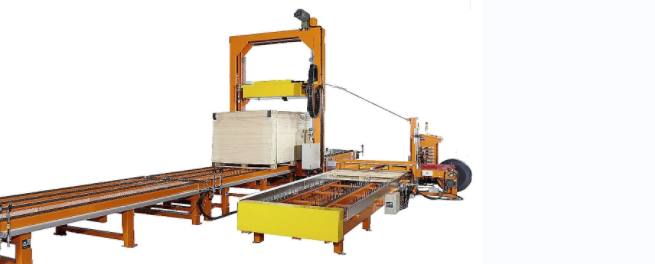
We lay out the line in process order: stacking, edge protection, strapping, wrap or shrink, then palletizing. Plan these published dimensions and utilities into the drawing:
| Item | Published value | Machine |
|---|---|---|
| Power supply | 380 V, 3-phase, 50 Hz (changeable) | Wrapper, shrink machine, strapper |
| Installed power | About 10.5 kW / 6.5 kW / 1.8 kW | Wrapper / shrink machine sealing power (sealer only) / strapper |
| Shrink tunnel heating | About 15 kW for small-item packaging, rising with tunnel length | Shrink tunnel |
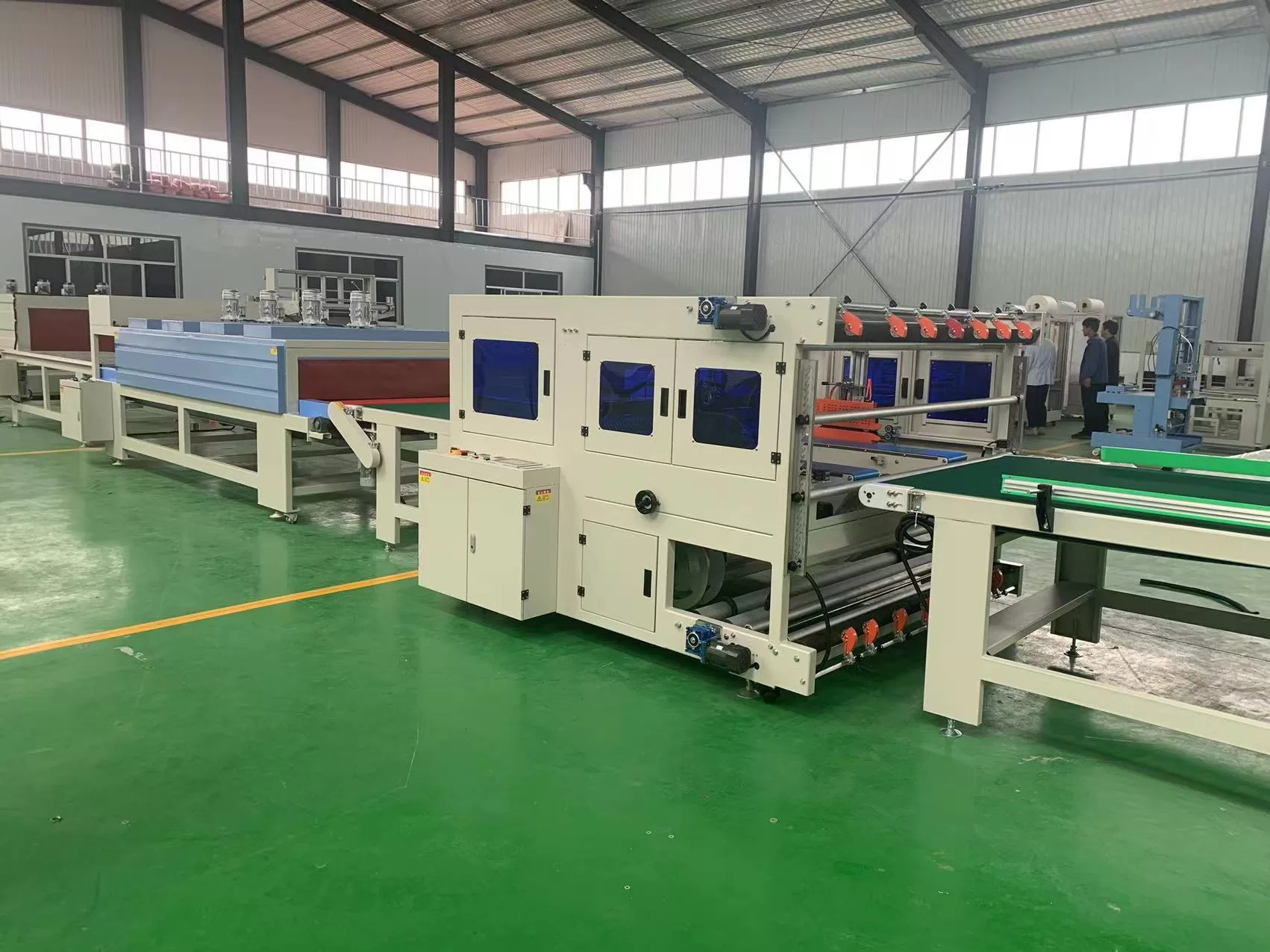
| Shrink tunnel envelope | L 2600 × W 1600 × H 1300 mm | Board and door shrink machine, single boards up to 1250 × 2500 mm |
| Conveyor height | 300–600 mm, adjustable | Horizontal strapping station |
| Compressed air | 6–8 kgf/cm² | Panel shrink sealer |
| Delivery time | About 45 days standard, about 60 days customised | Horizontal orbital wrapper |
Leave access at the wrapper for film changes. Our six-side wrapper uses an elevated film-loading platform with stairway, hand railing and an overhead hoist, so headroom above the ring belongs on the layout.
Safety and standards
The wrapper ships with a light beam, emergency stop, safety enclosures and warning signals; the six-side model adds a safety guardrail. The applicable standards depend on the destination market. For CE markets, ISO 12100 sets the risk-assessment method, and EN 415-10 gives general packaging-machine requirements. Machine-specific parts apply on top: EN 415-4 for palletizers, EN 415-5 for wrapping machines and EN 415-8 for strapping machines.
Implementation checklist
Work through these items with our engineers before the layout is frozen:
- Board program: board length, width, thickness and weight range; boards per stack; stacks per hour.
- Takt calculation: required bundles per hour, then the station times from the cycle-time section.
- Closure per market: strapping only, six-side wrap, or shrink; edge protectors or timber bearers.
- Interface: plant PLC brand, signal list, and whether stacking takes boards straight from the production exit.
- Utilities: 380 V supply, total installed power and compressed air at 6–8 kgf/cm².
- Floor and access: tunnel envelope, conveyor heights and film-loading access at the wrapper.
- Safety scope: guarding, light beams and the standards set for your destination market.
- Commissioning plan: film and strap trial on your own boards before the line runs at takt.
Engineering FAQ
Q: Can one line pack both single MDF boards and full bundles? A: Yes, if the closure stations are sized for both. The shrink machine takes single boards up to 1250 × 2500 mm and 10–90 kg. Bundles of 1000–1500 mm width go to the orbital wrapper, which works on packages from 300 mm to 1400 mm high.
Q: How many operators does an automatic MDF packing line need? A: Our design runs every packing step with one operator. That holds when the stacker takes boards directly from the production exit and edge protectors are fed automatically.
Q: What film thickness should we use for MDF wrapping? A: Use 20–40 µm stretch film on the orbital wrapper and 30–45 µm PE film on the shrink line. Set the wrapper overlap between 20% and 90% by destination. Export to humid regions runs at the high end.
Q: How do we estimate wrapping cycle time before ordering? A: Divide the bundle length by the film pitch, where pitch = film width × (1 − overlap). Then divide by ring speed. A 3000 mm bundle with 500 mm film at 50% overlap needs 12 revolutions, which is 14.4–36 s at 20–50 r/min.
Q: Will the strapping head crush MDF edges? A: Not when tension matches protection. Tension adjusts from 50 N to 5000 N. Run low tension on bare edges, or feed edge protectors ahead of the strapper and raise tension for transport.
Next step
Get a line proposal for your own board program:
- Submit your layout drawing with board sizes, stack heights and daily volume to info@fhopepack.com.
- Receive a line proposal within 48 hours, with station selection and a takt check against your volume.
- Book a site survey to confirm the interface to your production line, utilities and installation plan.
Related reading
- Automatic board packaging line for MDF and wooden board
- Six-side horizontal orbital stretch wrapper for board
- Panel horizontal orbital stretch wrapping machine
- Board and door shrinking machine with motion sealer
- Board packing solutions overview
- Video: automatic strapping machine for panel and board
- Video: automatic panel rotating and stacking machine
Sources
- Line modules, single-operator design, C-type upender: Automatic board packaging line
- Wrapper package size, ring speed, power, film, overlap, safety: Panel orbital wrapper
- Six-side wrap, corner coverage, film-loading platform: Six-side orbital wrapper
- Shrink size, weight, tunnel, film, speed, temperature: Shrinking machine with motion sealer
- Strap tension, width, seal, cycle, Siemens controls: Horizontal strapping machine and side-seal strapper
- Pallet changer rate and IoT link: Inline pallet changer
- Centering, press-down rollers, top-sheet covering, E-series shrink: Board packing market page
- Bundles over 1 m, rings over 3 m, PU rollers: Plywood packaging solution
- ERP data link: Board packing solutions
- Compressed air: Panel shrink packing machine
- Ring OD rule for board stacks, E1800 / E800 film format, horizontal wrapper lead time: FHOPE internal engineering data
- Ring outer-diameter basis, custom parameters per project, shrink tunnel heating power: FHOPE engineering confirmation, 2026-10-03
- Edge protection with timber feeding: Plasterboard strapping line video
- Standards scope: ISO 12100:2010, EN 415-10:2014
Last reviewed: 2026-10-03