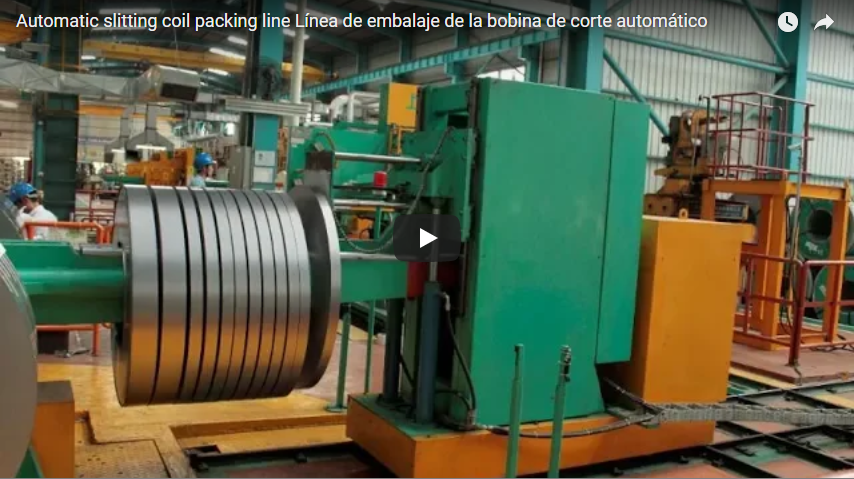
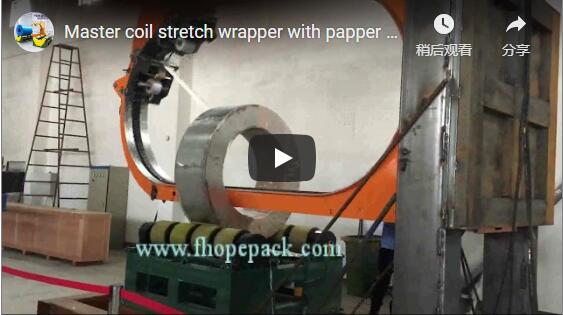
An automatic steel coil packaging line replaces manual crane moves and hand labor between strapping, wrapping, weighing, and stacking with a single, continuous automated flow. The configuration of this line is not fixed; it is determined by the specific coil range and the required dispatch format for each project. By integrating distinct stations on roller conveyors, the system eliminates the need for internal crane lifts.
Overview
The video documentation of this line provides a station-by-station breakdown of the automated process. It illustrates how a coil transitions from a vertical orientation to a horizontal one for processing, undergoes strapping and wrapping, and returns to a vertical position for stacking and dispatch. This guide details the function of each station, the rationale behind the sequence, and the critical data required to configure a system that meets your specific operational needs.
What the video shows
The visual evidence from the video captures the physical movement of the coil through the primary stations. At the start, a turnstile and coil downender takes a coil standing on the infeed and turns it from an eye-vertical position to an eye-horizontal position on the yellow roller conveyor. This orientation is necessary for subsequent processing steps.
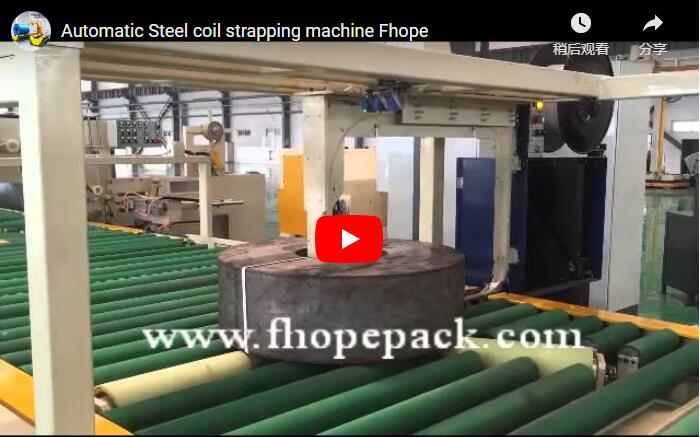
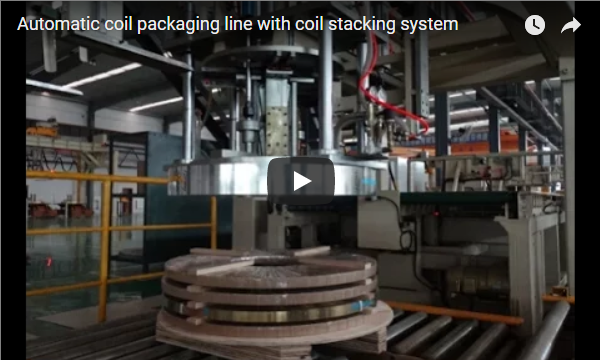
The coil then moves to the strapping machine, where bands are applied. Following strapping, the coil proceeds to a weighing and labeling station, then to a centering machine that aligns the coil for the wrapper. The automatic coil wrapping machine applies white wrapping material around the coil. The video shows the coil being weighed and labeled a second time, after which a coil upender turns it back to an eye-vertical position. Finally, an automatic timber feeder and stacker places timbers and stacks the coils, which are then buffered on an outfeed conveyor.
It is important to note that while the video shows the wrapping process, it does not confirm whether the wrapping is performed through the coil eye (eye-through) or merely around the exterior. This distinction must be confirmed with the supplier based on your material requirements. Similarly, specific metrics such as cycle time, exact coil dimensions, and power consumption are not observable in the video and must be defined by your project parameters.
The stations in order
The line is composed of nine stations along the sequence, each performing a specific function to prepare the coil for dispatch; weighing and labeling appears twice, once before and once after wrapping. The sequence is designed to maintain the coil’s stability and ensure accurate packaging.
| Station (as captioned) | Function |
|---|---|
| Turnstile and coil downender | Transitions the coil from eye-vertical to eye-horizontal orientation. |
| Coil strapping machine | Applies steel or plastic bands to secure the coil structure. |
| Weighing and labeling | Measures the coil weight and prints the initial identification label. |
| Coil centering machine | Aligns the coil centrally on the conveyor for uniform wrapping. |
| Automatic coil wrapping machine | Applies protective wrapping material to the coil surface. |
| Weighing and labeling | Measures the total weight of the wrapped coil for final labeling. |
| Coil upender | Returns the coil to an eye-vertical orientation for stacking. |
| Automatic timber feeder and stacker | Inserts timber separators and stacks coils for storage or transport. |
| Outfeed conveyor | Buffers the stacked coils, preparing them for forklift or crane pickup. |
Each station hands the coil to the next via the roller conveyor system. This continuous flow ensures that no crane lift is needed inside the line, reducing the risk of damage and improving safety. For a deeper understanding of how stretching wrapping integrates with downender stacking systems for heavy coils, refer to our buyer’s guide to stretch wrapping and downender stacking.
Why the line weighs twice: coil and packaging weight
The inclusion of two weighing stations is a critical feature for quality control and accurate billing. The first weighing occurs after strapping but before wrapping, while the second occurs after wrapping is complete.
This dual-weighing process allows the system to calculate the exact weight of the packaging materials used. For example, if the first weighing records 8,000 kg and the second records 8,012 kg, the system identifies that 12 kg of packaging was added. This data is printed on the final label, providing transparency for the buyer.
Deviations from expected packaging weight can indicate issues such as missing layers or extra straps. Therefore, the second weighing serves not only as a measurement tool but also as a packing quality check. The specific accuracy and precision of these weighing scales must be confirmed per project, depending on your tolerance requirements.
Choosing the stations for your line
The configuration of the line is modular. While the full nine-station sequence is shown in the video, smaller lines can start with fewer stations and add complexity later. The selection of stations depends on your coil range and dispatch format.
| If you need | Station to include |
|---|---|
| Coils arrive eye vertical | Turnstile and downender at the infeed |
| Coils leave eye vertical | Upender before stacking |
| Net and gross weight on the label | Two weighing and labeling points |
| Timbers between stacked coils | Timber feeder beside the stacker |
| A buffer before forklifts or cranes | Outfeed conveyor |
For service centers packing slit coils, the requirements may differ. You may need a configuration that prioritizes speed and compactness over full automation. Our guide on automated slit coil packing lines offers insights into configurations for smaller, high-volume scenarios.
Controls and safety
Automatic coil packaging lines handle heavy loads and involve moving mechanical parts. The downender, upender, and stacker perform significant lifting and turning operations. Safety is paramount in the design and operation of these systems.
Yellow guarding surrounds the stacker and timber feeder, as seen in the video. This guarding is designed to keep personnel outside the hazardous areas while the line is running. Operators should only enter a station when it is stopped and isolated.
The safety standards applicable to the machine depend on the destination market. For CE markets, ISO 12100 sets the risk-assessment method, and EN 415-10 sets general requirements for packaging machines. These standards are used as design references. Certification of the delivered machine is confirmed in the project ordering agreement; the supplier does not pre-claim certification without this confirmation.
Selection checklist for a steel coil packaging line
To receive an accurate proposal, you must provide specific data about your operations. Use this checklist to gather the necessary information before contacting the supplier.
- [ ] Coil OD, ID, width, and weight range.
- [ ] Eye position at infeed and at dispatch.
- [ ] Strapping and wrapping materials.
- [ ] Label content and weighing points.
- [ ] Stacking pattern and timbers.
- [ ] Coils per hour and building layout.
Engineering FAQ
Q: What stations does the line have?
A: The full line includes a turnstile downender, strapping, weighing and labeling, centering, wrapping, a second weighing and labeling, upender, timber feeder and stacker, and outfeed conveyor.
Q: Why weigh twice?
A: To print both coil weight and packaging weight on the label. This allows for quality control and accurate billing.
Q: Why turn the coil down and up again?
A: The wrapper operates most effectively when the coil is eye-horizontal, while stacking and dispatch typically require the coil to be eye-vertical.
Q: How do coils move between stations without a crane?
A: Roller conveyors carry each coil from one station to the next, creating a continuous flow.
Q: Can I start with fewer stations?
A: Yes. Smaller lines can start with strapping, wrapping, and one weighing point, adding stations later as needed.
Q: Is the stacker guarded?
A: Yes. Yellow guarding surrounds the stacker and timber feeder to ensure operator safety.
Next step
We plan your steel coil packaging line in three steps:
- Submit your layout drawing with coil sizes, output, and building layout to info@fhopepack.com.
- We reply with a proposal after we confirm the details.
- Book a site survey to check the building, crane access, and floor conditions.
Please provide the data from the selection checklist above to ensure the proposal is tailored to your specific requirements.