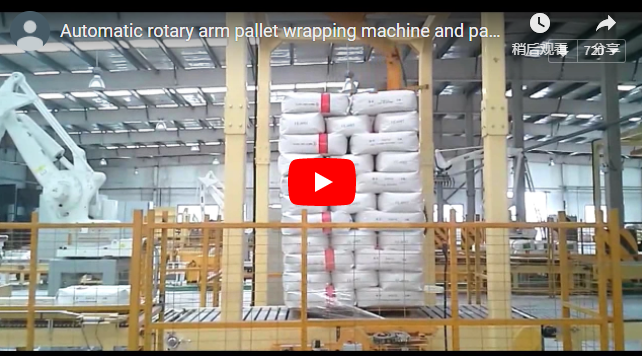
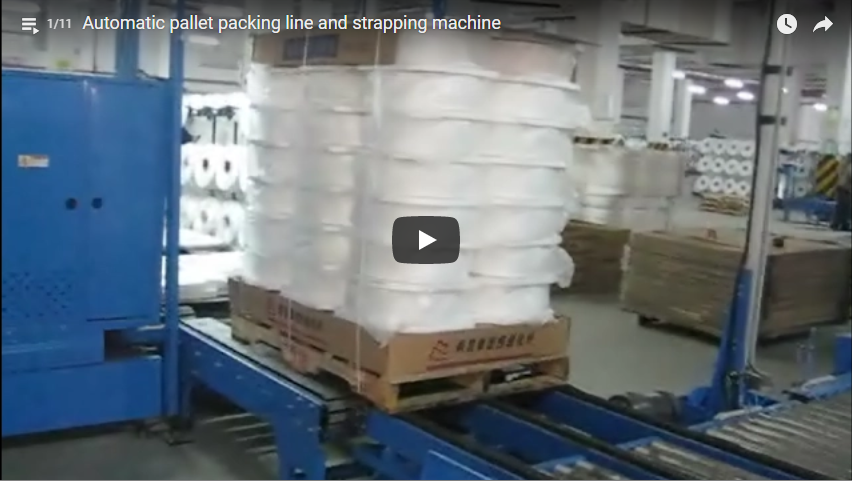
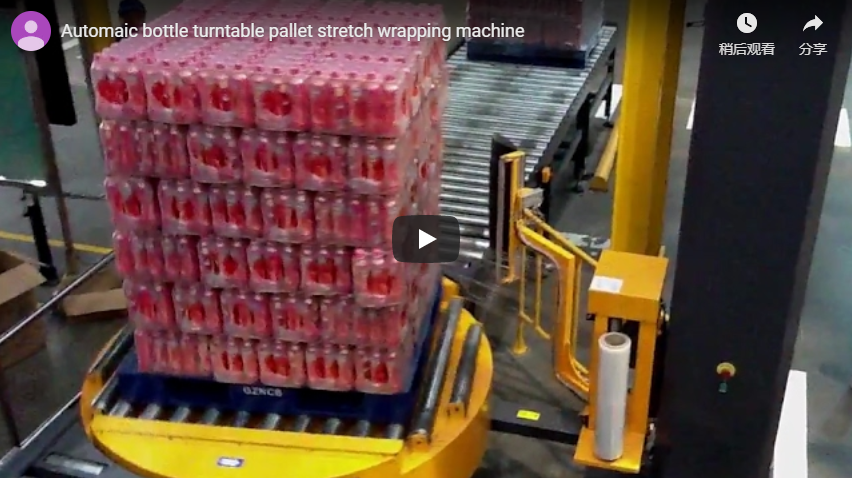
Double rotary arm stretch wrapping machine

Executive summary This video shows a double rotary arm stretch wrapping machine completing a full wrapping cycle on a palletized load in roughly 26 seconds of footage: the load enters on a roller conveyor, the rotary arm rotates around it while film is applied, and the fully wrapped pallet exits at the conveyor end. The article separates what is directly observable from what must be verified with the manufacturer.

Why this machine matters for pallet packaging

Stretch wrapping is the last step before a pallet leaves your plant. If it is done by hand, results vary with every operator: some loads get too little film, others get too much, and tall or heavy loads are physically hard to wrap safely. A rotary arm machine solves this by bringing the film to the load instead of spinning the load itself.

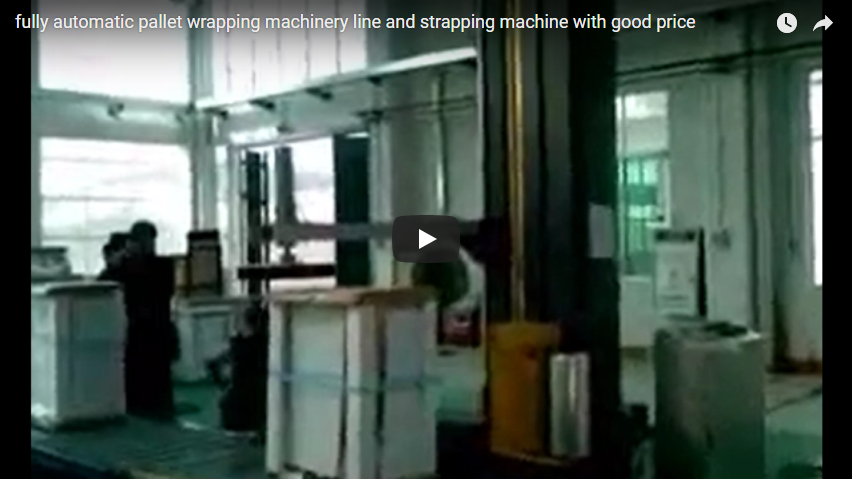
In the video on this page you can see a double rotary arm stretch wrapping machine in a real working layout. Two operators stand nearby, a palletized load moves in on a roller conveyor, the wrapping head travels around the load, and the wrapped pallet emerges at the end of the cycle. Nothing is staged or edited to hide the process — the footage shows the machine doing its normal job from standby through to output.

What the video shows, step by step

Based on direct analysis of the footage, the cycle unfolds as follows:

Phase Time in footage What happens
Standby and infeed 0–4 s A partially wrapped pallet load sits at the machine center on the roller conveyor. An operator in dark work clothing stands to the left, observing. The machine is still.
Wrapping 6–12 s The upper beam with the wrapping head begins rotating around the pallet. The load simultaneously advances on the conveyor into the wrapping zone. Film is applied as the arm turns.
Completion and output 14–26 s The rotary arm stops and the upper beam returns to its start position. The pallet is fully enclosed in clear stretch film and rests at the conveyor end, ready to be moved away. The operator walks around, apparently checking or preparing the next step.

The whole visible cycle — from a load entering the station to a fully wrapped pallet — is captured in well under half a minute of video. The exact cycle time for your load profile is not stated in the footage and should be confirmed with the manufacturer.

Direct observation notes

The following is a plain, fact-level description kept close to the original analysis of the video. Only grammar has been lightly edited; no facts have been added.

  • At the start, a double rotary arm wrapping machine is on standby; a partially wrapped pallet load sits at the machine center, and a male operator in dark workwear stands on the left side observing. A second operator briefly appears at the lower left of the frame. The upper crossbeam and two vertical columns are clearly visible.
  • Between roughly 6 and 12 seconds, the machine starts working. The upper crossbeam, which carries the wrapping head, begins rotating around the pallet load, while the pallet advances on the conveyor into the machine.
  • Between roughly 14 and 26 seconds, wrapping is complete. The rotary arm stops, the upper beam returns to its initial position, and the pallet — fully wrapped in clear plastic film — rests at the conveyor end. An operator moves through the frame, apparently inspecting or preparing the next step.
  • The machine frame is off-white / light cream colored metal. It is built as a gantry-style structure: two tall vertical columns connected by a top beam, with the film carriage (film supply and stretch unit) mounted so it can travel along the beam. Below the machine is a metal roller conveyor carrying the pallet. A control box and a film roll spool sit at the side of the machine.
  • The control box is light gray, with a small display and several buttons. The display shows the characters “U8”, and a red indicator light is lit in some frames.
  • The product is a rectangular pallet load on a light-brown wooden pallet, wrapped in multiple layers of transparent stretch film so it forms a single bonded unit. Blurred Chinese characters are visible on the film but cannot be read.
  • Not visible in the footage: emergency stop button, physical guarding, light curtains, warning signage, or interlock devices.

Machine structure at a glance

From what the frames show, the machine consists of these main elements:

  • Two vertical columns and a top beam — the rotary arm carries the wrapping head around the load, so the load itself does not need to rotate.
  • Film carriage on the beam — carries the film roll and applies stretch film as the arm turns; in the footage the head is seen traveling around the pallet during wrapping.
  • Roller conveyor — feeds the pallet into the wrapping zone and carries it out at the end of the cycle.
  • Side-mounted control box — light gray, with a display (showing “U8” in the footage) and push buttons, plus a red indicator lamp.
  • Film roll spool — mounted at the machine side, supplying the stretch film.

Because the load stays still on the conveyor while the arm rotates, this architecture is a common choice for heavy, unstable, or very tall loads that could shift or shed material if spun on a turntable. That said, the specific load limits of this machine are not shown in the video — check rated capacity and maximum pallet size with the manufacturer before ordering.

What the video does not show

Honest buying decisions need the gaps, not just the highlights. The footage does not show:

  • Rated load capacity, maximum and minimum pallet dimensions, or wrapping height range.
  • Actual cycle time for a standard load (the visible cycle is fast, but your load profile determines real throughput).
  • Machine model, serial number, or power requirements (voltage, current, power draw).
  • Overall machine footprint dimensions.
  • Control software details, wrap programs, or how wrap parameters are set.
  • Emergency stop location, guarding, light curtains, or interlocks — none were observed on camera, though a machine of this type would normally include an e-stop; verify its position and function.
  • Maintenance requirements, spare-part intervals, or certification (CE, UL, etc.).

Every one of these items belongs on your pre-purchase verification list.

Where this type of machine fits

Rotary arm wrapping suits operations where the pallet must remain stationary:

  • Heavy loads — steel parts, drums, bagged goods — that a turntable would struggle to spin.
  • Fragile or unstable stacks that could deform or shed when rotated.
  • High-bay logistics and distribution centers needing consistent, uniform containment force on every pallet.
  • Production line integration, since the load simply passes through on conveyor — as seen in the video, where the pallet enters and exits on the same roller conveyor.

Conversely, very small or irregularly shaped loads may not suit this machine format; that limitation is noted in the underlying analysis and is worth testing with your actual product before purchase.

Buying checklist — verify these before you order

  • Rated load capacity and max/min pallet dimensions match your products.
  • Wrapping height covers your tallest load.
  • Cycle time measured on your load, not a demo load.
  • Conveyor height and direction compatible with your existing line.
  • E-stop, guarding, and safety interlock locations confirmed on the drawing.
  • Film spec (width, gauge, pre-stretch) supported by the carriage.
  • After-sales service and spare parts availability in your region.
  • Power supply requirements for your facility.

Operator and safety notes

Two operators are visible in the footage, and the machine has moving rotary elements. Standard practice for this machine class:

  • Keep clear of the arm’s rotation radius while the machine is running; never reach into the wrapping zone during a cycle.
  • Confirm the emergency stop is functional at the start of every shift — its location was not visible in the video, so identify it on your own machine.
  • Load and unload pallets only when the arm is parked and the conveyor has stopped.
  • Train operators on the control box (display, buttons, indicator lamp) before solo operation.

Treat these as general guidance for rotary arm wrappers; specific safety requirements for this machine should be confirmed with the manufacturer.

Frequently asked questions

Does the pallet rotate during wrapping? No. In the footage the pallet stays on the conveyor while the upper beam with the wrapping head rotates around it. This is the defining feature of a rotary arm design.

How fast is one wrapping cycle? The visible cycle in the video completes within about 26 seconds of footage, but real cycle time depends on your pallet size, wrap count, and film settings. Confirm performance figures with the manufacturer.

Can it integrate with an existing conveyor line? The video shows the pallet entering and exiting on a roller conveyor, which indicates conveyor-to-conveyor integration. Whether it matches your line’s height and flow direction needs confirmation against your layout.

What kind of film does it use? The footage shows standard clear stretch film being applied. Film width, gauge, and pre-stretch specifications are not observable — check with the manufacturer.

What safety features are included? None (no e-stop, guarding, light curtain, or signage) were visible in the sampled frames. This is a limitation of the footage, not necessarily of the machine — request the full safety specification before purchase.

What loads is it unsuitable for? Very small or irregularly shaped loads may not wrap well under a rotary arm, per the analysis. Test with your actual product if you are unsure.

Source and method

The facts in this article come from the embedded video of the machine. The footage was analyzed frame-by-frame with a local vision-language model on sampled frames; the video contains background music only, with no narration or speech, so no transcript was used. Claims marked “verify with the manufacturer” reflect information not observable in the video.

Related reading

Next step

If a double rotary arm stretch wrapper looks like a fit for your pallet loads, the fastest way forward is to send us your pallet dimensions, weight, and line layout. Visit our contact page to request a proposal, cycle-time data, and the full specification sheet for this machine.