Executive summary Our automatic pallet wrapper starts, cuts and finishes the film without an operator. A gripper clamps the film tail, a hot wire cuts it, and a soft brush wipes the end onto the load. The B100 wraps loads up to 1,800 kg at a minimum of 24 loads per hour, with 250% pre-stretch.
Table of Contents
- The clamp, wrap, cut and wipe cycle
- What the film cutter changes
- Pre-stretch and film per pallet
- Turntable and carriage
- Controls
- Utilities and safety
- Selection checklist
- Engineering FAQ
- Next step
- Related reading
- Sources
The clamp, wrap, cut and wipe cycle
| Step | What happens |
|---|---|
| Clamp | the clamping device holds the film tail, so wrapping starts without tying the film to the load |
| Wrap | the load is wrapped to the parameters set on the control panel |
| Cut | after the cycle, the film is cut from the load and held by the clamper for the next pallet |
| Wipe | the trailing end is stuck to the load, so no film tail hangs in transport |
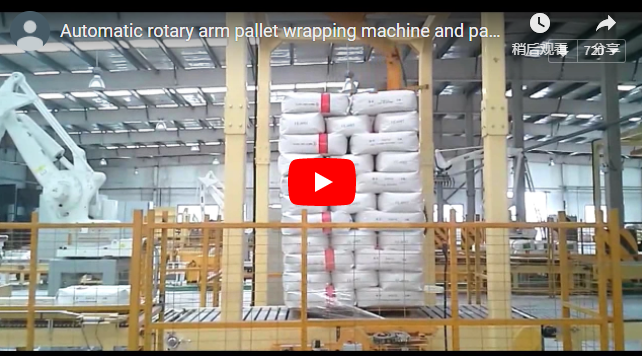
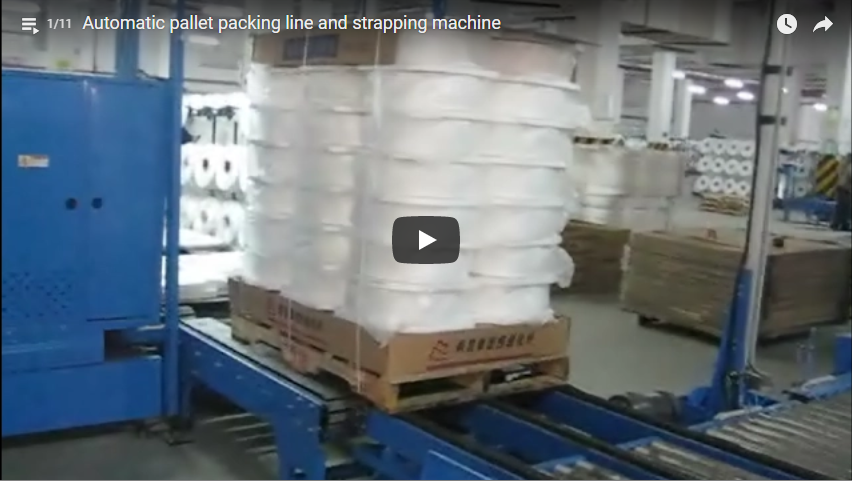
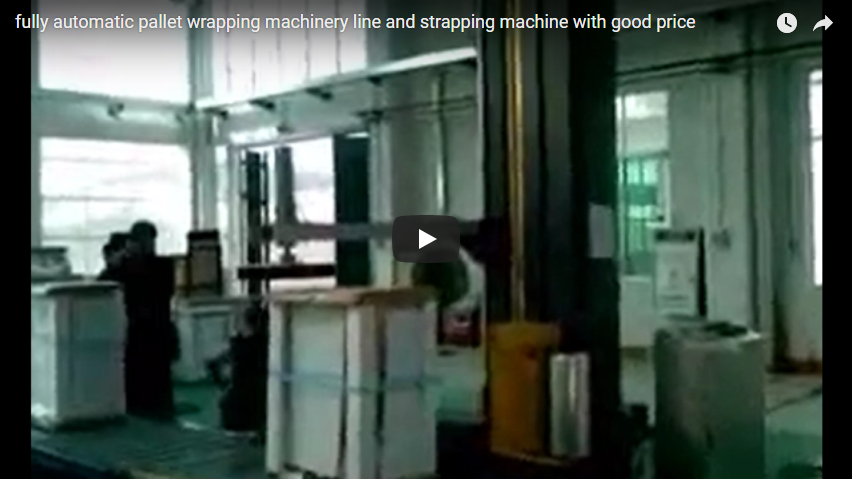
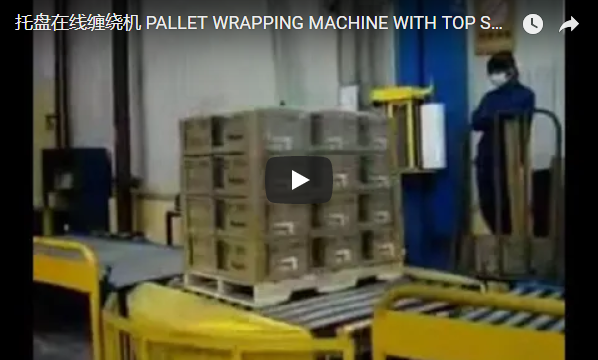
The clamp and cut unit sits at the turntable edge, where it can hold the film tail between loads, as our video shows on a carton pallet.
What the film cutter changes
On a semi-automatic wrapper, an operator ties the film on and cuts it off at every pallet. The automatic mechanical hand removes both steps.
| Item | B100 |
|---|---|
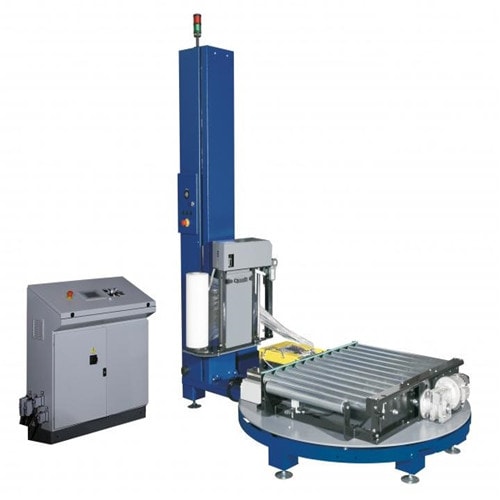
| Film clamper | scissors-like gripper bars |
| Cutting method | instant heating wire |
| Wiping system | soft brush sticks the film onto the pallet |
| Control | sensor and PLC program |
| Ready for next load | automatic material clamping |
With an infeed conveyor, the forklift driver drops the pallet and leaves. The wrapper runs unmanned.
Pre-stretch and film per pallet
The powered pre-stretch delivers film at 250%, optional 100–300%. At 250%, each metre of film off the roll becomes 3.5 m on the load. Illustrative example for a 1,200 × 1,000 mm pallet with 15 wraps:
| Item | Value |
|---|---|
| Load perimeter | 2 × (1.2 + 1.0) = 4.4 m |
| Film on the load | 4.4 × 15 = 66 m |
| Film off the roll | 66 ÷ 3.5 ≈ 19 m |
| Pallets per 1,500 m roll | about 79 |
Powered pre-stretch also lets the operator wrap light, unsteady pallets that friction systems cannot.
Turntable and carriage
| Parameter | B100 |
|---|---|
| Maximum load weight | 1,800 kg |
| Loads per hour | minimum 24 |
| Turntable diameter | 2,200 mm |
| Turntable speed | up to 12 rpm, adjustable |
| Turntable height | about 400 mm |
| Film carriage speed | 2.9 m/min |
| Wrap layers | bottom, middle and top, 0–99 wraps each |
The turntable is chain driven, runs on a ring-gear bearing with soft start and stop, and resets automatically. A photocell senses the load height.
Controls
| Item | B100 |
|---|---|
| Controller | PLC |
| Operator interface | separate buttons and HMI |
| Wrap settings | re-wrap, overwrap and overlap adjustment |
| Counters | independent top and bottom wrap counters, total and resettable cycle counters |
Utilities and safety
| Utility | B100 |
|---|---|
| Power supply | AC 380 V, 3 phase, 50 Hz |
| Turntable motor | about 0.75 kW |
| Roller motor | about 0.75 kW |
| Carriage up-down motor | about 0.37 kW |
| Pre-stretch motor | about 0.37 kW |
| Air supply | 6–8 kgf/cm² |
A red mushroom-head emergency stop and a lockable electrical disconnect are standard. The standards that apply depend on the destination market. For CE markets, ISO 12100 sets the risk-assessment method and EN 415-10 sets general requirements for packaging machines.
Selection checklist for an automatic pallet wrapper
- Pallet size, load height and weight.
- Loads per hour needed.
- Infeed and outfeed conveyors, yes or no.
- Pre-stretch level for your film.
- Compressed air at the machine.
- Top sheet or film covering, yes or no.
Engineering FAQ
Q: Does an operator need to tie or cut the film? A: No. The gripper clamps the tail, a hot wire cuts it, and a brush wipes the end onto the load.
Q: How many pallets per hour? A: A minimum of 24 loads per hour on the B100.
Q: How much film does one pallet use? A: About 19 m off the roll in our illustrative 15-wrap example at 250% pre-stretch.
Q: What is the heaviest load? A: 1,800 kg on the B100.
Q: Does it need compressed air? A: Yes. The air supply is 6–8 kgf/cm², and we confirm consumption in the proposal.
Next step
We plan your automatic pallet wrapper in three steps:
- Submit your layout drawing with pallet sizes, load heights and loads per hour to info@fhopepack.com.
- Receive a proposal within 48 hours, with the model, conveyors and options.
- Book a site survey to fit the wrapper to your line.
Related reading
- Automatic pallet wrapping machine B100
- Automatic stretch wrapping machine B200
- Automatic pallet wrapping machinery
- Video: automatic turntable pallet wrapping machine line
- Video: fully automatic pallet wrapping machinery line
Sources
- B100 data, cutter and utilities: automatic pallet wrapping machine B100 page
- Clamp, wrap, cut and stick cycle: automatic pallet wrapping machinery page
- Machine in action: our automatic pallet wrapper with film cutter video on YouTube
- Standards scope: ISO 12100:2010, EN 415-10:2014
Last reviewed: 2026-10-04