Executive summary An automatic strapping machine takes stacked loads straight from the conveyor, closes a strap around each bundle and releases it without manual handling. The clip shows that cycle running on brick stacks; our equivalent strapping solution is configured per project. Configuration choices, safety references and the quoting steps follow.
Table of Contents
- What the video shows
- Where this machine fits
- How the strapping cycle runs
- Configured per project
- Selection checklist for a strapping station
- Controls and safety
- Engineering FAQ
- Next step
- Related reading
- Sources
What the video shows
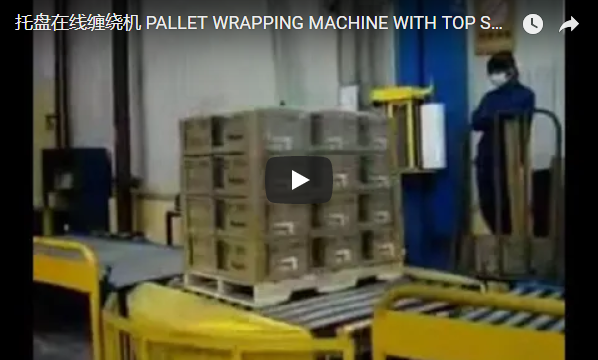
The clip is a single continuous shot: the camera stays with the machine while it works through brick loads. A stack of rectangular blocks sits on the conveyor section inside the machine frame at the start of the video.
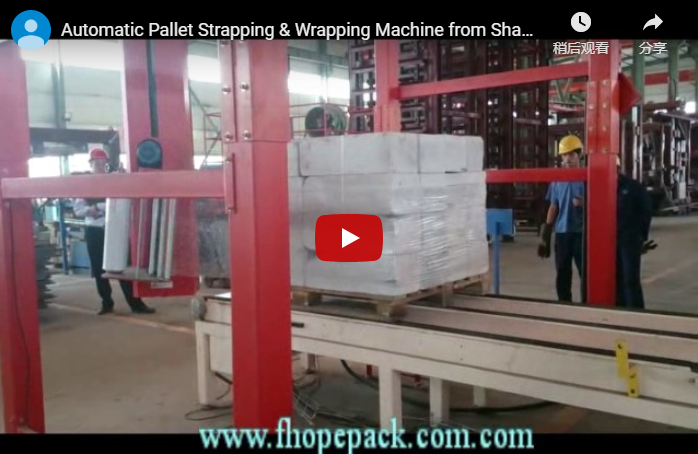
A tall stack of red bricks stands on the conveyor inside the yellow strapping arch, and vertical straps appear on the stack as the clip goes on. Brick stacks travel through the strapping arch rather than being handled by hand.
A tall brick stack is secured while it stands under the strapping head. Later in the video, a bundle of bricks is strapped on the conveyor while several people watch from beside the line.
Each stack stays in the arch while the straps are added. People stand beside the machine throughout the clip.
Where this machine fits
The station sits between the stacker and the wrap-or-dispatch point. Fired brick, pressed blocks and foundry ingots all leave a stacker as a stable rectangle, and horizontal strap adds the compression the stack lacks on its own.
Because strapping happens in-line, the load moves from the stacker, through the arch and on toward wrapping or loading without being set down and re-handled. Mixed-product lines benefit most: a tall brick stack and a low pallet of blocks can pass through the same station as long as both fit the arch opening.
How the strapping cycle runs
A typical automatic cycle has four beats. The load indexes into the arch and stops in position. The strap is fed around the bundle — over the top, down the sides and under the conveyor section. The clincher tensions the strap to the set level and closes the seal.
With the strap closed, the knife separates the coil from the finished bundle and the conveyor advances. Each bundle gets the same treatment — the same tension setting, the same seal position, the same strap pattern — which is the practical difference between an in-line strapper and hand strapping.
Staff stand close to the machine in every frame; how the cycle is started, and whether any step is manual, are not shown.
Configured per project
Strapping equipment is configured per project rather than sold as a fixed box. The arch opening is sized to your tallest expected stack, the conveyor height matches the joining line, and strap grade and width follow the weight and edge sharpness of the product.
| Item | How it is set | Unit |
|---|---|---|
| Arch opening | Sized to the tallest stack in your layout | mm |
| Conveyor height | Matched to the joining line | mm |
| Strap width | Selected for load weight and edge sharpness | mm |
| Strap tension | Set per load and confirmed at commissioning | N |
| Sealing method | Chosen per strap type and duty | — |
Seal type, tension range and coil size are specified the same way. A layout drawing is what turns those choices into a concrete proposal, because it shows the infeed height, the direction of travel and the space available around the station. Browse the full equipment range at fhopepack.com.
The cycle numbers below are an illustrative customer example, not a measurement of the machine in the clip. At a 12 s cycle the station straps 300 bundles per hour. If the target is 240 bundles per hour, the cycle budget is 15 s.
| Item | Value |
|---|---|
| Example cycle time | 12 s |
| Output at a 12 s cycle | 300 bundles/h |
| Example target output | 240 bundles/h |
| Cycle budget for that target | 15 s |
Selection checklist for a strapping station
- Largest stack height and width on this line, plus the pallet or bundle footprint.
- Product family: fired brick, pressed blocks, ingots or other bundled goods.
- How the load arrives: conveyor from the stacker, or hand fed to the arch.
- Strap type and coil stock you already buy, or a grade we should pair with the load.
- Conveyor infeed height, discharge height and travel direction.
- Destination market, so the guarding and e-stop layout is reviewed against the right standards.
Controls and safety
The footage was filmed with staff close to the machine, which is normal for a demonstration recording — it is not a model of how the station should be staffed in production. Plan the layout so the strapping area stays clear during the cycle.
If a strap jam, mis-feed or blocked load needs attention, the machine is stopped at the controls and isolated, with lock-out applied per your site procedure, before anyone reaches toward the arch. Never reach into the strapping area while the machine is powered and able to cycle.
The standards that apply depend on the destination market. For CE markets, ISO 12100 sets the risk-assessment method and EN 415-10 covers the general safety requirements of packaging machines.
Engineering FAQ
Q: Which products are a poor match for strap bundling? A: Loose items that cannot be compressed and loads that crush at the edges. Anything that leaves the stacker as a stable bundle is a candidate.
Q: Can the station handle more than the product shown in the clip? A: Yes, provided each product fits the arch opening and tolerates compression. The recipe for each product is selected at the controls.
Q: Can the frame match my conveyor height and travel direction? A: Yes — frame, arch and conveyor interface are built around your line. A drawing showing infeed height and direction is enough to size it.
Q: Which safety references apply? A: It depends on where the machine ships. European deliveries work to ISO 12100 and EN 415-10; other regions follow their own rules.
Q: How quickly can I expect a quotation? A: A layout sketch is enough to begin; the quotation step typically completes in 48 hours, with an optional on-site survey to follow.
Next step
We specify a strapping station for your line like this:
- Submit your layout drawing with the stack sizes and line details, to info@fhopepack.com.
- Receive a proposal within 48 hours, including the strapping station and the conveyor match.
- Book a site survey so we confirm the infeed height, the line direction and the space around the arch.
Related reading
- Auto Pallet Strapping Machine for Conveyor Lines
- Bottle Pallet Strapping Machine for Layered Plastic Bottles
- Slit Coil Packing Line for Service Centers: Strapping, Eye-Through Wrapping and Stacking
- Automatic Steel Coil Strapping Machine for Slit Steel Coils
- Automatic Steel Tube Bundling and Strapping Solution
- Automatic Steel Coil Strapping Machine
Sources
- Recorded clip: the video on YouTube (@stretch Wrapper)
- Original video page: automatic-pet-strapping-machine-for-brickingotspallet
- Standards scope: ISO 12100; EN 415-10
- Proposal timing: approved house CTA (proposal within 48 hours)
Last reviewed: 2026-10-06