Executive summary
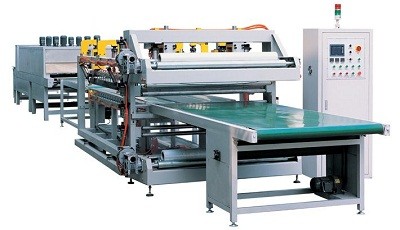
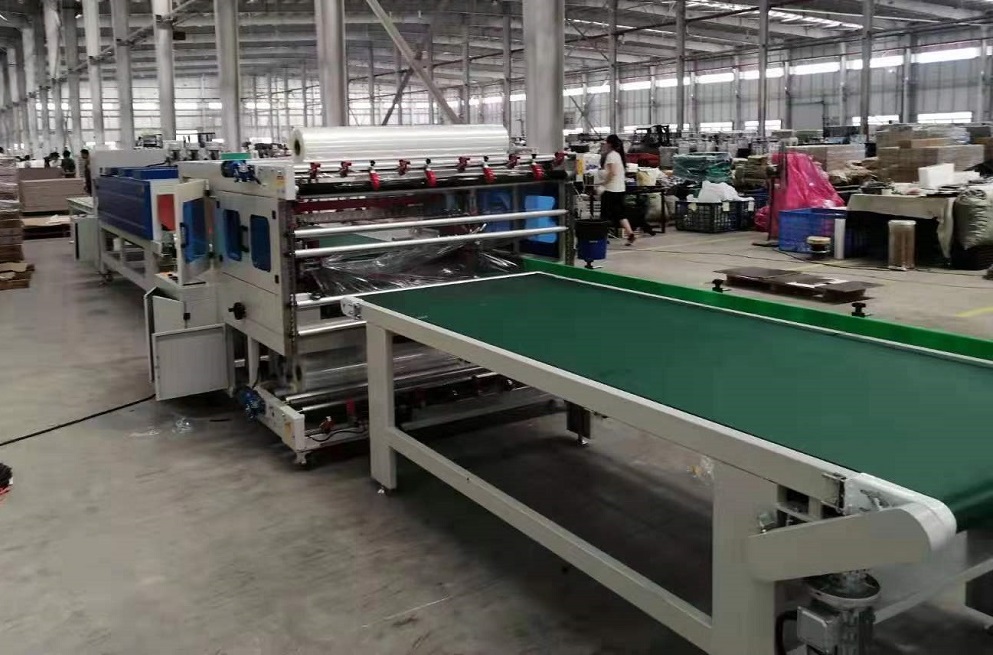
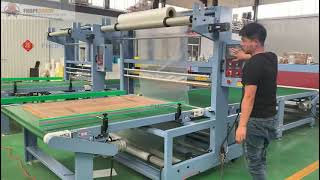
Flat, wide products like paper stacks sit differently on every line, and the film that seals them has to be applied and pressed around each one. This machine applies film sealing to panels and stacks: a sealing head presses film around the product on a conveyor, producing a tight sealed package. We build film sealing machines for panel, door and stack products. Product range and film plan are confirmed per project.
Table of Contents
- Why flat stacks are sealed
- How the machine feeds
- The sealing head
- Wrapping the stack
- A tight sealed package
- Conveyor flow
- Typical configuration
- What the video shows
- Selection checklist
- Operation and safety
- Engineering FAQ
- Next step
- Related reading
- Sources and standards
Why flat stacks are sealed
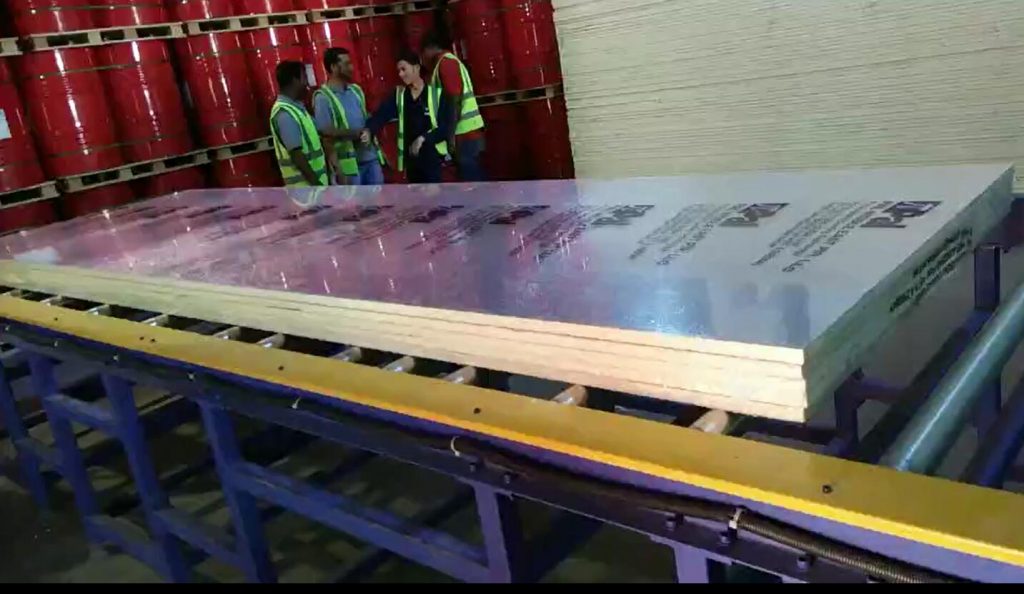
Large flat products, paper stacks, panels and doors, are wide, easily marked and hard to handle, and they need film to stay clean and together. Sealing film around the product protects the surface and holds the stack, so panels arrive without edge damage and paper stays clean. Hand sealing is slow and varies with the operator, leaving some stacks loose. The machine seals every stack the same way, and the product range is confirmed per project.
How the machine feeds
The product moves into the machine on a conveyor, arriving under the sealing station as one flat unit. Conveyor feed carries the stack without lifting it, so wide and heavy panels arrive in position the same as light ones. The feed spaces the stacks so each one reaches the sealing head ready for film. Conveyor width and stack size are confirmed per project.
The sealing head
At the sealing station, a sealing head descends and presses film against the product, starting the seal. The head pressing onto the stack is what closes the film around the product, and an even press gives an even seal across the full width. Because the head works from above, it suits flat stacks that sit level under it. Head travel and pressure follow the product, confirmed per project.
Wrapping the stack
Film is pulled from a roll and wrapped around the stack, covering the faces the seal will close. The wrap is drawn close by the sealing action, so the film goes around the stack rather than hanging loose on it. Even wrapping matters because the seal can only hold what the film covers. Film layout and wrap cover follow the product dimensions, confirmed per project.
A tight sealed package
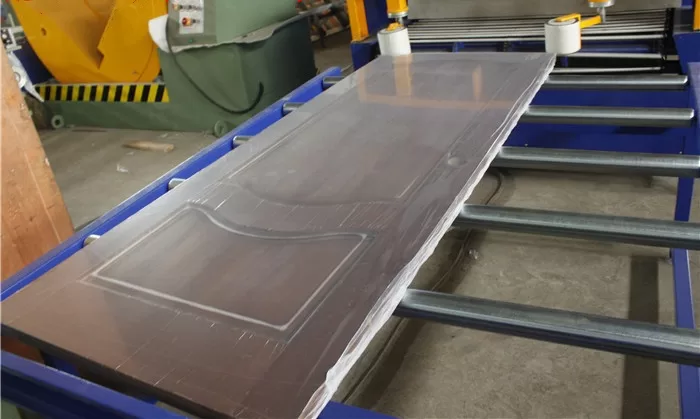
The finished package is tight and sealed, with the film held close around the stack on every side. A tight seal is what keeps the package together through handling and gives the product a clean stored surface. The seal holds because it is made by the machine at even pressure, not by a hand that varies. Package tightness is confirmed per project against how the stack is handled.
Conveyor flow
The product completes the cycle on the same flow: in on the conveyor, sealed under the head, and out as a finished package. Keeping the flow on one conveyor removes the handling between steps, and the machine stays in rhythm with the line around it. Conveyor flow is what ties the machine to production, and its speed and height are confirmed per project.
Typical configuration
Figures below list functional design boundaries rather than numeric values, and are confirmed per project.
| Parameter | Typical range, confirmed per project |
|---|---|
| Product | paper stack, panel, door |
| Feed | conveyor width |
| Seal | head travel, pressure |
| Film | roll plan |
| Flow | line rhythm |
| Electrical supply | 380 V three phase 50 Hz, or 220 V single phase for light machines, selected per project |
What the video shows
Our footage shows an automatic film sealing machine applying and pressing film around a flat stack on a conveyor. It is a general demonstration, so your product range and film plan are confirmed with us per project.
Selection checklist
| Question | Confirm per project |
|---|---|
| Product | stack, panel, door |
| Feed | conveyor fit |
| Seal | head settings |
| Film | cover plan |
| Flow | line rhythm |
| Electrical supply | voltage, phase and frequency on site |
Operation and safety
Run the recipe from the panel and the machine feeds, presses and seals each stack automatically. Keep clear of the conveyor, sealing head and film path while the machine runs, with guarding and emergency stops at the operator position. Routine checks cover the conveyor, seal head, film feed, sensors and control, per the machine manual. Confirm the seal settings against the product before each run so packages stay tight.
Engineering FAQ
Q: What does this machine seal? A: It applies and presses film around flat stacks, panels and doors.
Q: How is the film applied? A: A sealing head descends and presses film against the product to close it.
Q: Why press the film? A: Even pressure closes the film fully across the stack, giving a tight seal.
Q: How does the product move? A: It feeds in on a conveyor and leaves the same way on the same flow.
Q: What comes out? A: A tight sealed package with the film held close around the stack.
Next step
- Email us at info@fhopepack.com with your product range, films and volumes.
- We send a film sealing proposal and a layout drawing within 48 hours.
- We arrange a site survey to confirm product range and line position.
Related reading
- Automatic film sealing machine on panel and door
- Automatic panel shrink packing machine
- Automatic shrink packaging machine for plates
- FHOPE packing machinery product lines
Sources and standards
- ISO 12100:2010 Safety of machinery, general principles for design and risk assessment
- EN 415-10:2014 Safety of packaging machines, general requirements
- EN ISO 13849-1:2023 Safety of machinery, safety-related parts of control systems
FHOPE automatic film sealing machine demonstration video. Reviewed as a general demonstration; product range confirmed per project.
Last reviewed: 2026-10-10