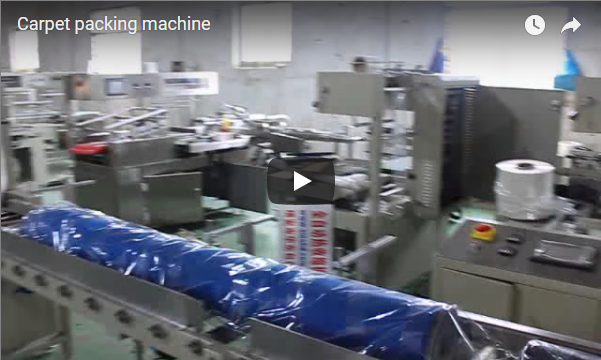
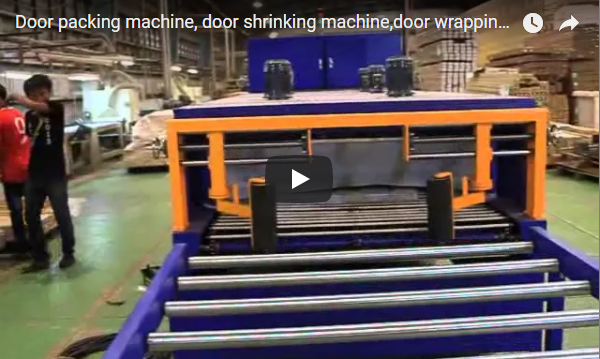
Summary: This guide provides a printable checklist for selecting, installing, and operating an automatic bagging machine for guide rails and aluminum profiles. It covers common mistakes, critical parameters, and pass/fail criteria to ensure you get a sealed, moisture-proof package that protects precision surfaces and avoids costly warranty claims.
🛠️ Scope
This guide provides a practical selection and operation checklist for automatic bagging machines designed to protect precision guide rails and aluminum profiles from moisture and dust. It replaces manual wrapping with horizontal form-fill-seal (HFFS) technology, operating at 5–15 packs per minute with sealing temperatures between 140°C and 180°C. By following these verification steps, manufacturers can ensure hermetic seals that prevent costly warranty claims, which typically cost ten to fifty times the value of the rail itself.
🏗️ Checklist Body
This structured evaluation framework helps plant managers and procurement teams verify that an automatic bagging system meets operational requirements before purchase or commissioning. It breaks down critical checks into selection, installation, and daily operation phases, ensuring equipment delivers consistent hermetic seals while minimizing unplanned downtime from sensor contamination or roller residue buildup.
Selection Phase
-
[ ] Confirm product dimensions match machine specs. Pass: Product length aligns with 1,000–2,100 mm guide rails. Cross-section typically ranges between 50–100 mm; verify forming box adjustability with the supplier if outside this range. Fail: Product exceeds verified limits without a custom adapter.
-
[ ] Verify film compatibility. Pass: Machine accepts standard PE or POF packaging films that heat-seal reliably. Film thickness varies by application; confirm typical industrial ranges (0.025–0.050 mm) with your supplier. Fail: Using non-heat-sealable materials or unverified thicknesses that cause jams.
-
[ ] Check sealing temperature control. Pass: Equipped with PID control (a precise temperature regulation system) maintaining the 140–180°C range. Tolerance typically falls within ±5°C; request supplier verification for critical applications. Fail: Relies on basic on/off switches without digital readouts or stability controls.
-
[ ] Ensure longitudinal sealing roller cleaning feature. Pass: Includes an automated station that wipes PTFE-coated rollers to prevent film residue buildup. This is a commonly missed item that significantly extends seal consistency. Fail: Requires manual cleaning, which increases downtime and contamination risk.
-
[ ] Validate sensor protection for dusty environments. Pass: Photoelectric sensors feature IP67 ratings (industrial-grade dust and water resistance) with optional air-cleaning nozzles to clear lens debris every 100 cycles. Fail: Standard lower-rated sensors without protective airflow, leading to frequent false triggers in machining areas.
Installation & Commissioning
-
[ ] Check power supply compatibility. Pass: Matches standard industrial 380V / 50Hz / 3-phase requirements with typical power draw around 4.5 kW. Verify exact electrical specs against your facility’s grid capacity before installation. Fail: Mismatched voltage or phase without a certified transformer or converter.
-
[ ] Verify conveyor speed alignment. Pass: Belt speed is adjustable (typically 0.5–2.0 m/s) and synchronizes with sealing rollers to maintain consistent film tension. Fail: Unsynchronized speeds that cause film wrinkling, tearing, or misaligned seals.
-
[ ] Inspect forming box adjustment. Pass: Adjustable angle range (commonly 15–45°) adapts smoothly to different profile cross-sections without catching or bunching the packaging film. Fail: Fixed geometry that restricts product variety or causes material waste.
-
[ ] Confirm safety compliance. Pass: Built to meet recognized international benchmarks like EN ISO 12100 and EN 60204-1, ensuring safe operator interaction and electrical standards. Verify certification documentation directly with the manufacturer. Fail: Missing safety certifications or incomplete operational manuals.
Daily Operation
-
[ ] Perform a peel test on the first 5 packages of each shift. Pass: Longitudinal and cross seals remain intact when pulled apart at a 90-degree angle by hand. Fail: Any seal separation indicates temperature drift, pressure loss, or film misalignment requiring immediate adjustment.
-
[ ] Monitor sealing temperature every 30 minutes. Pass: Readings stay stable within the 140–180°C operating window for both seal types. Fail: Significant deviation outside this range; pause production and recalibrate the PID controller before resuming.
-
[ ] Inspect film residue on longitudinal rollers after 2 hours. Pass: Surfaces remain clean with automated cleaning cycles functioning correctly. Fail: Visible buildup requiring manual intervention; verify cleaning station programming and air pressure settings.
-
[ ] Check sensor lens cleanliness every 100 cycles. Pass: Air-cleaning nozzle operates actively, keeping detection lenses free of metal dust or debris. Fail: Obscured sensors causing production stoppages; realign nozzles or increase compressed air flow.
-
[ ] Validate package dimensions and seal placement. Pass: Each unit is fully enclosed with centered end seals (typically within 5 mm of the product edge) and zero film tears. Fail: Open ends, excessive wrinkles, or off-center sealing that compromises moisture protection.
📈 Pass/Fail Criteria
Clear acceptance thresholds prevent costly production delays by defining exact performance benchmarks before equipment deployment or shift changes. This section establishes mandatory verification steps for each operational phase, ensuring that sealing consistency, sensor reliability, and safety compliance meet factory standards. Any deviation triggers immediate corrective action to protect precision surfaces from environmental damage.
A machine passes selection if all Selection Phase items pass. It passes installation if all Installation & Commissioning items pass. Daily operation passes if at least 4 of 5 Daily Operation items pass. If any item fails, corrective action is required before proceeding. For selection failures, contact the supplier for a model that meets verified specs. For installation failures, re-commission with technical support. For daily operation failures, stop the line, resolve the issue, and re-test five packages. A commonly missed failure point involves longitudinal roller cleaning; without it, seal quality degrades after several hours of continuous use. Another frequent issue is sensor contamination in machining environments, which causes false triggers and unplanned downtime. Upgrading to protected sensors with airflow cleaning typically resolves this reliability gap.
🛡️ Commonly Missed Items
Overlooking these frequently neglected features often leads to premature equipment failure, inconsistent seal quality, and unexpected maintenance costs during high-volume production runs. This section highlights critical upgrades that suppliers routinely exclude from base specifications but are essential for maintaining hermetic protection in demanding industrial environments.
-
Longitudinal roller cleaning station: Often omitted in basic machine quotes. Without automated wiping, film residue accumulates quickly, causing seal leaks and requiring frequent shutdowns. Pass: Automated cleaning cycle integrated into the design. Fail: Manual-only maintenance protocols.
-
IP67 sensors with air cleaning: Standard lower-rated sensors struggle in dusty guide-rail machining environments. Pass: Industrial-grade IP67 rating combined with periodic compressed-air nozzle activation. Fail: Unprotected lenses that require constant manual wiping.
-
Sealing temperature tolerance: Many suppliers advertise wider tolerances, but tighter control ensures consistent hermetic seals for moisture-sensitive components. Pass: PID regulation maintaining stable heat distribution. Fail: Wide variance that compromises seal integrity across different ambient conditions.
-
Forming box adjustability: A fixed forming geometry cannot efficiently handle varying profile cross-sections without film waste or jamming. Pass: Adjustable angle mechanism accommodating multiple product sizes. Fail: Rigid construction limiting production flexibility.
-
Film thickness verification: Using packaging films outside standard industrial ranges causes either weak seals (too thin) or mechanical jams (too thick). Pass: Supplier-verified film compatibility chart provided at purchase. Fail: Unchecked material substitutions that disrupt machine timing.
Tip: When specifying the machine, request written confirmation of sealing temperature stability and roller cleaning intervals. These baseline guarantees are standard industry practice and directly impact long-term packaging reliability and product protection standards.
⚙️ Purchase-Decision Checklist
This final verification matrix streamlines the procurement approval process by consolidating technical requirements into a single, actionable scoring system. It enables cross-functional teams to quickly identify specification gaps, negotiate supplier guarantees, and confirm that the selected bagging machine aligns with long-term production efficiency and product protection goals.
| Check | Item | Yes/No |
|---|---|---|
| 1 | Product length 1,000–2,100 mm? | ☐ |
| 2 | Cross-section 50–100 mm (W & H)? | ☐ |
| 3 | Film type PE or POF, standard thickness range? | ☐ |
| 4 | PID temperature control with verified stability? | ☐ |
| 5 | Automated roller cleaning integrated system? | ☐ |
| 6 | IP67 sensors with air cleaning capability? | ☐ |
| 7 | Power supply matches standard industrial grid (380V/50Hz)? | ☐ |
| 8 | Conveyor speed adjustable to match sealing rhythm? | ☐ |
| 9 | Forming box adjustable for multiple profile sizes? | ☐ |
| 10 | Safety certifications documented and verified? | ☐ |
Pass: 10/10 Yes. Fail: Any No. For a No, verify with supplier or upgrade spec to match operational requirements.
🛠️ FAQ
Q: Can this machine handle carpet rolls? A: No. The machine is designed for rigid, linear products like guide rails and aluminum profiles with a cross-section of 50–100 mm. Carpet rolls are flexible and require a different bagging system, such as a vertical FFS or a sleeving machine.
Q: What is the typical payback period? A: Replacing manual film wrapping with an automatic bagging machine generally reduces labor requirements per shift and eliminates warranty claims caused by moisture damage. Actual return on investment depends on your specific production volume, shift patterns, and local labor costs; most facilities see positive ROI within a standard operational timeframe.
Q: How do I integrate this with a coil upender? A: If your guide rails are stored in coils, you may need a coil upender to orient them for the bagging machine infeed. The upender tilts the coil from vertical to horizontal, aligning with the conveyor. See our coil upender page for specs.
Q: What is the maximum package length? A: The machine handles products up to 2,100 mm. For longer rails, a custom machine or a two-stage bagging process is needed. Verify with the supplier.
Q: How often should I replace the sealing jaws? A: The rotary sealing jaws use hardened tool steel designed for durability. Under normal operation (5–15 packs/min across multiple shifts), replacement intervals vary based on film type and usage frequency. Replace when cross-seal quality degrades or visual inspection shows blade wear.