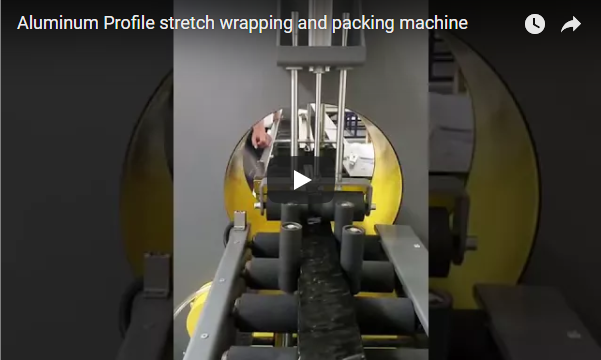
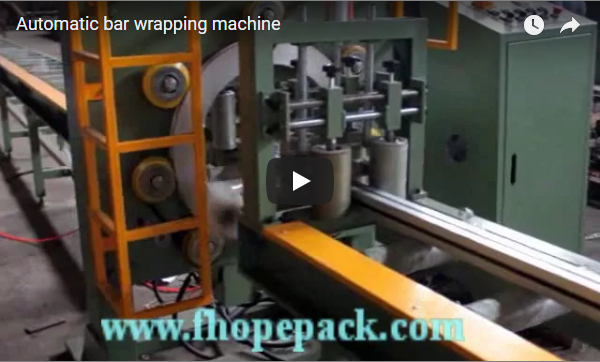
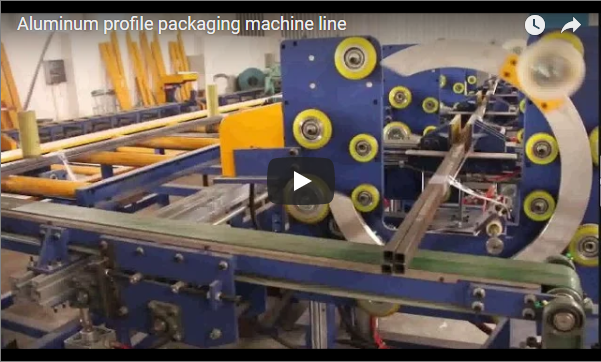
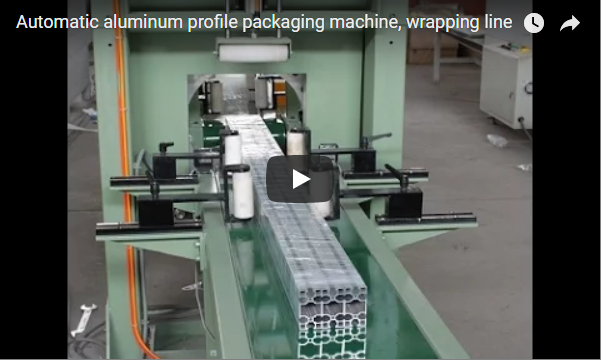
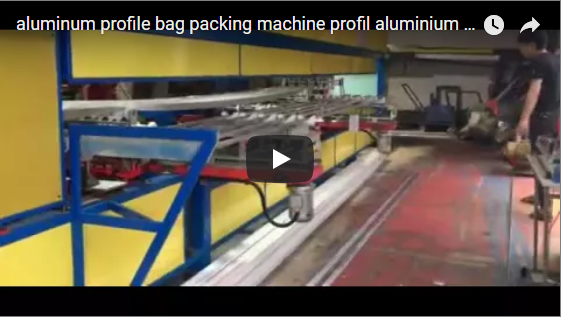
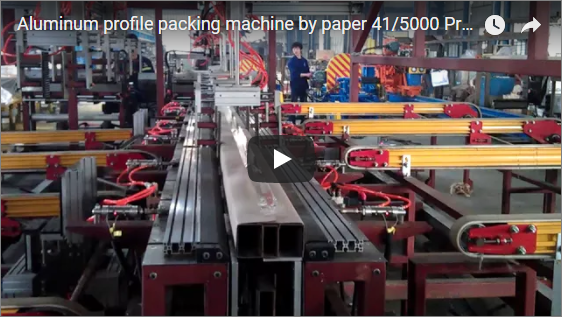
An industrial aluminum packing machine protects soft, chemically reactive, non-magnetic surfaces from scratching, pressure rub-marks, and moisture-induced oxidation (white rust). For coiled strip, an eye-through wrapper drives stretch film through the core while the coil rotates on polyurethane-cradle rollers. For extruded profiles, a through-feed orbital wrapper rotates the film carriage around the bundle as it passes through the ring.
Executive Summary
Protecting aluminum coils and extruded profiles during transit requires packaging machinery engineered for non-ferrous metals. Aluminum easily suffers friction damage, edge deformation, and surface staining when moisture is trapped between layers. Dedicated packing systems integrate closed-loop film tension control, polyurethane-shielded handling tables, and barrier films to eliminate transit damage and optimize material yield.
Aluminum Coil Packing
For slit coils and master coils, eye-through wrapping through the center bore is the standard solution:
- Coil Loading and Centering: The coil is set on a polyurethane-cradle roller table by crane, C-hook, coil car, or 90° upender, avoiding contact gouging.
- Film Threading and Shuttle System: The film carriage runs on a ring track through the coil eye; an opening mechanism clears the coil wall and drives the shuttle through the core.
- Synchronized Kinematics: The ring and cradle rollers rotate in coordination to apply an adjustable 30–70% spiral overlap.
- Tension-Controlled Application: Load-cell feedback holds low, stable film tension (40–80 N) to prevent edge cut-through on soft tempers such as 1050 or 3003-O.
- Automated Cut and Clamp: Pneumatic cut-and-wipe arms secure the film tail to the outer wrap without adhesive contact with the bare aluminum.
Aluminum Coil Packing Specifications
| Parameter | Standard Range | Heavy-Duty Master Coil |
|---|---|---|
| Coil Inner Diameter (ID) | 300–800 mm | 508–610 mm |
| Coil Outer Diameter (OD) | 500–2,000 mm | 1,000–2,200 mm |
| Coil Axial Width | 300–2,000 mm | Up to 2,500 mm |
| Maximum Coil Weight | 2,000–10,000 kg | Up to 30,000 kg |
| Ring Rotation Speed | 15–35 RPM | 10–25 RPM |
| Film Pre-Stretch Ratio | 150–250% (powered servo) | 200–300% |
| Recommended Film | Cast LLDPE / Multi-layer VCI | 25–40 µm (100–160 gauge) |
Aluminum Profile Packing
For architectural extrusions and industrial profiles, the through-feed orbital wrapper protects bundle lengths during handling:
- Bundle Formation: Profiles are batched with foam interleavers and lightly bundled with low-tack PP straps or stretch-tape bands.
- Through-Feed Wrapping Process: An orbital profile wrapper uses a continuous solid ring; powered conveyors feed the bundle axially through its rotating center.
- Dynamic Pneumatic Hold-Down: Overhead pressure rollers and lateral pneumatic guides clamp the bundle to prevent dispersion, chatter, and scuffing from ring rotation forces.
- Cycle Sealing: Pneumatic cut-and-clamp mechanisms seal the film tail on the fly, enabling continuous indexing without stopping the line.
Aluminum Profile Packing Specifications
| Parameter | Standard Profile Line | Structural / Large Extrusions |
|---|---|---|
| Bundle Length | 2,000–7,000 mm | Up to 14,000 mm |
| Cross-Section Envelope | 100 × 100 to 500 × 500 mm | Up to 900 × 900 mm (or Ø 1,000 mm) |
| Bundle Weight Capacity | 50–1,500 kg | Up to 3,000 kg |
| Ring Rotation Speed | 30–80 RPM | 20–50 RPM |
| Conveyor Linear Speed | 5–25 m/min | 3–15 m/min |
| Pre-Stretch Ratio | 150–250% | 200–300% |
| Film Specification | High-clarity Cast LLDPE | 17–25 µm (70–100 gauge) |
Film Selection for Aluminum Protection
Aluminum reacts rapidly with trapped moisture, producing hydroxide staining (“water stains” or “white rust”), so film chemistry is critical:
- Cast Polyethylene (LLDPE): Cast multi-layer film provides optical clarity, silent unwinding, and consistent puncture resistance against profile burrs.
- Gauge Selection: 17–23 µm (70–90 gauge) for architectural extrusions; 25–35 µm (100–140 gauge) for heavy slit coils.
- UV-Stabilized Blends: For outdoor yard staging or flatbed freight, 12–24 month UV inhibitors prevent film embrittlement.
Vapor Corrosion Inhibitor (VCI) Films
For ocean transport and tropical environments, co-extruded VCI films release inhibitors that passivate the aluminum surface and suppress electrochemical oxidation, eliminating the need for protective oils and secondary degreasing.
Moisture Barrier Films
For high-humidity transit, high-barrier co-extruded films (EVOH or metal-bonding polymers) keep vapor transmission below 1 g/m² per 24 h, preventing seepage, condensation, and dew-point staining.
Film Tack and Cling
Standard stretch film relies on migratory tackifiers for cling, but over time these additives migrate and leave oily stains or corrosive tracks on bare or anodized aluminum:
- One-Sided Differential Cling: Premium aluminum wrapping requires one-sided cling, with the cling layer facing outward (or non-migratory co-extruded skin layers).
- Surface Slide: The smooth non-cling inner layer contacts the aluminum without bonding, allowing relative movement in transit without scuffing.
- Self-Sealing Integrity: Overlapping outer cling layers weld together under tension, forming an impermeable, self-adhering shell.
Pre-Stretch Technology
Pre-stretch carriages isolate the tension zone from the application zone, protecting delicate aluminum geometries:
- Dual-Motor Powered Pre-Stretch: AC servo motors drive two rubberized rollers at differential speeds, elongating film 150% to 300% before it leaves the carriage.
- Molecular Alignment: Elongating LLDPE past its yield point aligns polymer chains, increasing tensile strength and puncture resistance.
- Material Cost Savings: A 250% pre-stretch ratio reduces resin consumption by 50–65% versus mechanical brake systems.
- Constant Low Wrap Force: Pre-stretching lowers downstream tension requirements, preventing crushing of thin-walled profiles or warping of extruded fins.
Aluminum Coil vs. Profile: Different Approaches
Coils and profiles present different load dynamics, requiring distinct machine architectures:
| Feature | Aluminum Coil Processing | Aluminum Profile Processing |
|---|---|---|
| Primary Kinematic | Eye-through radial spiral wrap | Axial through-feed orbital wrap |
| Workpiece Position | Dual-roller rotating cradle | Polyurethane infeed/outfeed conveyor |
| Ring Design | Open/close track shuttle mechanism | Continuous solid rotating ring |
| Clamping Mechanism | Core-expansion or perimeter stabilizing arms | Vertical top-press and lateral side rollers |
| Primary Risk Area | Edge cracking and inner lap gouging | Bending deflection and cross-section collapse |
| Cycle Pacing | Batch index (2–5 min per coil) | Continuous pass-through (up to 20 m/min) |
Automatic Edge-Board Applicators
Sharp coil edges and pointed bundle corners concentrate film forces, causing puncturing or surface deformation:
- Automated Corner Feeding: Applicators place heavy-duty cardboard edge protectors along package edges before film application.
- Load Distribution: Edge boards spread film tension over a wider area, preventing high-tension wraps from notching soft alloy edges.
- Strap and Stack Protection: Reinforced boards stop steel/PET strapping from cutting the metal and add crush-resistant shoulders for multi-tier storage.
Safety and Operational Standards
Heavy, rotating machinery requires full safety integration in line with international standards:
- CE and North American Compliance: Systems are engineered to EN 415-6 and OSHA 29 CFR 1910.212.
- Perimeter Fencing and Optical Interlocks: Category 4 / PLe light curtains guard infeed and outfeed portals.
- Fail-Safe Pneumatic Holding: Hold-down clamps use anti-drop pilot-operated check valves to secure loads on air-pressure loss.
- LOTO Provisions: Lockout/Tagout isolates electrical and pneumatic supplies during maintenance, per OSHA 29 CFR 1910.147.
Maintenance Requirements
Preventive maintenance preserves machine alignment and wrap quality:
- Daily Inspections: Clean polyurethane cradle rollers; inspect pre-stretch rollers; check safety interlocks.
- Weekly Service: Lubricate ring bearing tracks, drive chains, and guide ways; check line pressure (0.6–0.8 MPa).
- Monthly Checks: Verify sensor alignment and calibrate load-cell tension feedback.
- Quarterly Overhauls: Inspect gear reducers, terminal torques, and PLC error logs for drive current spikes.
Technical Selection Guide
Follow this systematic framework when specifying an automated packaging line:
- Dimensional Envelope and Mass: Map outer and inner diameters, maximum bundle cross-sections, and weight extremes.
- Throughput Requirements: Calculate cycle times from conveyor line speeds or coils-per-hour targets.
- Transit Environment Mapping: Specify UV or VCI formulations for ocean, rail, or humid outdoor warehousing.
- Line Integration: Choose standalone offline units or fully integrated lines with upenders, weighing stations, and edge-board applicators.
Engineering Inquiries and System Proposals
To receive a fully engineered packaging proposal tailored to your plant:
- Compile Technical Specifications: Document coil or bundle dimensions, production speeds (metric tons per shift), alloy grades, and material handling preferences.
- Contact Engineering: Submit your layout drawings and requirements to our technical team at info@fhopepack.com.
- Application Review: Our engineering department provides 3D layout drawings, cycle-time models, and film-consumption payback calculations within 48 hours.