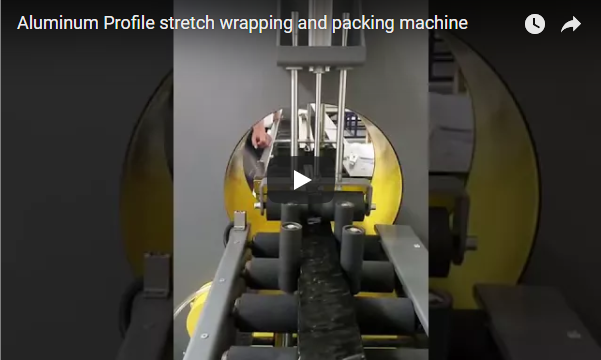
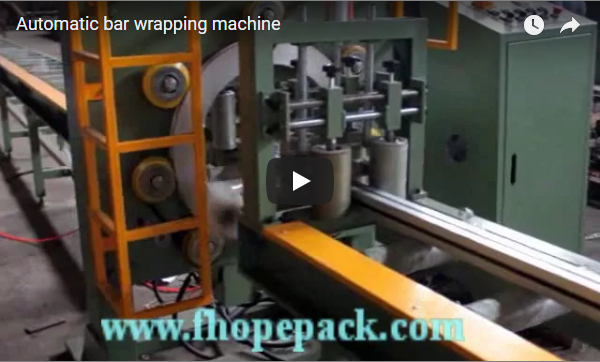
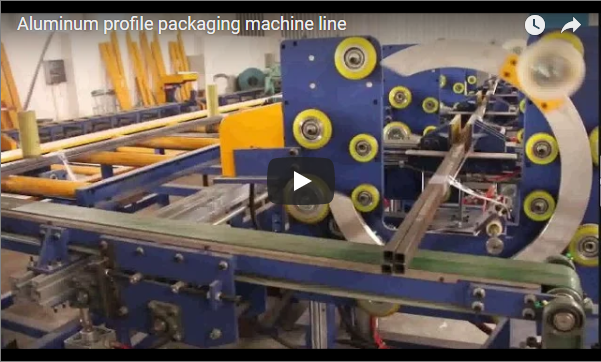
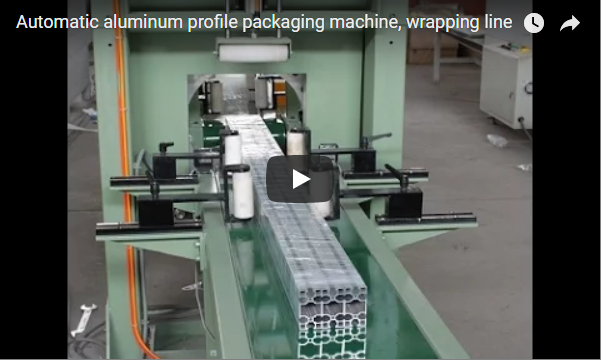
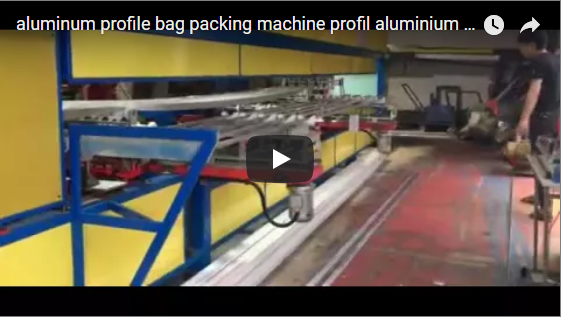
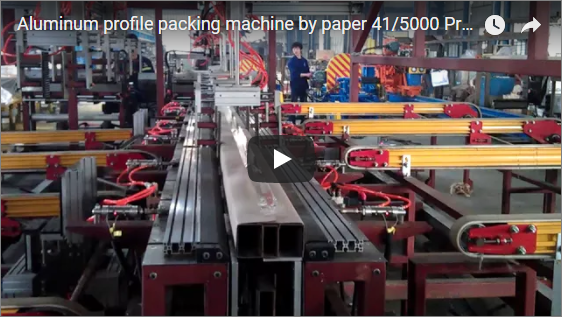
Aluminium profiles scratch, stain, and pick up cosmetic defects long before they reach the fabricator or jobsite. An industrial aluminum orbital stretch wrapper seals single extruded shapes and bundled profiles in a continuous protective spiral of stretch film. Supported on non-marking polyurethane (PU) coated rollers, profiles pass horizontally through a rotating ring without metal-to-metal contact. The system delivers constant containment force, eliminates manual taping, and minimizes film consumption across high-volume extrusion finishing lines.
Executive Summary
An economic aluminum orbital stretch wrapper automates the exterior packaging of single profiles, architectural tubes, and small multi-piece bundles. By passing profiles horizontally through a continuous rotating ring, the machine applies pre-stretched film directly over non-marking PU-covered rollers that protect mill-finish, anodized, and powder-coated surfaces. Designed for seamless inline or offline extrusion cell operations, its primary benchmark is achieving repeatable, tight film containment without bending delicate profiles or generating surface abrasions.
How Aluminum Orbital Wrappers Work
An aluminum orbital stretch wrapper operates on a horizontal pass-through (through-feed) principle. The profile or strapped bundle is supported by a powered external roller conveyor bed, while a rigid circular ring rotates continuously in a vertical plane perpendicular to the profile axis.
As the profile advances through the center opening of the ring, film is pulled from an onboard orbital carriage, spiraling evenly around the load.
       [Pneumatic Top Hold-Down Rollers]
                     ↓
[Infeed Profile] ===>[ Rotating Ring ]===> [Wrapped Output]
                     ↑
       [PU-Covered Infeed/Outfeed Bed]
Key structural and mechanical assemblies include:
- PU-Covered Support Rollers: Solid steel conveyor rollers encapsulated with an 85–95 Shore A polyurethane sleeve prevent surface marring, black-marking, and chipping on sensitive decorative coatings.
- Continuous Orbital Ring: A high-rigidity circular aluminum or cast-steel ring mounted on machined support and drive wheels. The ring does not separate or open; instead, profiles pass directly through its open internal eye along the longitudinal centerline.
- Film Delivery Carriage: Mounted directly on the rotating ring body. It carries the film roll, core brake, and tensioning assembly through the full 360° orbital trajectory.
- Powered Pre-Stretch System: Driven rollers on the carriage elongate the film by 200% to 300% before it leaves the dispenser, reducing consumption and locking residual elasticity into the film web.
- Pneumatic Top Hold-Down Press Rollers: Vertically acting polyurethane rollers mounted at the ring entry and exit. They exert controlled downward pressure to prevent bundle fanning, profile vibration, or film tension from lifting light profiles off the roller bed.
- PLC & Synchronized Inverter Drives: An industrial controller coordinates ring rotational speed (RPM) with conveyor linear speed (m/min) to maintain accurate pitch and overlap.
Technical Specifications
Standard economic orbital wrappers are engineered to handle typical architectural and structural extrusion configurations:
| Technical Parameter | Standard Engineering Range |
|---|---|
| Profile / Bundle Length | 2,000–6,000 mm (Custom up to 12,000 mm) |
| Profile / Bundle Cross-Section (W × H) | 50 × 50 mm to 450 × 450 mm |
| Bundle Weight Capacity | 20–500 kg (Heavy-duty configurations to 1,500 kg) |
| Ring Rotational Speed | 15–40 RPM (Variable frequency inverter control) |
| Conveyor Advance Speed | 2–15 m/min (Synchronized with ring RPM) |
| Pre-Stretch Ratio | 150–300% (Gear-driven power pre-stretch) |
| Film Specification | Cast LLDPE, 17–25 µm (68–100 gauge), 125–250 mm width |
| Maximum Film Roll Outer Diameter | 150–220 mm (Balanced for rotational centripetal limits) |
| Cycle / Packaging Time | 30–75 seconds per standard 6-meter bundle |
Ring RPM and Conveyor Speed Relationship
The spiral pattern, overlapping layer count, and bundle tightness depend directly on the kinematic ratio between ring rotational speed and conveyor linear travel speed:
Mathematical Pitch Formulation
The linear film pitch (P)—the linear advance of the bundle per single revolution of the orbital ring—is governed by the relationship:
Pitch (mm) = [Conveyor Speed (m/min) × 1000] / Ring RPM-
Film Overlap Percentage: If utilizing a 200 mm film roll width (
W_f), the percentage overlap between successive spiral wraps is calculated as:Overlap (%) = [(W_f - Pitch) / W_f] × 100
Operating Modes
- Stationary Reinforcement Wraps (Lead & Trail Ends): When the profile nose enters the wrapping plane, the conveyor briefly stops (
Conveyor Speed = 0 m/min,Pitch = 0 mm). The ring rotates 2 to 4 times to anchor the film securely around the leading edge. The same stationary sequence repeats at the profile tail before cut-and-clamp execution. - Dynamic Continuous Feed Wrapping: The conveyor advances the profile steadily through the ring plane. At 30 RPM and a conveyor speed of 3 m/min, the pitch is exactly 100 mm. With a 200 mm film width, this delivers an exact 50% overlap spiral jacket across the entire extrusion body.
Film Selection for Aluminum
Aluminum surfaces demand film chemistries that balance puncture resistance against residual adhesive or migratory chemical stains:
- Cast LLDPE Film: Produced with smooth, high-clarity cast extrusion rather than blown film. It provides ultra-low surface roughness to ensure it does not scuff or scratch high-gloss finishes.
- Standard Thickness: 17–20 µm (68–80 gauge) for smooth flat architectural profiles; 23–25 µm (92–100 gauge) for sharp-cornered structural channels, T-slots, or heavy solar frame bundles.
- Optical Clarity: Transparent formulations enable immediate visual inspection of batch codes, anodized grain, and extrusion tags without unwrapping.
- VCI & Anti-Corrosion Formulations: For maritime transport or high-humidity regions, volatile corrosion inhibitor (VCI) blended stretch film prevents water spot oxidation, white rust, and atmospheric galvanic staining.
Pre-Stretch Benefits
Integrated powered pre-stretch carriages yield distinct economic and structural packaging benefits:
- Film Yield Optimization: Pre-stretching film between 200% and 300% increases the usable length of a film roll by a factor of 3 to 4, slashing consumable packaging costs by 40% to 55%.
- High Residual Tension Without Profile Crushing: Cold pre-stretching aligns polyethylene polymer chains into high-tensile orientation. When the film relaxes slightly around the profile bundle, it applies continuous holding force without localized overtightening that could warp thin-walled extrusions.
- Neck-In Stabilization: Controlled motorized rollers isolate the tension generated during elongation inside the carriage rather than pulling directly against the profile, preserving structural cross-section integrity.
Film Performance by Application
Select film properties according to shipment duration and transit environmental exposure:
- Internal Plant Transit & Short-Term Staging (1–3 Months): 17 µm cast LLDPE with 200% pre-stretch. Offers mechanical protection from dust and handling scuffs at lowest cost.
- Domestic Truckload & Rail Freight (3–6 Months): 20 µm cast LLDPE with 250% pre-stretch. Resists road vibration friction and inter-profile rub marks inside bundles.
- Export Container Sea Shipping (6–12 Months): 23–25 µm multi-layer co-extruded film with active UV inhibitors and VCI chemistry. Shields against salt spray fog, container condensation cycles, and long-term sun exposure.
Surface Protection
Extruded aluminum profiles are especially prone to transit abrasion. The orbital wrapper resolves this via specific physical features:
- Full Polyurethane Cushioning: All horizontal conveying rollers, side-guide alignment rollers, and overhead press rollers feature seamless, non-marking polyurethane coverings.
- Axial Load Stability: Because the profile passes linearly through a balanced ring rather than rotating on a turntable, no centrifugal forces act on the load. Fragile, asymmetric extrusions remain stationary relative to their supports.
- Dynamic Tension Regulation: A dancer-arm or magnetic powder clutch regulates film unspooling tension to ensure uniform tightness regardless of bundle diameter changes.
- Polished Film Roller Guides: Carriage transfer rollers feature polished chrome or anodized coatings to eliminate film scoring and roll-edge tearing.
Integration Options
Aluminum orbital stretch wrappers function both as standalone packaging stations and as fully automated inline systems:
- Direct Extrusion Line Take-Off: Positioned inline after the runout cooling table, saw gauge table, and intermediate stacking buffer.
- Automated Bundle Strapping Integration: Pairs with upstream semi-automatic or automatic PET strapping machines that secure internal bundles prior to protective film spiraling.
- Automatic Label Application: Integrates with print-and-apply labeling systems to place shipping and barcoded inventory labels either under or over the film wrap.
- Powered Accumulation Cross-Transfers: Connects to downstream gravity or motorized discharge racks for forklift offloading or automated robotic bundle sorting.
Safety Features
Industrial wrappers comply with international machinery safety protocols (including CE and OSHA directives):
- Emergency Stop Integration: Push-pull mushroom E-stop buttons located on the operator HMI, machine frame, and infeed/outfeed stations.
- Safety Interlocked Enclosures: Perimeter wire mesh fencing around the orbital ring rotation zone with safety switches that cut drive power when opened.
- Optical Infeed/Outfeed Safety Light Curtains: Class 4 light grids at conveyor entry and exit apertures immediately stop ring rotation if an operator breaches the danger zone.
- Conveyor Underside & Pinch Point Guarding: Sheet metal covers protect all chain sprockets, drive belts, and nip points along the conveyor bed.
Maintenance
Consistent preventive maintenance ensures round-the-clock reliability on busy extrusion lines:
- Daily (Start of Shift):
- Inspect PU rollers for embedded metal swarf or foreign chips that could scratch incoming profiles.
- Check the film cutter and clamp blade for residual film build-up; clean with non-corrosive solvent.
- Weekly:
- Lubricate orbital ring guide wheel bearings and main drive chain links with high-grade synthetic grease.
- Verify smooth rotation and pneumatic cylinder pressure on top hold-down rollers.
- Monthly:
- Inspect pre-stretch rubber rollers inside the film carriage for surface wear or glazing.
- Check ring drive V-belts or timing belts for correct operating tension and alignment.
- Quarterly:
- Perform torque checks on all ring frame foundation anchors and motor gearbox fasteners.
- Inspect electrical enclosure terminals, inverter connections, and safety interlock switches.
Selection Guide
To select the properly sized orbital wrapper for your plant, systematically evaluate:
-
Maximum & Minimum Envelope: Calculate the maximum diagonal dimension of your largest bundle
D_bundle = √(Width² + Height²). Ensure the wrapper internal ring eye diameter satisfies:D_ring ≥ D_bundle + 250 mmThis guarantees safe mechanical clearance for the film carriage during high-speed rotation.
- Required Throughput: Define line output in linear meters per hour or finished bundles per shift to select the appropriate ring RPM and conveyor motor kW.
- Extrusion Wall Thickness & Finish: Thin-wall custom shapes demand dynamic low-tension powered pre-stretch carriages to prevent structural crushing.
- Footprint & Flow Orientation: Determine infeed/outfeed conveyor lengths based on your longest standard extrusions (e.g., 6 m or 12 m setups).
Next Step
Equip your extrusion facility with an industrial orbital wrapping solution engineered to eliminate surface rejections and lower consumable packaging costs:
- Compile Application Parameters: Document your profile cross-sections, minimum/maximum lengths, bundle weights, and target shift capacity.
- Consult Engineering Support: Email your profile drawings and capacity targets to the OEM design team at info@fhopepack.com.
- Receive a Technical Proposal: Review a tailored engineering package complete with clearance calculations, 2D/3D plant footprint layouts, cycle time analyses, and exact film savings projections.
- Finalize Machine Specification: Validate roller hardness, conveyor transfer style, and upstream integration options before manufacturing release.