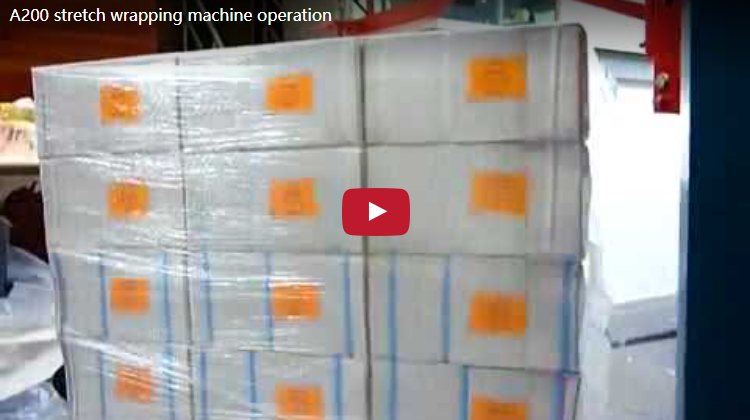
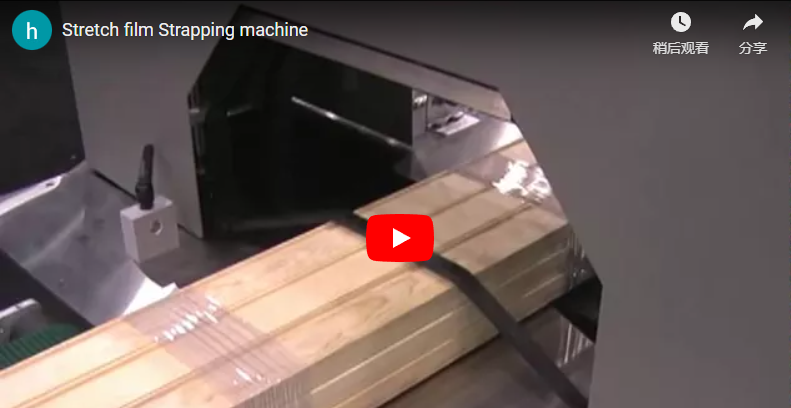
Executive summary Our vertical coil stretch wrapper stands the coil on its edge on PU rollers and passes a film ring through the eye, so film covers the bore, both faces and the outside in one pass. The FPS-800 takes coils of 800 to 1,400 mm OD, 400 to 800 mm wide and 200 to 1,000 kg, with overlap adjustable from 10% to 90%.
Table of Contents
- Why big coils are wrapped standing up
- How the eye-through cycle runs
- FPS-800 specifications
- Worked example: overlap that still covers the OD
- FPS-800 or FPS-500
- Selection checklist: what to send us
- Safety and EN 415-10
- Engineering FAQ
- Next step
- Related reading
- Sources
Why big coils are wrapped standing up
A big coil lying flat has one face on the pallet, so film cannot reach it. Standing the coil on its edge leaves the whole cross-section free; for coils that arrive flat, an upender ahead of the wrapper turns them.
The ring passes through the bore and round the outside, while the coil turns slowly on its rollers so every part of the ring path is covered. The result is a sealed package against dust, water and handling marks, which is what export coils and coils stored outdoors need.
How the eye-through cycle runs
- A trolley carries the coil into the machine and sets it on the support rollers, so the crane or C-hook does not have to place it precisely.
- The operator enters the coil OD, ID, width and weight on the touch screen, with the wrapping speed and number of layers.
- The ring turns through the eye while the PU rollers rotate the coil, laying film in a spiral around the cross-section.
- Inverter drives give a soft start and stop, so the ring and coil run smoothly without slipping.
- At the end of the set layers the operator cuts the film tail by hand, and the trolley takes the wrapped coil out. If you want no hand cutting, the FPS-500 offers automatic cut and clamp.
FPS-800 specifications
These are the values for our FPS-800; special coil sizes are possible per project.
| Item | FPS-800 |
|---|---|
| Coil ID | 508 mm |
| Coil OD | 800 to 1,400 mm |
| Coil width | 400 to 800 mm |
| Coil weight | 200 to 1,000 kg |
| Packing material | PVC, LLDPE, PE, paper or HDPE |
| Overlap | 10% to 90%, adjustable |
| Power | 1.5 kW, 380 V 50 Hz 3-phase (adjustable) |
| Air supply | 5 to 7 kgf/cm², optional |
| Control | Siemens, Mitsubishi or Omron PLC; 7″ or 10″ touch screen |
| Rollers | High-strength PU coating: grips the coil without scratching it |
Worked example: overlap that still covers the OD
On an eye-through wrapper the film overlaps most in the bore and least on the outside, because the outside circumference is longer. If the overlap is set for the bore alone, the outside can end up with gaps.
| Step | Value |
|---|---|
| Coil ID / OD | 508 / 1,400 mm |
| Bore circumference, π × 508 | about 1,596 mm |
| Film width (illustrative) | 100 mm |
| Largest advance per ring turn at the OD with no gap | 100 mm |
| Same advance measured at the bore, 100 × 508 ÷ 1,400 | about 36 mm |
| Overlap needed at the bore, 1 − 36 ÷ 100 | about 64% |
| Ring turns per layer, 1,596 ÷ 36 | about 44 |
So on this coil, an overlap of at least about 64% at the bore is needed for the outside to be closed, well inside the 10% to 90% range. A smaller coil OD lets you run less overlap and fewer turns; a wider film does the same.
FPS-800 or FPS-500
| FPS-800 | FPS-500 | |
|---|---|---|
| Coil OD | 800 to 1,400 mm | 700 to 1,400 mm |
| Coil width | 400 to 800 mm | 200 to 500 mm |
| Coil weight | 200 to 1,000 kg | 80 to 1,000 kg |
| Coil ID | 508 mm | 508 / 610 mm |
| Wrapping time | set by OD, overlap, layers and the inverter speed setting; we quote it per coil | 20 to 45 s per coil |
| Extras | trolley loading | two film rolls at once, e.g. LLDPE plus VCI; automatic cut and clamp |
Choose the FPS-800 for wide coils up to 800 mm. The FPS-500 suits narrower slit coils, and its dual-roll option lets you lay a VCI film for rust protection in the same pass.
Selection checklist: what to send us
- Coil OD, ID, width and the heaviest coil.
- Coils per shift.
- Film or paper you use, and whether you need VCI.
- How coils reach the machine: crane, C-hook or conveyor.
- Floor space and the crane hook height.
- Site voltage and compressed air.
Safety and EN 415-10
The standards that apply depend on the destination market. For CE markets, ISO 12100 sets the risk-assessment method and EN 415-10 sets the general safety requirements for packaging machines, including the rotating ring. Our FPS-800 has safety light curtains and emergency stops, and stops when an operator enters the protected zone.
Fixed fencing with interlocked access, together with the light curtains, should guard the rotating ring and the trolley path. The site risk assessment decides the exact layout. Load and unload with the crane only when the ring is stopped.
Engineering FAQ
Q: What coil sizes does the FPS-800 take? A: 800 to 1,400 mm OD, 508 mm ID, 400 to 800 mm wide and 200 to 1,000 kg.
Q: Which materials can it wrap with? A: PVC, LLDPE, PE, paper or HDPE.
Q: How much overlap should I set? A: Enough for the outside to close; for a 508 / 1,400 mm coil with 100 mm film, about 64% at the bore.
Q: Does it need compressed air? A: Air at 5 to 7 kgf/cm² is optional, depending on the configuration.
Q: Which safety standards apply? A: For CE markets, ISO 12100 and EN 415-10.
Next step
- Email your coil sizes, weights and coils per shift to info@fhopepack.com.
- We reply within 24 hours with a proposal naming the model and wrapping material.
- We send a layout drawing showing the machine, trolley and crane access.
Related reading
- Coil wrapping machine FPS-800
- Steel coil packing machine FPS-500
- Steel coil wrapping machines
- Automatic coil packing line
Sources
- Specifications: FHOPE FPS-800 and FPS-500 product pages
- Machine video: vertical stretch wrapping machine for big coils on YouTube
- Overlap and turns: our worked example, illustrative film width
- Standards: EN 415-10 (packaging machines, general safety); ISO 12100:2010
Last reviewed: 2026-10-17