Executive summary
A stretch hood bag packing machine seals an EPS insulation panel inside a plastic film bag without touching the panel face. The panel is fed onto a conveyor, a film bag is drawn down over it, and the film is closed at the lower edge so the board comes out sealed on the other side. Panel size, film dimensions and line speed are confirmed per project.
Table of Contents
- Why stretch hood bag packing
- What the machine does
- How the bag is formed and drawn from film
- Cycle and control
- What the footage shows
- Typical configuration
- Selection checklist
- Operation and safety
- Engineering FAQ
- Next step
- Related reading
- Sources and standards
Why stretch hood bag packing
An EPS insulation panel is light and large in area, so a dent or a scuffed face is easy to see and hard to repair. A sealed film bag keeps the board clean and protected while it is stored, stacked or carried to site.
Because the bag is drawn over the whole panel as one piece, the face is not pressed and there are no straps pressing into the soft board. Film grade and bag dimensions are confirmed per project.
What the machine does
The machine is a stretch hood bag packing unit laid out in a line. Panels are placed on the infeed conveyor, and each panel travels into the machine while a transparent film bag is drawn over it from above.
The lower edge of the bag is then closed, and the sealed panel leaves on the outfeed side for collection. Panel length and bag dimensions are confirmed per project.
How the bag is formed and drawn from film
The main structure is a vertical machine frame. A movable upper frame holds a film bag open in a vertical position above the conveyor, and a film roll plus a control cabinet sit on the machine body.
When a panel reaches the bagging position, the upper frame lowers and draws the film over the panel, and the bag is closed at the lower edge. Conveyor length and bag format are confirmed per project.
Cycle and control
The cycle runs in clear steps. A panel is fed in on the conveyor while the film bag is held open in the vertical position. The upper frame moves down to draw the bag onto the panel, the film is closed at the lower edge, and the sealed panel is carried out.
The control cabinet carries the push buttons and indicator lamps for the cycle. Cycle timing and the control layout are confirmed per project.
What the footage shows
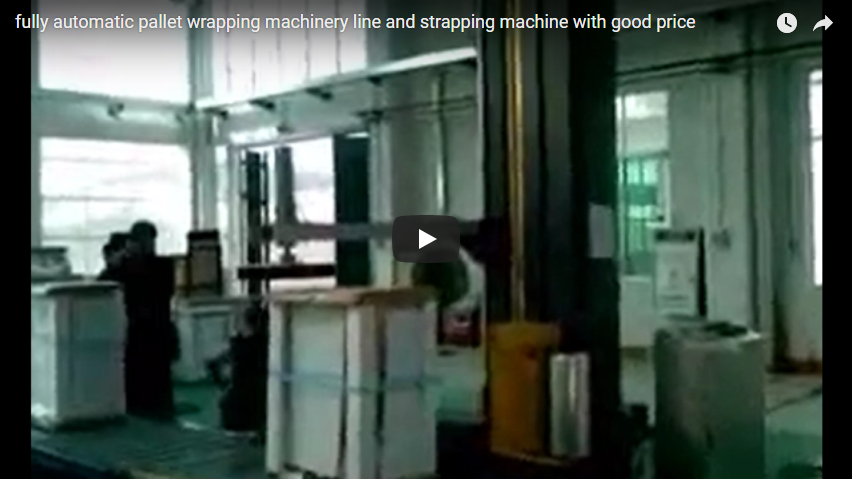
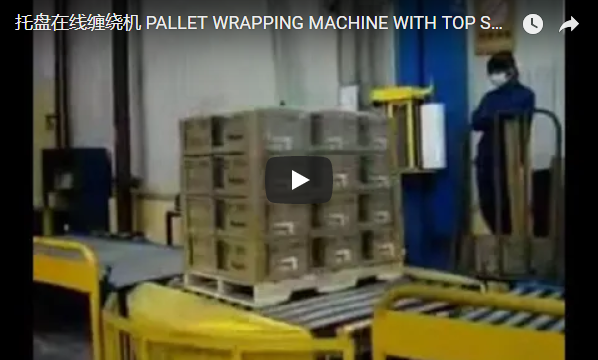
Our footage shows a transparent film bag held open under the upper frame, and an orange rectangular insulation board being fed in on the conveyor from the infeed side. The upper frame draws the film down over the board, the bag is closed around the lower edge, and the sealed panel is carried out on the outfeed side. It is a general demonstration, so your panel size, film format and line speed are confirmed with us per project.
Typical configuration
Figures below list functional design boundaries rather than numeric values, and are confirmed per project.
| Parameter | Typical range, confirmed per project |
|---|---|
| Load | rectangular EPS insulation panels on the infeed conveyor |
| Process | film bag drawn over each panel and sealed at the lower edge |
| Transfer | infeed conveyor in, outfeed conveyor out |
| Control | push buttons and indicator lamps on the control cabinet |
| Mount | floor mounted, in line with the panel line |
| Electrical supply | 380 V three phase 50 Hz, or 220 V single phase for light machines, selected per project |
Selection checklist
| Question | Confirm per project |
|---|---|
| Panel | length, width, thickness and weight |
| Film | type, width, stretch and seal method |
| Bag | bag length, open width and film format |
| Cycle | bagging speed and conveyor pacing |
| Control | panel layout and guarding around the line |
| Electrical supply | voltage, phase and frequency on site |
Operation and safety
Place each panel on the infeed conveyor, start the cycle, and let the machine draw the bag and close the lower edge. Keep hands clear of the moving upper frame and the bag-closing area while the machine is running.
Routine checks cover the upper frame, the film supply and the bag-closing unit, per the machine manual. Confirm the panel is seated on the conveyor before each cycle.
Engineering FAQ
Q: What does this machine do? A: It draws a plastic film bag over each EPS insulation panel and seals it, so the panel leaves the line in a protective bag when the cycle ends.
Q: How is the bag applied? A: The bag is held open by the upper frame, lowered over the panel as it sits on the conveyor, and closed at the lower edge.
Q: Do our people feed each panel by hand? A: The footage shows panels fed from the infeed side by the conveyor line; automatic feeding is arranged when the line speed requires it.
Q: Does the film press on the panel face? A: The bag is drawn on as one piece, so the face of the board is not pressed; if the panel face needs extra clearance, this is handled per project.
Q: What does it suit? A: Long rectangular boards such as EPS insulation panels that need a clean, sealed finish when they are stored or transported.
Next step
- Email us at info@fhopepack.com with your panel size and thickness.
- We send a stretch hood bag packing proposal within 48 hours.
- We confirm the bag format and electrical supply for your site.
Related reading
- Sealed packaging of EPS insulation panels by stretch hood bag packing
- Wooden Board Door Plate shrinking packaging machine
- Packaging Equipment: Technology and Best Practices for door
- FHOPE packing machinery product lines
Sources and standards
- ISO 12100:2010 Safety of machinery, general principles for design and risk assessment
- EN 415-10:2014 Safety of packaging machines, general requirements
- EN ISO 13849-1:2023 Safety of machinery, safety-related parts of control systems
FHOPE stretch hood bag packing demonstration video. Reviewed as a general demonstration; panel size, film format and line speed confirmed per project.
Last reviewed: 2026-10-12