Overview
Steel strip coils face significant risks of moisture accumulation and transit damage during storage and transportation. To mitigate these risks, Fhope Packing offers two distinct wrapping configurations that address the specific orientation of your incoming coils: a horizontal ring wrapper for coils lying flat and a vertical turntable wrapper for coils standing upright. Both solutions ensure the coil remains on its conveyor or platform throughout the wrapping process, eliminating the need for manual transfer and maintaining continuous flow. The choice between these orientations directly impacts your facility’s footprint, material handling logic, and the specific mechanics of film application.
How Do Horizontal and Vertical Wrapping Differ?
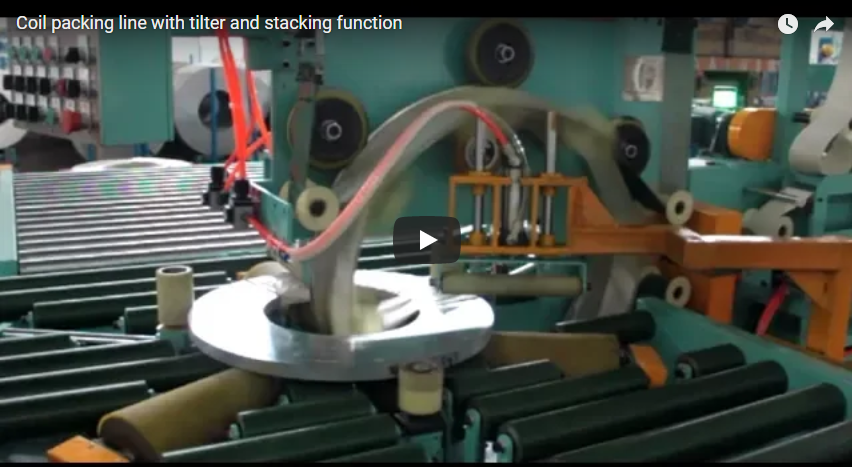
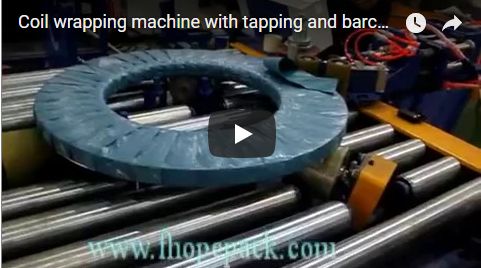
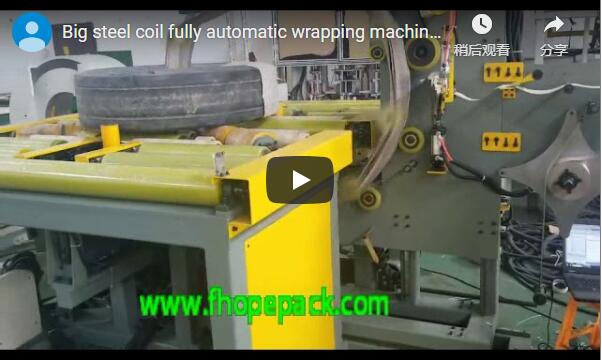
The primary distinction between horizontal and vertical strip wrapping lies in the orientation of the steel coil during the packaging cycle. Steel strip coils are wide packs rather than round bundles, requiring wrapping solutions that accommodate their specific profile. The horizontal ring wrapper is designed for coils that are discharged flat onto a conveyor by upstream lines. In this configuration, the coil remains stationary on the conveyor while a ring mechanism passes around the outer edge of the coil, carrying the wrapping film around the coil body. This method preserves the low profile of the coil and allows for seamless integration with flat-discharge production lines.
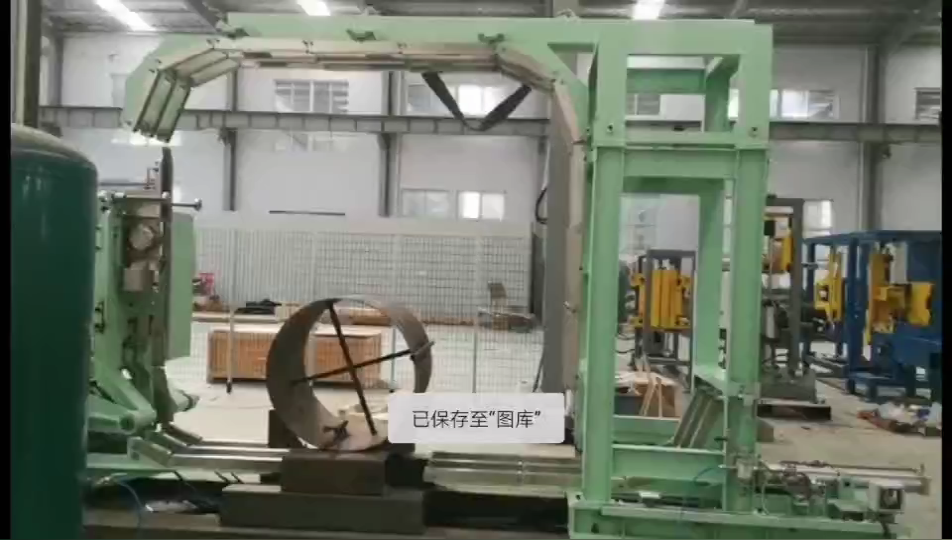
Conversely, the vertical turntable wrapper is engineered for coils that arrive standing on their edge. This often occurs when an upender is positioned between processing stations. In this setup, the coil is placed on a rotating platform. As the platform rotates, film is fed from the side, wrapping the standing pack column. This solution is ideal for facilities where the natural flow of material involves vertical orientation, ensuring that the coil does not need to be tilted or manually repositioned before wrapping.
Why Does Coil Orientation Matter for Wrap Access?
Orientation dictates the path of the wrapping film and the mechanical access required to secure the coil. For horizontal ring wrappers, the wrap access is from the outside ring. The ring travels around the width of the flat coil. This external ring path is free to move around the coil width.
In contrast, vertical turntable wrappers utilize side film feed. The film is applied to the side of the standing coil as the turntable rotates. This side-feed mechanism follows the standing pack, ensuring that the film adheres securely to the vertical surface of the coil. The choice of wrap access is not arbitrary; it is determined by the physical orientation of the coil. Selecting the correct access method ensures that the film is applied evenly and securely, preventing gaps that could allow moisture ingress or allow the coil to shift during transit.
What Are the Operational Benefits of Non-Transfer Wrapping?
Both horizontal and vertical wrapping solutions share a critical operational advantage: they keep the coil on the conveyor or platform throughout the entire wrapping cycle. This “non-transfer” approach eliminates the need for manual handling or intermediate lifting equipment between the production line and the wrapping station. By keeping the coil in place, these systems reduce the risk of physical damage that can occur during manual transfers.
How Does Full Film Coverage Protect Against Moisture and Transit Damage?
The primary goal of strip wrapping is to protect the steel strip from environmental factors and mechanical damage. Full film coverage of the coil body is essential for this protection. By applying a continuous layer of film, the wrapping process seals the coil surface and edges, creating a barrier against moisture during storage. This is particularly important for steel products, which are susceptible to corrosion when exposed to humidity.
In addition to moisture protection, the film helps prevent movement damage during transit. While the film provides significant protection, it is important to note that the specific effectiveness may vary based on environmental conditions and handling practices.
What Are the Technical Specifications and Configuration Requirements?
Two figures are often mixed up in this comparison, so keep them apart. The 15–40 t band is the figure the supplier publishes for the coil packing line that these wrapping machines feed into. It is a whole-line reference for heavy-duty coils at engineering review, not a load measured on either single machine.
| Reference | Horizontal Ring Wrapper | Vertical Turntable Wrapper |
|---|---|---|
| Coil position | Lying flat | Standing upright |
| During wrap | On conveyor | On rotating platform |
| Wrap access | Outside ring | Side film feed |
| Line load band | 15–40 t published for the coil packing line; the rating of the single machine is confirmed per project | Same band, with the single-machine rating confirmed per project |
The table settles orientation and wrap access only. Frame dimensions, ring clear diameter, platform capacity, film grade and overlap are not defined by the band; each of them is confirmed per project against your coil sizes and the layout drawing.
How Do Safety Standards Apply to These Machines?
Safety is a critical consideration in industrial packaging equipment. ISO 12100 sets the risk-assessment method, ensuring that potential hazards are identified and mitigated during the design phase. EN 415-10 covers the safety requirements for packaging machines, providing guidelines for guarding and control systems.
It is important to note that these standards serve as design references. The certification of a delivered machine is confirmed in the project ordering agreement. Buyers should confirm the guarding and control scheme with the builder to ensure compliance with local regulations.
What Data Should You Provide to Get a Real Configuration?
Send the data a supplier’s engineering team needs to size either machine, in the order that review needs it:
- Coil list: outer diameter, inner diameter, pack width and weight, with the minimum and maximum of each.
- Arrival orientation: whether the coils reach the wrapping station flat on a conveyor or standing on edge, and which upstream machine hands them over.
- Layout drawing: the space around the station, the infeed and outfeed direction, and the height available if a crane or C-hook is used above the wrapper.
- Site supply: voltage, phase and frequency at the installation point.
With those four items a supplier can say which of the two orientations fits and what the machine rating would be; without them the answer is only a generic range. We reply with a proposal after we confirm the details.