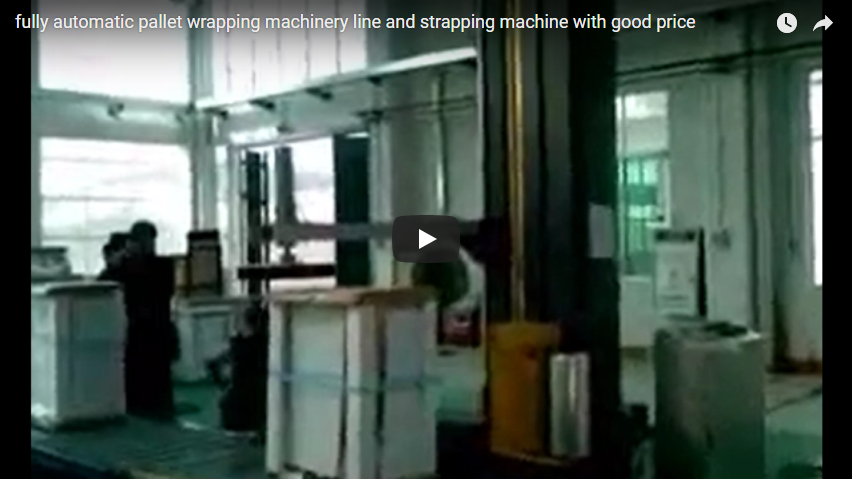
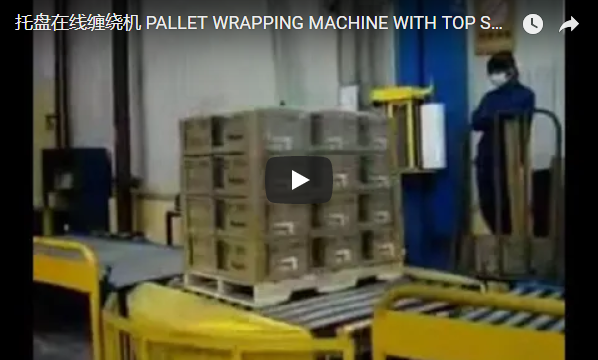
Executive summary A pallet stretch wrapper applies stretch film tightly around a loaded pallet so the load stays stable in storage and transit. It works by relative motion between the pallet and a film carriage: a turntable rotates the pallet, or a rotary arm revolves around a stationary pallet. The control runs on a PLC with an HMI, and pre-stretch stretches the film before application to save material. This guide explains the mechanics, the components, the typical specification ranges and how to select a wrapper.
Table of Contents
- What a pallet stretch wrapper does
- Turntable and rotary arm wrapper types
- Key components and typical specification ranges
- Pre-stretch and film economy
- Automation levels and PLC control
- Why automatic and semi-automatic wrapping help
- Machine selection checklist
- Operation and troubleshooting best practices
- Maintenance essentials
- Engineering FAQ
- Next step
- Related reading
- Sources and standards
What a pallet stretch wrapper does
A pallet stretch wrapper secures a loaded pallet by applying stretch film tightly around its four sides. The film holds the cartons or products against the pallet, which keeps the load stable during forklift travel, storage and transit. Wrapping machines also protect the load from dust and moisture, and an opaque film can discourage theft.
Whether the machine is semi-automatic or fully automatic, the principle is the same: relative motion between the pallet and a film dispensing system. The wrapping applies controlled tension and repeated layers, which manual wrapping cannot match for consistency.
Turntable and rotary arm wrapper types
For most operations the two configurations to compare are the turntable wrapper and the rotary arm wrapper.
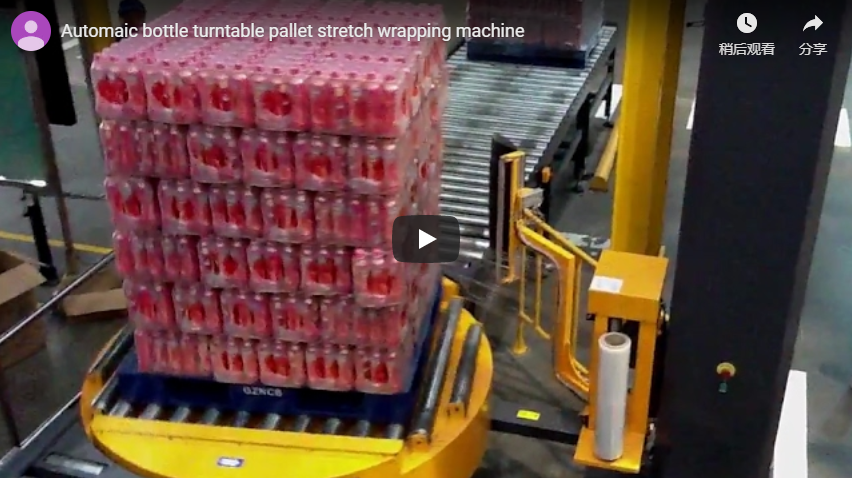
A turntable wrapper sits the loaded pallet on a rotating platform. As the platform spins, a stationary or vertically moving film carriage dispenses film around the load. This is the standard workhorse for typical pallet loads, and it is easy to load with a forklift.
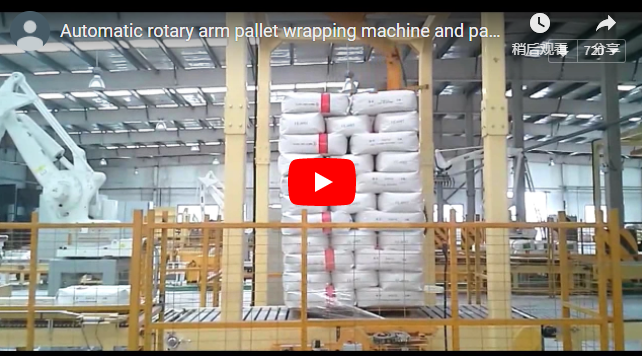
A rotary arm wrapper keeps the pallet stationary while a rotating arm carries the film carriage around it. With no turntable to spin, this suits very heavy, light or unstable loads that should not rotate, and it takes less floor space around the wrapping zone.
The cycle itself is similar on both: secure the film tail, start the cycle, let the carriage travel up to cover the full load height with the set layers and tension, cut and clamp.
Key components and typical specification ranges
When evaluating wrapping platforms, we assess the turntable or arm, the film carriage, the control system, the mast and the supply requirements. The numbers below are typical ranges for evaluation, not a specification of any single machine.
| Component | Typical range (for evaluation) |
|---|---|
| Load capacity | 1500–2000 kg turntable rating, heavier on rotary arm |
| Turntable rotation | 10–15 rpm, usually adjustable |
| Turntable diameter | 1500 mm for standard pallets, 1650 mm for larger bases (per project) |
| Mast height | 2100 mm / 2400 mm, load height plus top clearance (per project) |
| Pre-stretch | 150% / 250% / 300% fixed or variable |
| Film width | 500 mm rolls, core and diameter per roll |
| Power supply | 220 V / 380 V / 480 V, 1-phase or 3-phase |
| Control | PLC + HMI, adjustable wrap counts and programs |
| Standards and interface | ISO 12100, EN 415-6, EN ISO 13849-1, PLC signal |
Higher load capacity, taller masts, higher pre-stretch and interface options are confirmed against your pallet size, load weight and line per project.
Pre-stretch and film economy
Pre-stretch stretches the film before it reaches the pallet, so the film that touches the load is already elongated. The machine uses less film for the same containment force, and powered pre-stretch systems extend film usage by 150–300% or more compared with hand wrapping or basic mechanical brakes.
The carriage types are a mechanical brake, an electromagnetic brake, or a powered pre-stretch system. Powered pre-stretch holds the tightest tension control and the best economy, while a mechanical brake is simpler and cheaper to maintain. Your film grade, load type and pallet throughput decide which one pays back.
Automation levels and PLC control
A semi-automatic wrapper handles the rotation and the carriage travel, while the operator drives the forklift and may start the cycle. A fully automatic wrapper adds automatic film cut and clamp, conveyor integration and preset programs. An automatic pallet stretch wrapping machine with a film cutter runs the cycle end to end as pallets arrive.
The control is a PLC with an HMI. Operators set the top and bottom wrap counts, the carriage speed and the wrap pattern, and the presets recall them for repeat loads. An automatic model takes its signal from the line, wraps to the stored program, clamps and cuts the film, and releases the pallet without an operator step.
Why automatic and semi-automatic wrapping help
The measurable gains come from consistency and labour. Load stability improves because tension and wrap patterns are the same on every pallet. Throughput rises because powered cycles are faster than hand wrapping. Film use falls with pre-stretch, which lowers the consumable cost over time.
Worker safety improves too. Operators do not walk backward around each pallet holding a film roll, so repetitive-motion strain drops and the wrapping zone stays clear. A machine also wraps uniformly every time, which removes the variability that manual application brings to the outer layer.
Machine selection checklist
Work through these points before you ask for a quote, and we confirm the rest against your operation per project.
| Item | What to confirm per project |
|---|---|
| Load type | uniform, irregular, heavy, light or unstable loads |
| Load weight | kg, against the turntable or arm rating |
| Pallet footprint | mm, against turntable diameter and film width |
| Wrapping height | mm, against mast height |
| Throughput | pallets per hour or day, setting the automation level |
| Integration | conveyor feed, automatic cut and clamp, PLC signal |
| Power supply | V / phase, match your site |
Operation and troubleshooting best practices
Start with load placement: center the pallet on the turntable or in the wrapping zone, and make sure the load is stable before the cycle starts.
Set the machine parameters for the load rather than the default. Adjust rotation speed, carriage ascent and descent speed, and the top and bottom wrap counts to the load type, stability and weight. Run a test wrap when the product changes.
Apply enough containment force to secure the load without crushing it. The force depends on pre-stretch and the number of layers, so tune both together.
Thread the film exactly as the machine diagram shows. Incorrect threading is a common cause of film breaks and poor pre-stretch performance.
Watch for the three common faults. Film breaks usually trace to a nick in the roll edge, improper tension, or a sharp corner on the load. Uneven wraps trace to carriage speed or a misaligned film path. Sensor faults show as missed wraps or a stalled cycle and usually need a sensor check.
Maintenance essentials
Run the daily checks before the first shift. Inspect the rollers for wear or debris, confirm the sensors are clean and aligned, and make sure the guards are in place.
Keep lubrication on the schedule in the machine manual for chains, bearings and moving parts. Clean the film carriage and the pre-stretch rollers regularly, because dust and film residue reduce tension control and film economy. Inspect wear parts such as rollers, belts and cutting mechanisms, and always follow the manufacturer’s maintenance procedures.
For authoritative guidance on packaging machinery standards, industry bodies such as PMMI, the Association for Packaging and Processing Technologies, publish useful reference material.
Engineering FAQ
Q: What is the difference between a turntable and a rotary arm wrapper? A: A turntable rotates the pallet while the film carriage stays or moves up a column. A rotary arm keeps the pallet still and moves the film around it.
Q: What load capacity do I need? A: Match your heaviest load against standard ratings, typically 1500–2000 kg for turntables, with heavier loads moving to a rotary arm; confirmed per project.
Q: How much film does pre-stretch save? A: Powered pre-stretch can extend film use by 150–300% or more compared with hand wrapping, depending on film grade and load type.
Q: Do I need automatic film cut and clamp? A: If pallets arrive continuously and the line runs unmanned, automatic cut and clamp pays back. For occasional wraps, manual is simpler.
Q: Can it integrate with my conveyor line? A: Yes. Automatic models take a PLC signal from the line and release the wrapped pallet, with conveyor timing matched per project.
Q: What power supply does it need? A: Machines operate on 220 V, 380 V or 480 V in single-phase or three-phase, configured to the facility per project.
Q: What safety features should I look for? A: Guards, an emergency stop and a clear wrapping zone. Risks are assessed to ISO 12100 and EN 415-6 during engineering.
Q: How do you size the mast height? A: Mast height equals your tallest load plus clearance for the film to clear the top, confirmed against the actual pallet stack per project.
Next step
The right wrapper depends on your loads, your pallet throughput and your line layout, so the sizing starts with a few facts about your operation.
- Send your pallet size, load weight, wrapping height and throughput to info@fhopepack.com.
- We confirm the machine type, automation level and options for your operation.
- We provide a layout drawing and a site survey within 48 hours.
- We quote the machine per project, including conveyor integration and film tests.
Last reviewed: 2026-10-09
Related reading
- Heavy-Duty Pallet Wrapping Machine with Reinforced Turntable
- Pallet Wrapping Machine with Black Pallet Detection
- Automatic Pallet Wrapping and Strapping System
- Pallet Turning Machine and Pallet Inverter
- FHOPE main-site product range
Sources and standards
- ISO 12100:2010 — Safety of machinery: General principles for design
- EN 415-6:2013 — Safety of packaging machines: Pallet wrapping machines
- EN ISO 13849-1:2023 — Safety-related parts of control systems: Functional safety
- EN ISO 14120:2015 — Guards for machinery: General requirements