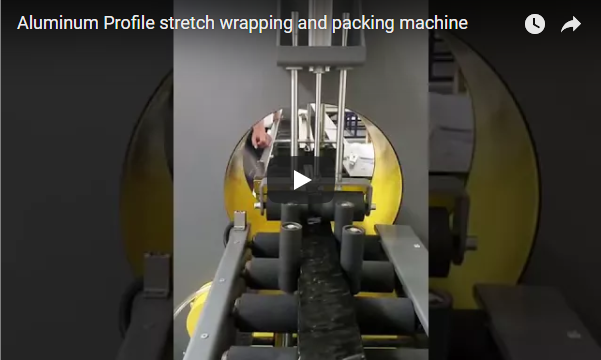
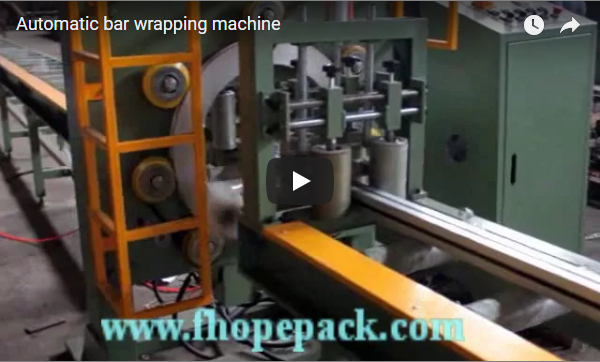
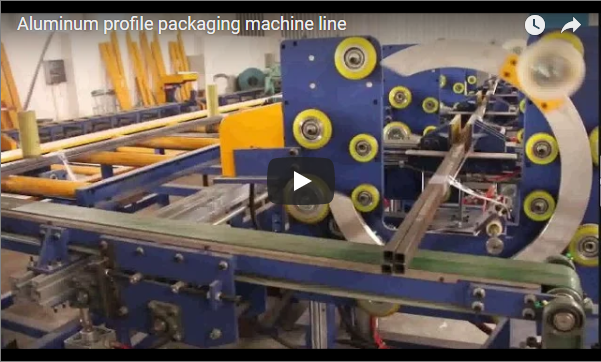
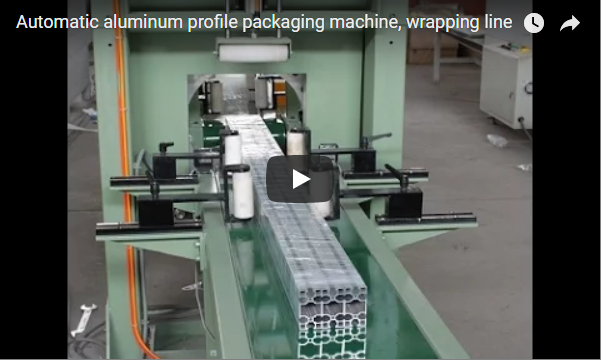
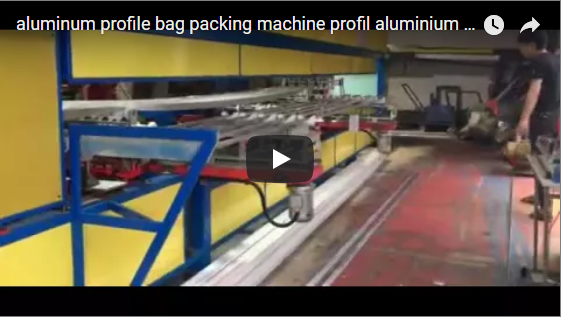
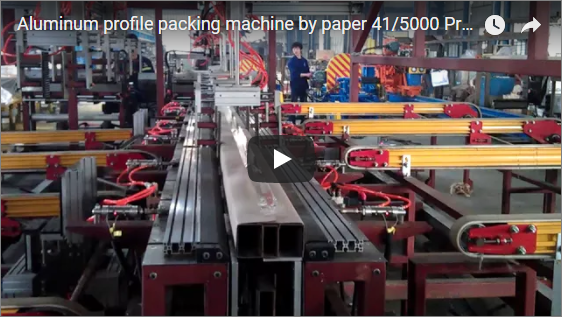
Abstract: Aluminum profiles shrink wrapping machine and board packing machine provide automated protective packaging for aluminum extrusions. Shrink wrapping handles profiles up to 6.5m length, 40-120 micron PE film, throughput 8-15 packs/min. Board packing uses corrugated cardboard or fiberboard for edge protection and stacking strength. CE certified per Machinery Directive 2006/42/EC. Suitable for construction profiles, automotive trim, industrial aluminum frames, and curtain wall systems.
Aluminum profiles require robust packaging solutions to prevent damage during handling, transit, and storage. Their length (typically 3-6.5m), varied cross-sectional shapes, and susceptibility to scratches, abrasions, and bending present unique packaging challenges. Automated packaging systems—specifically shrink wrapping and board packing machines—provide consistent protection and improve operational efficiency compared to manual methods.
Shrink wrapping involves enveloping profile bundles in thermoplastic film (typically PE or polyolefin), which shrinks tightly around the product when heat is applied. This creates a sealed, unitized bundle that protects against dust, moisture, and surface scratches. Board packing utilizes cardboard, fiberboard, or similar rigid materials to provide enhanced protection against impact, puncture, and bending. The two methods are often used in combination: board edge protectors applied first, followed by shrink wrap to secure the assembly.
For aluminum extrusion facilities processing 200-500 bundles per shift, automated packaging reduces labor by 60-70%, improves bundle consistency (tension variation <10% vs. 30-50% manual), and decreases transport damage claims by 40-60%.
What Are the Packaging Challenges for Aluminum Profiles?
Effective packaging must address four key vulnerabilities inherent to aluminum extrusions.
Surface Damage: Scratches, abrasions, and dents compromise both aesthetic and functional integrity. Anodized or powder-coated profiles are particularly sensitive—surface defects visible after installation lead to customer rejection. Film-based packaging (shrink or stretch) provides a sacrificial barrier that absorbs minor abrasions during handling.
Bending and Deformation: Long extrusions (5-6.5m) are prone to bending if not adequately supported. Aluminum 6063-T5 (common for architectural profiles) has yield strength 145-160 MPa, but thin-wall sections (1.0-1.5mm) deflect under their own weight when unsupported spans exceed 1.2m. Board packing with edge protectors distributes stacking loads and prevents point-load deformation during warehousing.
Corrosion: Exposure to moisture and environmental factors leads to oxidation, especially on unfinished aluminum. Coastal environments (salt spray) and industrial atmospheres (sulfur compounds) accelerate corrosion. Shrink wrapping creates a moisture barrier; for extended outdoor storage, VCI (vapor corrosion inhibitor) film or desiccant packets inside the wrap provide additional protection.
Handling Difficulties: Loose profiles are difficult to move, load, and inventory. Unitizing profiles into bundles (typical 10-50 pieces per bundle, 50-300kg total weight) simplifies crane or forklift handling. Shrink wrap secures the bundle; board corners protect against forklift tine damage.
How Does Shrink Wrapping for Aluminum Profiles Work?
Process Overview
Shrink wrapping aluminum profiles follows a five-stage automated sequence.
Stage 1: Infeed — Profiles are fed onto the machine’s conveyor system, typically grouped into bundles by an upstream stacking/bundling station. Bundle dimensions: width 100-800mm, height 50-600mm, length up to 6500mm. Conveyor type: roller conveyor (for rigid bundles) or belt conveyor (for delicate surfaces).
Stage 2: Film Application — A curtain or tube of thermoplastic film (commonly Polyethylene — PE, 40-120 micron thickness) is draped or formed around the profiles. Film roll width: 200-1000mm, roll diameter up to 400mm. For long profiles, overlapping film curtains ensure complete coverage.
Stage 3: Sealing — Sealing bars create a sealed bag around the product. Common sealing methods:
- Side seal: L-bar or continuous rotary seal along the bundle length
- End seal: Heat bars seal both ends of the bundle
- Shrink tunnel entry: Film loosely wrapped, sealing occurs inside tunnel
Seal integrity tested via air pressure decay or visual inspection. Seal strength: ≥2.5 N/15mm peel strength per ASTM F88.
Stage 4: Heat Application — The wrapped product passes through a heat tunnel where controlled hot air circulation causes the film to shrink uniformly. Tunnel temperature: 120-180°C (varies by film type). Air velocity: 8-15 m/s. Residence time: 30-90 seconds depending on bundle size and film thickness.
Stage 5: Cooling and Outfeed — The wrapped bundle cools, solidifying the film’s tight fit, before exiting the machine. Cooling time: 15-30 seconds. Outfeed conveyor transfers bundled profiles to palletizing or storage area.
Key Machine Specifications
| Parameter | Specification | Notes |
|---|---|---|
| Max profile length | 6500 mm | Custom to 7200mm |
| Bundle width | 100-800 mm | Adjustable film curtain |
| Bundle height | 50-600 mm | Adjustable sealing bar |
| Film thickness | 40-120 micron | PE or polyolefin |
| Film roll width | 200-1000 mm | Roll OD up to 400mm |
| Sealing speed | 8-15 packs/min | Depends on bundle size |
| Tunnel temperature | 120-180 °C | PID controlled |
| Tunnel length | 3-8 meters | Longer = more uniform shrink |
| Power consumption | 20-100 kW | Heat tunnel is 80-90% of load |
| Air supply | 0.4-0.6 MPa | For pneumatic actuators |
| Control system | PLC + HMI | Siemens S7-1200 or equivalent |
Benefits of Shrink Wrapping
- Provides good protection against dust, moisture, and surface scratches
- Creates stable, unitized bundles for easier handling
- Offers tamper evidence (broken seal indicates handling)
- Cost-effective for high-volume applications (film cost $0.15-0.40 per bundle)
- Transparent film allows visual inspection without unwrapping
Considerations
- Film selection: Thickness, clarity, UV protection critical based on profile weight, handling requirements, and storage conditions. Heavy bundles (>200kg) need 80-120 micron film; light bundles (50-100kg) use 40-60 micron.
- Energy consumption: Heat tunnel consumes 20-100 kW depending on size. For 8-hour shift at 50 kW average: 400 kWh/day, cost $40-60/day ($0.10-0.15/kWh).
- Ventilation: Heat tunnel generates hot air and potential film fumes. Facility requires exhaust ventilation (typical 2000-5000 CFM) and make-up air.
How Does Board Packing for Aluminum Profiles Work?
Process Overview
Board packing utilizes cardboard, fiberboard, or similar rigid materials to provide enhanced protection, particularly against impact and bending.
Stage 1: Infeed — Profiles or bundles are conveyed into the packing station. Upstream process may include stretch wrapping or shrink wrapping before board application.
Stage 2: Board Feeding and Forming — Flat sheets or pre-scored blanks of cardboard/fiberboard are automatically fed from a magazine. The machine may cut, score, or fold the board to create protective U-channels, edge protectors, or full enclosures.
Board material specifications:
- Corrugated cardboard: B-flute (3mm), C-flute (4mm), or BC double-wall (6mm)
- Solid fiberboard: 2-6mm thickness, higher compression strength
- Edge protectors: Pre-formed L-shape or U-channel, 50-150mm leg width
Stage 3: Application — The formed board elements are applied to the profiles:
- Top and bottom: Full sheets protect against stacking loads
- Edges: L-shape or U-channel protectors guard against forklift damage
- Corners: Triangular corner boards prevent corner crushing
Stage 4: Securing (Optional) — Depending on the system, the board may be secured using:
- Integrated strapping: Plastic (PP/PET) or steel strap, tension 200-400N
- Gluing: Hot melt adhesive applied to board contact points
- Interlocking folds: Board tabs lock into slots (no adhesive needed)
- Shrink wrap over board: Film secures board and provides moisture barrier
Stage 5: Outfeed — The protected profiles exit the system to palletizing or storage.
Key Machine Specifications
| Parameter | Specification | Notes |
|---|---|---|
| Board material | Corrugated, fiberboard | B/C/BC flute, 2-6mm |
| Max sheet size | 1200 × 800 mm | Custom to 1500 × 1000mm |
| Min sheet size | 100 × 50 mm | For small edge protectors |
| Forming speed | 10-25 cycles/min | Depends on complexity |
| Changeover time | 15-30 minutes | Board size adjustment |
| Strapping tension | 200-400 N | PP/PET strap |
| Glue system | Hot melt (optional) | 2-4 nozzles |
| Power consumption | 3-8 kW | Much lower than shrink tunnel |
| Air supply | 0.5-0.7 MPa | For forming and application |
Benefits of Board Packing
- Superior protection against impact, puncture, and bending compared to film alone
- Provides stacking strength for warehousing (compression strength 2000-6000N)
- Utilizes recyclable and renewable materials (cardboard is widely recycled)
- Tailored for specific high-protection needs (sharp edges, heavy profiles)
- Reduces transport damage claims by 50-70% vs. film-only packaging
Considerations
- Material costs: Board costs $0.50-1.50 per bundle vs. $0.15-0.40 for shrink film
- Machine complexity: Board packing machines have more moving parts (forming, application mechanisms)
- Throughput: 10-25 cycles/min vs. 15-30 packs/min for high-speed shrink systems
- Dust generation: Board cutting produces cardboard dust; facility may need dust collection system
How to Choose Between Shrink Wrapping and Board Packing?
| Selection Criteria | Shrink Wrapping | Board Packing | Combination System |
|---|---|---|---|
| Protection level | Basic (dust, moisture, scratches) | High (impact, bending, puncture) | Highest (both) |
| Material cost | $0.15-0.40/bundle | $0.50-1.50/bundle | $0.65-1.90/bundle |
| Energy consumption | 20-100 kW (heat tunnel) | 3-8 kW (forming motors) | 20-100 kW |
| Throughput | 15-30 packs/min | 10-25 cycles/min | 8-20 packs/min |
| Equipment cost | $25,000-60,000 | $40,000-90,000 | $65,000-150,000 |
| Floor space | 4-8m length | 3-6m length | 8-15m length |
| Best for | Indoor storage, short-distance transport | Long-distance, export, heavy profiles | High-value, critical protection |
Decision Framework
- Storage environment indoor, transport <500km? → Shrink wrapping sufficient
- Export packaging, ocean freight, or >1000km transport? → Board packing or combination
- Profile value >$50/meter? → Combination system (board + shrink)
- Facility has high energy costs (> $0.15/kWh)? → Board packing (lower energy)
- Throughput requirement >20 packs/min? → Shrink wrapping (higher speed)
- Customer requires stacking strength >3000N? → Board packing mandatory
Hybrid Approach
Many facilities use a two-stage system:
- Board edge protectors applied to top/bottom edges and corners
- Shrink wrap applied over board to secure and provide moisture barrier
This approach provides:
- Impact protection at critical points (edges, corners)
- Moisture/dust protection from shrink film
- Lower cost than full board enclosure ($0.40-0.80/bundle vs. $1.00-1.50)
- Faster throughput than full board packing (12-20 packs/min)
Trade-off: requires two machines or integrated combination line.
How Are These Systems Integrated into Production Lines?
Both shrink wrapping and board packing machines are often part of a larger automated line. Effective integration involves three key aspects.
Conveyor Synchronization
Matching speeds between extrusion, cutting, stacking, packaging, and palletizing stages is critical. Typical line speeds:
- Extrusion: 5-20 m/min (varies by profile complexity)
- Cutting: 30-60 cuts/min (flying cut-off saws)
- Stacking/bundling: 8-15 bundles/min
- Packaging: 8-25 packs/min (bottleneck is usually bundling, not packaging)
Buffer stations (accumulation conveyors) between stages prevent upstream/downstream blocking. Accumulation length: 20-50m between bundling and packaging.
Handling Systems
Using appropriate conveyors and transfer devices manages profile flow without causing damage:
- Roller conveyors: For rigid bundles, low friction
- Belt conveyors: For delicate surfaces (anodized, powder-coated)
- Transfer cars: Move bundles between parallel lines
- Lift-and-carry: Transfers bundles without dragging
Profile guides and side rails keep bundles aligned during transfer. Gap between conveyors ≤10mm to prevent bundle snagging.
Control System Communication
Ensuring seamless communication between different machines enables coordinated operation:
- PLC integration: Siemens S7-1200/1500, Allen-Bradley CompactLogix, or Mitsubishi FX5U
- Communication protocols: Ethernet/IP, Profinet, Modbus TCP
- Handshaking signals: “Ready to receive”, “Bundle ready”, “Fault status”
- Central HMI: Single interface monitors entire line status
Industry 4.0 features (optional):
- OPC-UA server for SCADA integration
- MQTT for cloud monitoring
- OEE (Overall Equipment Effectiveness) tracking
- Predictive maintenance alerts
Frequently Asked Questions
What Film Thickness Should I Use for Aluminum Profile Shrink Wrapping?
Film thickness depends on bundle weight and handling requirements:
- Light bundles (50-100kg): 40-60 micron PE film
- Medium bundles (100-200kg): 60-80 micron PE film
- Heavy bundles (200-300kg): 80-120 micron PE film
For outdoor storage or export packaging, use UV-stabilized film (adds 10-15% cost) or apply board protectors over film.
Can the Machine Handle Different Profile Lengths Without Manual Adjustment?
Yes, with automatic length detection. Sensors (photoelectric or laser) measure profile length as bundles enter the packaging station. The PLC adjusts:
- Film curtain overlap (longer profiles need more overlap)
- Sealing bar position
- Tunnel residence time (if variable speed)
Changeover time between lengths: <30 seconds (automatic) vs. 5-10 minutes (manual adjustment).
How Do I Prevent Film from Tearing on Sharp Profile Edges?
Sharp edges (e.g., unfinished cut ends, thin fins) can tear film during wrapping or shrink. Solutions:
- Edge protectors: Apply cardboard or foam edge guards before shrink wrapping
- Film type: Use puncture-resistant film (multi-layer co-extruded, 3-5 layers)
- Film thickness: Increase from 60 to 80-100 micron for sharp-edge profiles
- Bundle configuration: Alternate profile orientation to nest sharp edges inward
What Is the Expected Service Life of Shrink Wrapping and Board Packing Machines?
With proper maintenance:
- Shrink wrapping machines: 12,000-18,000 hours (5-8 years at 2-shift operation)
- Board packing machines: 15,000-20,000 hours (6-10 years at 2-shift operation)
Key wear components and replacement intervals:
- Shrink machine: Sealing bars (2000-3000 hours), tunnel heating elements (4000-6000 hours), conveyor belts (6000-8000 hours)
- Board machine: Cutting blades (1000-2000 hours), forming dies (4000-6000 hours), suction cups (500-1000 hours)
Preventive maintenance schedule (2-shift operation):
- Daily: Clean sensors, inspect sealing elements, remove film/board debris (15 minutes)
- Weekly: Lubricate moving parts, check pneumatic filters, verify safety interlocks (30 minutes)
- Monthly: Inspect conveyor alignment, calibrate temperature sensors, test emergency stops (1 hour)
- 500 hours: Replace worn sealing bars, inspect tunnel insulation (2 hours)
- 2000 hours: Overhaul drive motors, replace worn bearings (4-6 hours)
Is Operator Training Required, and How Long Does It Take?
Basic operator training: 4-8 hours (classroom + hands-on). Covers:
- Machine operation (HMI navigation, recipe selection, parameter adjustment)
- Film/board loading and threading procedures
- Daily maintenance (cleaning, inspection, basic troubleshooting)
- Safety procedures (lockout/tagout, emergency response, PPE requirements)
Advanced maintenance training: 2-3 days (for maintenance technicians). Covers:
- PLC diagnostics (I/O monitoring, alarm code interpretation)
- Mechanical adjustments (sealing bar alignment, forming die replacement)
- Electrical troubleshooting (motor faults, sensor failures, communication errors)
Most operators achieve proficiency within 2-3 days of supervised production. Vendor typically provides on-site training during installation (included in purchase price).
Request Technical Documentation
For complete specification sheets, CAD/STEP files, or FAT test reports, contact our engineering team.
We provide:
- Detailed specification sheet (PDF, all optional configurations included)
- 3D STEP file (for production line layout integration)
- Electrical schematics (DWG format)
- FAT factory acceptance test records (including throughput demonstration)
- CE Declaration of Conformity and ISO 12100 risk assessment report
- Spare parts list with recommended inventory (including lead times)
- Operator and maintenance manuals (PDF, English + local language options)