Large Pallet Wrapping Machine: Complete Guide

Summary: Large turntable pallet wrappers solve the instability and film waste common with standard machines when handling 1500-2000kg loads. This guide covers three critical problems: selecting the right turntable size, managing film tension for heavy loads, and avoiding installation errors. Technical specs, cost factors, and a procurement checklist are included.

🛠️ Problem 1: Choosing the Wrong Turntable Size for Heavy Loads

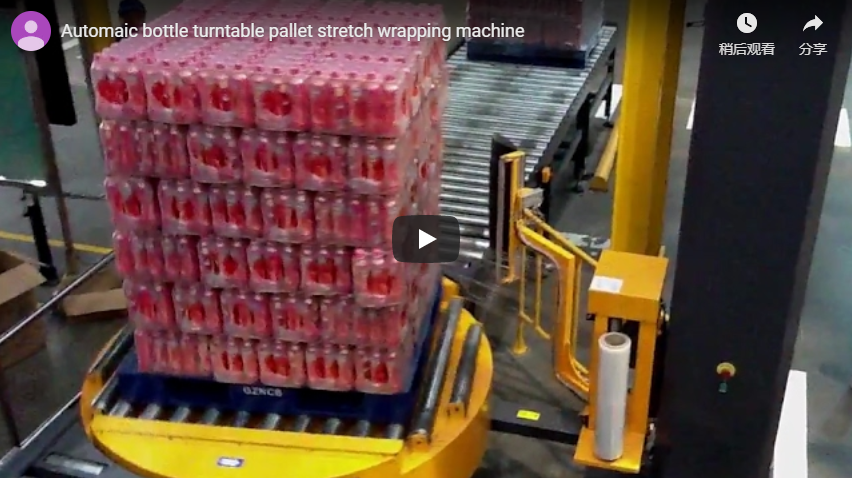
Selecting an undersized turntable for heavy loads directly causes film breakage and load shifting by failing to counteract centrifugal force; always specify a diameter of at least Ø1800mm with reinforced flooring to maintain stability and protect throughput. The root cause is underestimating rotational stress. Larger diameters distribute weight across a wider base, reducing strain on the film wrap and drive system. This directly affects load containment reliability and operational efficiency.

Impact of undersized turntables:

  • Film breakage: Standard units lack the structural stiffness to dampen vibration from heavy or off-center loads. Field data indicates higher breakage rates when rotational stress exceeds design limits, increasing packaging costs per shift.

  • Load instability: Pallets with uneven weight distribution can tilt on smaller platforms. The expanded surface area of larger turntables provides a wider stability base, preventing product damage during transit.

  • Reduced throughput: Operators often slow rotation speeds to compensate for instability, which drops the number of pallets wrapped per hour and creates bottlenecks in high-volume warehouses.

Recommended action:

  • Calculate your load weight and center of gravity. If any load exceeds 1500kg or has uneven distribution, specify a turntable diameter of at least Ø1800mm to ensure safe rotation.

  • Verify turntable construction. A reinforced steel plate of 12mm thickness (as specified for the FHOPE-R200) is necessary for dynamic heavy loads. Thinner plates may deform over time, causing alignment issues.

  • Check drive system torque. Industrial-grade large turntables typically use a 3.7KW AC motor paired with a planetary gear reducer (1:87 ratio, ~450Nm torque). Smaller motors struggle to accelerate heavy pallets consistently, leading to cycle delays.

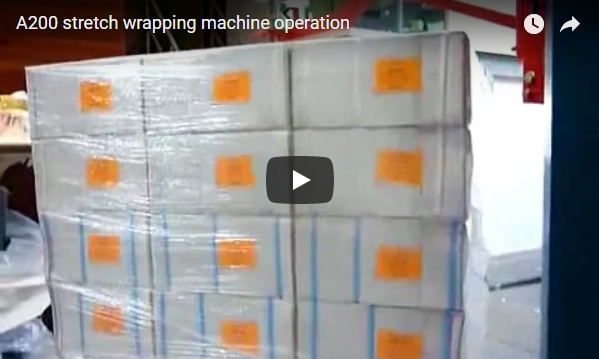
  • Consider the Semi-auto-pallet-wrapping-machine/Pallet-Stretch-Wrapping-Machine-JL-A200.html as a semi-automatic entry point if your volume is under 15 loads/hour, but verify its turntable diameter against your heaviest load.

🏗️ Problem 2: Inconsistent Film Tension Leading to Load Failure During Transit

Relying on standard pneumatic tension systems for heavy loads inevitably leads to inconsistent film wrap and transit failures; a servo-driven carriage with closed-loop control is required to maintain precise containment force and minimize material waste. Pneumatic or friction-based systems often drift under variable load weights, creating weak bands that unravel or crush product edges. Servo-driven carriages adjust tension in real-time, ensuring uniform coverage from bottom to top.

Why tension consistency matters:

  • Containment force: Wrapped pallets require consistent retained film tension to survive acceleration and braking during transport. Uneven tension creates failure points that compromise load security and increase damage claims.

  • Film yield: Pre-stretch capability (typically 250% for LLDPE film) significantly lowers material costs. However, fluctuating tension makes pre-stretch ratios unpredictable, wasting film and reducing overall packaging efficiency.

  • Product protection: Over-tensioning on one side can deform cardboard or crush delicate items. Closed-loop servo control maintains a steady set point across the full wrap height, protecting both product and packaging budget.

Recommended action:

  • Specify servo-driven carriage for loads above 1200kg or when wrapping irregular shapes. This is the industry standard for heavy-duty applications where tension drift causes costly failures.

  • Test film tension accuracy by requesting a supplier-provided consistency chart over consecutive cycles. Industrial-grade machines should maintain tight tolerances (±2mm) under dynamic loads.

  • Set correct overlap percentage: 50-70% film overlap is recommended for heavy loads to create a continuous containment band. Match carriage vertical speed (e.g., ~2.9m/min on the FHOPE-R200) to rotation speed for optimal coverage.

  • Use LLDPE film of 0.025mm thickness with verified pre-stretch capability. Thinner films may tear under high tension; thicker films reduce yield and increase material spend unnecessarily.

Tip: For loads with sharp edges or protruding parts, consider a M-type pallet wrapper which uses a dual-carriage system to apply film from top and bottom simultaneously, improving edge protection and reducing wrap defects.

📈 Problem 3: Installation Errors That Reduce Machine Lifespan by 40%

Installing heavy-duty wrappers on unprepared concrete floors causes structural misalignment and premature bearing wear; verifying floor load capacity and leveling tolerances before setup is essential to ensure long-term operational safety and equipment longevity. A rotating machine handling heavy dynamic loads generates continuous vibration. Unlevel or under-reinforced floors transmit this stress into the frame, accelerating wear on critical components and triggering unplanned downtime.

Engineering requirements for proper installation: Requirement Specification Consequence if ignored
Floor load capacity ≥3t/m² (concrete, minimum 200mm thickness) Frame warping, column stress fractures
Power supply 380V/50Hz/3-phase, dedicated circuit with surge protection Voltage fluctuations cause control system faults
Compressed air 6-8 bar, filtered, 10mm ID line (if pneumatic clamp used) Clamp failure or inconsistent film cutting
Ceiling clearance 3.5m minimum (for load height + column extension) Film carriage jams at top travel limit
Leveling tolerance ±1mm over 2m length Uneven wear on turntable bearings and drive gears

Impact of poor installation:

  • Structural damage: Machines built with Q355B steel (a high-strength structural grade) are engineered for heavy loads, but misalignment concentrates stress on single columns, leading to fatigue cracks over time.

  • Bearing failure: Turntable bearings (typically crossed roller or slewing ring types) require precise alignment to operate smoothly. Floor flex increases rotational runout, drastically shortening bearing service life and increasing replacement costs.

  • Control system errors: Industrial-grade PLCs (programmable logic controllers for automation) rely on stable power delivery. Voltage drops or electrical noise cause random fault codes, halting production until troubleshooting is complete.

Recommended action:

  • Conduct a floor load test before installation. Verify that the concrete slab meets the manufacturer’s minimum thickness and weight capacity requirements to prevent structural settling.

  • Install on a vibration-dampening pad (e.g., 20mm rubber-impregnated cork) to isolate machine vibrations from the building structure, protecting both equipment and surrounding operations.

  • Use a dedicated electrical circuit with appropriate breakers and surge protection. Do not share power lines with high-draw equipment like welders or large compressors.

  • Verify ceiling height with the machine’s full column extension to prevent carriage interference during operation.

  • Schedule annual maintenance at 1-1.5% of machine cost. Key wear parts (carriage guide rails, bearings) require periodic inspection and replacement based on actual cycle counts, not fixed calendar dates.

🛡️ Purchase-Decision Checklist for Large Pallet Wrappers

Use this checklist during supplier evaluation to verify specifications against your operational needs:

  1. Turntable diameter: ≥1800mm for loads >1500kg. Verify reinforced steel thickness (≥12mm) and load capacity rating in writing.

  2. Drive system: 3.7KW AC motor with planetary gear reducer. Torque output should match heavy-load acceleration requirements; request performance data sheets.

  3. Film tension control: Servo-driven carriage with closed-loop feedback. Request a supplier-provided tension consistency chart to verify ±2mm accuracy claims.

  4. Frame material: Q355B high-strength structural steel with reinforced columns. Confirm safety factor ratings and weld inspection standards.

  5. Control system: Industrial-grade PLC with recipe storage capability. Minimum 7” HMI for operator interface; verify compatibility with your facility’s electrical standards.

  6. Certifications: CE (Machinery Directive), ISO 9001:2015, and relevant safety compliance documentation. Request third-party test reports if available.

  7. Installation support: Supplier must provide written floor load requirements, power specifications, and leveling guidelines prior to delivery.

  8. Warranty: Minimum 2 years on structural frame, 1 year on electrical components. Clarify coverage for bearings and drive systems.

  9. Spare parts availability: Verify lead times for carriage guide rails, turntable bearings, and film carriage motors to minimize future downtime.

  10. Throughput verification: Request documented cycle time data at specified parameters. Ensure contracts include clear definitions of packaging rate calculations.

⚙️ FAQ

Q: What is the difference between a large turntable wrapper and an orbital wrapper? A: A large turntable wrapper rotates the pallet on a reinforced platform (Ø1800-2200mm). An orbital wrapper rotates a film ring around a stationary load. For heavy pallets (1500-2000kg), turntable wrappers provide better load containment and tension control. Orbital wrappers are typically used for long or irregularly shaped items like pipes and profiles.

Q: Can a large turntable wrapper handle non-standard pallet sizes? A: Yes, within the specified range (800-1200mm L × 800-1200mm W). For oversized pallets (up to 1400mm), consider a Ø2400mm turntable variant. Verify with the supplier that the film carriage travel path covers the full pallet height plus necessary overhang clearance.

Q: What is the typical ROI for upgrading from manual to automatic large turntable wrapping? A: Based on industry benchmarks, machines in the $25,000-35,000 installed range typically replace 2-3 manual operators. At standard labor rates, payback occurs within 12-18 months for multi-shift operations. Film savings from optimized pre-stretch and reduced breakage further improve total cost of ownership.

Q: How do I choose between semi-automatic and fully automatic? A: Semi-automatic (operator attaches film manually) is suitable for lower volumes around 10-15 loads/hour. Fully automatic (auto film attachment, cutting, and sealing) is required for 20+ loads/hour to maintain consistent cycle times. The Semi-auto-pallet-wrapping-machine/Pallet-Stretch-Wrapping-Machine-JL-A200.html serves as a semi-automatic option; the FHOPE-R200 is fully automatic. Choose based on your peak throughput and labor availability.

Q: What maintenance is required weekly? A: (1) Check turntable bearing grease level and re-grease per manufacturer intervals (typically every 500 hours). (2) Inspect film carriage rails for debris or wear. (3) Verify film tension calibration using a handheld meter. (4) Clean the PLC cabinet air filter to prevent overheating. (5) Test emergency stop function and safety interlocks before each shift.