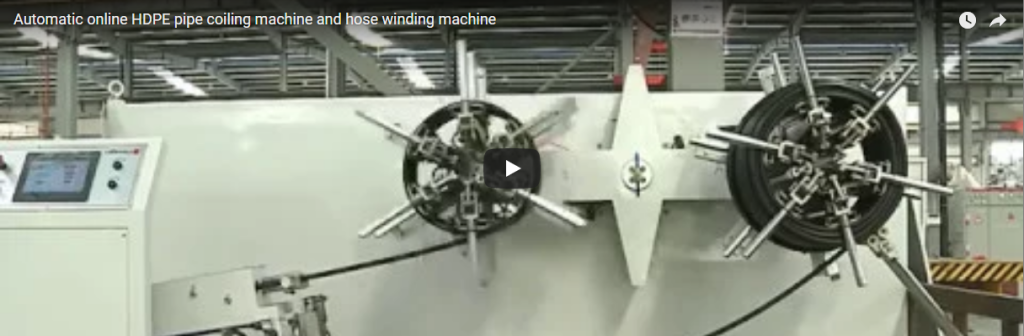
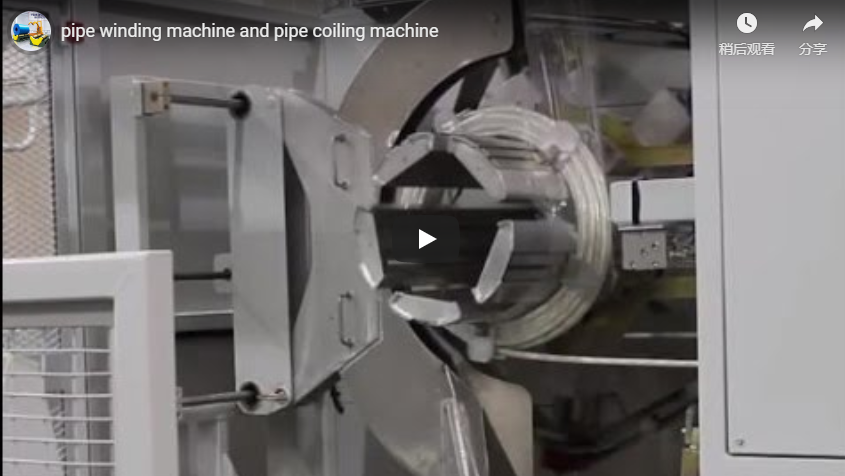
Overview
An automatic wire coil packing machine wraps a flat-lying steel wire coil through the eye in a single cycle: the coil lies on rollers with its axis vertical, an orbital ring passes through the coil eye and lays film around the whole coil section — the inner and outer surfaces and both faces — and the wrapped coil runs out of the station. Because the coil stays flat throughout, there is no upending step and the coil remains stable while the ring turns. This article explains the eye-through wrapping cycle, why it suits wire coils, and what to confirm before purchase. It is written for production engineers and plant managers at steel wire, rod and flexible-wire coil producers.
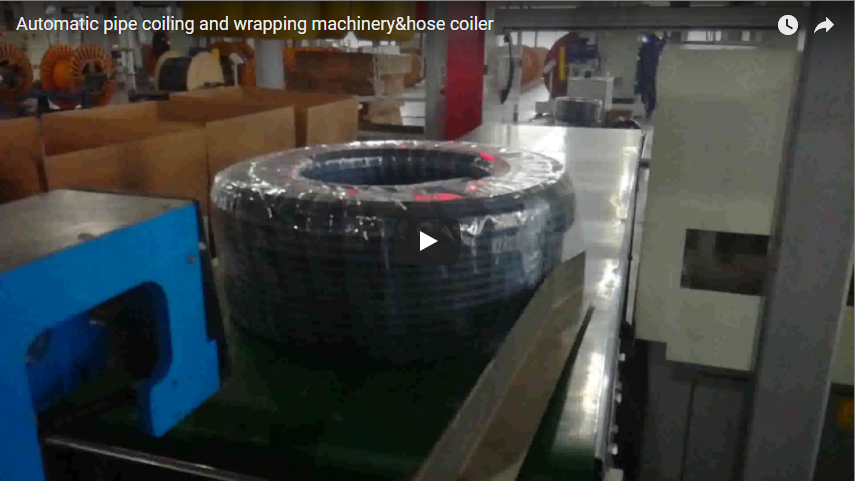
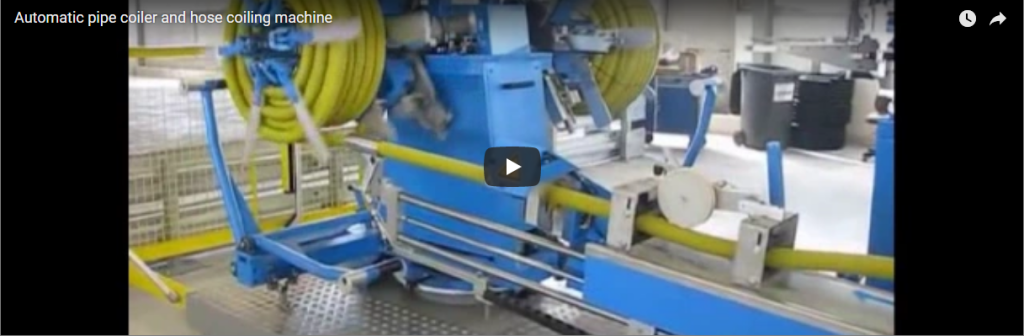
The video below shows the eye-through wrapping cycle on flat-lying coils:
How the Eye-Through Wrapper Works
| Stage | What happens |
|---|---|
| Infeed | A bare steel wire coil lies flat on the infeed roller conveyor. |
| Positioning | The coil is moved into the wrapping station and held between upright side rollers. |
| Wrapping | The ring passes through the coil eye and lays stretch film over the coil section as the coil turns on its rollers. |
| Outfeed | The wrapped coil, fully covered, runs out on the outfeed rollers. |
The ring travel through the eye is what gives full coverage: in one circuit the film crosses the inner and outer surfaces of the coil and both faces, so no strip is left open. Side rollers keep the flat-lying coil steady while the ring turns, and the film is drawn with even tension because the coil and ring speeds are coordinated by inverters. Because the coil never changes orientation, no upender is needed on either side of the wrapper.
Why Eye-Through Wrapping for Flat-Lying Wire Coils
| Benefit | What it means in use |
|---|---|
| Full cover | Film reaches the inner and outer surfaces and both faces in one pass. |
| Rust and dust protection | A closed film layer keeps moisture and dirt off the drawn wire in storage and transport. |
| No upending | The coil stays flat, so there is no turning step before or after wrapping. |
| Stable coil | Side rollers hold the coil in place while the ring turns. |
For drawn wire, the closed film layer is what keeps the surface clean and corrosion-protected between production and the customer, which is why coil producers run eye-through wrapping ahead of shipment. The same principle applies whether the coil comes from a drawing line, a rewinder or a compacting press.
Sizing Inputs and What to Confirm
| Input | Why it matters |
|---|---|
| Coil outside diameter, inside diameter and width | Sets the ring size, roller spacing and film reach across the section. |
| Coil weight | Sets the roller conveyor and drive capacity. |
| Wrap material and film width | Sets coverage and whether film, paper or both are used. |
| Overlap and number of layers | Sets film consumption and the protection for the transport route. |
| Coils per hour | Sets the cycle and conveyor speed. |
| Upstream and downstream stations | Confirms how coils arrive and whether compacting, strapping or stacking machines follow. |
Coil sizes, weights, speeds and wrap settings are confirmed per project; approximate dimensions in the footage are read with a project confirmation rather than as published specification.
What the Footage Shows, Safety and Verification
The footage shows the eye-through wrapping cycle on a flat-lying steel wire coil: the coil runs in on rollers, the ring passes through the eye and lays blue film over the whole section, and the wrapped coil runs out with one operator starting the cycle. Compacting, strapping and stacking are not part of the wrapper and are performed by separate machines when a customer needs them; the wrap can also be combined with paper where the transport route requires it.
The ring turns through the coil eye and the coil moves on powered rollers, so keep clear of the ring zone and the infeed while the machine runs; guardrails, soft start and stop are fitted to the risk assessment. For CE markets, EN 415-10 is used as the packaging-machinery safety reference and ISO 12100 guides the risk assessment; confirm the applicable standards and guarding with the manufacturer for your market. As a stated manufacturer practice for this machinery family, each unit undergoes sustained functional and safety testing before delivery (about 24 hours where stated), covering the control system and the emergency-stop function; treat this as the stated family practice for acceptance planning.
FAQ
Q: How does the machine wrap a wire coil?
A: The coil lies flat on rollers and the ring passes through its eye, laying film over the whole coil section in one pass.
Q: Why wrap a coil through the eye instead of around the outside?
A: Eye-through wrapping covers the inner and outer surfaces and both faces, so no coil surface is left open.
Q: Does the coil need to be turned over?
A: No. The coil stays flat-lying during wrapping, so there is no upending step before or after.
Q: What coil sizes can it take?
A: Coil outside diameter, inside diameter, width and weight are confirmed per project; state your coil range to the manufacturer.
Q: Does it also strap or stack the coils?
A: No. Compacting, strapping and stacking are separate machines and are configured per project.
Next Step
Send coil sizes (outside diameter, inside diameter, width and weight), wrap material, overlap and coils per hour to info@fhopepack.com, so the ring size, conveyor and film settings are confirmed on the approval drawing.
Related Resources
- Operation Process for the Coil Wrapping Machine – The eye-through wrapping sequence for steel master coils.
- Steel Coil and Copper Coil Packaging Machine for Eye-Through Film Wrapping – Eye-through film wrapping for the same coil family.