Executive summary
A line ordered across a continent is a line that has to match the site before it ships, which is why the supply plan and the machine are settled together. This automatic pipe coiling and strapping machine was configured for a pipe factory, built to the line’s hose range and its site supply. We build automatic coiling and strapping machines for factory lines. Drawing and supply plan are confirmed per project.
Table of Contents
- Why a factory line is a site-built design
- What the machine does
- Coiling on the factory line
- Strapping in the same flow
- Built to the site supply
- Shipped ready to run
- Typical configuration
- What the video shows
- Selection checklist
- Operation and safety
- Engineering FAQ
- Next step
- Related reading
- Sources and standards
Why a factory line is a site-built design
A factory line has its own hose range, its own line speed and its own electrical supply, and a machine that ignores them will not run as bought. Designing to the site is what makes the machine part of the line on arrival. That is why every factory line is confirmed from the drawing up. The supply and layout are confirmed per project.
What the machine does
The machine coils pipe and straps each coil on the factory line, completing the step the line needs at its own pace. Winding closes the coil, strapping holds it, without a break in the flow. Because the machine is built to the line, it joins the flow from the first run. The covered step is confirmed per project.
Coiling on the factory line
The machine draws pipe from the factory line and winds it into coils, matched to the line’s output of hose. On-line coiling means the step runs as the pipe runs, not after a pile builds. The winding and its pace follow the factory’s hose, confirmed per project.
Strapping in the same flow
Each coil is strapped in the same flow as it is wound, closing the coil before it leaves the machine. In-flow strapping keeps the coil closed through the factory’s own handling. The strap plan follows the coil and the factory’s standard, confirmed per project.
Built to the site supply
The machine is configured to the site’s electrical supply and layout, so it arrives able to run where it lands. Site supply is part of the machine’s build, settled before shipping rather than after. The voltage and phase follow the site, confirmed per project.
Shipped ready to run
The machine ships with the line’s settings, ready to take the factory’s hose on installation. Ready-to-run is what a factory abroad expects from a machine ordered at distance. The machine arrives matched to the drawings confirmed between the parties. The interface and hanging points are confirmed per project.
Typical configuration
Figures below list functional design boundaries rather than numeric values, and are confirmed per project.
| Parameter | Typical range, confirmed per project |
|---|---|
| Pipe | factory range |
| Coil | diameter set |
| Straps | positions, tension |
| Supply | site matched |
| Build | line-specific |
| Control | PLC |
| Winding | guided lay |
| Electrical supply | site voltage, phase and frequency, confirmed per project |
What the video shows
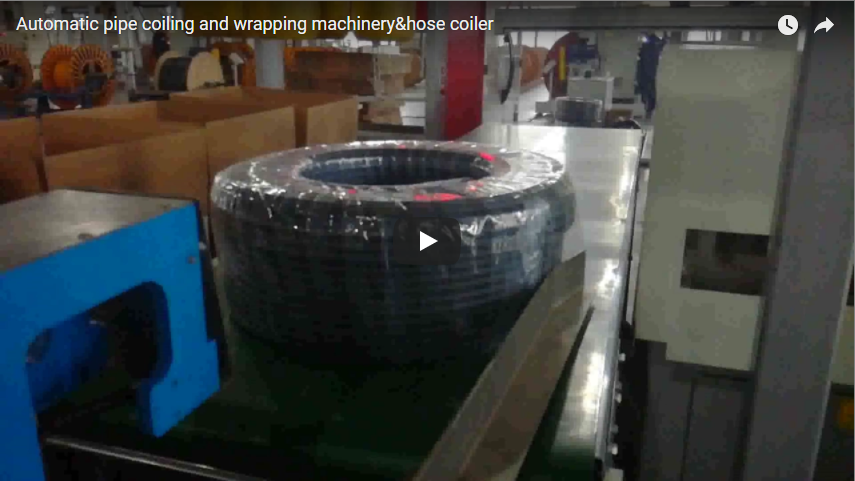
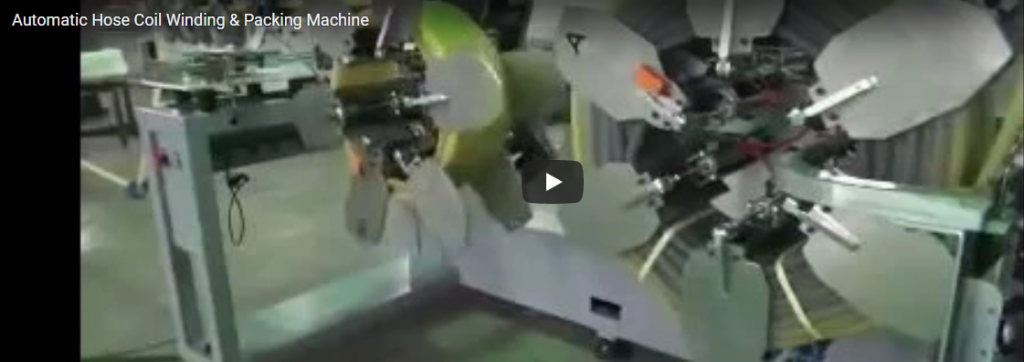
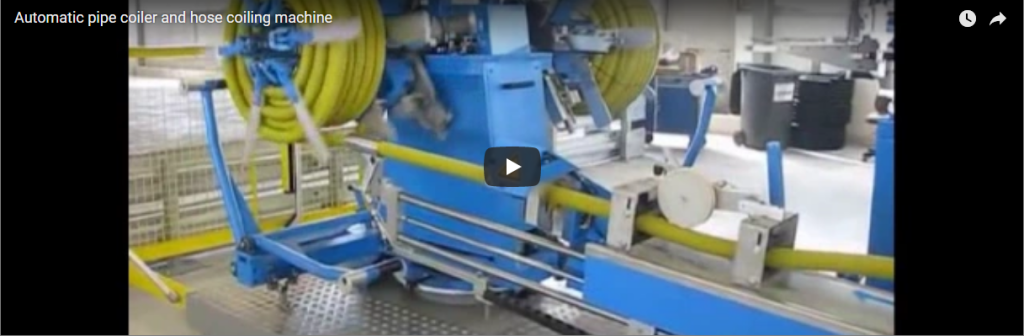
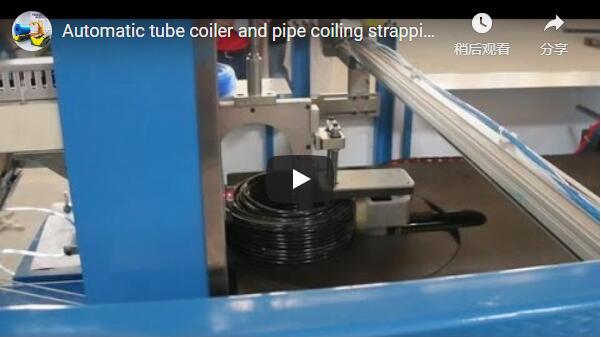
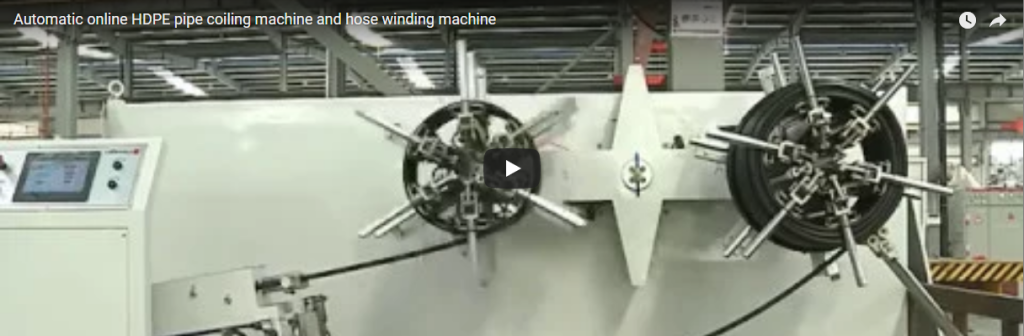
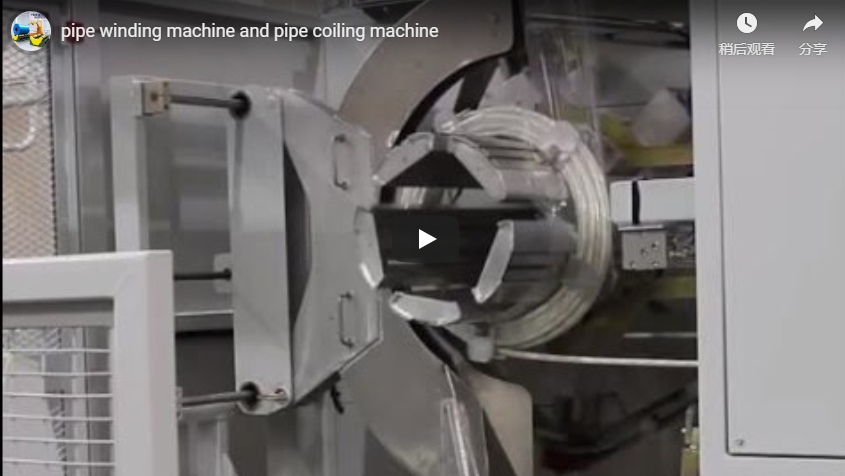
Our footage shows an automatic pipe coiling and strapping machine built for a factory line. It is a general demonstration, so your factory’s hose range and site supply are confirmed with us per project.
Selection checklist
| Question | Confirm per project |
|---|---|
| Pipe | factory range |
| Coil | diameter set |
| Straps | count, tension |
| Supply | site matched |
| Build | line-specific |
| Control | PLC |
| Cycle | PLC-governed |
| Electrical supply | site voltage, phase and frequency |
Operation and safety
Run the cycle from the panel and the machine coils and straps each pipe at the line’s pace. Keep clear of the winding head, pipe path, strap unit and outfeed while the machine runs, with guarding and emergency stops at the operator position. Routine checks cover the winding drive, guides, strap head, sensors and control, per the machine manual. Confirm the coil settings against the factory’s pipe before each run so coils keep the line’s standard.
Engineering FAQ
Q: Why is this machine site-specific? A: The machine matches the factory’s hose range, line pace and electrical supply.
Q: What does the machine do on the line? A: It coils pipe and straps each coil as the pipe runs from the factory line.
Q: When is the strap applied? A: In the same flow as the wind, closing each coil before it leaves.
Q: How is the supply handled? A: The electrical plan is matched to the site before the machine ships.
Q: What happens on arrival? A: The machine runs with the line’s settings, ready for installation.
Next step
- Email us at info@fhopepack.com with your factory’s hose range and supply.
- We send a site-built proposal and a layout drawing within 48 hours.
- We arrange a site survey to confirm the line interface and electrical plan.
Related reading
- Automatic pipe coiler and strapping machine
- Pipe coiling and strapping machine for hose
- Automatic steel wire winding machine
- FHOPE packing machinery product lines
Sources and standards
- ISO 12100:2010 Safety of machinery, general principles for design and risk assessment
- EN 415-10:2014 Safety of packaging machines, general requirements
- EN ISO 13849-1:2023 Safety of machinery, safety-related parts of control systems
FHOPE automatic pipe coiling and strapping machine demonstration video. Reviewed as a general demonstration; factory range confirmed per project.
Last reviewed: 2026-10-10