Executive summary
Medical tubing leaves the line cut to length and wound into a clean coil, every piece. This automatic machine feeds medical-grade tubing under controlled tension, measures it, cuts it cleanly, and winds it into a coil with the inner and outer diameter set per product. We build it for fluid delivery and catheter assemblies. Tubing range and coil spec are confirmed per project.
Table of Contents
- What the machine does
- Feed and measure
- Cut it clean
- Wind and secure
- Tubing materials
- Control and build
- Typical configuration
- What the video shows
- Selection checklist
- Operation and safety
- Engineering FAQ
- Next step
- Related reading
- Sources and standards
What the machine does
Cut length and coil shape are the two things a medical tube must hold, and both are done in one machine. Tubing is drawn from the source spool under steady tension, measured as it advances, cut at the programmed length, and wound into a coil with inner and outer diameter set for the product. Because the steps share one feed path, the coil matches the cut length without manual handling between them.
Feed and measure
Accuracy starts at the feed. A precision feeding mechanism, driven by servo motors, draws tubing from the spool with consistent tension so the material does not stretch or deform. As the tube advances, sensors or encoders measure the length, so the machine knows exactly where to cut. The measurement loop is what makes every piece the same length instead of a series of close approximations.
Cut it clean
The cut has to be clean and free of contaminants for a medical product. A high-speed cutting mechanism parts the tube at the measured point, using a rotary blade or a shear cut selected per project based on polymer rigidity and wall thickness. Blade material and design follow the polymer being cut, because silicone and a stiff polyurethane do not behave the same way.
Wind and secure
After the cut, the segment transfers to the coiling station. The system winds the tube into a uniform coil at the programmed inner and outer diameter, and an automated binding step holds the coil together so it stays wound for packaging and further processing. Coil dimensions and binding follow the product specification, confirmed per project.
Tubing materials
The machine handles the common medical-grade polymers. Silicone, PVC, PU, TPE and Pebax all run through the same feed and cutting path, with per-material settings for tension, blade and winding. The compatibility list and the machine configuration are confirmed per project before the line commits.
Control and build
A programmable controller runs the sequence with a touchscreen panel for recipes, and servo drives are used for the feeding and coiling actions for repeatability. Contact parts are kept cleanable for medical or near-cleanroom environments, and the frame and guards are built to stand up to a continuous production shift. The build is confirmed per project against the room it serves.
Typical configuration
Figures below list functional design boundaries rather than numeric values, and are confirmed per project.
| Parameter | Typical range, confirmed per project |
|---|---|
| Tubing | diameters and material |
| Cut length | programmed per product |
| Coil | inner and outer diameter |
| Feed | servo-driven, tensioned |
| Blade | rotary or shear per polymer |
| Electrical supply | 380 V three phase 50 Hz, or 220 V single phase for light machines, selected per project |
What the video shows
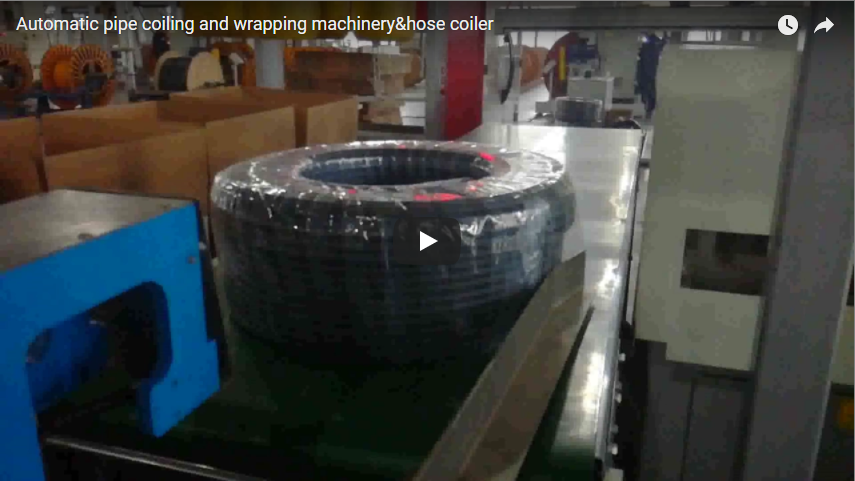
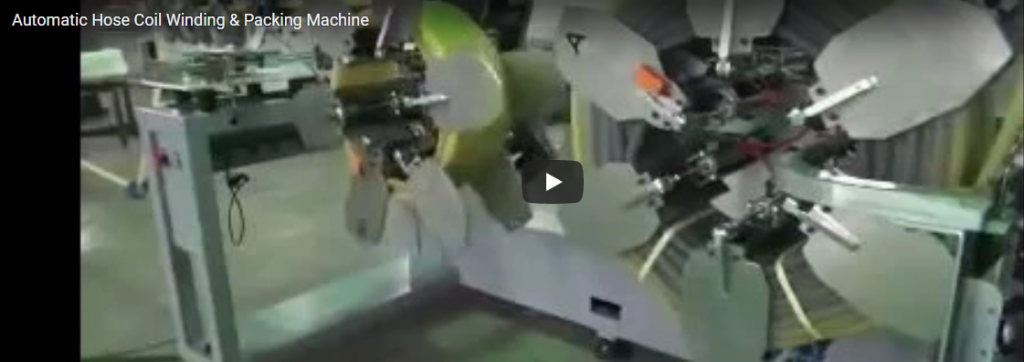
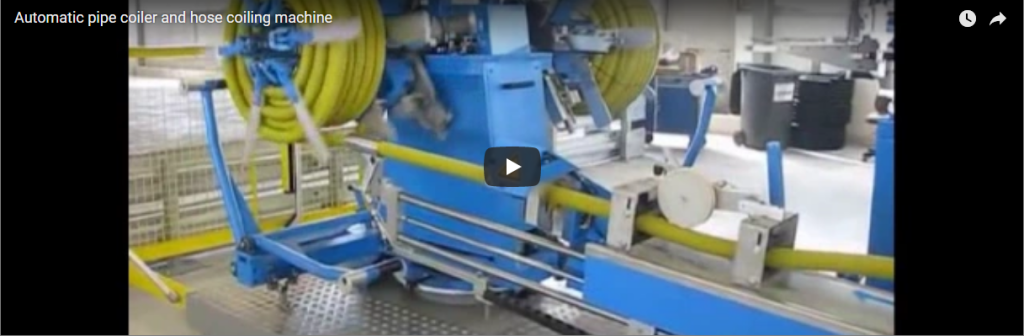
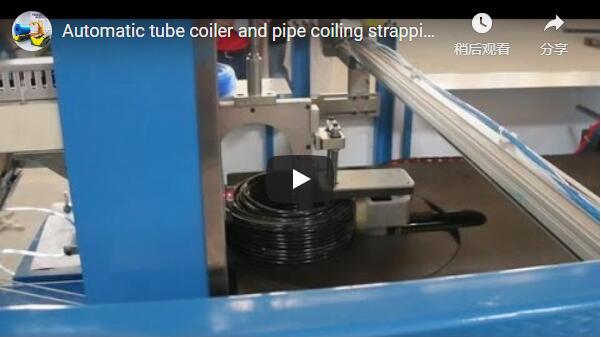
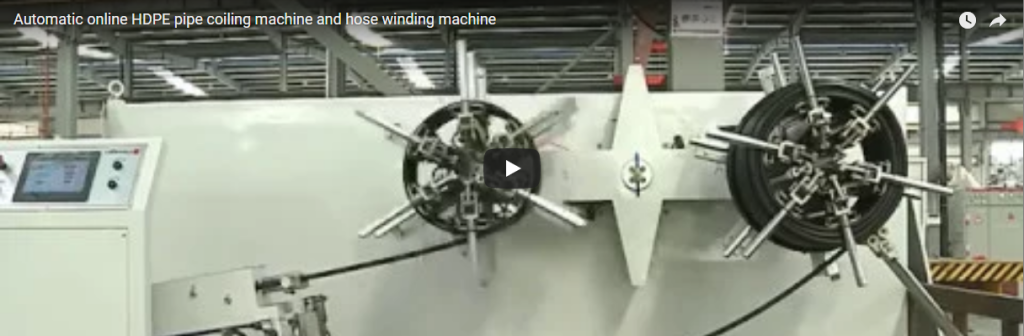
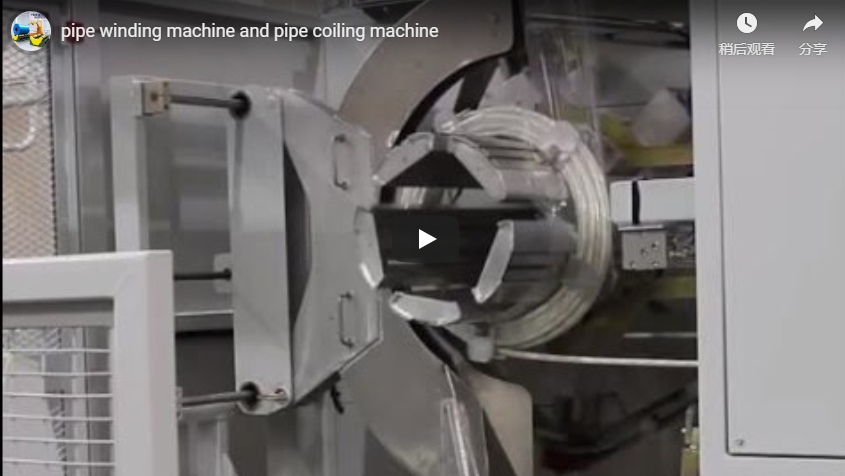
Our footage shows a medical tube being fed, cut and coiled on this machine. It is a general demonstration, so tubing range and coil spec for your line are confirmed with us per project.
Selection checklist
| Question | Confirm per project |
|---|---|
| Tubing range | diameters, material, wall |
| Cut length | lengths in the product mix |
| Coil spec | inner and outer diameter |
| Feed tension | safe window for the material |
| Blade plan | rotary or shear per polymer |
| Electrical supply | voltage, phase and frequency on site |
Operation and safety
Load the source spool, set the recipe and start the cycle from the panel. Keep clear of the cutting and coiling zone while it runs, with the emergency stop near the operator position and guarding around moving parts. Routine checks cover the feed, encoder, blade, coiling mandrel and sensors, per the machine manual.
Engineering FAQ
Q: What does the machine produce? A: Medical tubing cut to a programmed length and wound into a coil with set inner and outer diameter.
Q: How is the cut length controlled? A: Servo-driven feed holds steady tension and sensors or encoders measure the advancing length before the cut.
Q: What blade does it use? A: A rotary blade or shear cut, chosen for the polymer, for a clean burr-free cut.
Q: Which tubing materials run on it? A: Common medical-grade polymers such as silicone, PVC, PU, TPE and Pebax, per project.
Q: Is it suitable for medical environments? A: Contact parts are built cleanable for medical or near-cleanroom use, confirmed per project.
Next step
- Email us at info@fhopepack.com with your tubing range, coil spec and volumes.
- We send a cutting and coiling proposal and a layout drawing within 48 hours.
- We arrange a site survey to confirm materials and environment.
Related reading
- Automatic medical tubing coiling machine video
- Automatic coil packing machine theory
- Simple coil wrapping machine for full size
- FHOPE packing machinery product lines
Sources and standards
- ISO 12100:2010 Safety of machinery, general principles for design and risk assessment
- EN 415-10:2014 Safety of packaging machines, general requirements
- EN ISO 13849-1:2023 Safety of machinery, safety-related parts of control systems
FHOPE automatic medical tubing cutting and coiling machine demonstration video. Reviewed as a general demonstration; tubing range confirmed per project.
Last reviewed: 2026-10-10