Executive summary
Palletizing and wrapping end the line, and done separately they add the handling that costs a facility time and consistency. This integrated system combines an automatic palletizer with a turntable stretch wrapper: cases are stacked onto the pallet in pre-programmed patterns, then the load is wrapped on the turntable in the same flow. We build palletizer and turntable wrapper systems. Load range and pallet pattern are confirmed per project.
Table of Contents
- Why palletizing and wrapping belong together
- What the system combines
- The automatic palletizer
- Palletizer types
- The turntable wrapper
- One end-of-line flow
- Typical configuration
- What the video shows
- Selection checklist
- Operation and safety
- Engineering FAQ
- Next step
- Related reading
- Sources and standards
Why palletizing and wrapping belong together
Manual palletizing and wrapping are common bottlenecks at the end of the line, and each one carries inconsistencies, injury risk and labor cost. A facility that palletizes in one place and wraps in another re-handles the load and opens it to damage between the steps. Combining palletizing and wrapping keeps the load built and secured in one flow. The load range and the flow it needs are confirmed per project.
What the system combines
The system combines an automatic palletizer with a turntable stretch wrapper, so the cases are stacked and the stack is wrapped without leaving the line. Palletizing builds the load in a pre-programmed pattern, and wrapping secures that pattern on a turntable, one after the other. Combining the two removes the handling point between stacked and wrapped, which is where manual lines lose stability. The combined flow is confirmed per project on the real load.
The automatic palletizer
The automatic palletizer stacks cases, bags or other products onto a pallet according to pre-programmed patterns. Pre-programmed stacking is what makes pallets stable and repeatable, with the pattern matched to the product and how it ships. A palletizer that stacks consistently feeds the wrapper a load that wraps consistently. The palletizer pattern and product types are confirmed per project.
Palletizer types
Robotic arm palletizers handle complex patterns and multiple lines with flexibility, while gantry palletizers suit high-speed, single-pattern duties. The choice between them follows the product mix and the line speed, and the turntable wrapper completes the flow either way. Selecting the palletizer type is part of matching the system to the facility. The palletizer type and duty are confirmed per project.
The turntable wrapper
After palletizing, the load moves to the turntable stretch wrapper, where the pallet rotates while the film carriage applies the wrap. Turntable wrapping suits loads that turn freely, building the film layers as the pallet rotates beneath the film. The rotation applies even tension around the load, and the wrap is set at a consistent standard. Turntable settings follow the load height and shape, confirmed per project.
One end-of-line flow
Palletizer and wrapper run as one end-of-line flow, taking cases in and delivering a wrapped pallet at the outfeed. A single flow improves throughput and load stability, and it streamlines the warehouse by delivering a consistent unit every time. With the steps connected, the load is touched once instead of re-handled, and the flow is confirmed per project against the lines feeding it.
Typical configuration
Figures below list functional design boundaries rather than numeric values, and are confirmed per project.
| Parameter | Typical range, confirmed per project |
|---|---|
| Product | cases, bags |
| Palletizer | robotic or gantry |
| Pattern | pre-programmed |
| Wrapper | turntable |
| Flow | end-of-line |
| Electrical supply | 380 V three phase 50 Hz, or 220 V single phase for light machines, selected per project |
What the video shows
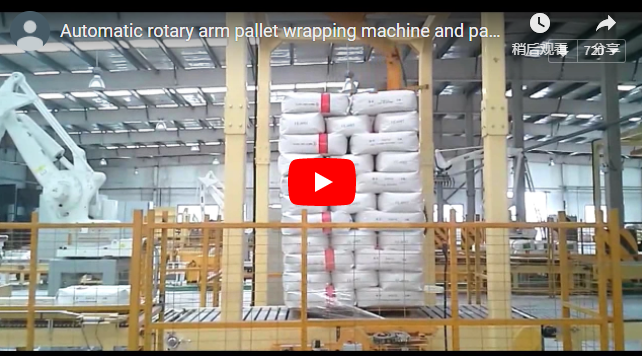
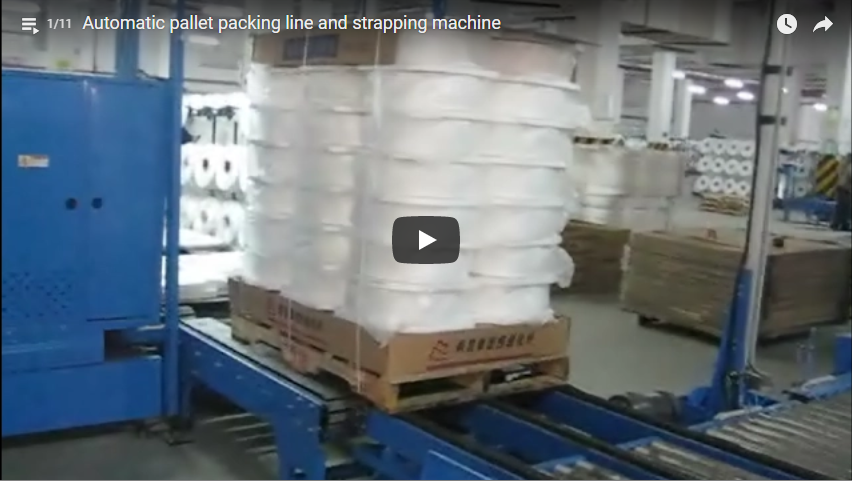
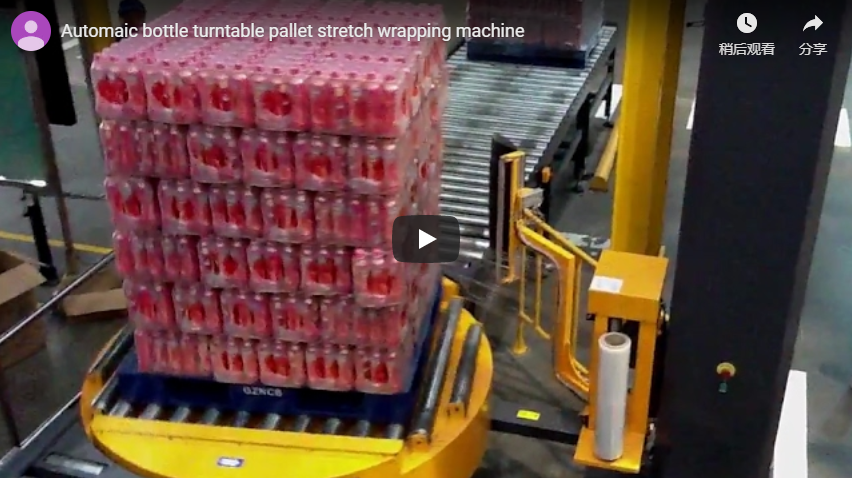
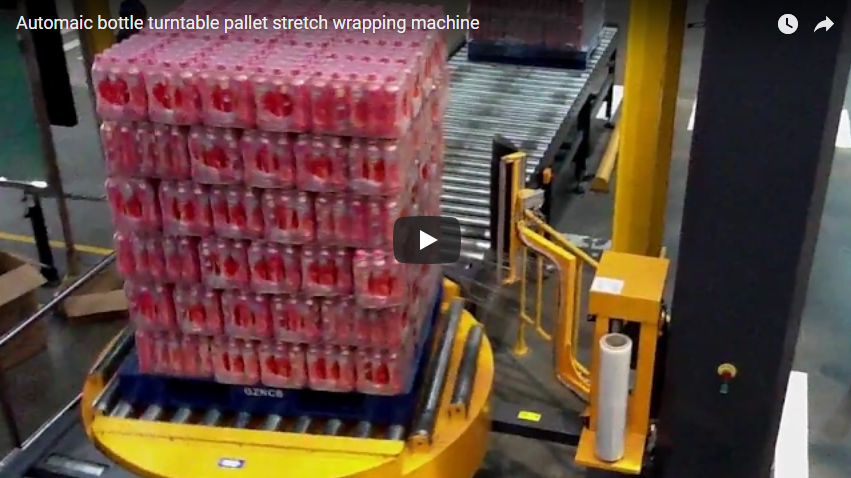
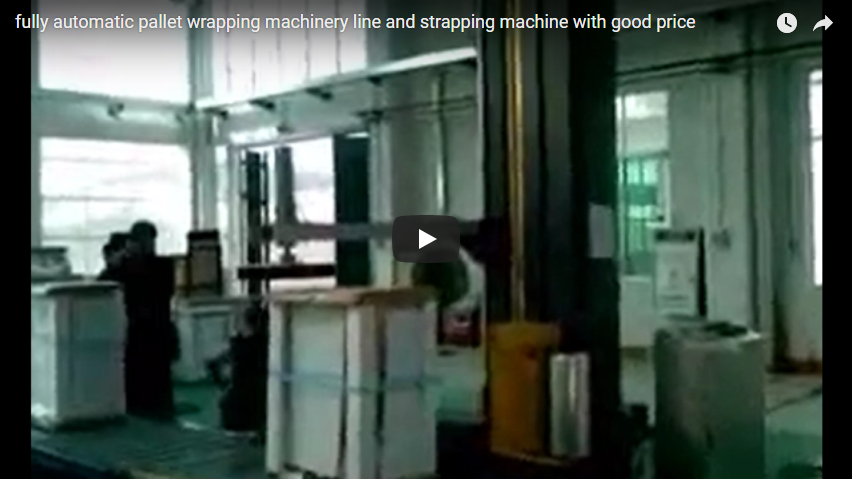
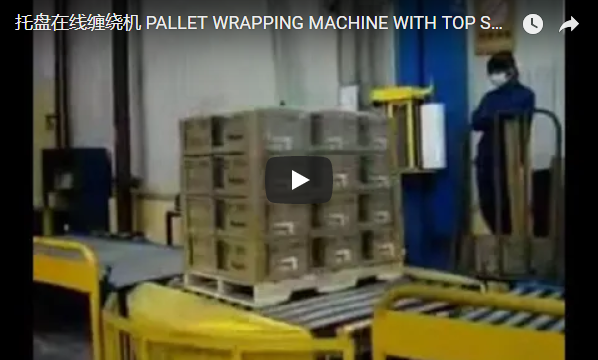
Our footage shows an automatic palletizer and turntable stretch wrapper running as one system. It is a general demonstration, so your load range and pallet pattern are confirmed with us per project.
Selection checklist
| Question | Confirm per project |
|---|---|
| Product | case, bag range |
| Pattern | pallet build |
| Palletizer | type match |
| Wrapper | turntable plan |
| Flow | line interface |
| Electrical supply | voltage, phase and frequency on site |
Operation and safety
Run the recipe from the panel and the system stacks, transfers and wraps each pallet automatically. Keep clear of the palletizer, transfer, turntable and film path while the system runs, with guarding and emergency stops at the operator position. Routine checks cover the palletizer, transfers, turntable, film carriage, sensors and control, per the machine manual. Confirm the pattern and wrap settings against the load before each run so pallets ship stable.
Engineering FAQ
Q: What does the system do? A: It palletizes cases or bags and wraps the load on a turntable in one flow.
Q: Why combine the two? A: Combining removes the re-handling that costs stability between stacked and wrapped.
Q: What does robotic palletizing offer? A: Flexibility for complex patterns and multiple lines.
Q: When choose gantry? A: For high-speed, single-pattern duties, confirmed per project.
Q: How does the turntable wrap? A: The pallet rotates under a film carriage, applying even tension around the load.
Next step
- Email us at info@fhopepack.com with your product range, patterns and volumes.
- We send a palletizing proposal and a layout drawing within 48 hours.
- We arrange a site survey to confirm load range and end-of-line layout.
Related reading
- Automatic palletizer and turntable stretch wrapper
- Automatic pallet wrapping machine: complete guide
- Automatic pallet packing line and strapping machine
- FHOPE packing machinery product lines
Sources and standards
- ISO 12100:2010 Safety of machinery, general principles for design and risk assessment
- EN 415-10:2014 Safety of packaging machines, general requirements
- EN ISO 13849-1:2023 Safety of machinery, safety-related parts of control systems
FHOPE automatic palletizer and turntable stretch wrapper demonstration video. Reviewed as a general demonstration; load range confirmed per project.
Last reviewed: 2026-10-10