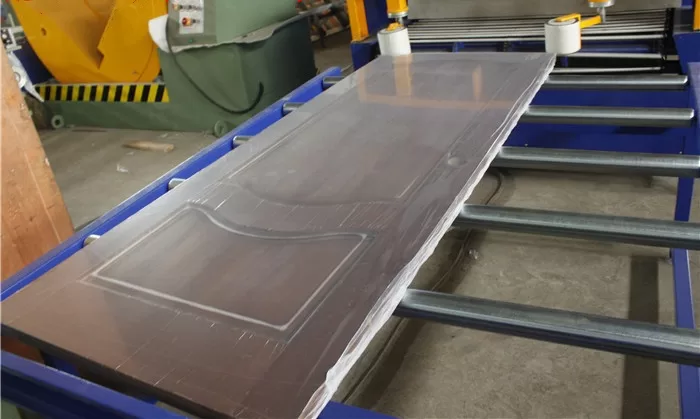
Film Tapping Machine For Sheet And Panel: Complete Guide

Summary: This guide addresses three critical failures in automated film tapping for sheet and panel packaging: surface damage from improper tension, adhesive residue from thermal mismatch, and throughput bottlenecks. It details technical parameters, machine configurations like lap versus side sealers, and selection criteria to optimize protective packaging systems while reducing material costs by up to 30%.

[VIDEO PLACEHOLDER]

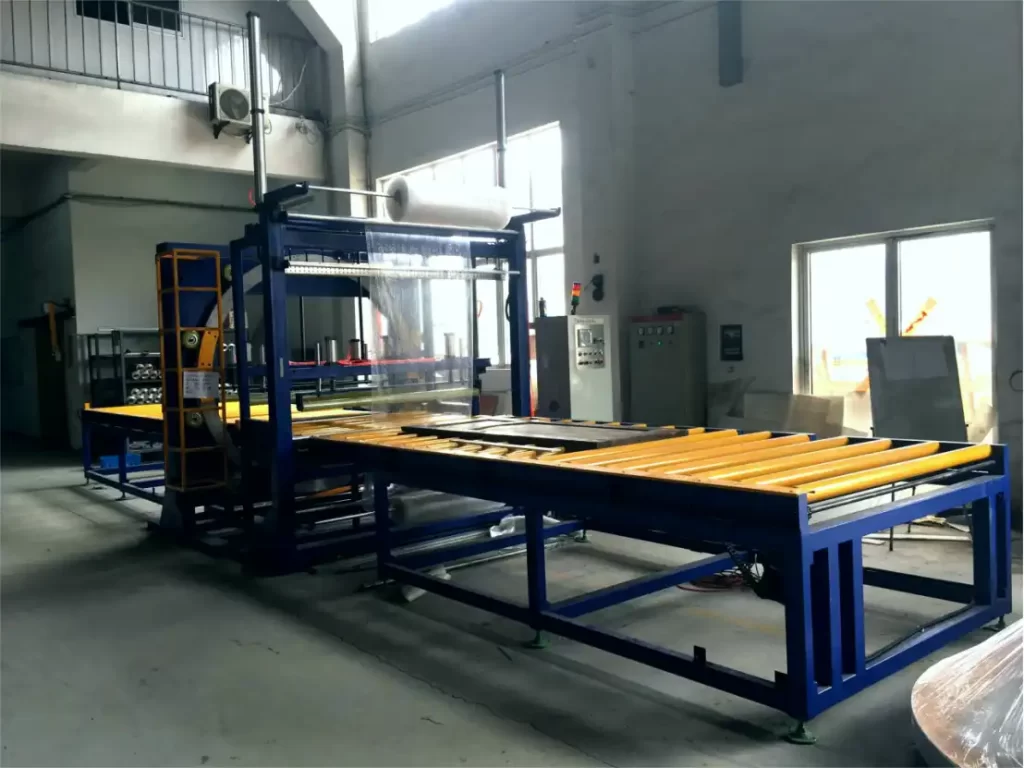
A film tapping machine for sheet and panel applies protective film via automated tension control, vacuum fixation, and precision rolling to prevent surface damage during transit; selecting the correct configuration based on substrate width, film gauge, and line speed ensures defect-free packaging and optimizes operational efficiency.

🛠️ Problem 1: Surface Defects and Adhesive Failure in Automated Film Application

Surface defects like air bubbles or adhesive residue result from inconsistent film tension, uneven vacuum fixation, or thermal mismatch; automated machines prevent these failures by using servo-driven unwind shafts for dynamic tension feedback and zoned pressure control to ensure uniform nip force across varying substrate geometries.

Substrate damage compromises brand perception in architectural cladding, appliance manufacturing, and optical plastic applications. Manual application often introduces scratches, abrasions, or contamination. Automated protective film lamination systems eliminate these risks by maintaining precise contact parameters throughout the process.

Core Mechanisms for Surface Integrity

Substrate fixation relies on negative pressure to secure panels during lamination. Vacuum tables generate suction via blowers or vacuum pumps. Advanced models incorporate zoned vacuum control, allowing operators to adjust suction zones based on part size and flexibility. Zoning prevents substrate movement on large sheets and reduces stress on delicate materials like high-gloss stainless steel or decorative laminates.

Film dispensing requires strict tension management. Systems use dancer rollers or electronic feedback loops connected to servo-driven unwind shafts. These components maintain consistent, low tension before film contact, preventing stretching or wrinkling. Industry innovations often prioritize tension control mechanisms adaptable to various film elasticities. Precise tension regulation directly minimizes material waste and prevents surface scratches, lowering defect rates and operational costs.

Thermal activation improves conformability for specific polymers. For PVC or polyolefins, integrated heating units warm the film immediately before application. Infrared (IR) lamps or controlled hot air provide targeted heat sources. Thermal parameters must match the polymer’s glass transition temperature—the softening point where a material transitions from rigid to pliable. Operators verify these settings to ensure proper bond strength without degrading the substrate surface energy.

Lamination rollers apply the final bonding force. Silicone or EPDM rubber rollers with specific durometers (a standardized scale measuring rubber hardness) ensure uniform pressure distribution. The nip pressure at the contact point is pneumatically or servo-controlled, allowing fine-tuning based on film type and substrate characteristics. Some designs feature oscillating rollers to expel trapped air during application.

Key Point: Standard industrial seals like FKM O-rings are rated for continuous duty under verified supplier conditions; verify that roller durometer hardness matches the required nip pressure range for your specific film gauge to prevent premature wear or uneven bonding.

Automated cutting mechanisms complete the lamination cycle. High-throughput systems include inline rotary blades or shear cutters. These tools cut film to precise substrate lengths, with some configurations offering oversized cuts for edge wrapping. Edge-wrapping capabilities fold film over panel perimeters for complete protection against transit damage.

Mechanism Technical Specification Operating Condition & Business Impact
Vacuum Table Zoned negative pressure control Secure fixation reduces substrate movement and handling defects
Unwind Shaft Servo-driven with dancer feedback Maintains tension typically within ±3–5% to prevent film waste
Heating Unit IR lamps or controlled hot air Activates thermal bond for PVC/Polyolefin films without surface degradation
Lamination Roller Silicone/EPDM, variable durometer Pneumatic/servo nip pressure adjustment ensures consistent adhesion quality

🏗️ Problem 2: Excessive Film Consumption and Material Cost Inefficiency

Film consumption exceeds optimal levels when machines lack precise length control or cannot process thin-gauge shrink films, driving up unit costs; selecting a system compatible with thinner gauges and verifying lap sealer economics can reduce film usage by 10% to 30% per product, though lap sealers require dedicated tooling for each film width.

Material waste directly impacts the profitability of packaging operations. Machinery unable to process thinner gauge shrink film incurs higher production costs. Compatible equipment enables significant material cost savings through optimized film utilization. Procurement teams must evaluate sealing configurations against volume requirements and changeover frequency.

Sealer Configuration Economics

Lap sealer systems offer substantial material efficiency. Lap sealers provide a 10% to 30% reduction in film material costs per wrapped product compared to certain side-sealing alternatives. These machines use a scrapless design that minimizes waste during the sealing process. Lap sealers require single-wound shrink film and mandate specific film widths for each tooling set.

The economic advantage of lap sealers involves trade-offs. Each product-specific configuration requires an additional capital expense for the film-forming plow. Tooling procurement leads times are longer than standard components, and inventory requirements increase because operators must stock multiple plows for different product runs. Factories with stable, high-volume SKUs benefit most from this cost structure due to predictable material savings.

Side sealer configurations prioritize flexibility over raw material savings. Side sealers optimize production for rapid and easy product changeovers. These machines reduce downtime when switching between film types or widths. The absence of complex tooling requirements lowers initial setup costs, though side sealing may utilize more film per unit depending on the overlap design.

Film compatibility dictates machine selection limits. Equipment features machine-specific maximum and minimum gauge limits. Thinner gauge shrink film support varies by model. Operators must verify that the selected packaging system can handle the thinnest economically viable film. Processing thinner gauges reduces material cost but requires precise tension control to prevent breaks or wrinkles, directly tying equipment capability to unit economics.

Key Point: Lap sealer tooling demands dedicated film-forming plows; calculate total cost of ownership by comparing 10%–30% material savings against additional capital expense and inventory complexity for multiple plow sets before committing to high-volume runs.

Film Type Compatibility

Automated packaging systems support diverse protective materials. Compatible films include PE, PET, PVC, PP, paper-based substrates, and co-extruded variants. Each film type exhibits distinct mechanical properties affecting machine settings. Stretch wrap film relies on adhesive-based barriers, while heat-shrinkable film requires thermal activation for shrinkage.

Verification of film gauge economics is essential for budget planning. Machinery unable to process thinner gauges forces reliance on thicker films, increasing waste. Compatible equipment allows procurement teams to specify minimum viable thicknesses. This capability aligns packaging technology with sustainability goals and cost reduction targets.

Sealer Type Material Savings Tooling Requirement Changeover Speed & Operational Fit
Lap Sealer 10% to 30% reduction Dedicated film-forming plow per width Longer setup time; ideal for stable, high-volume SKUs
Side Sealer Standard consumption Minimal tooling changes Rapid adjustment; optimal for frequent product mix shifts

🔗 Related: Explore more solutions

📈 Problem 3: Production Bottlenecks Due to Limited Substrate Versatility

Production bottlenecks arise when packaging equipment cannot accommodate wide substrate ranges or thick profiles, forcing manual intervention; automated film tapping machines typically support widths up to 2,000–2,500 mm and thicknesses over 100 mm, with lamination speeds generally ranging from 10 to 30 meters per minute depending on configuration.

Inefficient machine geometry restricts operational flexibility. Packaging lines handling doors and windows, construction materials, or industrial components require adaptable equipment. Machines with narrow width limits force manual taping or secondary operations. These interventions increase labor costs and reduce line speed. Selecting a packaging solution with broad substrate compatibility eliminates these constraints.

Substrate Parameter Ranges

Maximum substrate dimensions determine the machine’s application scope. Horizontal film tapping machines typically support widths from 600 mm to supplier-verified ranges exceeding 2,500 mm. This range accommodates standard sheet metal panels, wood boards, and glass substrates. Operators verify width limits against their largest product SKU to ensure full coverage without manual assistance.

Thickness handling capability affects machine clearance design. Automated systems manage substrate thicknesses up to 100 mm or more. This specification ensures compatibility with heavy-duty profiles, insulated panels, and multi-layer assemblies. Sufficient clearance prevents mechanical interference during film application and allows for the packaging of finished goods assembled on pallets or frames.

Throughput rates influence overall equipment effectiveness. Lamination speeds typically range from 5 to 30 meters per minute, depending on machine configuration and supplier verification. Variable speed control enables operators to match line output with upstream fabrication processes. Consistent speed maintenance prevents film tension fluctuations during acceleration or deceleration phases, protecting both product quality and cycle times.

Integration and Workflow Optimization

Automated packaging technology integrates seamlessly into broader production workflows. Film tapping machines function as standalone units or components of a complete packaging system. They can operate after forming, filling, or enclosure steps in FFS (Form-Fill-Seal, an automated packaging process that shapes, fills, and seals containers in one continuous line). The scope extends to palletising preparation by protecting individual units before bulk handling.

Facility requirements must align with machine specifications. Load-bearing capacity supports the weight of heavy substrates and equipment. HVAC specifications manage environmental conditions affecting film adhesion and static control. Dust control systems prevent particulate contamination on sensitive surfaces like optical plastics or high-gloss finishes, directly reducing rework costs and warranty claims.

Substrate Parameter Typical Range Operational Impact & Verification Note
Max Width 600 mm to 2,500+ mm Determines panel coverage capability; verify against largest SKU
Max Thickness Up to 100+ mm Ensures clearance for heavy profiles and palletized assemblies
Lamination Speed 5 to 30 m/min Impacts throughput; confirm supplier-verified ranges for your film type

🛡️ Purchase-Decision Checklist

Use this checklist to validate equipment selection against technical and economic requirements.

  • Substrate Compatibility: Verify maximum width exceeds your largest SKU by at least 10%. Confirm thickness clearance supports the thickest panel in production.

  • Tension Control System: Require servo-driven unwind shafts with dancer roller feedback. Ensure tension tolerance remains typically within ±3–5% to prevent wrinkles or stretching.

  • Sealer Configuration Analysis: Calculate material savings for lap sealers versus tooling costs. Select side sealers if changeover frequency exceeds daily shifts.

  • Film Gauge Support: Confirm machine processes your target minimum gauge. Request test data on thin-gauge performance to validate supplier claims.

  • Edge Protection Features: Verify inline cutting mechanisms include rotary blades or shear cutters. Ensure edge-wrapping capability folds film securely over panel perimeters.

  • Facility Integration: Assess load-bearing requirements for heavy substrates. Plan dust control and HVAC adjustments for sensitive film types like PVC or PET.

  • Maintenance Access: Check roller durometer availability and vacuum pump service intervals. Confirm spare parts inventory includes standard industrial seals rated for continuous duty.

🔗 See Also: Related equipment

🛡️ Compliance Note: This equipment is designed to meet ISO and ASTM requirements. Verify specific certifications with the manufacturer before procurement.

⚙️ FAQ

The FAQ section addresses common technical queries regarding film tapping machine selection, including lap versus side sealer economics, substrate compatibility limits, and vacuum system maintenance; these responses help procurement teams evaluate total cost of ownership and operational fit before finalizing packaging equipment specifications.

Which sealing configuration offers the best material savings for high-volume production?

Lap sealers provide a 10% to 30% reduction in film material costs per wrapped product. This configuration uses a scrapless design with single-wound shrink film. However, lap sealers require dedicated tooling for each film width. Procurement teams must weigh these savings against additional capital expense and inventory complexity for multiple plow sets. Side sealers offer lower tooling costs but may use more material per unit.

What film types are supported by automated film tapping machines?

Machines typically support PE, PET, PVC, PP, paper-based films, and co-extruded variants. Stretch wrap film relies on adhesive barriers, while heat-shrinkable film requires thermal activation. Film compatibility depends on machine-specific gauge limits. Thinner gauge shrink film support varies by model; verify minimum gauge capabilities with the supplier to ensure cost-effective material selection.

How does the system handle edge protection for sensitive panels?

Automated cutting mechanisms include inline rotary blades or shear cutters. These tools cut film to precise substrate lengths or oversized dimensions for edge wrapping. Edge-wrapping capabilities fold film over panel perimeters to seal edges completely. This feature protects high-gloss finishes and delicate surfaces from abrasion during transit. Verify cutting precision matches tolerance requirements for your specific product line.