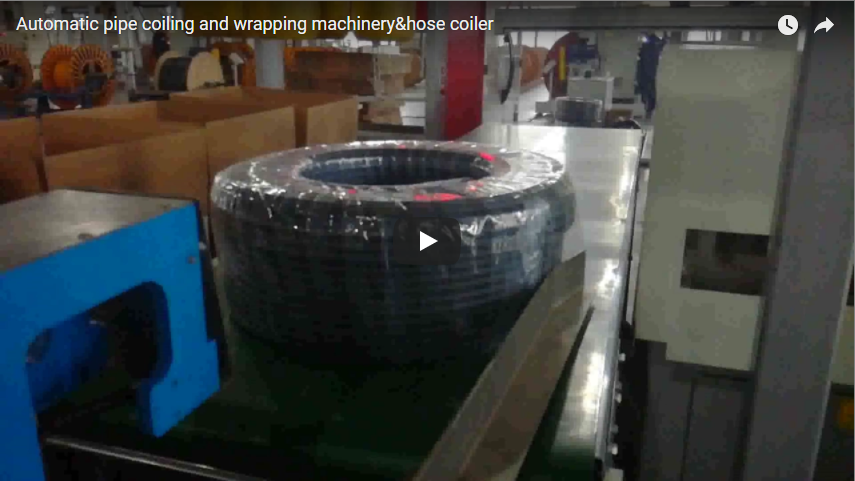
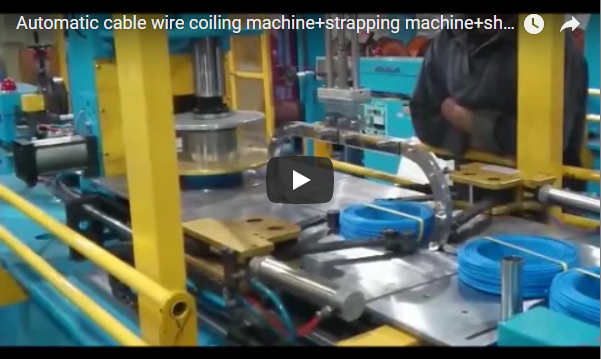
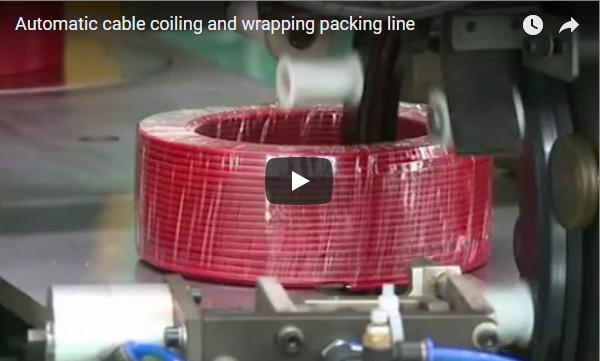
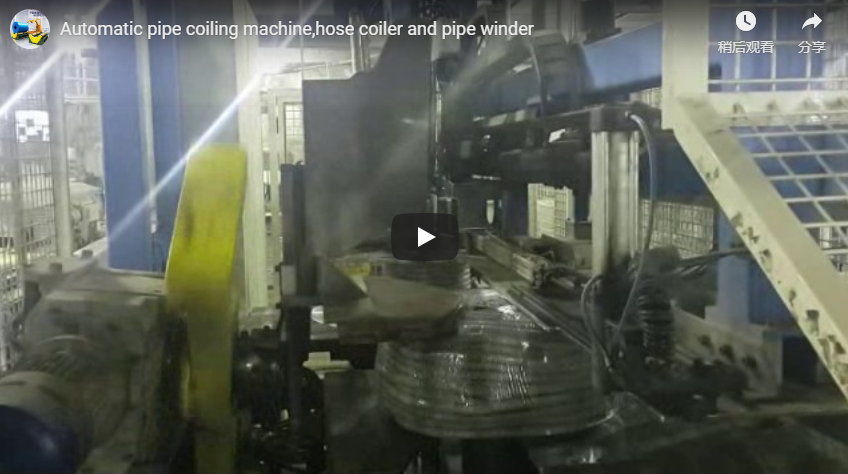
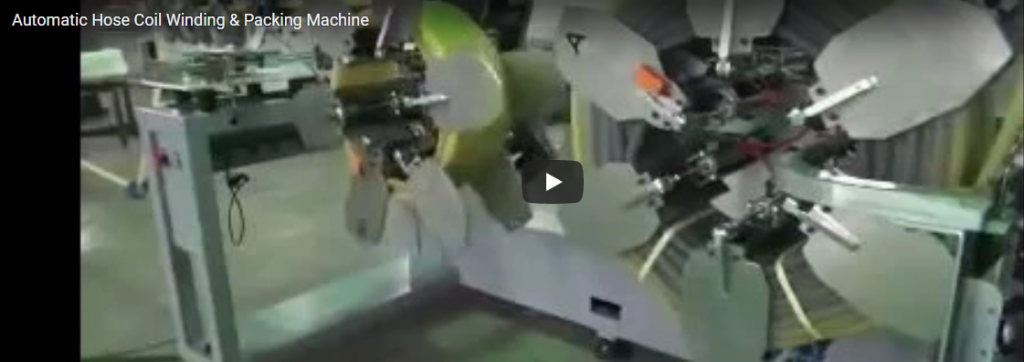
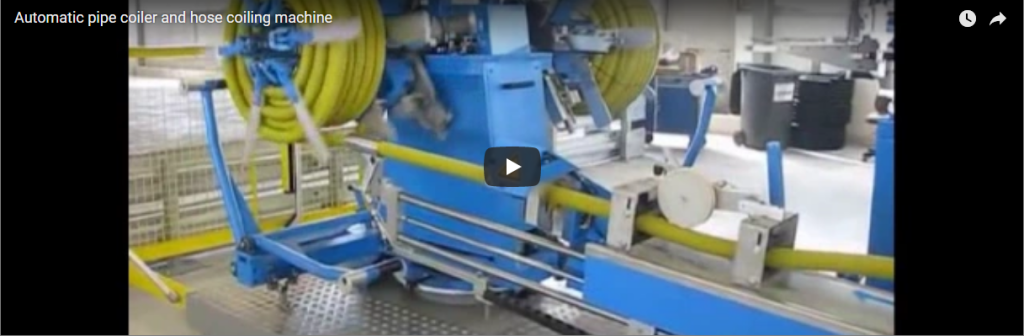
Executive summary This video shows a fully automatic pipe coiling and strapping machine completing a full working cycle: feeding a white plastic pipe, winding it into a tight coil, strapping the coil, and discharging it. Multiple identical machines are then shown running in line, indicating this equipment is designed for continuous production environments. No cycle time, capacity, or specification data is shown — all such figures must be confirmed with the manufacturer.
Why this machine matters
Anyone who produces flexible plastic pipe — PE water pipe, PVC conduit, irrigation hose — knows the pain point at the end of the line. The pipe comes off the extruder continuously, but the finished product needs to leave the factory as a neat, tightly bound coil that will not unravel, tangle, or deform in transit.
Doing that by hand works, but it is inconsistent. One operator winds loosely, another winds tightly. Coils slip, ends spring loose, and strapping quality varies shift to shift. An automatic pipe coiling and strapping machine exists to remove that variability: the same tension, the same coil pattern, the same strap position — every cycle.
The video on this page shows exactly that kind of machine in operation. Below, we describe what the footage actually shows, what it does not show, and what a buyer or plant manager should verify before making a purchasing decision.
What the video shows
The footage is roughly 24 seconds long and plays out in four distinct phases. Times below are approximate, based on frame-by-frame analysis at 2-second intervals.
| Time | What happens |
|---|---|
| ~0–6s | A single white machine stands idle in standby. Green status light is lit. A white plastic pipe extends from the right into the machine’s infeed area. |
| ~8–12s | The cycle starts. A red mechanical arm/clamping device on the left reaches in, grips the pipe, and guides it into the winding zone. The winding reel begins to rotate. |
| ~14–18s | Winding completes. The pipe has formed a compact, even coil. The strapping mechanism on the right (rollers, sealing/pressing components) begins to move, preparing to bind the finished coil. |
| ~20–24s | The camera pans right to reveal multiple identical machines running in a row, all with green lights on — a production-line layout rather than a single isolated unit. |
Direct observation notes
The following observations are kept deliberately close to the frame-by-frame analysis, with only light grammatical editing. They are the factual backbone of this article.
- The machine is a white, painted metal-frame unit standing on adjustable feet, with a rust-resistant coating.
- The front and sides are fitted with transparent safety doors combined with metal mesh guards, framed in aluminum or steel with locking latches.
- On the left: infeed guide rollers and a red pneumatic clamping/swing arm.
- In the center: a large rotating reel support, with what appears to be a brake or tension-control device.
- On the right: a strapping module containing two parallel rollers, a sealing/pressing assembly, and tensioning pulleys.
- On top: a three-color signal tower (red/yellow/green) and an embedded touchscreen control panel with a blue interface.
- At the base: an independent white electrical cabinet with ventilation slots, warning labels, and a yellow triangular high-voltage warning symbol on its door.
- A red circular emergency stop button is mounted on the left column, next to the touchscreen, alongside physical buttons and indicator lights (button colors not readable in the footage).
- The product is a smooth, milky-white flexible plastic pipe. Relative to the roughly 1-meter winding reel, the pipe’s outer diameter appears to be about one-tenth to one-fifteenth of the reel — visually in the 50–80mm range (estimate only; not a specification).
- The finished coil is wound in a regular spiral with even spacing between layers, then discharged from the right side via a guide/roller system, in a vertical or slightly tilted orientation.
- Watermarks reading “FHOP / FHOPE PACKAGING / www.fhopepack.com” are overlaid on the footage.
- The floor near the line shows visible water/oil stains, and part of a person’s arm appears at the edge of frame — no operator is shown actively interacting with the running machine.
The process, step by step
Following one pipe through the cycle gives the clearest picture of what this equipment automates.
- Feeding. The white pipe enters from the machine’s left-side inlet, guided by rollers into the coiling zone.
- Coiling. The reel starts, the clamping arm secures the pipe’s leading end, and the reel rotates, winding the pipe layer by layer into a disc.
- Strapping. Once the coil is complete, the strapping mechanism positions itself, wraps binding material around the coil one full turn, and tightens/seals it. (The strap itself is not clearly visible in the footage; only the mechanism’s motion is.)
- Discharge. The strapped coil is moved out on the right side, ready for the next stage or for storage.
Taken together, this is a hands-off cycle: in the footage, no operator touches the pipe at any point between infeed and discharge.
How the machines work as a line
The most telling shot is the final pan: several identical machines in a row, all running. This matters for buyers evaluating automation levels. A single machine suits a mid-volume pipe producer; a bank of machines, as shown, suits a continuous extrusion line where coil-making must keep pace with production. The footage does not show how coils transfer between the machines and any downstream conveyor or palletizing step — that is an integration question to raise with the manufacturer.
What the video does not show
The footage is a clean product demonstration, not a technical briefing. The following are not observable and must be confirmed directly with the manufacturer before purchase:
- Rated power (kW), supply voltage (V/Hz)
- Maximum coil diameter and coil weight
- Cycle time per coil and line throughput (m/min or pcs/h)
- Compatible pipe diameter and wall thickness range
- Overall machine dimensions
- PLC programming interface, remote monitoring support
- CE/UL or other certifications, warranty terms, spare parts availability, noise level
None of the control-screen text, warning labels, or nameplates are readable in the video. Any specification you see claimed elsewhere for this exact footage should be treated as unverified until confirmed in writing.
Where this type of machine fits
Based on the product visible in the video — smooth, flexible white plastic pipe — the natural applications are:
- PE water/gas pipe plants — coiling and strapping finished lengths for distribution
- PVC electrical conduit production — small-diameter coils bound for retail or site delivery
- Agricultural irrigation hose lines — long, flexible products that must be coiled cleanly to avoid kinking
The machine shown handles flexible plastic pipe. Rigid metal tube or corrugated pipe is a different handling problem; whether a given machine variant accepts those materials is a question for the manufacturer.
Safety features observed
For operations and maintenance teams, several safety elements are visible in the footage:
- Interlocked safety doors — transparent panels with mesh and locking latches on the front and sides. In all frames the doors are closed while machines run, consistent with an active door-interlock arrangement.
- Emergency stop — a prominent red button on the left column of each machine, next to the control screen.
- Status signal tower — red/yellow/green lights; steady green indicates normal running in the footage.
- High-voltage warning — a yellow triangular symbol on the electrical cabinet door.
Standard operating discipline applies: never force the guards open during a cycle, and confirm the door-interlock and e-stop function during commissioning and routine checks. Exact safety compliance documentation should be requested from the manufacturer.
Buyer verification checklist
Before committing to a purchase, work through this list with the supplier:
- Confirm coil size range (reel diameter options and changeover effort)
- Confirm compatible pipe diameters and materials for your product mix
- Confirm strapping method and strap consumption per coil
- Confirm cycle time and whether one machine can keep pace with your extrusion output
- Confirm PLC/communication protocols if you need line integration
- Confirm safety certification documents and after-sales response commitments
FAQ
Does the machine require an operator during the cycle? In the footage, no operator touches the pipe from infeed to discharge. Staffing requirements per machine will depend on your line layout — confirm with the manufacturer.
What pipe sizes can it handle? The pipe in the video appears to be roughly 50–80mm in diameter, but this is a visual estimate, not a specification. Ask for the official diameter and wall thickness range.
Can it strap with different materials (hot-melt, tape, cord)? The strapping method is not identifiable from the video. This is a configuration option to verify with the manufacturer.
Can several machines be linked into one line? The video’s final shots show multiple identical machines running side by side, so line arrangements are clearly part of how this equipment is deployed. The specific transfer/conveyor integration should be discussed with the manufacturer.
Is the touchscreen interface available in other languages? The screen text is unreadable in the footage. Check with the manufacturer.
Related reading
- Automatic Coiling Machine
- Automatic Strapping Machine
- Automatic Coil Packing Line
- Automatic Pallet Wrapping Machine
Next step
If the cycle shown here matches your pipe product and throughput goals, the fastest way to move forward is to send us your pipe diameter, coil weight target, and line speed. Visit our contact page and our team will confirm machine configuration, cycle data, and a quotation.
Source and method: This article is based solely on the product video above. The footage was analyzed frame by frame using a vision model; the video contains background music only, with no narration or speech, so no spoken content was transcribed. Statements marked as estimates or inferences are identified as such; all other observations come directly from visible frames.
Published: 2026-09-03