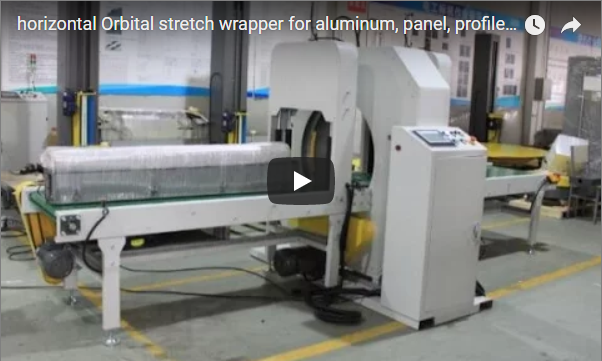
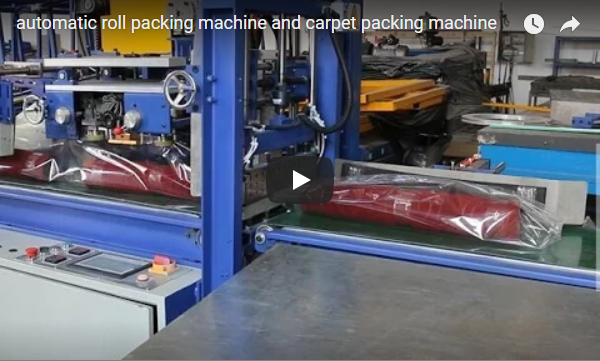
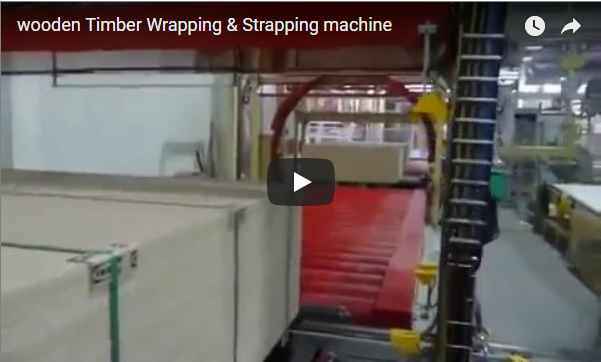
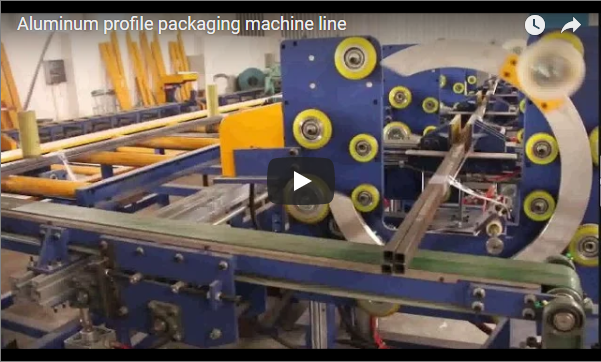
🛠️ Operational Inefficiencies in Manual Packaging & Unitization
Manual packaging workflows introduce critical bottlenecks that directly compromise throughput, product integrity, and regulatory compliance. Automated taping and labeling systems eliminate human variability, standardize cycle times, and ensure consistent unitization across high-volume production lines while significantly reducing operational waste and rework costs.
Manual strapping and hand-taping processes introduce unacceptable variability in tension application and label placement, which directly impacts downstream logistics and end-user safety. In high-volume environments, operator fatigue and inconsistent technique lead to under-tensioned bundles that shift during transit, causing surface abrasion, structural deformation, and product loss. These inefficiencies compound when handling temperature-sensitive or fragile goods, where compromised packaging integrity accelerates spoilage or mechanical failure. The financial impact extends beyond material waste; delayed shipments, customer returns, and compliance penalties erode margin faster than equipment depreciation.
Automated taping machines resolve these friction points by delivering repeatable tension control and precise material placement across varying carton and bundle dimensions. By standardizing the unitization process, facilities align with ISO 9001 quality management requirements, which mandate documented, repeatable processes for packaging consistency. Furthermore, CE marking compliance ensures that automated systems meet European safety, health, and environmental protection standards, reducing liability exposure and facilitating cross-border distribution. When packaging becomes a controlled variable rather than a manual guesswork process, throughput stabilizes and operational costs predictably decline.
The transition from manual to automated packaging also addresses critical safety and tamper-evident requirements, particularly in pharmaceutical and electronics distribution. Manual seal application often lacks verifiable breach indicators, leaving products vulnerable to unauthorized access or contamination. Automated tamp applicators and tamper-evident sealing systems provide standardized breach detection that satisfies ASTM F2654 specifications for tamper-evident packaging materials. This standardization ensures that every sealed unit meets regulatory expectations for chain-of-custody verification, reducing audit failures and protecting brand reputation.
🏗️ Automated Taping & Labeling System Architecture
Modern packaging automation integrates precision taping, pressure-sensitive labeling, and high-resolution coding into a unified workflow. Closed-loop servo control and standardized material handling ensure repeatable performance while meeting strict dimensional and adhesive specifications across diverse product geometries and variable production speeds.
Industrial packaging lines require coordinated subsystems that operate synchronously to maintain throughput without sacrificing accuracy. Taping machines seal various sized boxes and cartons by applying consistent adhesive bands, while pressure-sensitive label applicators position identification tags with micron-level precision. These functions are typically synchronized with inkjet printers and laser printers that encode barcodes, batch numbers, or graphics directly onto packaging surfaces. Laser coding delivers permanent, high-contrast markings resistant to abrasion and solvents, whereas large character inkjet case coding provides rapid, variable data printing for logistics tracking. The integration of these subsystems eliminates manual handoffs, reducing cycle time variability and minimizing mislabeling errors that trigger warehouse rejections.
At the core of reliable automation is closed-loop servo control, a feedback-driven mechanism that continuously monitors and adjusts motor output to maintain precise tension and positioning. Unlike open-loop systems that rely on fixed voltage or friction brakes, closed-loop architecture uses real-time sensor data to compensate for material thickness variations, roll diameter changes, and conveyor speed fluctuations. This capability ensures that tape widths and lengths remain within specified tolerances, preventing over-application waste or under-tension failures. Pressure-sensitive adhesives, which bond instantly upon contact without heat or solvent activation, require consistent dwell pressure and peel speed to achieve optimal adhesion. Automated applicators regulate these parameters dynamically, ensuring uniform bond strength across high-speed runs.
Material handling parameters dictate system selection and line configuration. Label applicators support different label sizes and materials, ranging from thin polypropylene films to heavy-duty kraft paper, while printers accommodate various print resolutions and speeds to match production velocity. Automatic round labeling systems utilize rotating mandrels and tensioned guide arms to conform labels to cylindrical products without wrinkles or air pockets. By standardizing these mechanical interactions, facilities achieve predictable consumable usage and reduce changeover downtime. The operational impact is measurable: consistent labeling reduces scanning errors, accurate taping prevents transit damage, and integrated coding eliminates manual data entry bottlenecks.
| Decision Criteria | Open-Loop Friction Control | Closed-Loop Servo Control | Operational Impact |
|---|---|---|---|
| Tension Consistency | Variable across roll life | Stable within ±2% tolerance | Reduces tape waste and bundle failure |
| Speed Adaptability | Limited by mechanical inertia | Dynamic adjustment to conveyor changes | Maintains throughput during speed ramps |
| Maintenance Frequency | High (brake pad wear, calibration) | Low (sealed bearings, software diagnostics) | Lowers downtime and service costs |
| Best Application | Light-duty, low-speed cartons | Heavy bundles, high-speed lines, fragile goods | Aligns equipment to product risk profile |
🔗 Related: Explore more solutions
📈 Compliance, Material Selection & Procurement Decision Matrix
Selecting the correct packaging automation requires aligning machine capabilities with industry standards, environmental conditions, and total cost of ownership. A structured procurement framework prevents specification mismatches and ensures long-term operational reliability across global supply chains and complex regulatory jurisdictions.
Procurement decisions must be anchored in verifiable industry standards rather than marketing claims. ISO 9001 certification verifies that a manufacturer maintains documented quality management processes, ensuring consistent build quality and traceable component sourcing. CE marking confirms compliance with European machinery directives, covering electrical safety, emergency stop functionality, and noise emission limits. For tamper-evident applications, ASTM F2654 defines test methods for seal integrity and breach detection, requiring manufacturers to validate performance under controlled tension and environmental stress. Procurement teams should request third-party test reports or certification documentation rather than relying on internal performance statements.
Material selection directly influences packaging performance and regulatory compliance. BOPP (biaxially oriented polypropylene) tape offers high tensile strength and moisture resistance, making it suitable for general carton sealing and outdoor storage. PET (polyester) tape provides superior thermal stability and dimensional rigidity, ideal for heavy-duty unitization or high-temperature environments. Filament-reinforced tapes incorporate fiberglass or polyester strands to prevent elongation under load, ensuring bundles remain secure during crane lifting or forklift handling. Adhesive selection must align with FINAT (Federation of European Adhesive Tape Converters and Distributors) classification standards, which categorize pressure-sensitive adhesives by substrate compatibility, temperature resistance, and aging performance. Inline verification of FINAT test data ensures that selected tapes maintain bond strength across the intended service life.
Environmental conditions and product sensitivity dictate system configuration. Food and beverage operations require packaging that preserves freshness and prevents microbial contamination, often necessitating sealed cartons with moisture-barrier tapes and sanitized label surfaces. Pharmaceutical distribution demands tamper-evident seals that provide irreversible breach indicators, satisfying ASTM F2654 and FDA 21 CFR Part 11 documentation requirements. Automotive and electronics sectors prioritize shock absorption and static-dissipative materials to protect fragile components during transit. Procurement checklists should evaluate tape consumption rates, label waste percentages, and printer ribbon longevity to calculate true total cost of ownership.
| Procurement Factor | Verification Requirement | Operational & Financial Impact |
|---|---|---|
| Machine Certification | ISO 9001 audit report, CE declaration of conformity | Reduces compliance risk, enables global deployment |
| Adhesive Performance | FINAT classification sheet, ASTM F2654 breach test | Prevents label delamination, reduces customer returns |
| Print Resolution & Speed | DPI specification, characters-per-second benchmark | Eliminates scanning failures, accelerates warehouse dispatch |
| Consumable Compatibility | Tape width/length range, label material tolerance | Minimizes changeover downtime, optimizes inventory turnover |
Decision checklist for procurement managers:
-
Does your line handle heavy bundles, fragile electronics, or temperature-sensitive goods? → Specify closed-loop servo control with tamper-evident tamp applicators to meet ASTM F2654 and reduce transit damage.
-
Is your facility operating in high-humidity or outdoor storage conditions? → Select BOPP or PET tape with acrylic adhesive rated per FINAT standards; avoid hot-melt variants prone to plasticizer migration.
-
Do you require variable data encoding for traceability? → Integrate laser printers for permanent barcodes or large character inkjet systems for rapid case coding; verify print resolution matches scanner requirements.
-
What is your verified cycle time and consumable waste rate? → Request third-party performance data or representative trial logs; use [Industry Benchmark] placeholders for unverified metrics until validated on your line.
Key Point: Validate all performance claims against your specific product dimensions, conveyor speed, and environmental conditions. Request certification documentation, material test reports, and a live demonstration of label placement accuracy and tape tension consistency before finalizing procurement. Automation ROI depends on measurable reductions in rework, consistent compliance, and predictable consumable usage—not theoretical specifications.