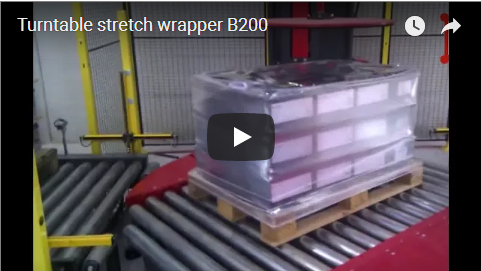
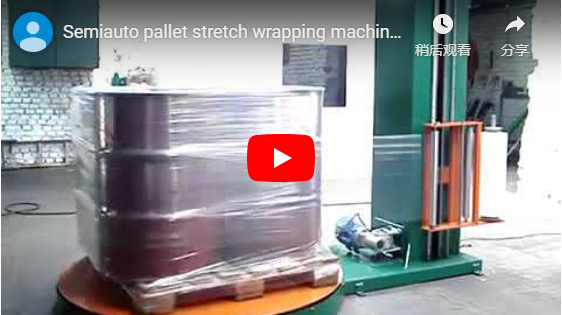
Summary: Discover the critical differences between turntable and rotary arm semi-automatic pallet wrapping machines. Learn how to select the right stretch wrapper for your load stability, throughput needs, and budget while maximizing film efficiency and operator safety.
🏗️ A Fabricator’s Guide to Semi-Automatic Pallet Wrapping: Turntable vs. Rotary Arm Technology
Ensuring load stability and security during transit and storage is paramount in manufacturing and fabrication environments. Pallet wrapping, or stretch wrapping, is the critical final step in the packaging process. Semi-automatic stretch wrapping machines offer a significant upgrade over manual wrapping, boosting efficiency, consistency, and operator ergonomics.
This guide delves into the two primary designs of semi-automatic pallet wrapping machines: turntable and rotary arm systems. We will analyze their operation, ideal applications, and key technical considerations to help you optimize your end-of-line packaging.
⚙️ Understanding Semi-Automatic Operation
Semi-automatic wrappers bridge the gap between manual labor and fully automated lines. The workflow is designed for human-machine collaboration:
-
Load Placement: The operator places the pallet load onto the machine (turntable) or into the wrap zone (rotary arm) using a forklift or pallet jack.
-
Film Attachment: The operator attaches the stretch film tail to the load manually.
-
Cycle Initiation: The wrap cycle is initiated via a PLC control panel.
-
Automated Wrapping: The machine automatically applies the film according to pre-set parameters (e.g., number of top/bottom wraps, tension, carriage speed).
-
Completion: Once the cycle completes, the operator cuts the film and removes the wrapped pallet.
🛠️ Turntable Pallet Wrappers: The Workhorse Standard
Turntable wrappers are the most common type of semi-automatic stretch wrapper, renowned for their reliability and cost-effectiveness in standard applications.
Operating Principle
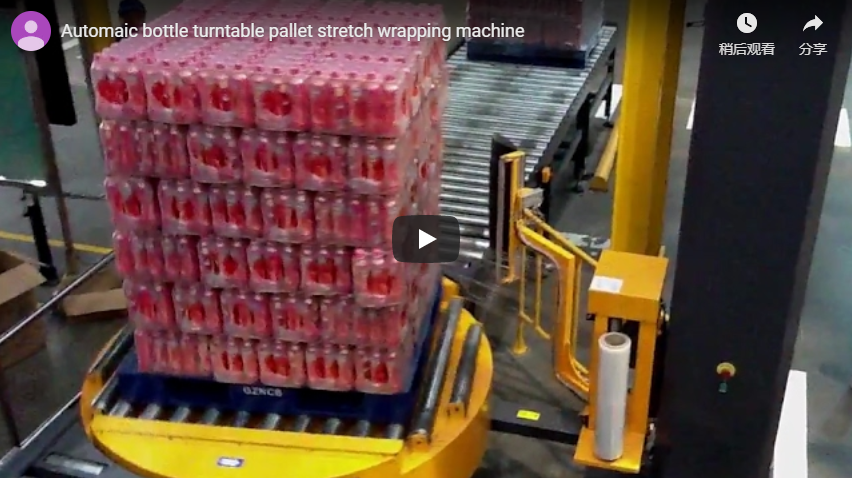
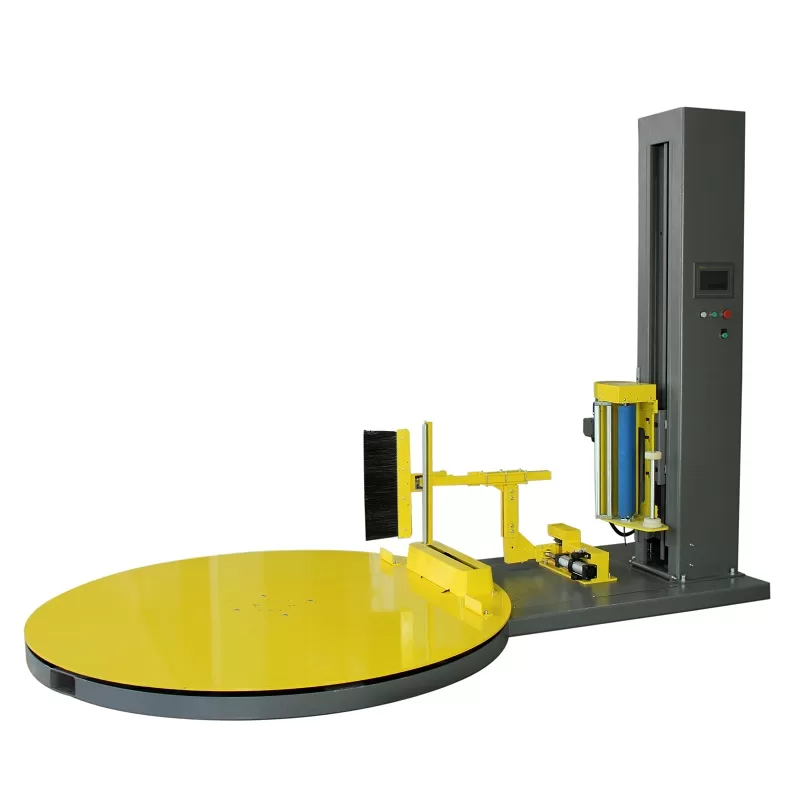
The pallet load is placed directly onto a rotating turntable. As the turntable spins (typically up to 12-15 RPM), a film carriage assembly mounted on a vertical mast moves up and down, dispensing the stretch film and wrapping the load.
Ideal Applications
-
Stable, uniform loads: Boxes, cartons, or items that can withstand rotational forces without shifting.
-
Standard pallet weights: Loads within the machine’s capacity (typically 1,500 kg to 2,500 kg).
-
Standard Environments: Facilities where forklift placement onto a raised platform is straightforward.
Key Technical Specifications
| Parameter | Typical Specification | Impact on Performance |
|---|---|---|
| Turntable Diameter | 1,500mm – 1,800mm (59″ – 71″) | Determines max pallet overhang and stability. |
| Max Load Weight | 1,500kg – 2,500kg (3,300 – 5,500 lbs) | Critical for structural integrity; heavy-duty models use Q345 steel. |
| Max Wrap Height | 2,000mm – 2,800mm (78″ – 110″) | Dictated by mast height; ensures full load coverage. |
| Pre-Stretch System | 250% – 300% (Powered) | Reduces film consumption by up to 30-40%. |
| Control System | PLC with Touchscreen | Allows custom wrap patterns (top/bottom reinforcement). |
| Frame Construction | Heavy-duty Steel / C45 Gear Components | Ensures durability under continuous cyclic loading. |
Advantages & Limitations
-
Advantages: Lower initial investment, simpler mechanics for easier maintenance, and widely available technology.
-
Limitations: Not suitable for unstable loads that may topple during rotation. Requires lifting the load onto the machine.
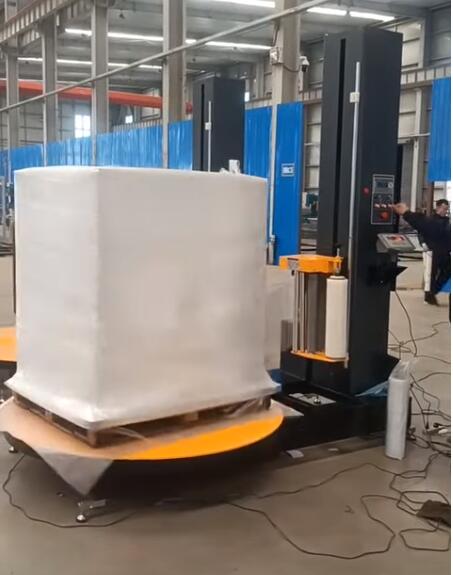
ROI Insight: Upgrading from manual to a semi-automatic turntable wrapper with a 300% pre-stretch system can reduce annual film costs by approximately 35% while doubling operator throughput.
🛡️ Rotary Arm Pallet Wrappers: Handling the Challenges
Rotary arm wrappers (sometimes called straddle wrappers) operate on a different principle, designed specifically for loads that cannot be easily rotated or are too heavy for a turntable.
Operating Principle
The pallet load remains stationary on the floor. A rotating overhead arm travels around the load, dispensing the stretch film from a carriage mounted on the arm. This eliminates any rotational force on the product itself.
Ideal Applications
-
Unstable or tall loads: Products prone to shifting or falling if rotated.
-
Extremely heavy loads: Capacity is limited only by the floor strength, not the machine turntable.
-
Very light loads: Prevents lightweight items from sliding off a spinning turntable.
-
Washdown Environments: Models available with stainless steel (304 SS) components for food/beverage or pharmaceutical compliance.
-
Irregular shapes: Non-palletized or odd-shaped industrial goods.
Key Technical Specifications
| Parameter | Typical Specification | Impact on Performance |
|---|---|---|
| Wrap Zone Dimensions | Defined by Arm Radius & Mast Height | Accommodates oversized or non-standard pallets. |
| Load Capacity | Unlimited (Floor Dependent) | Ideal for heavy-duty industrial loads (>3,000 kg). |
| Arm Speed | Adjustable (Comparable to Turntable) | Ensures consistent tension without load movement. |
| Safety Features | Light Curtains / Safety Fencing | Mandatory due to the moving arm sweeping the floor area. |
| Footprint | Larger than Turntable | Requires clear overhead and floor space for arm rotation. |
Advantages & Limitations
-
Advantages: Securely wraps difficult, heavy, or unstable loads. Eliminates load shifting caused by rotation.
-
Limitations: Higher initial investment, larger machine footprint, and mechanically more complex.
📈 Operational Best Practices & Experience Insights
Regardless of the machine type, optimizing the wrapping process involves several critical factors to ensure containment force and cost efficiency.
-
Film Selection: Use high-quality LLDPE stretch film appropriate for the load. Thinner gauge films (e.g., 15-17 micron) with high pre-stretch capability yield significant savings.
-
Pre-Stretch Maximization: Always utilize the highest pre-stretch level possible (e.g., 250%-300%) that maintains load integrity. This maximizes film yield and improves containment force without crushing the product.
-
Containment Force: Ensure proper film tension and overlap (typically 50%) to prevent load shifting during transit. Periodically test wraps with a tension gauge.
-
Wrap Pattern Optimization: Program the PLC for the minimum number of top and bottom wraps required for stability. Avoid excessive film usage on the pallet base.
-
Regular Maintenance: Keep photo-eyes clean, check roller conditions, lubricate moving parts (chains/gears) per manufacturer schedules, and inspect safety light curtains regularly.
-
Operator Training: Ensure operators understand proper film loading, setting adjustments, and emergency stop procedures.
Expert Pro Tip: For unstable loads, program a “Power Wrap” cycle with increased tension at the bottom 3 layers. This creates a solid base foundation, preventing the entire load from sliding during transit.
🤖 Choosing the Right Semi-Automatic Wrapper
Selecting the appropriate machine hinges on analyzing your specific operational data:
-
Load Characteristics: What are the typical weight, dimensions, stability, and shape? This is the primary deciding factor.
-
Throughput Requirements: How many pallets per hour/shift? (Semi-auto typically handles 20-40 pallets/hour).
-
Budget: Balance initial CAPEX against long-term OPEX savings from film efficiency and labor reduction.
-
Available Space: Evaluate the machine footprint. Rotary arms require more clearance.
-
Environment: Do you require washdown ratings (IP54/IP65) or explosion-proof components?
❓ FAQ: Semi-Automatic Pallet Wrapping
What is the main difference between turntable and rotary arm wrappers?
The main difference is movement. In a turntable wrapper, the load spins while the film arm stays relatively still. In a rotary arm wrapper, the load stays stationary on the floor while the arm rotates around it. Rotary arms are better for heavy or unstable loads.
How much film can I save with a semi-automatic machine?
With a powered pre-stretch system (250%-300%), you can typically reduce film consumption by 30% to 40% compared to manual wrapping or non-pre-stretch machines.
Can a semi-automatic wrapper handle loads over 2,000 kg?
Yes, but for loads exceeding 2,000 kg (4,400 lbs), a Rotary Arm system is generally recommended as it does not rely on a rotating platform to support the weight, eliminating the risk of turntable bearing failure.
Do these machines require special electrical installation?
Most semi-automatic wrappers operate on standard industrial power (e.g., 220V/380V, 50/60Hz, 3-Phase). However, specific voltage requirements should be confirmed with the manufacturer based on the motor and PLC specifications.
📞 Contact & Resources
For more information on specific models, custom configurations, or to request a quote for your fabrication facility:
-
Visit our Semi-Auto Pallet Wrapping Page: https://www.fhopepack.com/Semi-auto-pallet-wrapping-machine/
-
Email our Engineering Team: info@fhopepack.com
Optimize your packaging line today with FHOPE’s precision-engineered pallet wrapping solutions.