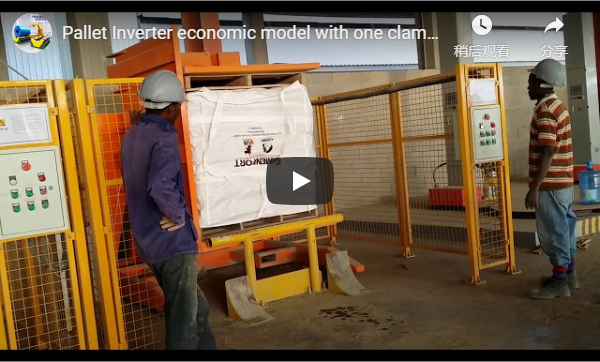
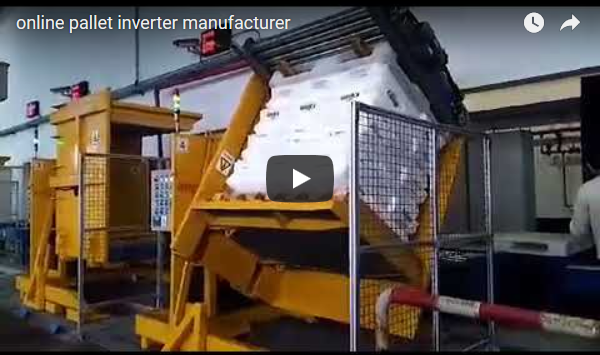
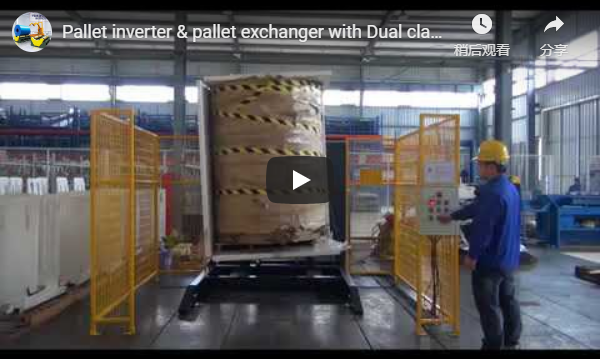
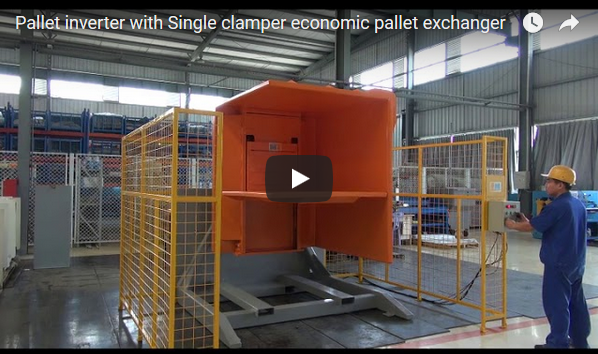
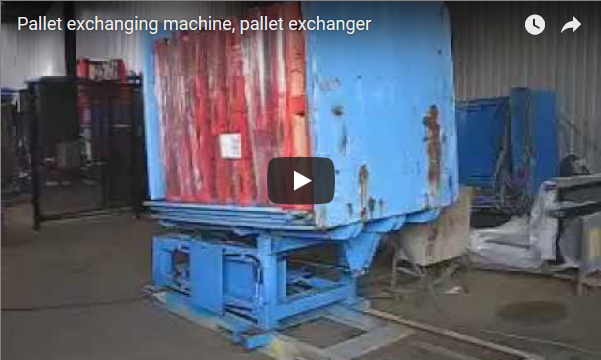
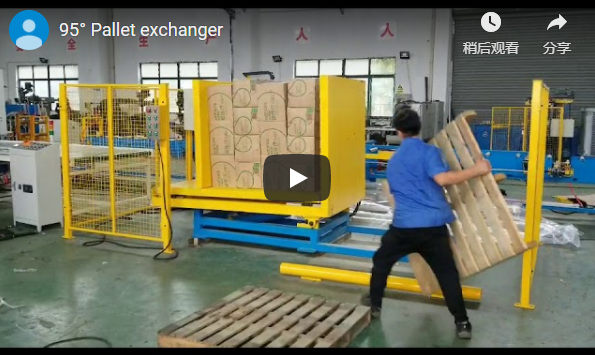
This piece of equipment’s core parameters hide a design logic that is well worth dissecting. In modern smart factories and heavy-duty logistics ecosystems, bridging the physical gap between “high-density static storage” and “high-frequency dynamic processing/shipping” is critical to determining the overall OEE (Overall Equipment Effectiveness) of the entire plant. This article provides a deep technical breakdown of the seamless coordination mechanism between the Automatic Pallet Changing System (APC) and the Automated Storage and Retrieval System (AS/RS) from the perspectives of underlying control, mechanical coupling, and data interaction.
Step 1: Operating Principle and Technical Architecture
The core of this system consists of a dual-station hydraulic/servo exchange worktable, a high-speed shuttle retrieval module, and a central PLC control hub. It achieves non-stop material flow through the online separation and rapid, precise swapping between “material pallets (internal circulation)” and “shipping pallets (external transfer).”
When the AS/RS stacker crane delivers the loaded pallet to the interfacing station, the APC system’s LiDAR and proximity switches complete safety interlocking verification. The servo push-pull mechanism or rotary changer activates, executing the decoupling, translation, lifting, and reconfiguration of the heavy-duty pallet within $\le 15$ seconds, precisely transferring the materials to the specific process pallet required by the production line. The entire process relies on datum pin rigid positioning and fully closed-loop servo control, eliminating secondary bumps and efficiency bottlenecks typical of manual pallet swapping.
Step 2: Core Parameters Breakdown (Accuracy / Speed / Payload)
To meet the rigorous demands of industrial-grade, heavy-duty, high-frequency applications, the system’s dynamic stiffness and motion control have been optimized to the limit:
- Rated Payload Capacity: The standard configuration supports up to $1,200 \text{ kg}$, with heavy-duty custom versions supporting up to $2,500 \text{ kg}$, meeting the load requirements of large aerospace components, automotive parts, and heavy molds.
- Repeatability: Utilizing absolute servo motors paired with high-precision ground-grade ball screws, the mechanical repeatability of the system’s X/Y axes reaches $\pm 0.05 \text{ mm}$, ensuring flawless alignment when interfacing with machining centers.
- Single Change Cycle Time: Under rated full-load conditions, a complete “clamp-lift-rotate/translate-seat-unclamp” cycle takes only $12 \text{ s}$, improving efficiency by more than 40% compared to traditional pneumatic or chain-driven systems.
Step 3: Interface Specifications and Integration Methods
To achieve low-cost, high-reliability integration with mainstream AS/RS brands, as well as MES/WMS systems, the system provides highly standardized hardware and software interfaces:
- Physical and Electrical Interfaces: The conveyor line height is modularly adjustable from $500 \text{ mm}$ to $900 \text{ mm}$, adapting perfectly to chain or roller conveyors. Electrical standards are compatible with mainstream industrial fieldbus protocols such as Profinet, EtherCAT, and Ethernet/IP.
- Data Communication and Handshake Logic: Standardized OPC UA architecture is used to exchange safety signals. Physical safety interlocking is established between the APC and AS/RS via hard-wired safety connections, supplemented by TCP/IP telegrams to track pallet IDs (RFID/barcodes). If an anomaly occurs—such as an empty pallet, full pallet, or misalignment—the system triggers an E-stop mechanism within $20 \text{ ms}$ to cut off power circuits.
Step 4: Comparative Selection Matrix
During the solution planning phase, the engineering team conducted a cross-technical evaluation of the three mainstream pallet-changing methods on the market:
| Evaluation Dimension | This Servo/Hydraulic Hybrid APC | Traditional Pneumatic Turnover Changer | Manual / Forklift Assisted Swapping |
|---|---|---|---|
| Heavy-Duty Stability | Extremely High (Hydraulic clamping + Servo pressure holding) | Average (Pneumatic fluctuations cause jitter) | Poor (Highly vulnerable to human factors) |
| Flexibility & Compatibility | Strong (Programmable stroke adjustments, supports multi-spec pallets) | Weak (Usually restricted to a single specification) | Strong (Completely reliant on manual adjustment) |
| Impact on Material | $\le 0.1 \text{ G}$ (S-curve smooth acceleration/deceleration) | $\ge 0.5 \text{ G}$ (High turnover impact shock) | Cannot be quantified (Prone to collisions) |
| MTBF (Mean Time Between Failures) | $\ge 8,000 \text{ Hours}$ | $\approx 3,500 \text{ Hours}$ | — |
Step 5: Technical Documentation and Drawing Downloads
We understand that engineers require detailed, empirical data when designing factory layouts and network topologies. Our engineering team has compiled the complete engineering package into an open-access repository.