Executive summary A luggage stretch wrapper secures upright suitcases, boxes, and parcels on a motorized rotating turntable, applying pre-stretched film across the load perimeter to protect against abrasion, moisture, cargo tampering, and unauthorized opening during transit. The industrial wrapping system integrates a 304 stainless steel turntable deck, a reinforced structural vertical mast, and a variable-speed carriage that delivers uniform spiral film application across programmable height strokes. Total film consumption and cycle duration are governed by the load cross-section, package height, pre-stretch elongation ratio, and programmable reinforcement wraps tailored to your throughput targets.
Table of Contents
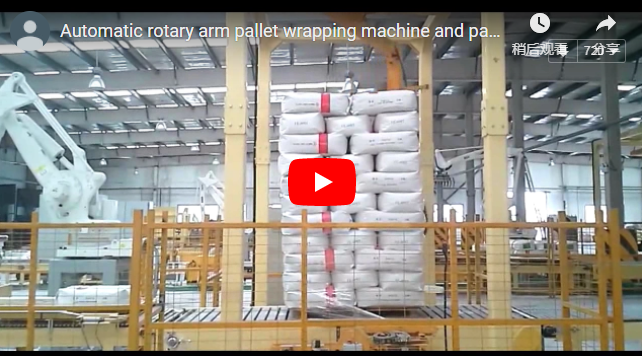
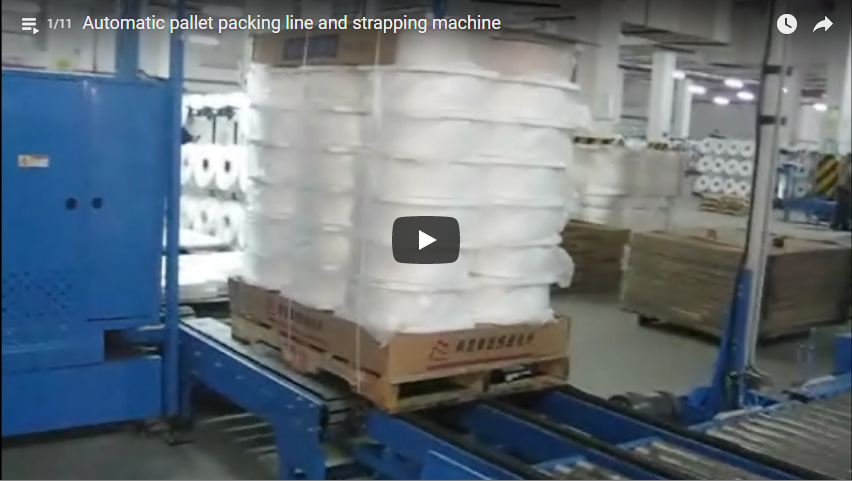
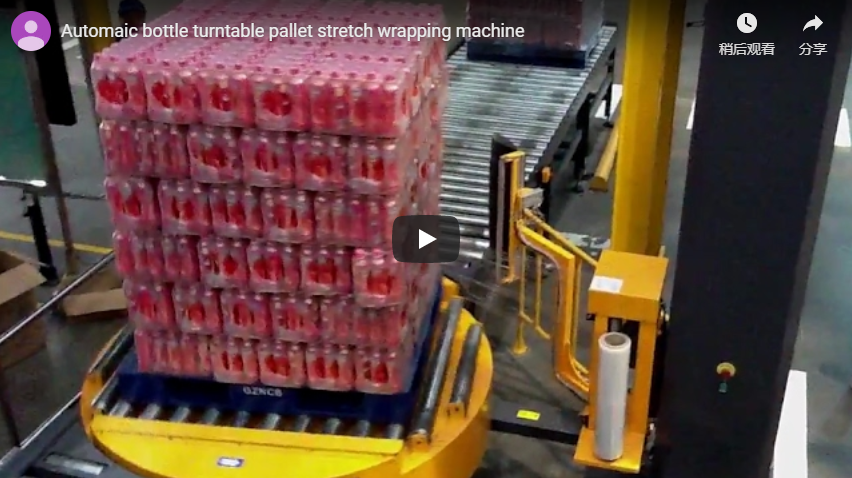
- What the video shows
- How the luggage wrapper works
- Estimating turns and film
- Where luggage wrappers are used
- Controls and safety
- Selection checklist for a luggage stretch wrapper
- Engineering FAQ
- Next step
- Related reading
- Sources
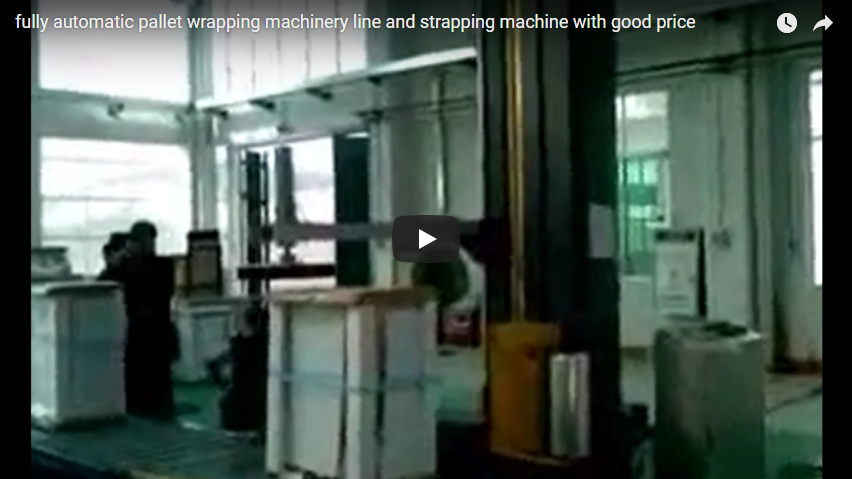
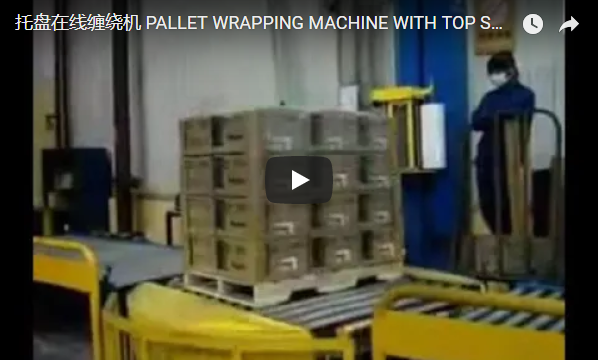
What the video shows
The operational video demonstrates the semi-automatic wrapping cycle for standard commercial upright luggage mounted on the 304 stainless steel turntable. The primary operating steps and mechanical interactions include:
- Upright Specimen Positioning: The suitcase is placed centrally on the anti-slip turntable deck, maintaining vertical stability without mechanical top clamps for standard baggage profiles.
- Controlled Kinematic Motion: As the variable-frequency turntable rotates at a preset speed (12–20 RPM), the vertical carriage feeds stretch film uniformly across the turning profile.
- Bidirectional Spiral Overlap: The film carriage initiates wrapping at the base, traverses upward along the precision linear mast, applies top reinforcement wraps, and descends to finalize the containment envelope.
- Tension Uniformity: Mechanical or powered pre-stretch rollers ensure consistent film tension along flat faces and corners, preventing localized corner punctures.
- Integrated Digital Control: The industrial control panel features dedicated rotary switches, speed potentiometers, layer cycle counters, and a prominent emergency stop button.
How the luggage wrapper works
The mechanical wrapping cycle executes a multi-axis coordinated motion pattern to form a tamper-evident, water-resistant containment barrier.
| Step | Mechanical Execution | Kinematic Details |
|---|---|---|
| 1. Infeed & Positioning | Manual or assisted loading | The piece is centered on the turntable to minimize rotational eccentricity |
| 2. Film Anchoring | Initial tail clamp / manual tuck | Pre-stretched film is anchored to the base or lower wheel housing |
| 3. Upward Spiral Wrap | Turntable rotation + carriage ascent | Variable frequency drive (VFD) controls pitch overlap (30%–50%) |
| 4. Top Reinforcement | Dwell rotation at upper stroke | Applies 2–3 full rotations to lock upper handles and zipper lines |
| 5. Downward Spiral Wrap | Controlled carriage descent | Reinforces containment and balances cross-directional tensile strength |
| 6. Cut & Tail Seal | Manual or automated wipe-down | Film is severed and brushed flat against the cling layer without adhesives |
Positioning the case vertically keeps high-stress components—such as retractable handles, side grab-bars, and multi-directional spinner wheels—aligned with the containment layer, preventing baggage shifting during conveyance.
Estimating turns and film
Film consumption and cycle speed depend on case dimensions, target containment force, and the effective film pre-stretch ratio.
Calculation Parameters (Illustrative Benchmark)
- Workpiece Dimensions: 450 mm (Width, W) × 250 mm (Depth, D) × 700 mm (Height, H)
- Nominal Film Width: 500 mm
- Vertical Overlap Ratio: 50% (effective vertical pitch per turn = 250 mm)
- Powered Pre-Stretch Ratio: 200% (1.0 m raw film elongates to 3.0 m on the load)
| Calculation Step | Formula / Logic | Computed Value |
|---|---|---|
| Perimeter per Turn | 2 × (W + D) = 2 × (450 mm + 250 mm) | 1,400 mm (1.40 m) |
| Vertical Travel Pitch | Film Width × (1.0 – Overlap) = 500 mm × 0.50 | 250 mm advance / turn |
| Spiral Ascent Turns | Case Height ÷ Advance = 700 mm ÷ 250 mm | 2.8 turns (rounded to 3) |
| Spiral Descent Turns | Matching return pass for bi-directional containment | 3 turns |
| Reinforcement Wraps | 2 top wraps + 2 bottom wraps | 4 turns |
| Total Programmed Turns | Spiral Ascent (3) + Spiral Descent (3) + Base/Top (4) | 10 turns |
| Total Film Laid on Case | Total Turns × Perimeter = 10 × 1.40 m | 14.0 m |
| Raw Film Drawn from Roll | Laid Film ÷ (1 + Pre-Stretch Ratio) = 14.0 m ÷ 3.0 | 4.67 m |
Note: Increasing overlap percentage or cycle turn counts provides superior puncture and tamper resistance for heavy duty commercial handling, but directly increases raw roll consumption and cycle time.
Where luggage wrappers are used
| Operational Environment | Primary Functional Purpose | Key Engineering Requirement |
|---|---|---|
| Airport Baggage Counters | Tamper evidence, theft prevention, and lock protection | Compact footprint, clean stainless deck, 45–60 s fast cycle |
| Luggage Manufacturers & OEMs | Protection against scratches and dust during factory storage | Continuous duty rated motor, smooth turntable ramping |
| Parcel Shippers & Freight Hubs | Consolidating irregular cartons, parcels, and soft baggage | Heavy-gauge film handling, adjustable tension control |
| Storage & Relocation Services | Sealing containers and personal cases against dampness | Simple HMI interface, minimal maintenance overhead |
Beyond consumer baggage, the same kinematic platform handles irregular cartons, rolled fabrics, vertical spools, and stacked consumer product boxes of comparable cross-section.
Controls and safety
Rotating turntables and vertical mast carriages introduce pinch and entrapment zones that require strict functional safety integration:
- Emergency Stop Integration: Hardwired Category 0/1 emergency stop pushbuttons (compliant with IEC 60204-1) instantly cut drive power to both the turntable motor and the carriage winch.
- Soft Start / Soft Stop Drives: Acceleration and deceleration ramp times (0.5–3.0 s) are managed via internal VFD inverters to prevent top-heavy cases from toppling over due to rotational inertia.
- CE Compliance & Directives: Designed in accordance with ISO 12100:2010 (Risk Assessment and Reduction) and EN 415-10:2014 (General Requirements for Packaging Machines).
- Safe Working Clearances: Operators must maintain a minimum safety perimeter around the rotating deck during high-speed cycle runs. Optional light curtains and perimeter safety mats are available for automated high-volume passenger zones.
Selection checklist for a luggage stretch wrapper
- Maximum & Minimum Package Profile: Verify width, depth, and vertical mast clearance (standard up to 1,000 mm height).
- Throughput Demands: Target units per hour (e.g., standard manual load: 30–50 pieces/hour).
- Carriage Mechanism: Mechanical friction brake vs. motorized power pre-stretch (200%–300% elongation efficiency).
- Turntable Specs: Diameter (standard 600–800 mm), stainless steel vs. carbon steel tread plate, load capacity (typically 80–120 kg).
- Facility Power Interface: 220V/240V single-phase or 380V 3-phase industrial drop.
- Commercial Modules: Integrated digital baggage weighing scales, cycle counting meters, or payment token readers.
- Consumable Selection: Hand-grade vs. machine-grade blown/cast LLDPE film (17 µm to 30 µm), clear or opaque security film.
Engineering FAQ
Q: Why wrap luggage in an upright vertical position rather than horizontally?
A: Vertical orientation ensures the structural base and transport wheels remain in a stable coordinate plane. The rotational force is applied symmetrically around the vertical axis, preventing lateral shear stresses from damaging sensitive handles, external zip compartments, or structural shells.
Q: What is the optimal number of wrap revolutions for standard airport baggage?
A: A typical luggage profile requires between 6 and 10 total turns. This comprises 2 base wraps, 2–3 ascending spiral wraps, 2 top wraps, and optional descending wraps, providing complete multi-layer security with a cycle time under 50 seconds.
Q: How much raw stretch film is used per piece?
A: With a 200% power pre-stretch carriage, a typical 700 mm tall suitcase requires approximately 4.5 to 5.0 meters of virgin film from the supply roll, which yields roughly 13.5 to 15.0 meters of applied elastomeric film on the package surface.
Q: Can lightweight cartons or top-heavy parcels tip over on the turntable?
A: Yes, if rotated too fast without damping. Our systems utilize VFD soft-start ramping. For ultra-lightweight, high-center-of-gravity parcels, an optional overhead pneumatic top-platen clamp secures the product vertically during high-speed rotation.
Q: How does the machine handle emergency power cuts or obstruction?
A: Actuating the industrial E-stop disconnects primary motor contactors, while internal worm-gear friction stops turntable coasting within less than 0.5 rotations.
Next step
Streamline your baggage wrapping operations with tailored factory automation:
- Submit Spec Profile: Send your dimensional range, target capacity (pieces/hr), and operational layout to info@fhopepack.com.
- 48-Hour Technical Proposal: Receive a complete mechanical layout drawing, turn-and-film consumption calculation, and power configuration.
- Site & Safety Survey: Finalize footprint confirmation, electrical specifications, and optional integration modules with our engineering department.
Related reading
- Video: stretch wrapping machine for luggage, bottles, blocks
- Semi-automatic pallet wrapping machines
- E300 horizontal stretch wrapper
Sources
- Packaging Machine Engineering Specifications: FHOPE Engineering Division, 2026-10-04
- Motion and Stretch Consumption Matrix: FHOPE Packaging R&D Benchmark Data
- Operational Demonstration: FHOPE Official YouTube Repository
- Safety Standard Baseline: ISO 12100:2010 (Safety of Machinery — General Principles for Design), EN 415-10:2014 (Packaging Machines Safety — General Requirements)
Last reviewed: 2026-10-04