Automated Horizontal Tire Wrapping Line | Seamless Upstream & Downstream Integration

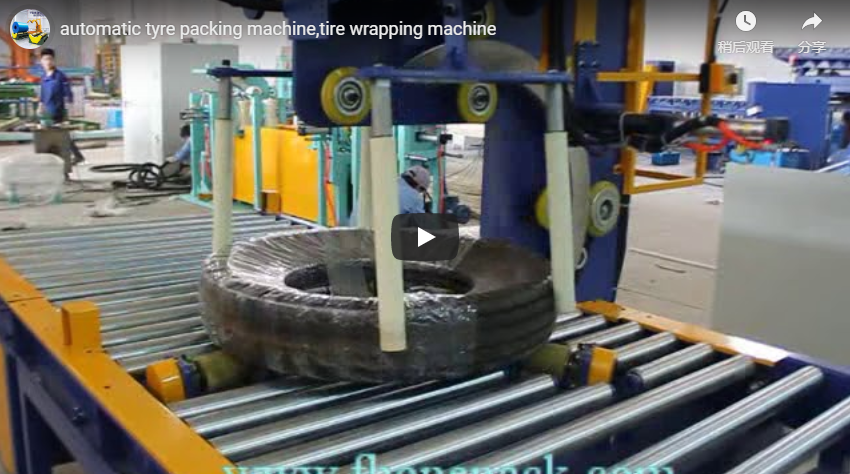
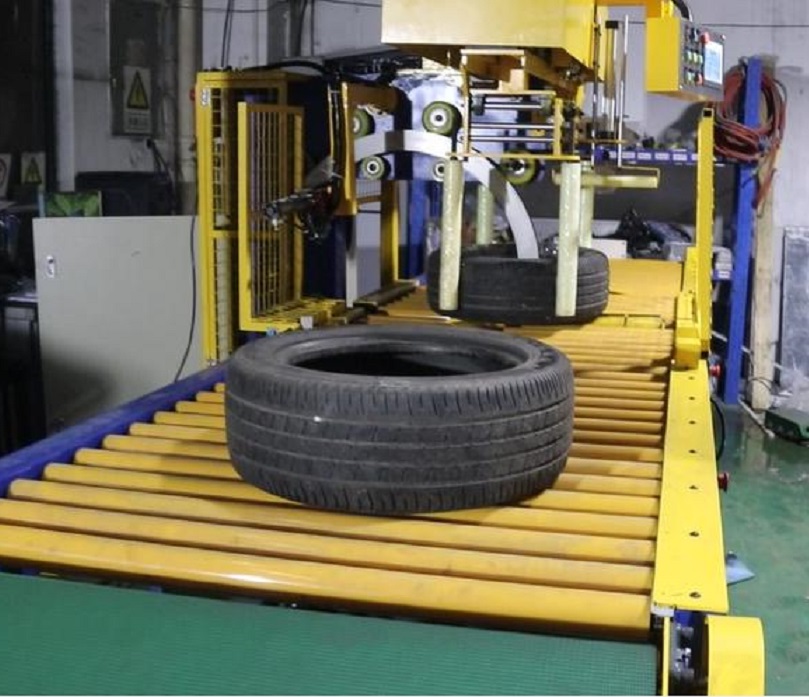
Executive summary This video shows a horizontal tire wrapping line in a complete cycle: a worker feeds a passenger car tire onto a roller conveyor, the machine applies blue protective film to the sidewall, wraps a printed yellow strap around the tire, and releases it toward the next stage. The whole observed cycle takes roughly 16 seconds of footage. Below you’ll find what the footage actually shows, what it does not, and what to confirm with the manufacturer before buying.

Why tire wrapping matters before it leaves your line

Tires are heavy, round, and easy to scuff. Once a tire is wrapped in film and strapped, it is far easier to move, stack, and store without the sidewall picking up dirt, scratches, or moisture damage. That is the job this line performs: it takes a bare tire coming down a conveyor and hands back a protected, secured unit ready for the next stage of handling.

For buyers, the key question is not whether wrapping helps — it usually does — but whether this style of automated horizontal line fits your tire sizes, your throughput, and the way your upstream and downstream equipment already runs. This article walks through the footage so you can judge the machine’s layout and workflow for yourself, then lists exactly what to verify with the manufacturer.

What the video shows

The footage runs about 16 seconds and follows one tire through a full wrapping cycle:

Time What happens
0–4s A worker in a yellow hard hat places a black passenger car tire onto the roller conveyor. The machine’s orange and silver arms are positioned above the tire, ready.
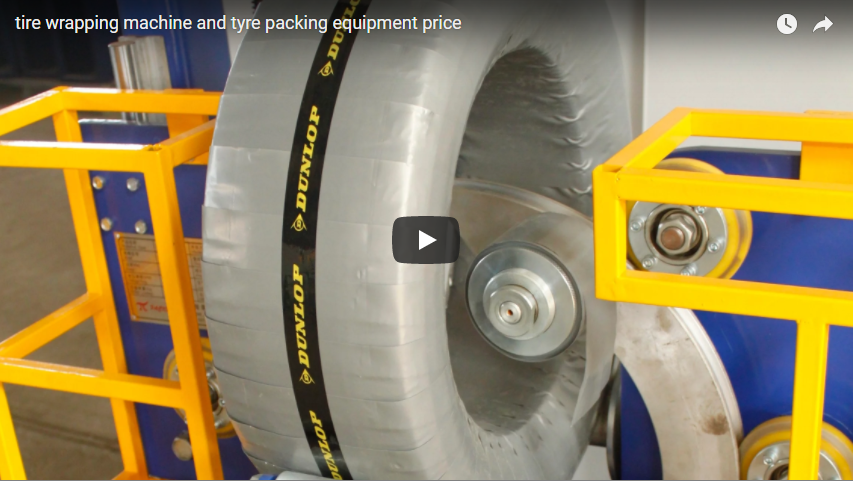
4–8s Wrapping begins. Blue protective film is applied to the tire’s sidewall, and a yellow strap printed with “BSAIFSTONE” is wrapped around it.
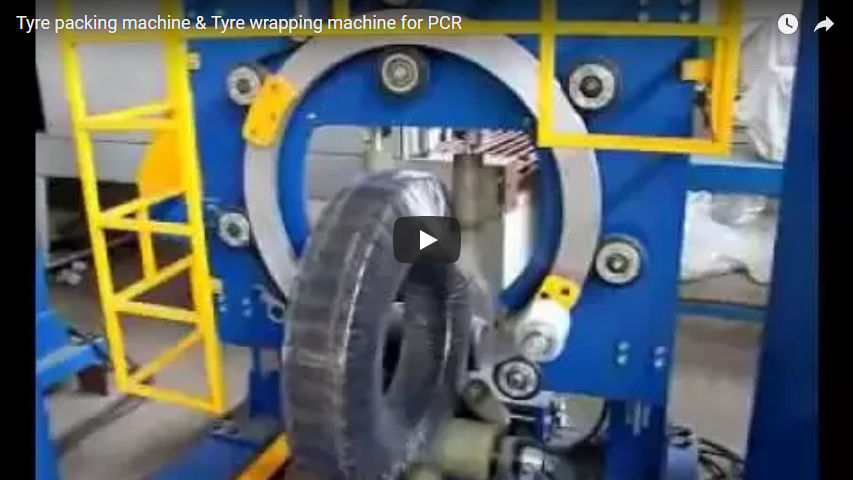
8–12s The wrap continues. Blue film and yellow strap are progressively applied while the tire stays held in place on the conveyor.
12–16s The cycle completes. Film and strap are fully secured, the machine’s arms begin to retract, and the tire is ready to move to the next stage.

A few structural details are visible throughout:

  • Frame and finish: a prominent orange machine frame with silver metal conveyor rollers and support beams.
  • Layout: the machine is arranged horizontally, with the conveyor running left to right and the wrapping mechanism in the center.
  • Control panel: a white panel on the right side, with a green indicator light, a digital display, and several buttons and switches.
  • Guarding: a protective frame surrounds the wrapping mechanism.

The title of this article mentions seamless upstream and downstream integration — the horizontal conveyor layout shown is what makes that kind of integration possible. Because the tire never leaves the roller conveyor, the line can sit inline between feeding equipment and the next handling or packing stage. How it would connect to your specific upstream and downstream machines is something to discuss with the manufacturer.

The process, step by step

Breaking the cycle down from an operator’s point of view:

  1. Feed. An operator places the tire on the infeed roller conveyor. The tire sits stationary while the machine positions itself.
  2. Film application. The machine’s arms engage and apply blue protective film to the tire’s sidewall.
  3. Strapping. A yellow strap is wrapped around the tire over the film, securing the package. In this footage the strap carries printed text.
  4. Release. The arms retract and the wrapped, strapped tire is ready to travel onward along the conveyor.

Each step runs automatically after the tire is placed. The only manual action visible in the video is the initial placement of the tire by the worker.

Direct observation notes

The following block stays close to the raw visual analysis, with only light grammar-level editing:

  • A worker in a yellow hard hat places a black passenger car tire onto a roller conveyor; the machine’s orange and silver arms are positioned above the tire, ready for wrapping.
  • The machine applies blue protective film to the tire’s sidewall and wraps a yellow strap with printed text around it while the tire remains on the conveyor.
  • The wrapping mechanism is centrally located; the conveyor runs left to right; the white control panel sits on the right side with a green indicator light, digital display, buttons, and switches.
  • A protective frame surrounds the wrapping mechanism. No emergency stop, warning labels, or interlocks are visible in the sampled frames.
  • Readable text includes the printed strap text and a video watermark. No cycle time, rated capacity, dimensions, model, power, or certification details are visible anywhere in the footage.

What the video does not show

The footage is a short demonstration, and it leaves many buyer-critical questions unanswered. Not visible in the frames:

  • Cycle time and rated capacity — the observed clip is short; actual throughput depends on your product and settings.
  • Machine dimensions, weight, and power requirements.
  • Model designation and full specification sheet.
  • Emergency stop location, warning labels, and safety interlocks — none are visible, though that does not mean they are absent.
  • Compatibility range — whether the machine handles your tire sizes and models. The observed setup appears designed around a specific tire size and type.
  • Certifications relevant to your market.
  • Actual upstream and downstream equipment — integration points are implied by the inline layout but not demonstrated.

Fit criteria: is this type of line right for you?

Use this checklist to judge whether an automated horizontal tire wrapping line suits your operation:

  • ✅ You handle tires (or similar ring-shaped products) that need surface protection during storage or shipping.
  • ✅ Your products already travel on, or can be fed to, a roller conveyor.
  • ✅ You want repeatable, consistent wrapping rather than operator-dependent manual wrapping.
  • ✅ You have floor space for a horizontal inline layout with conveyor running through the machine.
  • ⚠️ If your products vary widely in diameter and width, ask the manufacturer about the adjustable range before assuming fit.

What to verify with the manufacturer

Before requesting a quote, put these questions to the supplier:

  1. Which tire diameters and widths can this machine accommodate?
  2. What is the cycle time at my product size, and what daily throughput can I expect?
  3. What are the power requirements and machine footprint?
  4. Where are the emergency stop, interlocks, and safety guarding located, and which safety standards does the machine meet?
  5. What film and strap specifications does the machine require, and what consumption per tire?
  6. How does the line connect to my existing upstream feeding and downstream handling equipment?

FAQ

Does the operator need to stay at the machine during the cycle? The video shows manual placement of the tire; everything after that — film, strap, release — runs automatically. Whether higher levels of automation (auto feeding, stacking) are available, check with the manufacturer.

What materials does it use? The footage shows blue protective film on the sidewall and a printed yellow strap. Exact film gauge, strap type, and consumption rates are not stated — confirm with the manufacturer.

Is one wrap cycle enough for storage and shipping? The video shows the wrapped tire leaving toward a next stage and does not test the package. For shipping-standard performance, ask for packaging test results or a sample wrap of your own product.

How fast is the machine? Cycle time is not visible in the footage and no throughput figure can be read from it. Request tested cycle times for your specific tire model.

What safety features does it include? A protective frame around the wrapping mechanism is visible. Emergency stop and interlocks are not visible in the sampled frames — verify the full safety package with the manufacturer.

Maintenance considerations

General care for this type of wrapping line (confirm specifics in the manufacturer’s manual):

  • Keep conveyor rollers clean and free of film scraps or strap debris.
  • Inspect film and strap dispensing units regularly for consistent tension and alignment.
  • Check the protective frame and moving arms for wear, and keep sensors and the control panel area clear of dust.
  • Follow the manufacturer’s recommended lubrication and parts-replacement schedule — the video contains no maintenance data, so treat the manual as the authority.

Related reading

Next step

If this horizontal tire wrapping line looks like a fit for your facility, the fastest way to move forward is to send the manufacturer your tire dimensions, target throughput, and a description of your upstream and downstream equipment. Visit our contact page to request a quotation, ask the verification questions above, or arrange a demonstration.


Source and method: this article is based on the embedded video, which contains background music only — no narration or speech. The analysis was produced by a vision model reviewing sampled frames of the footage. All observations above come from what is visible in the video; anything not visible has been marked for confirmation with the manufacturer.

Published: 2026-09-03

Published: 2026-09-03