Executive summary
Paper rolls are heavy, round and easily ruined by moisture, dust and shifting in transit. A paper roll wrapper applies consistent stretch film containment around the roll so the outer layers stay protected and the load holds together under forklift handling. We build paper roll wrappers for mills, converters and printing houses. Roll range and film plan are confirmed per project.
Table of Contents
- Why paper rolls are hard to protect
- How a paper roll wrapper works
- Tension and containment
- In-plant operation
- Roll orientation and wrapping
- Choosing the machine
- Typical configuration
- What the video shows
- Selection checklist
- Operation and safety
- Engineering FAQ
- Next step
- Related reading
- Sources and standards
Why paper rolls are hard to protect
A paper roll a meter across and several meters long is heavy, cylindrical and unforgiving. Moisture seeps into exposed edges and degrades the paper, dust settles on surfaces that have to stay clean for printing, and handling stress crushes cores or makes outer layers telescope. Manual wrapping cannot keep tension even around a roll that holds several tons, so gaps appear near the edges and the roll shifts in transit. The result is damaged stock and costly claims downstream.
How a paper roll wrapper works
The machine replaces manual wrapping with a controlled cycle. The roll is positioned in the wrap station, film is applied around the roll with powered stretch, and the package is finished to a consistent pattern every time. Because film delivery and tension are automated, the wrapper holds containment around the full circumference instead of leaving operator gaps, and the finished load is ready for forklift movement and shipment in one step.
Tension and containment
Containment is a matter of tension, and the machine holds it steady. Powered pre-stretch draws the film out before application, so the load is held by tension in the film rather than by raw film weight. Consistent tension around the roll keeps the outer wrap taut at the ends as well as the middle, and prevents the loosening that lets rolls shift or telescope during handling. Film choice and pre-stretch follow the roll and the transport route, confirmed per project.
In-plant operation
The wrapper is built for the way mills actually move paper. Rolls arrive on the line, are wrapped without manual film handling, and leave ready for the forklift or the dispatch bay. Removing the manual wrap step means staff are free for higher-value work, and controlled cycles keep dispatch predictable. The machine integrates with existing roll handling by conveyor or pallet position, confirmed per project.
Roll orientation and wrapping
Rolls present standing or lying. Standing suits pallet-based handling, and lying suits cradle and conveyor transfers, so the machine follows the orientation of your upstream line, confirmed per project.
The wrap pattern covers the roll surface and protects the exposed ends, which are the first place moisture gets in. Whether your throughput is a few large rolls or a steady stream, the station is sized to the roll range and cycle time the plant actually needs, not to a generic catalog figure.
Choosing the machine
Selection starts from the roll. Outside diameter, face width, weight and the film the plant wants to run set the machine range, and the wrap pattern sets the recipe set. Confirm the roll envelope and floor layout before the order, and confirm film and pattern per project. A wrapper chosen on actual roll data protects the stock better and uses film more efficiently than one sized on guesswork.
Typical configuration
Figures below list functional design boundaries rather than numeric values, and are confirmed per project.
| Parameter | Typical range, confirmed per project |
|---|---|
| Roll | outer diameter, face width, weight |
| Orientation | standing for pallets, lying for cradle or conveyor |
| Film | grade and pre-stretch |
| Wrap | pattern per recipe |
| Handling | conveyor or pallet position |
| Electrical supply | 380 V three phase 50 Hz, or 220 V single phase for light machines, selected per project |
What the video shows
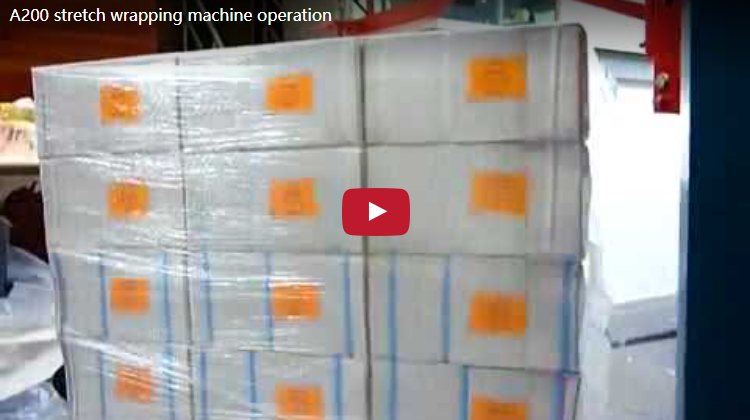
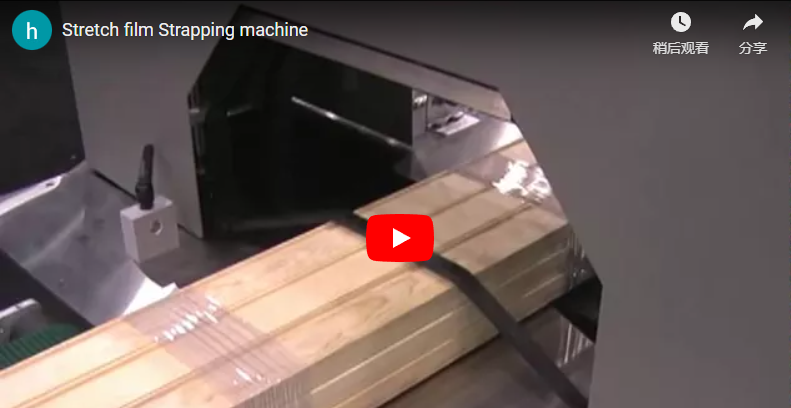
Our footage shows a paper roll being wrapped on an automatic paper roll wrapper. It is a general demonstration, so your roll range and film plan are confirmed with us per project.
Selection checklist
| Question | Confirm per project |
|---|---|
| Roll range | OD, face width, weight |
| Orientation | standing or lying |
| Film plan | grade, pre-stretch |
| Pattern | wrap coverage and ends |
| Handling | conveyor or pallet |
| Electrical supply | voltage, phase and frequency on site |
Operation and safety
Position the roll, start the recipe and the film applies automatically. Keep clear of the wrap and tension zone while it runs, with guarding and emergency stops at the operator position. Inspect pre-stretch roller cleanliness, limit switches and optical sensors at shift start, and check the film supply so wrapping never stops mid-run. Further checks follow the machine manual.
Engineering FAQ
Q: What does a paper roll wrapper do? A: It applies consistent, powered-stretch film containment around heavy paper rolls to protect the surface and keep the load stable.
Q: Why is moisture a problem for rolls? A: Moisture seeps through exposed ends and degrades paper quality, which is why the wrap covers the surface and the ends.
Q: How is tension controlled? A: Motorized rollers pre-stretch the film before application, keeping continuous hoop tension across the edges and core to stop the outer layers telescoping.
Q: How do rolls enter the machine? A: They are positioned in the wrap station by conveyor or pallet position, confirmed per project.
Q: How do we size the machine? A: From roll diameter, face width and weight, with the wrap pattern confirmed per project.
Next step
- Email us at info@fhopepack.com with your roll sizes, weights and volumes.
- We send a paper roll wrapper proposal and a layout drawing within 48 hours.
- We arrange a site survey to confirm roll range and plant layout.
Related reading
- Simple coil wrapping machine for full size
- Automatic paper core packing and shrinking machine
- Paper roll pallet wrapping machine
- FHOPE packing machinery product lines
Sources and standards
- ISO 12100:2010 Safety of machinery, general principles for design and risk assessment
- EN 415-10:2014 Safety of packaging machines, general requirements
- EN ISO 13849-1:2023 Safety of machinery, safety-related parts of control systems
FHOPE paper roll wrapper demonstration video. Reviewed as a general demonstration; roll range confirmed per project.
Last reviewed: 2026-10-10