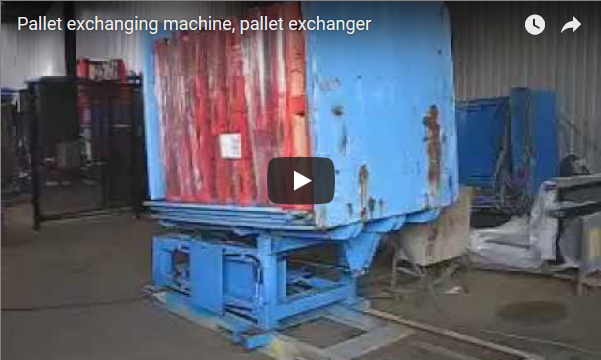
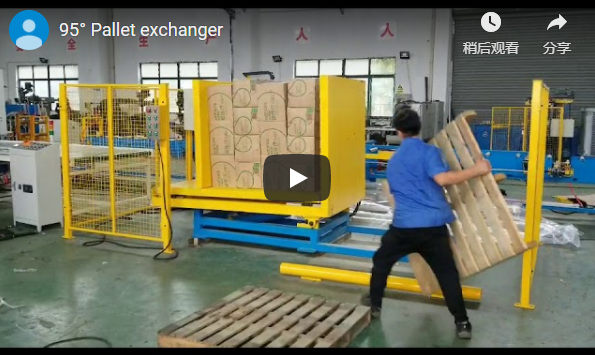
Summary: Optimize warehouse efficiency with the 180-degree tilting pallet changer. Automate pallet exchange, enhance safety, and ensure compliance with heavy-duty industrial standards.
In modern warehousing and distribution centers, efficiency, safety, and compliance are paramount. Handling palletized goods often requires transferring loads between different pallet types – such as switching from wooden pallets to hygienic plastic pallets, or replacing damaged units. The 180-degree tilting pallet changer, also known as a pallet inverter or pallet flipper, offers a robust and automated solution for these critical tasks. This article delves into the operation, technical specifications, benefits, and applications of this essential piece of material handling equipment.
🏗️ The Necessity of Pallet Exchange in Distribution
Several operational scenarios necessitate transferring goods from one pallet to another using a pallet changing machine:
-
Shipping Requirements: Exporting goods often mandates specific pallet types (e.g., ISPM 15 heat-treated wood, non-fumigated plastic).
-
Internal Hygiene Standards: Facilities in food, beverage, and pharmaceutical industries require captive plastic or aluminum pallets to prevent contamination in cleanroom areas.
-
Damaged Pallet Replacement: Swapping broken or unstable pallets prevents product collapse and ensures safe storage.
-
Specialized Load Handling: Transferring goods to slip sheets or specialized handling platforms for automated storage and retrieval systems (AS/RS).
Manual pallet changing is time-consuming, labor-intensive, and poses significant risks of worker injury and product damage. Automated pallet inverters streamline this process dramatically.
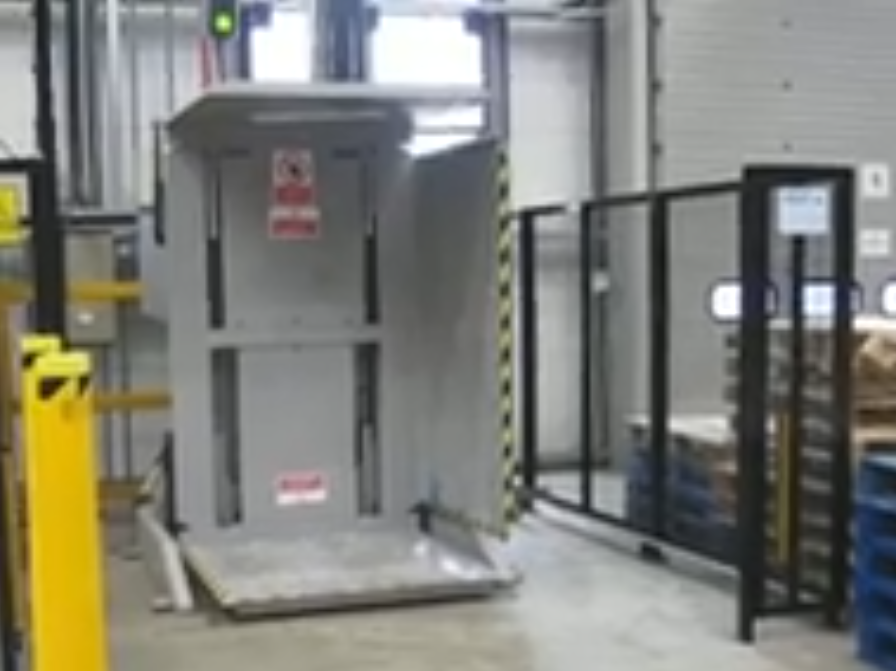
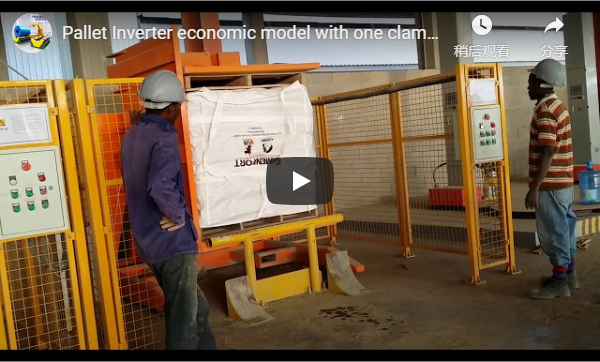
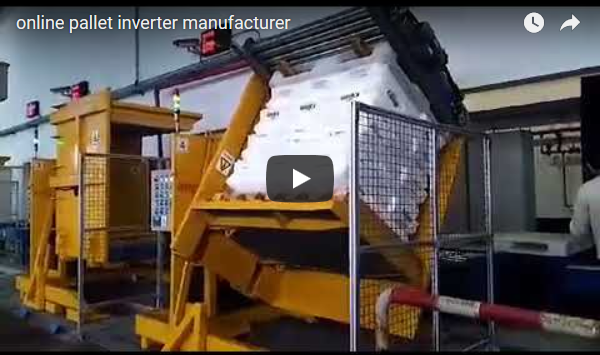
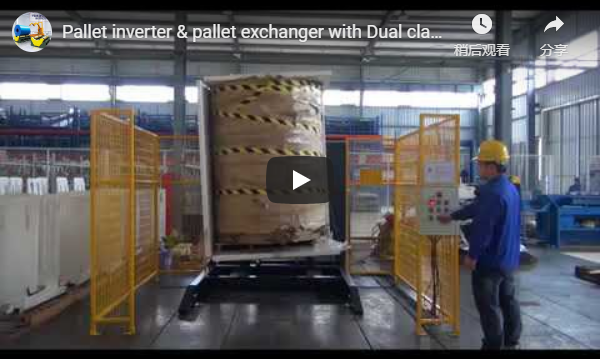
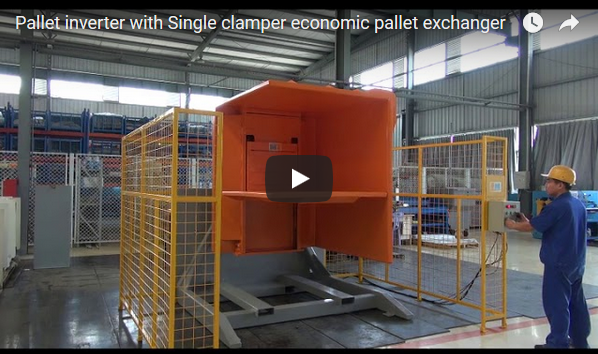
Figure: Heavy-duty 180-degree pallet changer designed for high-cycle industrial environments.
⚙️ Understanding the 180-Degree Tilting Mechanism
The machine showcased utilizes a precise 180-degree tilting mechanism. This design gently clamps the load, rotates it upside down, allows for the original pallet to be removed from the top (now the bottom), places the new pallet, and then rotates the load back to its upright position on the new pallet.
This method is particularly suitable for stable, well-packaged goods such as boxed products, bagged materials, and shrink-wrapped bundles. Unlike push-pull systems, the tilting pallet flipper ensures minimal friction on the product surface.
🔄 Operational Workflow: A Step-by-Step Analysis
The video illustrates the typical operational cycle of the automatic pallet changer:
3.1 Load Placement
The process begins with a forklift operator carefully positioning the fully loaded pallet into the machine’s loading bay. Precision is key to ensure the load is centered correctly for secure clamping.
3.2 Clamping and Inversion
Once the load is in place, the machine’s hydraulic or electric clamping system engages, securing the load from the sides and often the top. The entire clamped unit then rotates 180 degrees around a central axis. This inversion is controlled and smooth to prevent load shifting.
3.3 Pallet Exchange
With the load inverted, the original pallet (now accessible at the top) can be easily removed by the forklift or manually. The new target pallet is then positioned onto the exposed base of the load.
3.4 Load Return
The machine reverses the rotation, bringing the load back 180 degrees to its original upright orientation, now resting securely on the new pallet.
3.5 Unloading
Finally, the clamps release, and the forklift operator can safely remove the repalletized load, completing the cycle.
📊 Key Technical Specifications & Design Elements
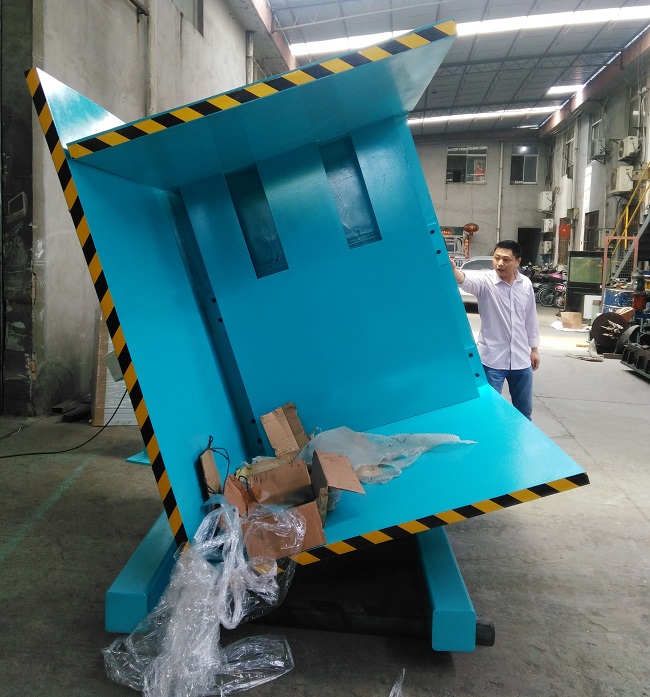
While specifications vary by manufacturer and model, typical parameters for a heavy-duty 180-degree tilting pallet changer include:
| Feature | Typical Specification Range | Importance |
|---|---|---|
| Load Capacity | 1000 kg – 2500 kg (2200 – 5500 lbs) | Must match maximum expected load weight. |
| Cycle Time | 45 – 90 seconds | Directly impacts throughput and efficiency. |
| Pallet Size Compatibility | Standard GMA, CHEP, EURO, Custom | Needs to accommodate facility’s pallet types. |
| Max Load Height | 1200 mm – 2400 mm (47″ – 94″) | Determines suitability for different load sizes. |
| Power System | 3-Phase Electric / Hydraulic | Influences energy consumption and maintenance. |
| Control System | PLC Automated / Manual Push-button | Affects ease of use, integration, diagnostics. |
| Construction | Heavy-duty C45 Steel Frame | Ensures durability and longevity under stress. |
| Safety Features | Perimeter guarding, light curtains, E-stops | Critical for operator safety and CE/ISO compliance. |
| Footprint | Varies (e.g., 2.5m x 2.0m) | Space requirement within the facility layout. |
🛠️ Core Components Breakdown
Understanding the main parts aids in appreciating the pallet inverter’s function and maintenance needs:
-
Base Frame: Provides structural integrity and supports all other components, typically fabricated from reinforced steel.
-
Tilting Mechanism: Powered by high-torque hydraulic cylinders or electric motors coupled with robust bearings to handle the load during rotation.
-
Clamping System: Side and potentially top pressure plates, hydraulically actuated, designed to securely hold diverse loads without causing deformation.
-
Control Panel: Houses the Human-Machine Interface (HMI), PLC (Programmable Logic Controller), and operational controls (start, stop, emergency stop).
-
Power Unit: Contains the electric motor and hydraulic pump (for hydraulic models) or variable frequency drives (VFD).
-
Safety Guarding: Physical barriers, safety interlocks, and light curtains prevent access during operation, complying with industry safety standards.
ROI Insight: Investing in an automated pallet changer can reduce labor costs by up to 40% compared to manual restacking, while simultaneously lowering product damage claims by ensuring consistent, controlled handling.
📈 Benefits for Industrial Distribution Operations
Integrating a pallet flipping machine offers significant advantages:
-
Increased Throughput: Automating the exchange process is significantly faster than manual methods, achieving up to 60-80 cycles per hour.
-
Enhanced Worker Safety: Eliminates manual lifting and restacking, reducing risks of musculoskeletal injuries (MSDs).
-
Reduced Product Damage: Gentle, controlled hydraulic clamping minimizes the chance of goods being dropped or crushed.
-
Improved Hygiene Control: Facilitates easy switching to clean pallets required in sensitive environments (HACCP, GMP).
-
Compliance Assurance: Ensures loads are on the correct pallet type for international shipping or internal processes.
-
Labor Optimization: Frees up personnel previously assigned to manual pallet swapping for more value-added tasks.
🏭 Common Applications and Industries
180-degree tilting pallet changers are widely used across various sectors:
-
Food and Beverage: Switching to plastic pallets for hygienic production areas.
-
Pharmaceuticals: Ensuring cleanroom compliance and preventing cross-contamination.
-
Chemical Manufacturing: Handling bagged goods or drums safely without spillage.
-
Printing and Paper: Managing large rolls or stacks of paper with precision.
-
General Warehousing: Replacing damaged pallets, transferring loads to outbound pallets.
-
Logistics Providers (3PLs): Meeting diverse client requirements for pallet types efficiently.
👤 User Experience Considerations
From an operator’s perspective, modern pallet inverters prioritize usability:
-
Ease of Use: Intuitive controls, sometimes with pre-programmed cycles for different load types. Minimal training is typically required for basic operation.
-
Maintenance: Regular maintenance includes checking hydraulic fluid levels, lubricating moving parts, inspecting clamps, and verifying safety sensor functionality. Access panels are designed for straightforward servicing.
-
Integration: These machines can operate as standalone units or be integrated into automated conveyor lines for seamless material flow. PLC controls allow for communication with Warehouse Management Systems (WMS).
✅ Selecting the Right Pallet Changing Solution
Choosing the appropriate pallet changer depends on:
-
Load Characteristics: Weight, height, stability, and fragility of the typical product.
-
Required Throughput: How many pallets need to be exchanged per hour or shift?
-
Pallet Types: The range of incoming and outgoing pallet sizes and designs.
-
Available Space: The physical footprint the machine will occupy.
-
Budget: Initial investment cost versus long-term ROI from efficiency and safety gains.
-
Automation Level: Standalone operation versus fully integrated system.
Other types of pallet changers exist, such as push-pull systems or clamp-and-lift designs, which may be more suitable for specific load types (e.g., very fragile items). Comparing different technologies is vital.
🎯 Conclusion
The 180-degree tilting pallet changer is a powerful tool for optimizing logistics and distribution processes. By automating the often necessary task of pallet exchange, it delivers substantial improvements in speed, safety, and operational efficiency, contributing directly to a more productive and compliant supply chain. Understanding its mechanics, specifications, and benefits allows businesses to make informed decisions about implementing this valuable technology.
For further information or specific inquiries about pallet changing solutions:
- Email: info@fhopepack.com
❓ Frequently Asked Questions (FAQ)
Q: What is the difference between a pallet inverter and a pallet flipper? A: The terms are often used interchangeably. Both refer to machines that rotate a load to change the pallet. A “flipper” usually implies a 180-degree rotation, while an “inverter” can sometimes refer to specific clamp-and-lift mechanisms, but in this context, they describe the same tilting technology.
Q: Can this machine handle unstable loads? A: The 180-degree tilting model is best for stable, shrink-wrapped, or boxed loads. For very unstable or loose items, a clamp-and-lift system or a push-pull changer might be recommended to avoid product shift during inversion.
Q: How long does a typical pallet exchange cycle take? A: A standard cycle typically takes between 45 to 90 seconds, depending on the load height and the specific model of the automatic pallet changer.
Q: Is the machine customizable for non-standard pallet sizes? A: Yes, manufacturers like Fhopepack offer customized clamping frames and conveyor widths to accommodate non-standard pallet sizes (e.g., 48×48, 1200x1200mm, or larger).