Executive summary A large-format panel has a big surface and a small tolerance for damage. This line packages doors, insulated panels and wooden slabs by sensing each piece’s size, sleeving it in heat-shrink film and tightening the cover in a shrink tunnel, so the film fits the product instead of the operator’s guess. Door and panel dimensions are configured per project.
Table of Contents
- Why large-format goods are hard to wrap
- Two machines, one job
- Infeed and sensing
- Sleeving in shrink film
- The shrink tunnel
- Edge protection
- Typical configuration
- What the video shows
- Selection checklist
- Controls and safety
- Engineering FAQ
- Next step
- Related reading
- Sources and standards
Why large-format goods are hard to wrap
Doors, architectural panels and insulation boards carry a lot of surface for their weight, and every one of those square meters is a place a scuff or a moisture mark can land. The edges are worse: a corner is where a forklift mast or a truck rail meets the product first.
Film that hangs loose makes the problem wider, because loose film shifts in transit and lets the next door touch the last one. A cover that fits the product removes that contact.
Two machines, one job
A door machine and a full-size panel shrinking machine cover two ends of the same problem. The door machine wraps individual doors with their narrower envelope; the full-size panel machine handles boards and slabs too wide for a door line.
We build either machine on its own or the two running together as one line, sized to the products you ship.
Infeed and sensing
Panels arrive on a heavy-duty conveyor and pass a sensing station. Optical sensors read the length, width and height of each piece, and the line uses those readings to set how much film the piece needs instead of using a fixed amount for every size.
Sensing pays for itself on a mixed line, where the difference between a small door and a full-size panel would otherwise be wasted film on one and a skimpy cover on the other.
Sleeving in shrink film
The machine draws film and sleeves it over the panel as it travels. Polyethylene shrink film is the working choice for this class, with other film options available where the product needs them. Before heat touches it, the open end of the sleeve is closed with a cross-seal. Longer panels that run in continuous flow use a side sealer instead, and the choice follows the panel length ran per project.
The shrink tunnel
The sleeved panel passes through a heat shrink tunnel where circulating hot air tightens the film onto the product. The tunnel heat and conveyor speed are set to the film grade at start-up and matched to the panel in the run.
Edge protection
Heat shrinking works from the outside in, so the strongest pull lands on the corners where the film contracts most. That is exactly where a panel needs the cover tightest, and it is why a heat-fit wrap protects edges that a tension wrap leaves bridged. Because the film fits on its way through the line, every unit also comes off with the same tight, clean cover.
Typical configuration
Figures below are common starting envelopes for this machine class and are confirmed per project.
| Parameter | Typical range, confirmed per project |
|---|---|
| Product envelope | sized to your door and panel dimensions |
| Film | polyethylene shrink film, other grades on request |
| Sensing | optical size reading to set film use |
| Sealing | L-bar or side sealer matched to the product |
| Output | paced to tunnel dwell and product mix |
| Electrical supply | 380 V three phase 50 Hz, or 220 V single phase for lighter lines, selected per project to the plant supply |
What the video shows
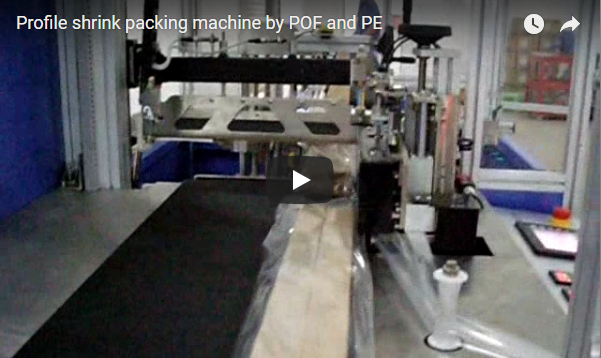
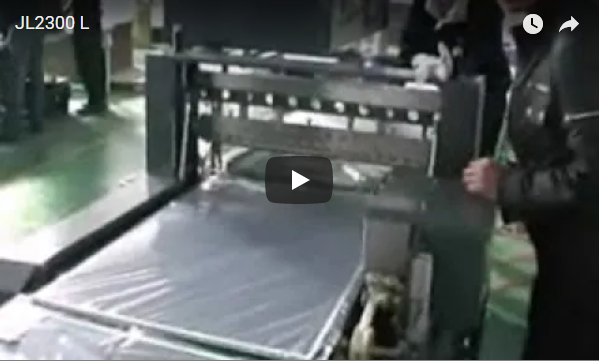
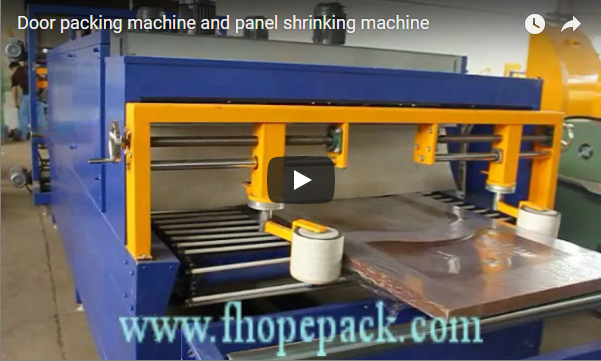
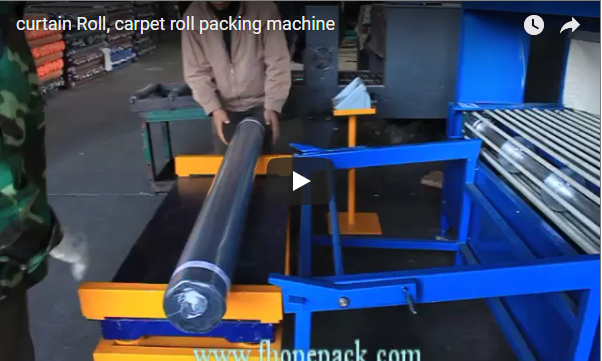
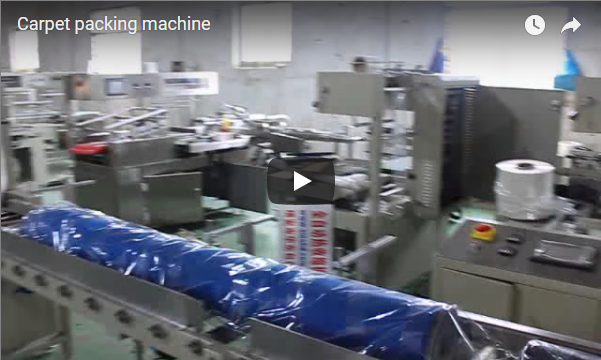
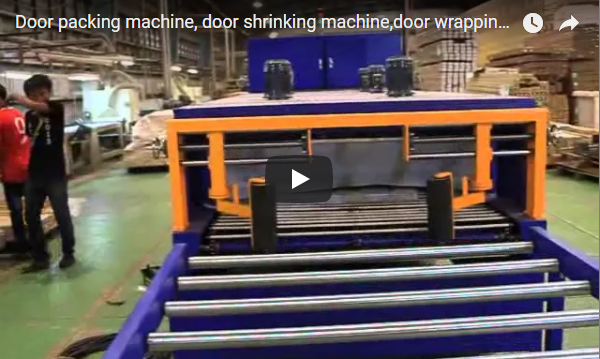
Our footage shows a line sleeving panels in film and running them through the shrink tunnel. It is a general demonstration, so product envelope, film grade and line layout for your goods are confirmed with us per project.
Selection checklist
| Question | Confirm per project |
|---|---|
| Door and panel sizes | machine envelope and film setup |
| Film use today | what sensing can save on your mix |
| Product weight | film grade and toughness |
| Sealing style | L-bar for standard lengths, side sealer for extended panel runs; chosen per project |
| Output rate | pieces per hour at your outfeed |
| Electrical supply | voltage, phase and frequency on site |
Controls and safety
The line runs from a control panel with an emergency stop at the operator position. Keep hands clear of the sensing, sleeving and heating zones while the line moves, and keep the load positioned on the conveyor. Routine checks cover sensing, film feed, tunnel heat and the conveyor, per the machine manual.
Engineering FAQ
Q: Does the line need a separate machine for doors and panels? A: No. We supply a dedicated door unit, a wide-panel unit, or an integrated combo line, configured per project.
Q: How does sensing reduce film use? A: The sensors measure each piece and set the film for that piece, so a mixed line does not oversize film for small doors or undersize it for large panels.
Q: What film does it run? A: Polyethylene shrink film is standard for this class, with other grades available for the product. Confirmed per project.
Q: Does heat shrink film protect edges? A: Yes. The film contracts hardest around corners and edges, which is where a panel takes most impacts in transit.
Q: What sizes are possible? A: The line is sized to your door and panel envelope per project, within the machine’s rated width and height.
Next step
- Email us at info@fhopepack.com with your door and panel sizes, mix and output rate.
- We send film recommendations, line layout and a layout drawing within 48 hours.
- We arrange a site survey to confirm the line fits your floor.
Related reading
- Shrink packaging machine for door and panels
- Carton packaging machine for door
- Panel shrink packaging machine
- FHOPE packing machinery product lines
Sources and standards
- ISO 12100:2010 — Safety of machinery. General principles for design, risk assessment and risk reduction
- EN 415-10:2014 — Safety of packaging machines. General requirements
- EN ISO 13849-1:2023 — Safety of machinery. Safety-related parts of control systems
- FHOPE door packaging and panel shrinking line demonstration video. Reviewed as a general demonstration; envelope, film and layout confirmed per project.
Last reviewed: 2026-10-10