Executive summary Preventing loose storage coils, jacket indentation, and downstream packaging bottlenecks requires accurate tension control and repeatable strapping joint efficiency. An automatic cable strapping machine applies high-tensile PET (polyethylene terephthalate) or PP (polypropylene) strap at a calibrated tension—typically 150 N to 700 N (15 to 70 kgf)—in repeatable cycles of 15 to 30 seconds per coil. By replacing erratic manual hand-tool operations with PLC-governed through-the-eye radial strapping, the machine guarantees uniform residual tension and flawless joint integrity across every batch. The strapping head feeds strap through a dedicated arch, tensions it around the coil cross-section, fuses the joint via vibration friction or heat sealing, and cuts the strap cleanly. This technical guide outlines the operational kinematics, material selection, tension parameters, and engineering checkpoints for seamless production line integration.
Table of Contents
- What the machine does
- How the strapping cycle runs
- Strap material and width
- Tension and sealing
- Coil dimension capacity
- Typical specification range
- Machine selection checklist
- Operation and safety basics
- Maintenance essentials
- Engineering FAQ
- Next step
- Related reading
- Sources and standards
What the machine does
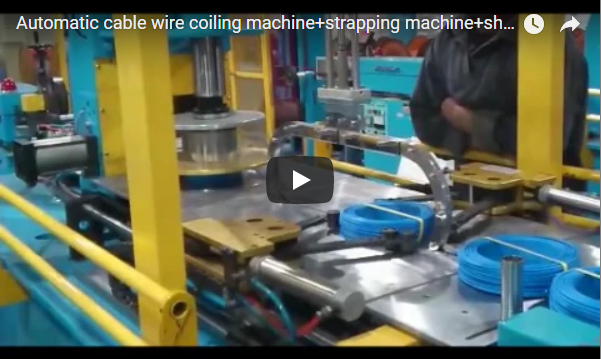
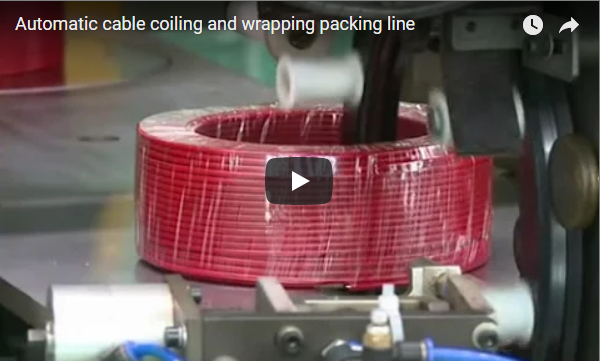
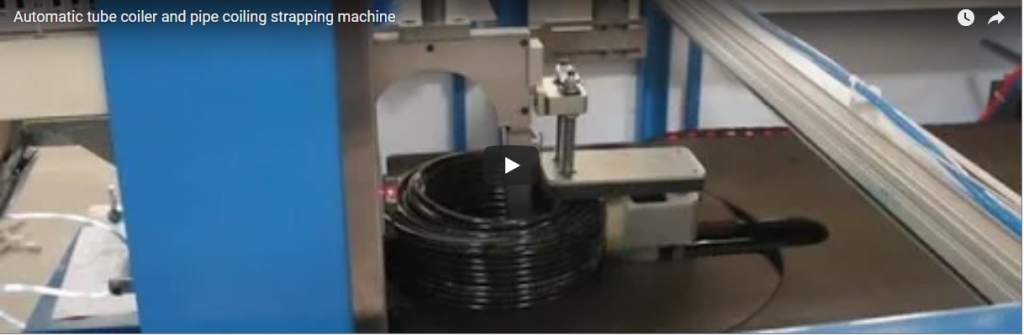
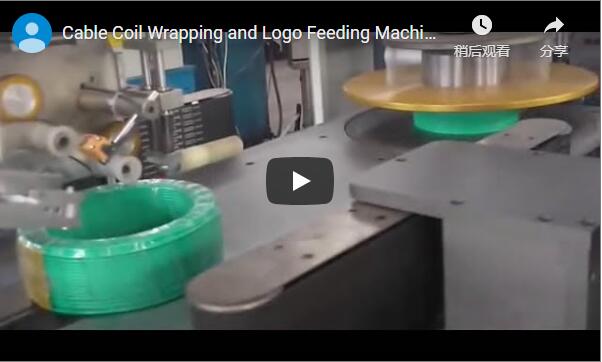
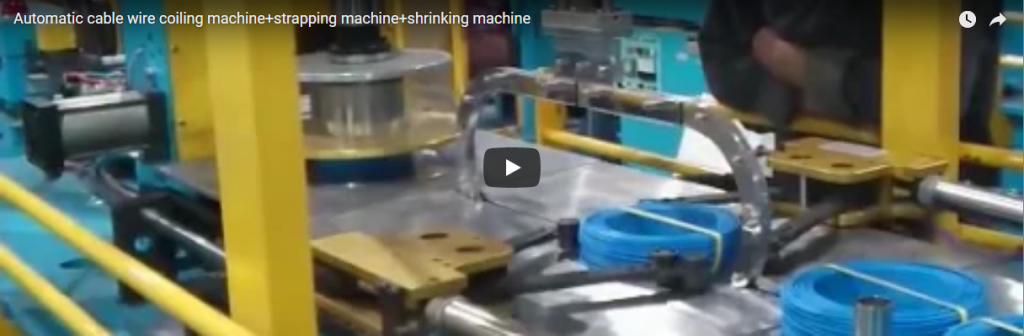
An automatic cable strapping machine secures coiled wire, flexible conduit, and power cables through the radial core before downstream processes such as shrink wrapping, orbital wrapping, or automated palletizing. In high-output manufacturing plants, this machine serves as the pivotal bridge feeding an integrated cable coiling, strapping and shrink packaging line. The cycle runs autonomously: every coil receives radial strapping with identical positioning, repeatable strap tension, and high-strength joint seals without direct operator intervention.
Eliminating manual variance is critical to cable quality assurance. Manual strapping tools yield fluctuating strap tension, which invariably causes loose coils during transit or localized insulation crush on soft jacket compounds. Automated strapping eliminates manual inconsistency, maintaining structural bundle geometry and clean package aesthetics.
How the strapping cycle runs
The automatic strapping sequence follows a synchronized electro-pneumatic kinematic sequence:
- Infeed & Positioning: The coil transfers from the coiler or winder along a powered roller or flat belt conveyor. Proximity sensors and optical arrays verify that the coil inner eye (ID) is centered along the strapping axis.
- Top Compression: A pneumatic or motorized top hold-down platen descends, clamping the coil firmly against the working table. This prevents springback, layer telescoping, and axial displacement while tension is applied.
- Strap Feed & Track Closure: A movable inner track section swings or shuttles into the eye of the coil, completing the continuous low-friction arch. The high-speed feed drive propels the strap forward through the track until the leading tip hits the head stop switch.
- Tensioning & Take-up: The strap guide track opens (flap or spring-loaded design). The tension mechanism reverses to pull back excess strap, shifting from primary take-up into secondary high-tension mode governed by torque or load-cell feedback.
- Sealing & Cutting: The sealing die clamps the overlapping strap ends, fusing them via friction welding or temperature-regulated thermal sealing. An integrated blade cuts the trailing end cleanly near the joint.
- Ejection: The strapping track retracts from the coil core, the top clamp releases, and powered discharge rollers move the strapped bundle to the outfeed station.
All mechanical transitions are coordinated via a central PLC, ensuring cycle recipes repeat identically across thousands of production hours.
Strap material and width
Selecting the proper strapping consumable depends on coil weight, storage duration, and jacket compliance. Two thermoplastic materials dominate industrial wire packaging:
- Polyester (PET): Features a high modulus of elasticity, superior retained tension, and high creep resistance under elevated temperatures. PET is the standard engineering selection for heavy power cables, building wire, and master coils subject to multi-tier warehouse stacking.
- Polypropylene (PP): Highly flexible with lower tensile strength and higher elongation recovery, making it suitable for light building wire, flexible conduits, and short logistical loops where residual tension over long storage times is less critical.
Standard commercial widths range from 9 mm to 19 mm, with thicknesses spanning 0.55 mm to 0.90 mm. Heavy-gauge industrial cables typically standardize on 12 mm or 16 mm PET strap to balance surface contact area against strap yield strength.
Tension and sealing
Tension calibration is the defining threshold between load integrity and product damage. Insufficient tension permits the strap to migrate across the outer jacket circumference, causing coils to uncoil during handling. Excessive tension concentrates mechanical stress onto small contact radiuses, causing permanent deformation, jacket thinning, or shield damage on compliant insulation materials (e.g., PVC, XLPE, silicone rubber).
Low Tension (<150 N)      Optimal Tension Window (150 N – 700 N)       Excess Tension (>700 N)
--------------------      ------------------------------------       -----------------------
Strap slippage            Uniform bundle integrity                   Jacket pinching
Core looseness            Zero jacket crushing                        Conductor deformation
Handling unraveling       Maintained springback absorption           Sheath cold-flow indent
The strapping head joins overlapping strap tails through one of two technical methods:
- Friction Welding (Vibration Joint): A high-frequency mechanical friction shoe oscillates the strap faces under high clamp pressure, generating localized molecular fusion. Friction welding typically achieves a joint efficiency of ≥ 75% to 85% of strap tensile strength, serving as the industry benchmark for PET.
- Thermal Heat Sealing: An electrically heated blade inserts between the strap ends, plasticizing the contact surfaces before mechanical compression. This method remains economical and reliable for PP strapping systems.
Coil dimension capacity
A strapping cell must reliably encompass three critical product dimensions: coil Outer Diameter (OD), Inner Diameter (ID), and Coil Width (axial height).
          ┌──────────────── OD ───────────────┐
          │                                   │
     ┌────┴────────┐                     ┌────┴────────┐
  ▲  │  Coil Wall  │                     │  Coil Wall  │
  │  │             │   ◄──── ID ────►    │             │
Width│             │                     │             │
  │  │  (Jacket)   │                     │  (Jacket)   │
  ▼  └────┬────────┘                     └────┬────────┘
          │                                   │
          └──────────── Track Arch ───────────┘
The machine’s stationary arch must provide clearance for the maximum OD and coil width, while the traversing inner arch arm must pass freely through the minimum internal diameter (ID) without scuffing the inner cable loops. Processing wide ranges of coil sizes—similar to configurations on a heavy-duty cable coil packing machine and wire packing machine—demands calculated mechanical clearance margins:
- Inner Diameter Clearance: Minimum inner eye diameter must allow the lower track arm and its protective wear strips to enter with ≥ 25 mm radial clearance.
- Height and Width Envelope: The arch height must exceed the maximum stack height by at least 50 mm to allow dynamic transfer without risk of mechanical strike during high-speed conveyor transfers.
Typical specification range
The parameters below reflect the standard industrial performance envelope for this equipment class. Final configurations are tailored to project-specific coil envelopes.
| Machine Parameter | Standard Specification Range |
|---|---|
| Strap Material Compatibility | PET (Polyester) or PP (Polypropylene) |
| Usable Strap Width | 9 mm, 12 mm, 16 mm, 19 mm |
| Strap Thickness Range | 0.55 mm to 0.90 mm |
| Mechanical Cycle Rate | 15 to 30 seconds per complete strapped coil |
| Strapping Tension Envelope | 150 N to 700 N (approx. 15 to 70 kgf), step-less digital adjustment |
| Joint Sealing Method | High-frequency friction weld (standard) / Heat seal element |
| Joint Tensile Efficiency | ≥ 75% of parent strap break strength |
| Coil Dimension Capacity | OD: 200–800 mm; ID: ≥ 120 mm; Width: 50–350 mm |
| Automation Architecture | Siemens / Allen-Bradley PLC with industrial touchscreen HMI |
| Fieldbus Integration | Profinet, Ethernet/IP, Modbus TCP |
| Utility Requirements | 3-Phase 380V/440V 50/60Hz, Clean Dry Air at 0.5–0.7 MPa |
Machine selection checklist
Prior to machine procurement, verify these core parameters to align mechanical clearances and cycle speeds with production rates:
| Technical Checkpoint | Factory Data to Verify per Project |
|---|---|
| Coil Dimensions | Maximum and minimum values for OD, ID, and Coil Width (Height) |
| Coil Weight & Construction | Bundle weight range, jacket compound hardness (Shore A/D), core rigidity |
| Strap Material & Spec | Selection of PP vs. PET, width, thickness, and breaking strength target |
| Tension Window | Calibrated target tension (N) to prevent jacket indentation while arresting springback |
| Line Throughput | Coils per hour (CPH) target and number of radial straps required per bundle (2, 3, or 4) |
| Infeed / Outfeed Handling | Upstream coiler transfer elevation, center-line heights, and downstream shrink/palletizer handshake |
| Control Architecture | Factory standard PLC brand, safety network requirements, and remote I/O protocols |
| Future Production Headroom | Envelope expansion margins for future product wire diameters or larger spool packages |
Standalone machines offer modular flexibility, but optimal ROI occurs when the system integrates seamlessly into a continuous cable coil rewinding, strapping and shrink packing line. Upstream winders feed automated transfer arms, while downstream powered outfeed lines deliver strapped coils to downstream secondary shrink wrappers without manual buffering.
Operation and safety basics
Safe, continuous operation requires proper preparation and adherence to machinery standards (ISO 12100 and EN 415-10):
- Strap Loading & Threading: De-energize the feed motor before feeding a new strap coil into the accumulator cassette. Thread the strap through the tension-relief dancers, orienting the natural curvature with the internal track path.
- Parameter Recipe Recall: Load the specific product recipe on the HMI. Ensure the dialed tension (N), feed speed, and cooling dwell times match the cable’s jacket material.
- Safety Interlocks & Guarding: The strapping zone features physical perimeter guards and EN ISO 13849-1 Category 3/4 light curtains. The pneumatic top hold-down and movable track elements pose pinch points; opening an access gate immediately dumps pneumatic pressure and initiates a safety stop.
- Lockout / Tagout (LOTO): Always lock out primary electrical and pneumatic supplies before clearing strap misfeeds, replacing cutter blades, or servicing the friction weld head.
Maintenance essentials
Preventive maintenance ensures zero-backlog operation across consecutive shifts:
- Daily Shift Tasks: Inspect the strap channel for debris or plastic dusting. Blow out the sealing head assembly with dry compressed air. Verify that the tensioning gripper teeth are clean and bite cleanly into the strap backing.
- Weekly Checks: Examine cutter blades for dulling or chipped edges to avoid frayed strap ends that jam the track. Check the friction welding heating element or vibrating pad for plastic residue build-up; clean using non-abrasive brass brushes.
- Monthly Preventive Maintenance: Inspect all pneumatic cylinders, pressure regulators, and rod alignment couplers. Lubricate precision linear guide rails, drive chains, and bearing assemblies in strict accordance with OEM lubricant charts. Check proximity sensor faces for dust accumulation.
Engineering FAQ
Q: What strap materials are compatible with this automatic machine? A: The strapping head handles both Polyester (PET) and Polypropylene (PP) strapping from 9 mm to 19 mm in width. Track guides and feed pinch wheels are adjusted to specific widths per project.
Q: What is the typical operational cycle time per coil? A: The dry cycle time is 15 to 30 seconds per coil, depending on total coil diameter, strapping head speed, and whether single or multiple radial straps are applied per unit.
Q: How is strap tension regulated to prevent crushing the cable jacket? A: Tension is governed via closed-loop servo or digital torque parameters within a programmable range of 150 N to 700 N (15 to 70 kgf). Operators select exact tension recipes on the touchscreen HMI to prevent sheath indentations.
Q: What joining technologies are deployed for strap closure? A: Systems utilize high-frequency friction vibration welding or thermal heat sealing. Friction welding is preferred for heavy-duty PET strapping because it yields joint efficiencies exceeding 80% without burning or degrading polymer chains.
Q: What happens if strap tension is miscalibrated? A: Setting tension too low leads to loose loops and unraveling during transport. Setting tension too high causes cold-flow indentation of softer jacket compounds (e.g., silicone, soft PVC), potentially damaging internal twisted pairs or optical fibers.
Q: Can the unit apply multiple radial straps to a single coil? A: Yes. The machine can integrate an automatic pneumatic index turntable. The coil is rotated 90° or 120° between strapping cycles to apply 2, 3, or 4 radial straps through the inner core automatically.
Q: Does the machine support factory SCADA and MES connectivity? A: Yes. The standard control platform utilizes Siemens or Rockwell Automation PLCs, interfacing directly via Profinet or Ethernet/IP protocols for cycle counts, fault telemetry, and recipe changeovers.
Next step
- Submit Core Data: Email our engineering team at
info@fhopepack.comwith your coil dimensions (OD, ID, Width), coil weight range, and required coils-per-hour target. - Technical Layout Delivery: We provide a detailed 2D/3D integration layout drawing and comprehensive strapping machinery proposal within 48 hours.
- Line Integration Validation: Our packaging engineers review infeed/outfeed heights, safety interfacing, and fieldbus specifications to ensure direct integration into your manufacturing line.
Related reading
- Steel sheet strapping machine
- Hose pipe wrapping machine for steel coil packing
- Coil and roll stretch wrapping machine
- Automatic horizontal orbital wrapping for one-pass full coverage
- FHOPE packaging machinery product lines
Sources and standards
- ISO 12100:2010 — Safety of machinery. General principles for design, risk assessment and risk reduction
- EN 415-10:2014 — Safety of packaging machines. General requirements
- EN ISO 13849-1:2023 — Safety of machinery. Safety-related parts of control systems
- FHOPE automatic cable strapping machine demonstration video, YouTube.
Last reviewed: 2026-10-09