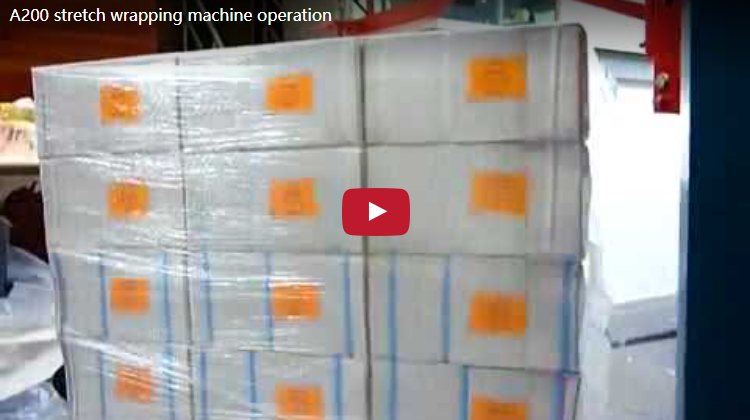
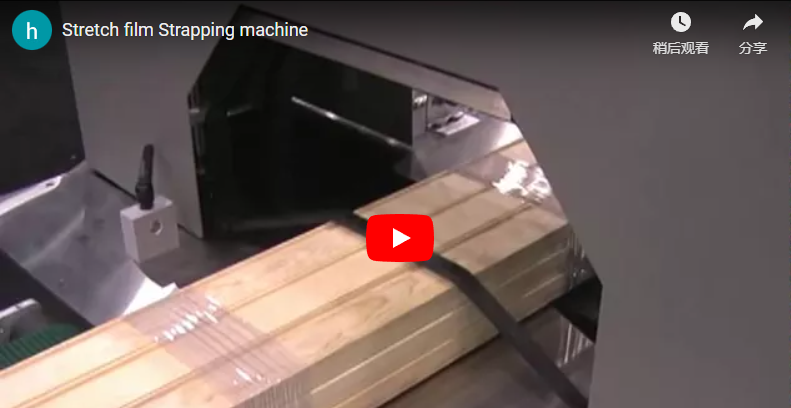
Non pallet stretch wrapping machine

Non-pallet stretch wrapping machines solve packaging challenges for irregular, long, or bulky items without pallets. Discover how orbital wrappers boost efficiency, cut material costs, and protect diverse products during transit.

Streamlining the packaging process for items that don’t conform to standard pallet sizes presents unique challenges. The non-pallet stretch wrapping machine, often referred to as an orbital or horizontal wrapper, offers a specialized solution for securely unitizing and protecting long, bulky, or irregularly shaped products without the need for a pallet base. This technology is particularly effective for items such as bundles of lumber, pipes, doors, windows, furniture, rolls of carpet, textiles, and even smaller consolidated loads like cartons or cable drums that require stabilization during transit and storage.

🛠️ Operational Principle and Structural Design

Unlike traditional turntable or rotary arm wrappers designed for palletized loads, non-pallet wrappers utilize an orbital wrapping mechanism that fundamentally changes how products are secured.

  • Core Function: The product is fed horizontally through a rotating ring or annulus. A carriage mounted on this ring dispenses stretch film, wrapping it around the product as it passes through the ring’s opening.

  • Design Variations: Machines feature vertical or horizontal ring orientations depending on the primary application and product flow. The structure includes infeed and outfeed conveyor systems (powered or gravity-fed) to facilitate product movement.

  • Film Application: Advanced systems offer precise control over film tension, pre-stretch up to 250-300% to maximize film efficiency, and wrapping patterns (e.g., number of wraps at leading/trailing edges) via a Programmable Logic Controller (PLC).

Non-pallet stretch wrapping machine orbital mechanism

Large turntable pallet wrapping machine demonstrating orbital wrapping principle

🔧 Key Components Breakdown

Understanding the core components helps in appreciating the machine’s capabilities and maintenance requirements:

Component Function Key Features
Ring Assembly Heart of the machine Houses drive mechanism (gear/belt-driven), film carriage, robust bearings for smooth high-speed rotation
Film Carriage Holds stretch film roll Pre-stretch rollers (fixed/variable), film threading, safety cut-and-clamp system
Conveyor System Transports product through wrapping zone Roller types (steel, PVC, rubberized), adjustable side guides for alignment
Control System Parameter management PLC with HMI touchscreen for ring speed, conveyor speed, film tension, wrap count
Frame and Guarding Structural stability Heavy-duty welded steel, safety guarding with interlocked access doors

📊 Technical Specifications Overview

While specifications vary based on model and manufacturer, typical parameters include:

Parameter Entry-Level Model High-Throughput Model
Ring Diameter 1200 mm 2500 mm
Max Ring Speed 40 RPM 75 RPM
Max Conveyor Speed 12 m/min 18 m/min
Pre-stretch Fixed (250%) Variable (150-300%)
Automation Manual Start/Stop Fully Auto Cycle, Clamp
Typical Throughput ~30-40 Loads/hr ~60-80+ Loads/hr

Additional Technical Parameters:

  • Ring Diameter Options: 1200mm, 1600mm, 2000mm+ (determines maximum product cross-section)

  • Maximum Load Weight: 1000 kg to 2000 kg+ per linear meter

  • Maximum Load Dimensions: Length theoretically unlimited (constrained by factory space)

  • Film Type: Standard LLDPE stretch film (23-35 micron thickness, 500mm width)

  • Power Requirements: 480V/60Hz/3Ph, compressed air (if pneumatic components used)

  • Control Systems: PLC (Siemens, Allen-Bradley) with HMI

💡 Expert Pro Tip: When selecting ring diameter, add a 200-300mm safety margin to your maximum product dimensions. This prevents film tearing during high-speed operations and accommodates slight product variations without requiring machine adjustments.

🏭 Diverse Industrial Applications

The versatility of non-pallet wrappers makes them suitable across numerous sectors:

Industry Applications Benefits
Building Materials Timber bundles, aluminum extrusions, PVC pipes, insulation panels, doors, windows Eliminates pallet costs, protects against moisture
Furniture Manufacturing Assembled or flat-packed furniture items Scratch protection, dust prevention
Textiles & Flooring Carpet rolls, fabric, artificial turf Maintains roll integrity, prevents unraveling
Metal Fabrication Long metal profiles, bars, tubes Corrosion protection, bundle stabilization
Logistics & Distribution Consolidated cartons, multiple items Creates stable shipping units without pallets
Cable & Wire Large drums, cable spools Prevents wire damage, secure transport

Cable drum wrapping application

Cable drum wrapping demonstrating non-pallet application

📈 Advantages Over Traditional Pallet Wrapping

Opting for a non-pallet wrapper offers distinct measurable benefits:

  • 💰 Material Savings: Eliminates pallet costs ($15-25 per pallet) and reduces overall packaging material usage by 30-40% compared to manual wrapping or crating.

  • 🛡️ Load Security: Provides tight, consistent wrapping around the entire product, offering superior stabilization and protection against dust, moisture, and shifting during transit.

  • 🚛 Handling Flexibility: Allows direct handling of wrapped products using forklifts (with appropriate attachments), cranes, or manual methods, depending on size and weight.

  • 📦 Space Efficiency: Wrapped products occupy 20-35% less storage and shipping space compared to palletized equivalents.

  • 🔄 Adaptability: Effectively handles products too long, unstable, or awkwardly shaped for conventional pallet wrappers (lengths exceeding 6 meters).

📊 ROI Insight: Companies switching from pallet-based to non-pallet wrapping report average annual savings of $50,000-150,000 through eliminated pallet purchases, reduced film consumption, and decreased shipping volume costs.

👤 User Experience and Operational Considerations

From a user perspective, modern non-pallet wrappers are designed for efficiency and safety:

  • Ease of Use: HMIs provide intuitive controls for adjusting parameters and selecting pre-programmed wrapping cycles. Film roll changes typically completed in under 5 minutes.

  • Maintenance: Routine checks involve inspecting rollers, belts/chains, sensors, and ensuring the film cutting/clamping mechanism is clean. Follow manufacturer lubrication schedules (typically every 500 operating hours).

  • Safety Features: Emergency stops, safety interlocks on access doors, light curtains at entry/exit points, and clear visual/audible signals during operation. Operator training is paramount for accident prevention.

  • Integration Capability: Machines integrate into automated production lines with upstream/downstream conveyor systems, barcode readers, and labeling equipment for seamless workflow.

✅ Selecting the Appropriate Machine

Choosing the right non-pallet wrapper requires assessing these critical factors:

Selection Criteria Questions to Ask Impact
Product Range What are min/max dimensions (W × H) and lengths? Determines ring diameter and conveyor length
Weight Capacity What’s the maximum weight per linear meter? Affects conveyor motor power and frame strength
Throughput Requirements How many items per hour/shift? Dictates ring speed and automation level
Automation Level Manual, semi-automatic, or fully automatic? Influences labor costs and consistency
Operating Environment Space constraints? Cold storage? Dusty conditions? Affects machine specifications and protective features

Machine selection considerations

Key factors in non-pallet wrapper selection

Conclusion

Non-pallet stretch wrapping machines represent a significant advancement in packaging technology, offering a robust and efficient method for securing and protecting a wide array of non-standard loads. By understanding their operational principles, technical specifications, and diverse applications, industries can leverage these systems to:

  • Enhance load integrity during transit and storage

  • Reduce packaging costs by 30-40% through eliminated pallets and optimized film usage

  • Streamline logistical operations with faster wrapping cycles and reduced handling

For businesses handling long, bulky, or irregularly shaped products, orbital wrappers provide a compelling alternative to traditional pallet-based unitizing methods, delivering measurable ROI within 12-18 months of implementation.

For further information on packaging machinery standards and best practices, resources like the Packaging Machinery Manufacturers Institute (PMMI) can provide valuable insights.

❓ FAQ: Non-Pallet Stretch Wrapping Machines

Q1: What products are best suited for non-pallet stretch wrapping?
A: Long items (pipes, lumber, extrusions), bulky products (furniture, doors), rolled materials (carpet, textiles), and irregular shapes that cannot be stabilized on standard pallets.

Q2: How much film can I save compared to manual wrapping?
A: Non-pallet wrappers typically reduce film consumption by 25-35% through precise tension control and optimized pre-stretch ratios (up to 300%).

Q3: Can these machines handle products over 6 meters in length?
A: Yes, length is theoretically unlimited and only constrained by available factory space and conveyor system design.

Q4: What maintenance is required for orbital wrappers?
A: Routine maintenance includes inspecting rollers and belts every 200 hours, lubricating bearings every 500 hours, and cleaning film cutting mechanisms weekly.

Q5: How quickly can operators be trained on these machines?
A: Most operators achieve proficiency within 2-4 hours of hands-on training, with full certification typically completed in 1-2 days.

Q6: Are non-pallet wrappers compatible with existing conveyor systems?
A: Yes, most machines can be integrated with standard conveyor systems. Custom infeed/outfeed configurations are available for specialized production lines.

Q7: What safety features are standard on modern non-pallet wrappers?
A: Emergency stop buttons, safety interlocks on access doors, light curtains at entry/exit points, audible alarms during operation, and CE/UL certification compliance.